REVIEW · ROME
Rome After Dark Mysteries Myths and Haunted History
Book on Viator →Operated by Not boring tours · Bookable on Viator
One walk after dark can change how you see Rome. This 90-ish minute haunted-history stroll mixes major sights with the darker stories tied to them, so you get night views without the usual Rome chaos. I like how it keeps things close together on foot and I like how it focuses on the stories you rarely hear. One thing to consider: you’ll be out at night for a short but steady walk, so wear comfortable shoes and plan for dim streets and steps.
What you’ll appreciate most is the way the tour uses geometry and light. You’re not just standing in front of monuments; you’re moving through the same streets that shaped power, punishment, and escape routes. I also like that the tour stays short enough to work even if you’ve already walked all day. If you’re expecting a full ghost-themed show with costumes, you might find the tone more history-forward than supernatural-theater.
In This Review
- Key things to know before you go
- Meeting Via del Banco di Santo Spirito and ending in Campo de’ Fiori at 9:00 pm
- Castel Sant’Angelo: prison history, the Passetto di Borgo, and Saint Michael’s plague stop
- Via Giulia: Pope Julius II’s Renaissance street and the joy of not getting lost
- Piazza Farnese and Palazzo Farnese: ancient bathtubs turned fountains
- Passetto del Biscione: the covered medieval passage with fresco remnants
- Campo de’ Fiori at night: the market square turns darker with Giordano Bruno
- Price and value: what $4.58 gets you in Rome after dark
- Guide style matters: Emilie, Mike, and the conversational pace
- Who should book this Rome After Dark walk
- Should you book Rome After Dark Mysteries, Myths and Haunted History?
- FAQ
- How long is the Rome After Dark tour?
- What time does the tour start, and where does it meet?
- Where does the tour end?
- Is the tour offered in English, and do I need a ticket?
- Is food or drink included?
- How big is the group?
- What is the cancellation policy for a full refund?
Key things to know before you go
- Short and efficient (about 1 hour 20 minutes), designed for an evening reset
- Castel Sant’Angelo at night plus the escape story of the Passetto di Borgo
- Elegant Renaissance stops on Via Giulia and Piazza Farnese before you hit the darker squares
- Passetto del Biscione as a mysterious, covered passage with medieval fresco remnants
- Ends in Campo de’ Fiori, where you can keep the night going after the tour
Meeting Via del Banco di Santo Spirito and ending in Campo de’ Fiori at 9:00 pm
This tour starts at Via del Banco di Santo Spirito, 25, 00186 Roma RM and finishes at Piazza Campo de’ Fiori. The start time is 9:00 pm, which matters more than you’d think. Rome at 9 pm is calmer than prime-time afternoon sightseeing, but the streets still feel lively enough that you won’t feel stranded in the middle of nowhere.
You’ll get a mobile ticket, so you can focus on showing up and walking rather than printing. The tour is offered in English. Group size is capped at 100 travelers, which usually keeps the pace manageable, but in Rome that can still mean you’ll occasionally slow down near bottlenecks.
Because the tour ends in Campo de’ Fiori, it’s set up like a good evening arc. You begin with a heavy-hitter fortress story, move through elegant Renaissance streets, then finish in a square that turns from market daytime energy into nightlife energy after dark. If you want an easy plan for your evening that doesn’t require a reservation-heavy dinner, this fits well.
You can also read our reviews of more tours and experiences in Rome.
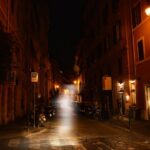
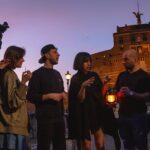
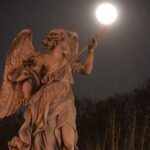
Castel Sant’Angelo: prison history, the Passetto di Borgo, and Saint Michael’s plague stop
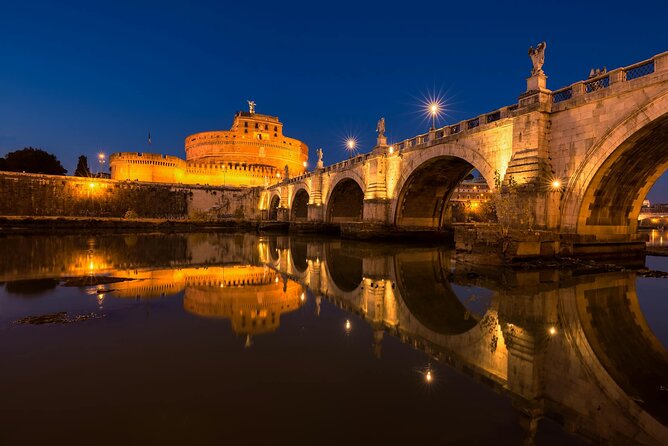
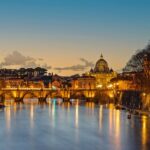
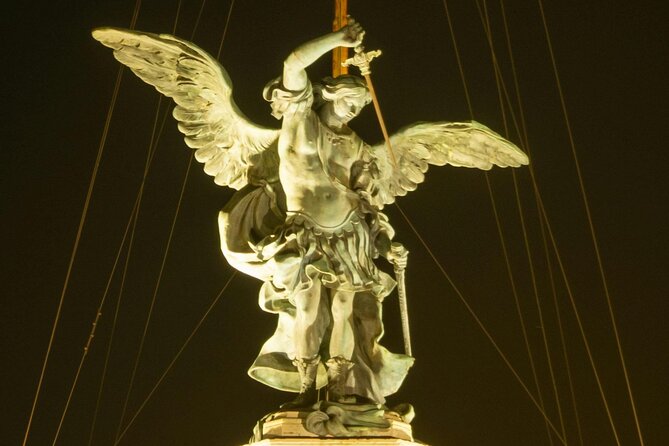
Castel Sant’Angelo is the star of the route, and the way the guide frames it is what makes this stop feel different. You’ll spend about 12 minutes here, and the focus isn’t just the postcard views. You’ll hear how the fortress functioned as a prison and place of punishment, including the executions that took place there.
Then comes the escape story, tied to the Passetto di Borgo—the fortified corridor that connects the castle to the Vatican. This isn’t an abstract footnote. It’s the practical idea that in dangerous times, power needed an out-of-the-way route. Even if you don’t care about political history, the corridor adds a real sense of urgency and secrecy to what you’re looking at.
The guide also connects the fortress to its surroundings, including the Tiber River, which has long played a role in Rome’s defense and development. Night makes that connection easier to feel, because the river area and fortress shape the city’s line of movement.
Finally, you’ll learn the story behind the name: Saint Michael the Archangel. In 590 AD, an apparition on top of the castle is said to have signaled an end to a devastating plague. Whether you view it as legend or belief, it adds a layer of meaning to the building. It explains why this place sits at the crossroads of fear and faith, punishment and protection.
Via Giulia: Pope Julius II’s Renaissance street and the joy of not getting lost
After the fortress, you shift to elegance with Via Giulia. This is a street that makes Rome feel designed, not just discovered. You’ll spend about 5 minutes here, and the guide highlights that Pope Julius II designed it in the early 16th century as a direct route through the city.
That detail helps you notice what you’re seeing. Via Giulia isn’t just pretty architecture lined up along a walk; it’s an example of how Rome was reshaped during the Renaissance—straightening movement, channeling visibility, and creating a sense of ordered urban life.
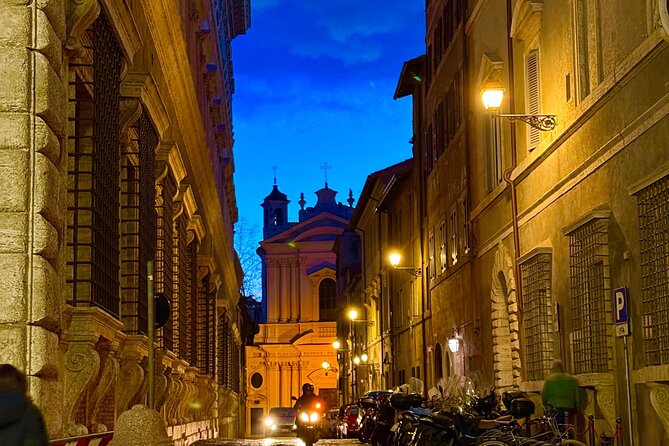
At night, the street’s Renaissance palaces and churches feel less like museum labels and more like a living corridor. You’ll also get the benefit of moving through with a guide instead of trying to hunt down viewpoints alone. You can admire the facades and also spot the kinds of courtyards and hidden spaces that many visitors miss when they walk quickly with their heads down on maps.
Piazza Farnese and Palazzo Farnese: ancient bathtubs turned fountains
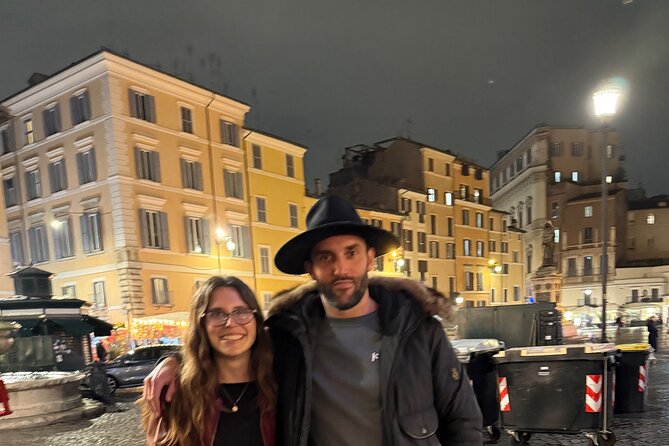
Piazza Farnese gets about 10 minutes, but it lands the point of contrast. This is where Rome’s softer side shows up—grand, composed, and quietly theatrical after dark.
The square is known for Palazzo Farnese, a large Renaissance palace associated with major architecture names, including Michelangelo. You don’t need to be an architecture nerd to feel why people pay attention to this area. The scale is what hits. At night, the lighting helps the geometry read clearly, and you can actually take in the façade lines instead of rushing past in daylight crowds.
The other standout detail is the fountains. You’ll see two large fountains made from ancient Roman bathtubs. That’s one of those Rome facts that turns into a little surprise in your brain: old everyday objects re-used to make something new and formal. It’s a reminder that Rome keeps recycling material and meaning across centuries.
A practical note: in a small square, you can still get packed at night. If you prefer space, stand where you can see the fountains without forcing your way deeper into the group.
Passetto del Biscione: the covered medieval passage with fresco remnants
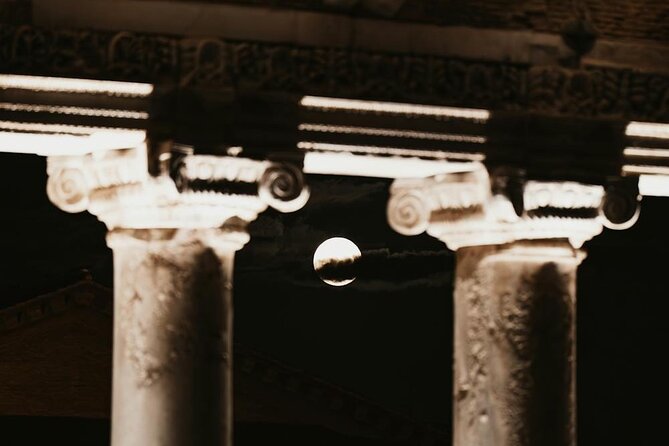
Right near Campo de’ Fiori, you’ll stop for about 12 minutes at Passetto del Biscione, located near Piazza del Biscione. This is a small, hidden square, which is part of why it works on this tour. The crowds thin here, and the stories feel closer to the ground.
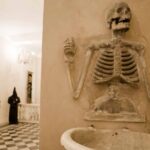
The attraction is the passageway itself: a covered passage with remnants of medieval frescoes. That combination—coverage plus leftover paint—creates a built-in mystery. You’re not just hearing about the past. You’re standing next to a physical reminder that these walkways weren’t always open to everyone.
This part of the tour is also where the phrase haunted history makes sense. It’s not about jump scares. It’s about walking through spaces that still show traces of earlier lives and earlier beliefs. If you’re the type who enjoys “how did people move, hide, and survive?” you’ll like this stop.
One consideration: since it’s a covered or enclosed passage area, you might want to keep your phone light off or low. Night photos are nice, but you don’t want to blast the group with bright screens while people are listening.
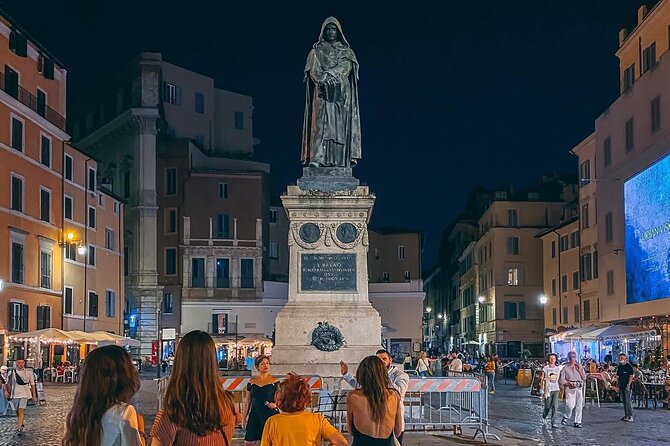
Campo de’ Fiori at night: the market square turns darker with Giordano Bruno
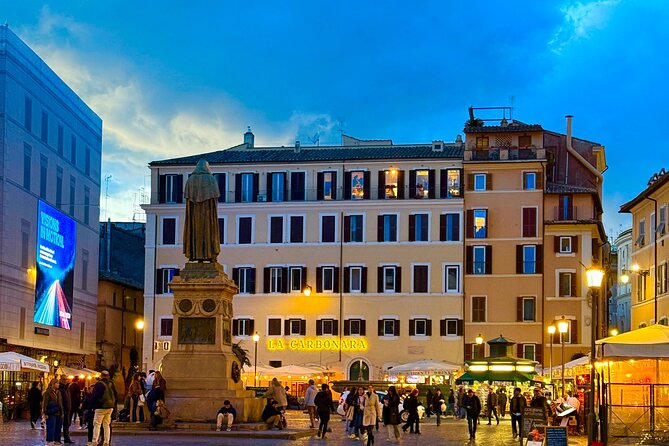
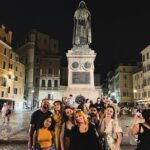
Your final major stop takes about 20 minutes at Campo de’ Fiori. During the day, it’s famous for a daily market selling produce, flowers, and local goods. At night, that same square becomes a social hub with restaurants and bars.
But this is the tour’s darker landing point. In the center stands a statue of philosopher Giordano Bruno, and the guide connects it to a darker past, including public executions associated with the square. This detail changes how you read the nightlife. You can still enjoy the energy of the bars and the chatter, but you also understand that the square’s role in Rome was not always cheerful.
Because you end here, you have a built-in option: grab a drink or keep exploring on your own. Just remember food and drink are not included. The tour is a guided story-walk, not a pub crawl. The upside is you get control over what you eat and where, which often matters more in Rome than people expect.
Price and value: what $4.58 gets you in Rome after dark
At $4.58 per person, this is one of the more budget-friendly ways to pay for a guide in central Rome. The real question isn’t the low price; it’s whether the time and storytelling justify it. In this case, you’re paying for:
- A guided night route through several well-known locations
- Context that ties those places together, especially the prison/punishment and escape-route threads
- A manageable walking format that works after a long day
The duration is about 1 hour 20 minutes, which is long enough to feel like you did something, but short enough that you don’t lose your whole evening. That matters in Rome, where transport, crowds, and navigation can eat hours quickly.
Also, the tour is described as a “haunted tour with a local guide.” For me, that signals the value isn’t in special effects. It’s in the local storytelling—turning geography into narrative.
One more subtle value point: the fact that this is commonly booked well in advance (on average 56 days) suggests the tour is filling demand for a specific kind of evening plan: short, guided, and different from the usual daytime checklist.
Guide style matters: Emilie, Mike, and the conversational pace
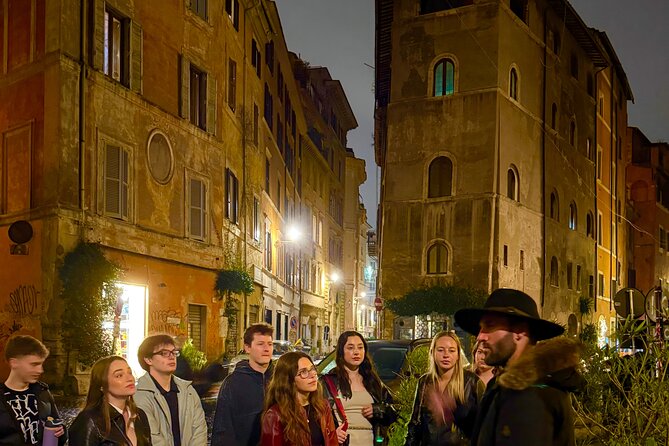
A big part of why this tour works is the tone of the guide. Names matter here, because you can understand what kind of experience you’ll get.
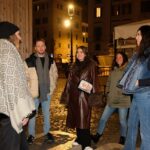
If you happen to meet Emilie, the style described is very knowledgeable and strongly story-driven, with lots of info packed into the time. If you get Mike, expect a more casual, conversational approach, the kind that feels like someone is showing you their favorite corners instead of running through a rigid script.
Either way, the best trait you’ll want in a night tour is clarity. Dark streets can make crowds feel stressful and directions harder. A guide who keeps the pacing smooth and the explanations focused can turn the walk into a relaxing evening.
And the tour’s small footprint by foot is a practical blessing. Rome is famous for making you walk farther than you think. Here, the stops are close enough that you can enjoy the night without constantly recalculating your route.
Who should book this Rome After Dark walk
I’d book this if you want:
- A night plan that doesn’t require tickets for timed entry
- A way to see major Rome landmarks with darker context instead of the usual highlights-only approach
- An evening activity that fits after you’ve already done a lot of walking
- Stories that connect fortress, power, and punishment with real street locations
You might skip it if:
- You want a long, multi-hour deep dive or multiple transport hops
- You’re looking for an explicitly staged horror experience rather than history-with-spooky-threads
- You hate night walking, even when the route stays fairly compact
Should you book Rome After Dark Mysteries, Myths and Haunted History?
Yes, if you want a low-stress evening that mixes beauty and bite. The price is hard to beat, and the format is built for a satisfying night without wrecking the rest of your schedule. The standout is how Castel Sant’Angelo and Campo de’ Fiori are used as bookends, with Renaissance Rome in between so the whole experience feels like a real journey through different moods of the city.
If you’re the kind of person who enjoys “why is that place remembered this way?” you’ll get a lot from it. Bring comfortable shoes, keep your phone light modest, and treat the stories as the main attraction—not just the buildings.
FAQ
How long is the Rome After Dark tour?
It lasts about 1 hour 20 minutes.
What time does the tour start, and where does it meet?
The tour starts at 9:00 pm. The meeting point is Via del Banco di Santo Spirito, 25, 00186 Roma RM, Italy.
Where does the tour end?
It ends at Piazza Campo de’ Fiori (P.za Campo de’ Fiori, 00186 Roma RM, Italy).
Is the tour offered in English, and do I need a ticket?
The tour is offered in English, and you’ll use a mobile ticket.
Is food or drink included?
No. Food or drink is not included, even if the tour passes by bars in Campo de’ Fiori.
How big is the group?
The tour has a maximum of 100 travelers.
What is the cancellation policy for a full refund?
You can cancel for a full refund up to 24 hours before the experience start time. If you cancel within 24 hours, the amount paid is not refunded.