REVIEW · ROME
Haunted Rome: Eternal City Night Walking Tour
Book on Viator →Operated by Republic Experiences · Bookable on Viator
Rome is best heard after dark. This Haunted Rome night walk turns the centro storico into a step-by-step story of crime, punishment, and rumor, paced for a 2-hour stroll at evening hours. I like how the route hits huge-name spots like Campo de’ Fiori and Castel Sant’Angelo while the streets feel calmer. Guides such as Simon and Antonio are often praised for being entertaining and easy to follow.
I also like that the scares lean more toward history than jump-scares. You’ll pick up street-level details, like the madonelles (little madonnas) and why cosmetics and execution stories show up on Via Giulia and nearby lanes. It’s the kind of walk where you notice Rome differently the moment you leave the next corner.
One consideration: Rome streets can get loud, and the tour pace can feel tighter if you hit longer breaks or harder-to-hear moments. If you like every word to land, stand where you can clearly see and hear your guide.
In This Review
- Key things you’ll notice
- A Night Walk Through the Centro Storico’s Darkest Corners
- Campo de’ Fiori: Where the Night Starts With Real-City Edginess
- Piazza Farnese Parties With a Price Tag
- Madonelles and Street-Corner Warnings in Via del Mascherone
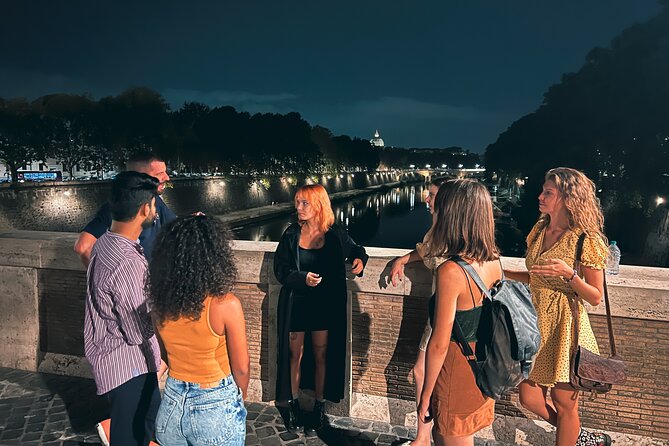
- Ponte Sisto: An Old Bridge With a Brutal Reputation
- Fontana del Mascherone: The Fountain You Should Treat Like a Warning
- Churches With Human Remains: Santa Maria dell’Orazione e Morte
- Via di Monserrato and the Idea of a Haunted Apartment Block
- Santa Maria in Monserrato degli Spagnoli: Scandals You Can Almost Hear
- Via Giulia’s Cosmetic Curse: When Beauty Turns Dangerous
- Via dell’Arco dei Banchi and Mastro Titta’s Executioner Legend
- Castel Sant’Angelo at Night: Angels Over Warnings
- Price and Timing: Is $17.97 Good Value for Your Evening?
- Who Should Book This Haunted Rome Night Walk
- A Quick Guide to Making It Easier (and More Fun)
- Should You Book Haunted Rome: Eternal City Night Walking Tour?
- FAQ
- How long is the Haunted Rome night walking tour?
- Where does the tour start and where does it end?
- What language is the tour offered in?
- Is this tour ticketed on a phone?
- How big is the group?
- Are there any separate admission tickets needed for the stops?
- Is the tour run in bad weather?
- Can I get a refund if my plans change?
Key things you’ll notice
- Small group (max 20) makes it easier to ask questions and stay together.
- Evening timing helps you dodge daytime heat and some of the worst crowds.
- Dark history, not horror movie jumps: crime, executions, and eerie religious symbolism.
- Specific stops with names like Ponte Sisto, Via Giulia, and Castel Sant’Angelo keep it anchored.
- Guides who project well (Simon, Antonio, Ana, Domenica, Sarah are frequently mentioned) help the stories come through.
A Night Walk Through the Centro Storico’s Darkest Corners
This is a Rome tour built for people who want more than monuments on autopilot. Instead of just pointing and moving on, it strings together a “why is this here?” chain of stories as you walk. Expect spooky themes: death, scandal, and punishment—handled as history you can actually picture.
The best part is the timing. Rome at night cools down, and the streets feel less like a checklist. You still see famous places, but you don’t feel swallowed by daytime crowds. That makes the experience feel like your own mini itinerary through the old center.
You’re walking through neighborhoods you’ll likely pass anyway, so the value comes from context. It’s not just where things are—it’s why these spots became associated with tragedy, fear, and legend. You start noticing details like symbols on street corners and the “don’t do that” warnings that show up in stories.
You can also read our reviews of more tours and experiences in Rome.


Campo de’ Fiori: Where the Night Starts With Real-City Edginess
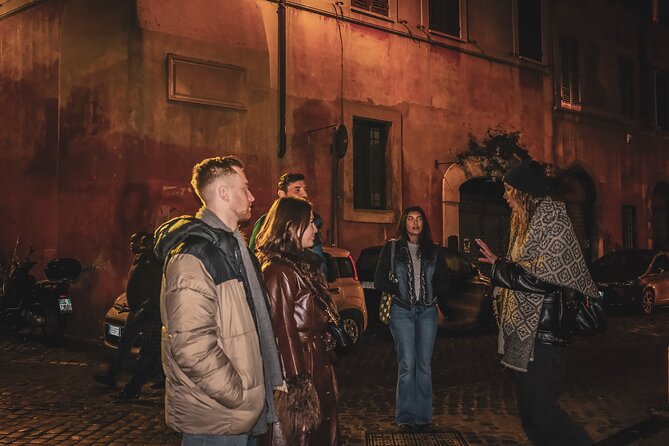
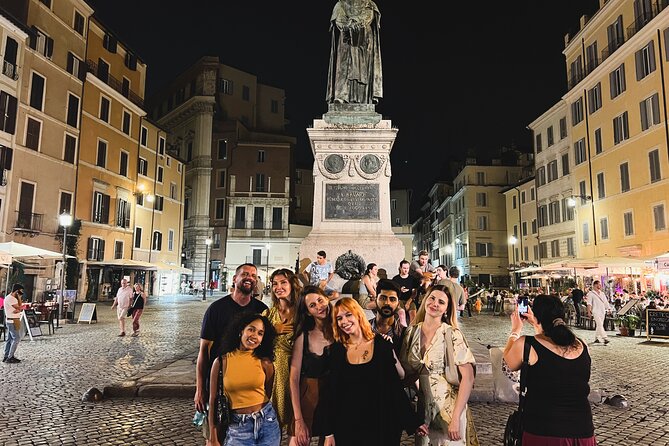
You begin in Campo de’ Fiori, one of Rome’s best-known piazzas. Today it’s lively, full of bars and restaurants. The twist is that this same square has long been tied to death and execution history, which makes the location hit differently after dark.
This is a strong opening stop because it’s a mood-setter. You’re not starting in some quiet side street. You’re starting in the middle of the city’s social life, then pulling back the curtain on the darker layer underneath.
If you’re the type who likes to understand a place before you photograph it, this start helps. It gives you a framework for how the tour will keep reframing what you thought you knew about Rome.
Piazza Farnese Parties With a Price Tag
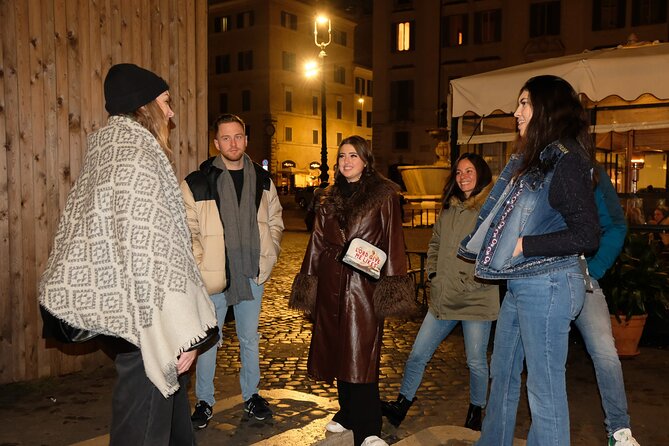
Next comes Piazza Farnese, which has its own “good times, bad ending” energy. The stories here focus on wealthy entertainment and the consequences that followed. It’s a reminder that power in Rome often came with a paper-thin layer of safety.
In a normal daytime walk, you might just see the square as pretty stone and café tables. On this tour, you get the human side: who had the influence, who paid the cost, and how quickly fortune could flip.
This stop is brief, but it matters. It keeps the tour from turning into only gruesome details. You get a mix of luxury, fear, and the sense that danger was part of the city’s social life, not only its crime scenes.
Madonelles and Street-Corner Warnings in Via del Mascherone
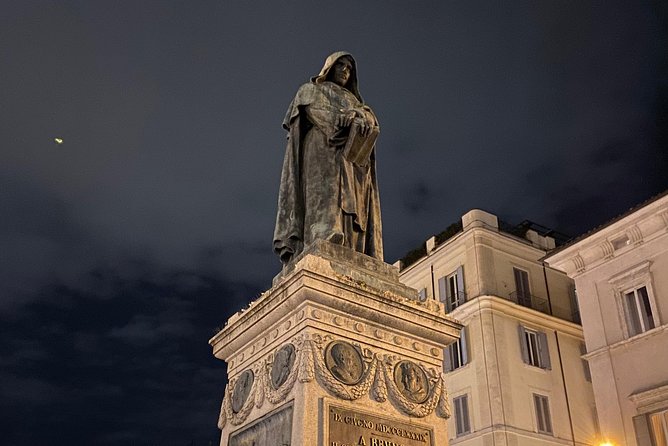
As you move into lanes like Via del Mascherone and Vicolo dei Venti, the tour shifts into street-level storytelling. You’ll learn about madonelles, small devotional images placed around the city. In these stories, they’re not just religious art. They’re tied to an idea of protection—especially as crime stoppers.
This section is where the walk gets more personal. You’ll start looking at Rome’s corners the way locals do, noticing what’s placed there and why it might have been meant to watch over daily life. It’s also the part that teaches you a simple habit: when you see a niche image, lantern, or marker, stop. Ask what the symbol is guarding.
One practical note: narrow streets can amplify noise. Stand where you can keep your guide in view, because hearing is part of the magic here.
Ponte Sisto: An Old Bridge With a Brutal Reputation
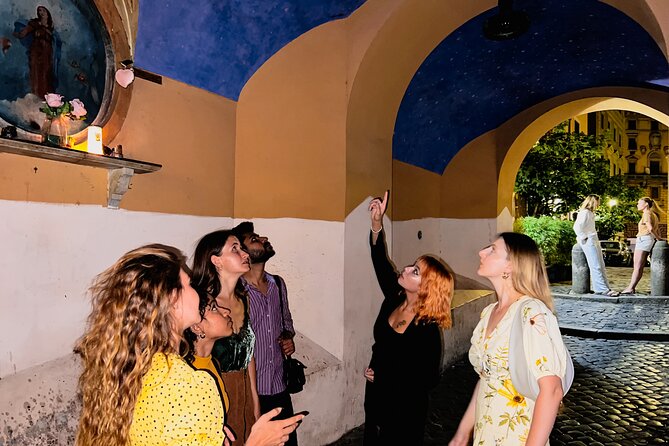
At Ponte Sisto, you’re on one of Rome’s older bridges, and the stories lean grim. The past described here includes tragic accidents, power struggles, theft, and suspicious deaths. It turns a simple crossing into a timeline of risk and conflict.
Bridges are great for this kind of tour. They force you to move from one side to another, so your brain naturally logs the change in setting. The guide uses that motion to build a sense of “this place has seen consequences.”
Don’t expect this to feel like a film scene with ghosts floating around. It’s more like crime history with atmosphere. If you like learning the darker reasons certain spots became infamous, you’ll enjoy this part.




Fontana del Mascherone: The Fountain You Should Treat Like a Warning
The next stop brings you to Fontana del Mascherone, and the message is simple: don’t drink from Rome’s deadliest fountain. Even if you know fountains are just fountains, the story frames it as a danger signal.
That’s the fun trick of this tour. It takes an ordinary street object and makes you think about risk, rumors, and how fear spreads. You’ll walk past water features later in your trip with a new level of skepticism.
This is also a good “pause point.” It gives your feet a moment and gives your brain a moment to absorb what you’ve learned about how legends latch onto physical places.
Churches With Human Remains: Santa Maria dell’Orazione e Morte
One of the standout stops is Chiesa di Santa Maria dell’Orazione e Morte, a church tied to the theme of mortality. You’ll hear about its 17th-century decoration involving human remains, and the idea behind it: a hard reminder that death is always nearby.
This isn’t horror for entertainment’s sake. It’s a religious and cultural message delivered with shocking literalness. If you like history that uses symbols—just not the comfortable kind—this is the stop you’ll remember.
If you don’t love grim details, you might find this part intense. It’s not scary in a Hollywood way, but it is visually and emotionally heavy in theme. Go in knowing the tour isn’t only “ghost stories.” It’s also about how Rome processed death.
Via di Monserrato and the Idea of a Haunted Apartment Block
On Via di Monserrato, the stories shift to a place many people associate with hauntings: an apartment block. You’ll hear why it’s considered one of the most haunted areas of Rome and how the legend grew around those walls.
This part works well because it’s so specific. Instead of vague “this is haunted,” you get a named location and a reason the story sticks. It feels like a local rumor made permanent by repeating details across generations.
Also, it changes the pace. After bridges and church symbolism, this is more “human scale.” You picture daily life happening inside a building that carries a darker reputation.
Santa Maria in Monserrato degli Spagnoli: Scandals You Can Almost Hear
Then you reach Chiesa di Santa Maria in Monserrato degli Spagnoli, where the tour leans into scandal. The stories here are described as dramatic, and the vibe is almost like a scripted drama.
Even if you’re not into gossip history, this stop adds variety. It pulls the tour back toward people—relationships, intrigue, and the kind of secrets Rome is known for. You’ll see the church as more than an architectural stop. It becomes the setting for a story that people kept repeating because it was irresistible.
If your goal is to understand why Rome’s past feels theatrical at times, this stop helps.
Via Giulia’s Cosmetic Curse: When Beauty Turns Dangerous
Via Giulia is where you get an iconic “wait, really?” lesson. The tour connects the street to a beauty shop past and the idea that cosmetics can kill. It’s one of those stories that sounds unbelievable until you realize the point: old-world medicine, beauty trends, and danger often shared the same ingredients and the same desperation.
This is a smart stop for travelers. It teaches you that Rome’s dark side isn’t only executions and graveyards. It also shows up in everyday choices—what people put on their faces and what they believed would protect them.
If you enjoy true-crime vibes or medical-history vibes, you’ll likely enjoy this leg the most. It’s creepy in a different way.
Via dell’Arco dei Banchi and Mastro Titta’s Executioner Legend
On Via dell’Arco dei Banchi, the tour points you toward a charming house with an unsettling backstory. You’ll hear about Mastro Titta, Rome’s infamous executioner, and how the legend ties to this area.
This is one of the tour’s most “character-driven” moments. Rome becomes a set of recurring players: officials, craftsmen, enforcers, and those forced to live under their rules. When you connect a name to a street address, the city feels more real.
This is also a good moment to ask questions—guides often do well here, since the topic is naturally full of “how did that happen?” details.
Castel Sant’Angelo at Night: Angels Over Warnings
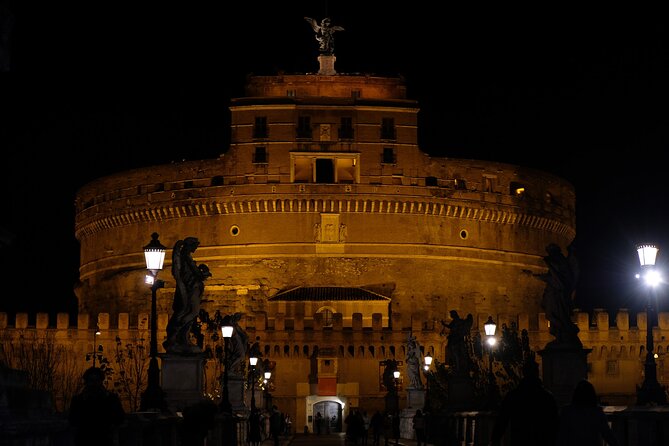
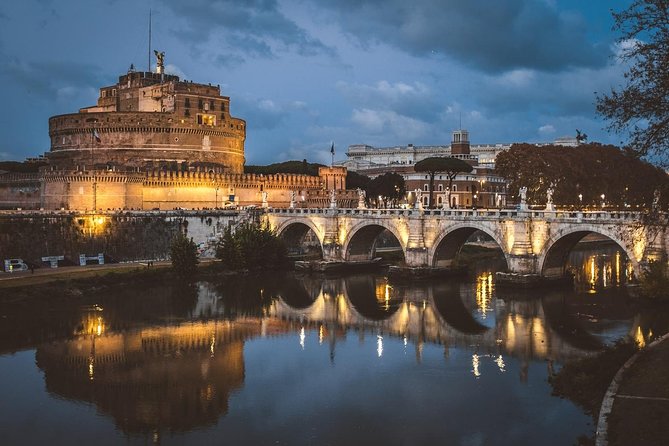
The tour ends at Castel Sant’Angelo on Lungotevere Castello. Here the story links back to punishment and public warning. The bridge and its location were used to expose executed bodies as a lesson to sinners. Today, the mood is different, with statues of angels and a shift toward the Cenci family’s tragic ending.
This finale lands because Castel Sant’Angelo is already dramatic. Add the darker backstory, and it becomes more than a pretty fortress. You feel the weight of why people feared certain places—and why Rome kept returning to death as a public message.
If you’re doing this early in your trip, Castel Sant’Angelo also works as a compass. You start to recognize that Rome’s most famous landmarks often have a second life as story locations.
Price and Timing: Is $17.97 Good Value for Your Evening?
At $17.97 per person, this tour is priced for value, especially if you love history that goes beyond the usual facts. The total time is listed as about two hours, and the pace depends on group flow and how often you pause.
My practical take: you’re paying for (1) a structured walk through the centro storico, and (2) guided storytelling that connects street names to meaning. You’re not buying tickets to major museums. So the main “cost” is your time on your feet.
Do note the pacing feedback you might encounter elsewhere: a couple of longer breaks can make the experience feel shorter than expected. If you’re the type who hates losing time, plan for that. Use the early phase of the evening to get settled, and keep an eye on where you are in the group so you don’t fall behind.
Street noise is another real factor. One guide may project well. Another may work with the natural volume of the streets. If you want to hear everything, position yourself where you can clearly see and listen without craning over crowds.
Who Should Book This Haunted Rome Night Walk
Book this if you want a small-group evening stroll that teaches you how to read Rome’s streets. It’s especially good for first-timers who want a darker, more human version of the city’s landmarks.
It also fits families, including kids who can handle scary themes without needing monster effects. The mood is often more “cool and spooky stories” than “ghost jump-scares,” which makes it more accessible for a wider range of people.
If you hate grim details, be cautious. This tour includes human-remains church symbolism and execution-linked stories. It’s not gore-heavy, but the theme is hard to avoid.
Best match:
- History lovers who like crime and punishment stories
- Travelers who enjoy evening experiences over daytime heat
- Anyone who wants to understand what makes the centro storico feel haunted on an emotional level
A Quick Guide to Making It Easier (and More Fun)
Wear comfortable shoes. This is a walking tour, and the route moves through several distinct areas of central Rome.
Bring a charged smartphone. You’ll use a mobile ticket, so battery matters. Also, if you’re sensitive to noise, plan to stand closer to your guide during stops. The streets can compete with the narration.
Finally, go with a flexible mindset. This kind of tour is part storytelling, part wandering. Even when the schedule is tight, the goal is that you leave with names, images, and street-level meaning.
Should You Book Haunted Rome: Eternal City Night Walking Tour?
Yes, if you want an affordable, night-timed way to learn Rome’s darker side without getting stuck in big daytime crowds. The route connects famous locations—Campo de’ Fiori, bridges, churches, and Castel Sant’Angelo—to stories you’ll likely miss on a self-guided walk.
Skip it (or at least be selective) if you want pure ghosts and jump-scares. This is more crime-history and eerie symbolism than spooky theater. Also, if you’re very strict about hitting a precise two-hour window, you might want to build a little buffer into your evening plans.
If your priority is value plus atmosphere, this is one of the easiest “yes” decisions you can make for an evening in Rome.
FAQ
How long is the Haunted Rome night walking tour?
The tour lasts about 2 hours.
Where does the tour start and where does it end?
It starts at Piazza Campo de’ Fiori (P.za Campo de’ Fiori, 00186 Roma RM, Italy) and ends at Castel Sant’Angelo (Lungotevere Castello, 50, 00193 Roma RM, Italy).
What language is the tour offered in?
The tour is offered in English.
Is this tour ticketed on a phone?
Yes, it uses a mobile ticket.
How big is the group?
The tour has a maximum of 20 travelers.
Are there any separate admission tickets needed for the stops?
The listed stops show admission ticket as free.
Is the tour run in bad weather?
The experience requires good weather. If it’s canceled due to poor weather, you’ll be offered a different date or a full refund.
Can I get a refund if my plans change?
Cancellation is free up to 24 hours in advance for a full refund.