REVIEW · LONDON
Private Ghosts and Gore Walking Tour of London
Book on Viator →Operated by Tours Of The UK · Bookable on Viator
London gets spooky after dark. I like that this is a private ghost-and-gore route with tight, story-driven stops, and I especially like how each location is tied to a specific reason for the haunting. One watch-out: the pacing is fast, with about 5 minutes per stop, so it is not the tour for slow wandering and long inside-the-church time.
I went in expecting scare stories. I got that, but the real hook was our guide Michael, who brings the historical thread through the macabre so the city feels logical, not random. You also end the walk near Farringdon Station, which makes the whole thing easy to plug into a night out.
Below is the practical version of what you can expect, stop by stop, plus who this works best for and whether the price makes sense for your group.
In This Review
- Key highlights if you like your London with a chill
- How this private night walk feels in real life
- Starting at the Monument and getting oriented fast
- St Magnus, Cornhill devils, and the grave that points back
- From Scrooge to the Black/Bank Ghost at Bank
- Paternoster Royal ratter and Jimmy the Mummy
- Haunted pubs, a cursed church, and orb-friendly street corners
- Plague pits, Greyfriars ghosts, and Temple Bar’s severed-head legacy
- Newgate’s bones and the Viaduct Tavern’s ghost Fred
- Old Bailey, the execution bell, and Cock Lane’s big ending
- Pye Corner body-snatching and West Smithfield’s brutal executions
- St Bartholomew the Great, the Rising Sun, and the Charterhouse plague pits
- Price and value when your group can be up to 15
- Who should book this London ghosts and gore tour
- Should you book?
- FAQ
- How long is the Private Ghosts and Gore Walking Tour of London?
- What is the price and group size?
- Where does the tour start and end?
- Is the tour private?
- What language is the tour offered in?
- Is it accessible for wheelchairs and strollers?
- What kind of ticket do you receive?
- Are service animals allowed?
- What is the cancellation window?
Key highlights if you like your London with a chill
- Private group up to 15: more back-and-forth questions and a calmer pace than a big walking crowd
- 2 hours, stop-by-stop stories: about 5 minutes each, so you cover a lot without spending all night in one place
- City of London route: churches, pubs, and execution-area streets, all in a tight, walkable pocket
- Michael’s historian style: the scares come with context, not just spooky sound effects
- Free entry at stops: each stop includes admission ticket free, so you are not hit with add-on fees
- Real-world clues: orbs, plague pits, and famous landmarks you can still see today
How this private night walk feels in real life
This tour is built for the City of London at night: a compact area where you can connect old stories to real buildings without getting lost. The experience is private, so you are not squeezed into a mass group. That matters because ghost tours often live or die on your ability to hear the guide, especially when you are standing in windy churchyards and narrow lanes.
The duration is about 2 hours, with each stop timed at roughly 5 minutes. That speed is part of the design. You get a steady stream of stories across multiple centuries, but you are not meant to linger. If you want to sit, read plaques slowly, and take your time inside churches, plan to add extra daytime sightseeing later.
The guide’s job here is also practical. You are walking with direction, which helps you move through the area confidently and follow the route without turning the night into a scavenger hunt. The tour uses a mobile ticket, and it finishes close to the Elizabeth Line entrance at Farringdon Station, so you can grab a train or continue walking easily.
You can also read our reviews of more tours and experiences in London.


Starting at the Monument and getting oriented fast
The walk starts at the Monument to the Great Fire of London, at Fish St Hill in the EC3R area. It is a strong beginning point because the Monument anchors you in the city’s geography. From there, the route threads through the older street network of the City, which is exactly where London’s most story-heavy hauntings tend to cluster.
One smart thing about this style of tour: it gives you bearings in the first phase. Instead of starting deep in a churchyard and hoping you can find your way back later, you begin with a well-known reference point and then head into smaller lanes and courtyards.
As you move into the City’s religious buildings and historic streets, the tour also starts teaching you how to read the landscape. You begin to notice why one grave, one bell, one tavern door, or one courthouse wall becomes the focus of multiple legends. That makes the scares more meaningful because you are not just collecting spooky names.
St Magnus, Cornhill devils, and the grave that points back
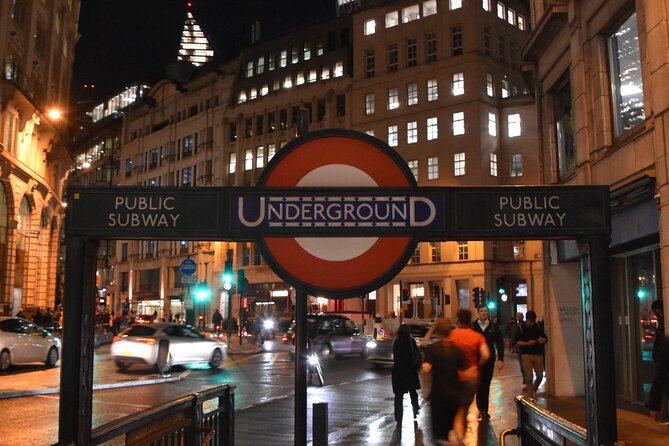
Stops 1 through 4 set the tone: religious spaces, short dramatic stories, and details that tie hauntings to specific people or events.
Stop 1: St. Magnus The Martyr is the opener, and it goes straight for the image of a shadowy figure haunting the church. You hear how, in 1951, a spiritual medium visited and revealed who the figure is and why it keeps pointing to one particular grave. The haunting here is not random. It is tied to obsession, and the story’s power comes from the idea that the haunting is stuck behind a demand that will never be fulfilled.
Stop 2: 54-55 Cornhill takes you just a bit out of the church world and into architecture-as-horror. The theme is devils in the details, and the story leans into the idea that designs and craftsmen can carry supernatural consequences. There is also a warning vibe: you should not cross an architect in London, even if your job title sounds like you should be fearless.
Stop 3: St Peter-upon-Cornhill Church brings literature into the mix. You visit the churchyard where Ebenezer Scrooge is said to be horrified by seeing his own grave in A Christmas Carol. From there, the guide connects London’s ghosts, ghouls, and gore to the fictional works shaped in this same city.
Stop 4: St. Michael’s Cornhill shifts to a devil-in-a-storm kind of story. It is brief, but it adds variety: not every haunting is about centuries of lingering sorrow. Some are about sudden days when the supernatural feels like it walked into London and caused trouble.
Drawback of this early stretch: if you are brand new to the City, some names and small street references may feel like a blur. The good news is the route is short between stops, so if you pay attention to the geography at the first few locations, it clicks fast.
From Scrooge to the Black/Bank Ghost at Bank
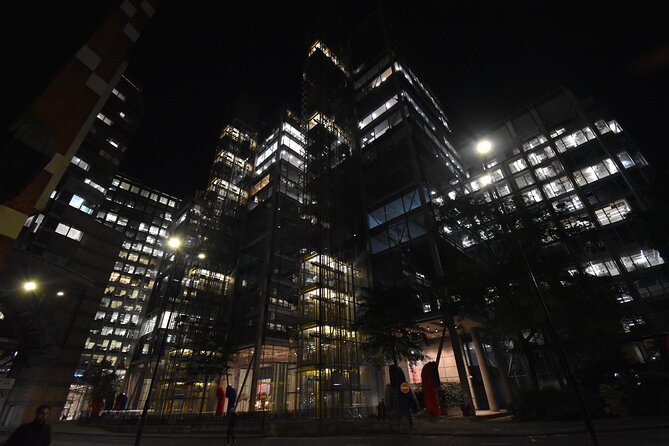
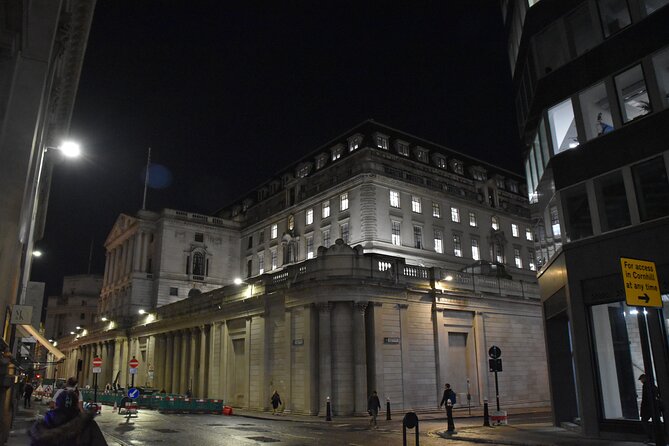
Stops 5 and 6 are where the tour leans hard into the Bank area and the idea of places that feel haunted because people are always passing through them.
Stop 5: St. Margaret Lothbury Church introduces a towering ghost linked to the Bank of England. The story centers on revenge for bones being disturbed, with the ghost said to rattle the guns of the Guards, stomp up stairs, and terrify the tellers. Whether you believe in ghosts or not, this kind of legend works because it turns institutional power into something that can be unsettled by one forgotten act.
Stop 6: St. Mary Woolnoth Church is one of the most famous legends on the route: the Black or Bank Ghost. The phantom is described as haunting Bank Station and the Bank of England area. The guide also brings in a specific moment from the legend involving a woman in black asking if you have seen her brother—another story detail that makes the myth feel like it has a script. You also hear about a horrible secret of the Bank Station Booking Hall, which is the kind of add-on that makes the area feel more layered than a regular commuter stop.
If you like modern landmarks paired with older folklore, this is your highlight stretch.
Paternoster Royal ratter and Jimmy the Mummy
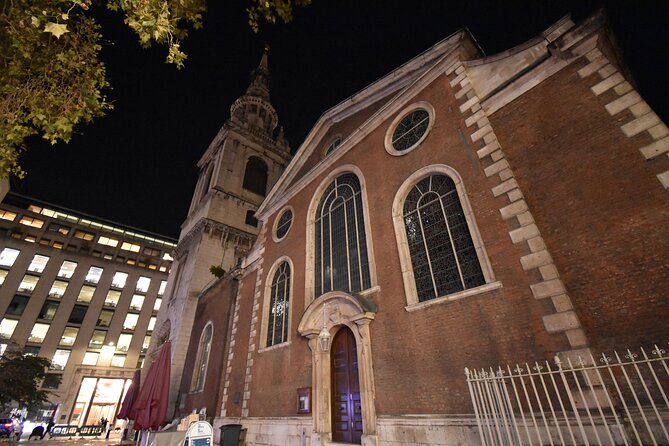
Stops 7 and 8 move the tone in a fun direction: cats, mummified remains, and a haunting that feels oddly human.
Stop 7: St. Michael Paternoster Royal Church centers on the Lord Mayor of London and a feline friend described as a ratter. The story says this ratter still roams between this location and the next. It is the kind of haunting detail that feels playful, like London folklore enjoyed slipping a wink into the darker themes.
Stop 8: St James Garlickhythe is the moment most people remember. In 1835, workers discovered a mummified body of an unknown person close to the church’s altar. The remains were placed in a display case and were on public display until about twenty years ago. Young children from the church would play with them, calling it Jimmy the Mummy. The legend says Jimmy still haunts the church and can be seen pointing to where he was buried.
This stop is worth your full attention because it shows how fear and humor can overlap in London history. The legend is creepy, but the origin story includes childlike play and Victorian-era display culture, which makes it more than just jump-scare material.

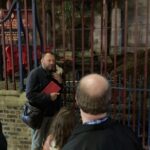

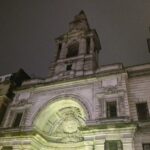
Haunted pubs, a cursed church, and orb-friendly street corners
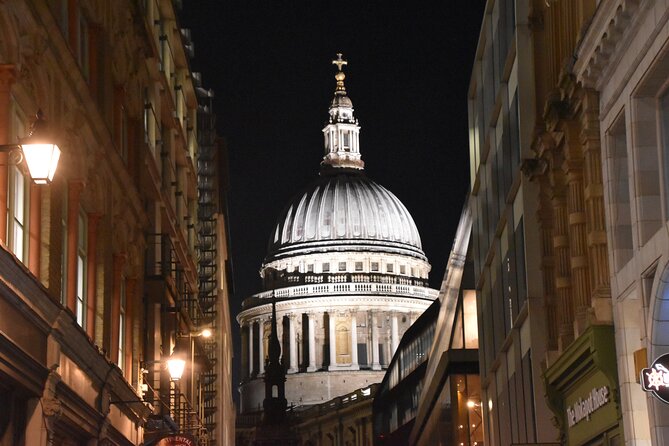
From Stop 9 to Stop 11, the tour enters the street-level London of pubs and iconic church bells, with death lore threaded right through daily life.
Stop 9: Williamson’s Tavern is described as one of the most haunted pubs in London. It is also cited as being at the center point of the City of London. The haunting history includes Lord Mayors of London, plus poltergeists and phantoms that are said to petrify police dogs. Expect stories with sensory cues: doors regularly bang, steps are heard, and there is only one way out—so the pub becomes a kind of moral maze.
Stop 10: St. Mary Le Bow Church is different: it is not framed as haunted but as cursed. You learn why this church is considered unlucky, including burnings, collapses, accidents, and murders and deaths tied to the site. It also comes with a cultural London detail: if you are born within the sound of the bells, you are a Cockney or a proper Londoner.
Stop 11: Noble Street takes you into older layers of the city. The area is linked with death from the moment the City was founded, and it connects to Roman and medieval walls, including part of the Roman wall and the medieval wall. The tour also points you toward the supernatural angle that London loves right now: orb photos and strange occurrences.
Practical tip: if you are camera-ready, this stretch is where you might feel tempted to take photos. The tour later repeats the orb theme at the plague-pit locations, so you can treat that as a running gag you try to win.
Plague pits, Greyfriars ghosts, and Temple Bar’s severed-head legacy
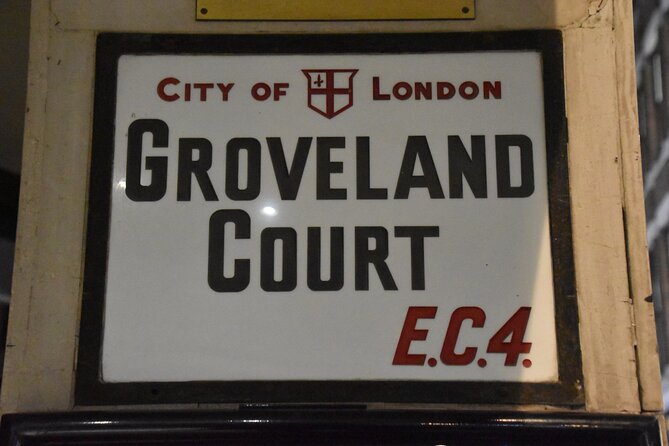
Stops 12 and 13 keep the plague and hauntings theme going, and Stop 14 ties it to public punishment and architecture.
Stop 12: St Anne & St Agnes Garden is built around plague pits below the church. You learn how plague shaped London, and you hear why orbs are still regularly seen and captured in people’s photographs. The guide encourages taking a picture here to see if you spot one of those mysterious objects.
Stop 13: Christchurch Greyfriars Church Garden expands the haunting cast. The ruins are said to be home to multiple ghosts: Queen Isabella with her lover in a rebellion story, a married couple who are constantly arguing, a religious prophetess, a monk, and a greyhound. This is a stop that feels like a mini-portfolio of London ghost legends, with different personalities attached to different corners of the ruins.
Stop 14: Temple Bar London brings in the most visible, headline-level horror: this gateway once stood as the main western entrance to the City and was linked with public display of severed heads. The story says traitors and criminals who met grisly ends had their heads placed on public display, and that the gateway is haunted by the souls of the condemned. Temple Bar is also associated with Sir Christopher Wren as the architect, giving the legend a real, recognizable name in the built environment.
If your idea of a good ghost tour includes history that sticks to stone and street design, this section does the job.
Newgate’s bones and the Viaduct Tavern’s ghost Fred
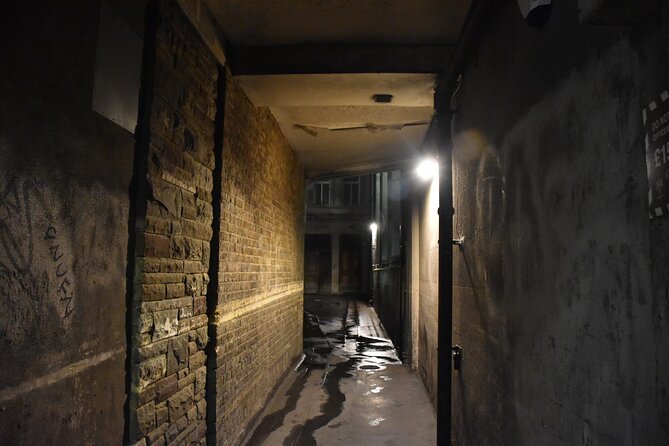
Now the route becomes a direct line into execution-era London. Stops 15 and 16 are about prisons, play spaces, and pubs that refuse to behave.
Stop 15: Amen Court is tied to Newgate Prison. From Amen Court, you can see remaining walls of the prison. The story includes a grim detail: children sing, run, and play over bones of condemned men. You also hear the unsettling angle that people living there may not know their homes are built on bones.
Stop 16: The Viaduct Tavern is about Fred, described as the most haunted pub in London. The ghost is said to like harmless yet confusing tricks, like flushing the ladies’ loos while it is being used. There is also a medium angle, with the identity of the naughty ghost questioned.
This is where the tour’s balance shows. You do not just get death and punishment. You also get small, human-scale mischief. That rhythm keeps the walk from turning into one long grim lecture.
Old Bailey, the execution bell, and Cock Lane’s big ending
Stops 17 through 19 are heavy, story-driven, and built to culminate rather than just repeat earlier legends.
Stop 17: Old Bailey is the Central Criminal Court, built on the old Newgate Prison site. The tour points out that people were hung in the street until 1868. You also hear about the Black Dog of Newgate, and the warning vibe is clear: if you see a large black dog in the area, you should update your will.
Stop 18: Holy Sepulchre Church brings in the execution bell. The bell would toll just before an execution at nearby Newgate Prison and Old Bailey. The guide explains the custom of ringing the bell and ties it to one of London’s infamous ghost stories, starting in the churchyard here and unfolding at the next location.
Stop 19: Cock Lane is where the Church Clerk story reaches its dramatic conclusion. The story involves major minds trying to save a man’s life, with a young girl acting as the main witness and channeling the spirit of a dead woman who insists she was murdered.
If you want the tour to feel like a narrative arc, this is the stretch where it finally becomes one continuous plot.
Pye Corner body-snatching and West Smithfield’s brutal executions
Stops 20 and 21 shift from courtroom suspense to street-level violence and the supply chain behind dissections.
Stop 20: Golden Boy of Pye Corner marks the furthest point west of the Great Fire of London. The statue is linked to a notorious pub and to stolen bodies displayed for doctors to buy and dissect at St Barts Hospital. You hear how resurrection men robbed graves, why fresh corpses were prized, and how that demand allegedly led to murders.
Stop 21: West Smithfield is framed as a legendary execution site. It connects to famous rebels like William Wallace and Wat Tyler, described as hung, drawn, and quartered. The tour also includes other brutal fates: burning at the stake and boiling alive. Then it adds a market detail—adjoining butcher’s market smell of meat, blood, and bone—to explain why the atmosphere would have been unbearable. It also brings the haunting to St Bartholomew’s (St Bart’s), describing poltergeists, a haunted lift, and late-night reports of strange goings-on from students working in labs and rooms.
This is where the gore-and-ghost promise feels most literal, because the stories connect bodies, institutions, and street sites you can still visit.
St Bartholomew the Great, the Rising Sun, and the Charterhouse plague pits
The final stretch, stops 22 through 24, moves from church founder legends to resurrectionist pub lore and then back to the deep scale of plague burial.
Stop 22: St Bartholomew the Great is haunted by its founder Rahere, who is said to still hobble around the building even after hundreds of years, with the limp explained as something that happened after 700 years of walking normally.
Stop 23: Rising Sun is another resurrectionist pub, described as home to one of the most disturbing and disturbed ghosts. The legend includes what the tour frames as a sex pest ghost, and it mentions that ladies on the tour might want to keep their wits about them as you learn why it is so difficult to find female staff willing to live on site.
That is a heavier topic, and it is worth noting as you decide if this is the right vibe for your group. If your idea of a ghost tour is more spooky than upsetting, you may want to talk your guide to set expectations.
Stop 24: The Charterhouse is the finish. The tour highlights large plague pits beneath the buildings, with an estimate of 50,000 people buried under the area. It also includes monks executed during the Reformation. The most seen ghost is a phantom monk praying, and there is also mention of a Duke who lost his head. The guide ends by mentioning modern science ideas as explanations for strange experiences, tied to the psychiatry school located at Charterhouse Square.
From a pacing point of view, the ending works well: you leave with the feeling that London’s ghosts live in both the old story-world and the modern attempt to explain human perception.
Price and value when your group can be up to 15
At $247.70 per group (up to 15 people), the price is best understood as a shared cost rather than a per-person ticket. For a group, you are buying a guided, private route through 24 stops with guiding fees included. For families or small friend groups, that can be good value because you are not just paying for the spooky bits. You are paying for a guide to connect each story to a location you can actually see, in one efficient loop.
The tour also covers a lot of terrain in two hours, with frequent short stops that keep the energy up. If you split the group cost, it can end up cheaper than trying to piece together your own night route and then paying for separate entries or separate guides.
It is also worth noting that this experience is booked about 45 days in advance on average, which is a hint that peak dates can sell out. If you are planning a tight London schedule, give yourself some breathing room.
Who should book this London ghosts and gore tour
This is a strong match if you love the overlap between history and folklore. You will probably enjoy it most if you like stories tied to specific buildings: churches, pubs, execution sites, and the kind of stone-and-street London you can still walk up to.
It is also a good pick for groups who want a private experience rather than chasing audio in a crowd. The fact that it is wheelchair and stroller accessible means it can work for more families than the average late-night walking show.
I would pick this tour over a slower museum day if you want orientation in the City of London at night and a guided route that keeps you moving. If your group is sensitive to gore-heavy themes or darker topics like execution sites and resurrectionist body trade stories, you may want to talk to your guide ahead of time about the tone you prefer.
Should you book?
Yes, if you want a guided night walk that mixes London landmarks with specific haunting stories, and you like the idea of covering many locations in a short, story-heavy format. The price makes sense when you bring friends or family, and the route ends near transit, which helps.
No, if you expect lots of quiet time at each stop, long interior museum-style exploring, or you prefer lighter ghost themes. This tour leans into curse, crime, plague pits, and executions, and it does it quickly.
If you want your London dark, guided, and efficiently paced, this is a tour worth booking.
FAQ
How long is the Private Ghosts and Gore Walking Tour of London?
The tour lasts about 2 hours.
What is the price and group size?
It costs $247.70 per group, with a maximum group size of up to 15 people.
Where does the tour start and end?
It starts at the Monument to the Great Fire of London, Fish St Hill, London EC3R 8AH, and ends close to the Elizabeth Line entrance to Farringdon Station on Cowcross St, London EC1M 6BY.
Is the tour private?
Yes. It is a private tour/activity, and only your group participates.
What language is the tour offered in?
The tour is offered in English.
Is it accessible for wheelchairs and strollers?
Yes. The tour is wheelchair and stroller accessible.
What kind of ticket do you receive?
You receive a mobile ticket.
Are service animals allowed?
Yes. Service animals are allowed.
What is the cancellation window?
Free cancellation is available up to 24 hours in advance for a full refund. Canceling less than 24 hours before start time is not refundable.