REVIEW · ROME
Ghosts Legends and Mysteries of Rome Walking Tour
Book on Viator →Operated by What About Tours · Bookable on Viator
Rome gets scarier after dark. This Ghosts Legends and Mysteries of Rome Walking Tour strings together iconic sights and unsettling stories on an easy, 1.5-hour route with an English licensed guide. You’re out at night with a small group, moving stop-to-stop along places tied to faith, punishment, and rumor.
I love how the tour focuses on story and atmosphere instead of acting like a Halloween show. You’ll get a set of specific, high-recognition landmarks like Castel Sant’Angelo and Ponte Sant’Angelo paired with the kind of grim lore that makes Rome feel human and dangerous. It’s also a solid option when your day is packed—this is short enough to fit after dinner.
One thing to consider: if you’re chasing jump-scares or paranormal thrills, this is not that. It’s a storytelling walk (told in a group), and it’s also tip-based, so budget for gratuity.
In This Review
- Key points
- A night walk that turns Rome’s landmarks into legends
- Meeting at Lungotevere Castello, 50 and ending by Campo de’ Fiori
- Castel Sant’Angelo: starting with Hadrian’s mausoleum and a prison past
- Ponte Sant’Angelo: Bernini angels watching the Tiber
- Via Paola: the house of the kindest executioner in Rome
- Arco dei Banchi: the Haunted Arch and a controversial exorcist
- Largo Ottavio Tassoni: Benvenuto Cellini’s scandalous legacy
- Vicolo della Moretta: Giulia Tofana and the witch stories
- Via di Monserrato: Corte Savella and Beatrice Cenci’s torture
- Via Giulia: Bramante’s street and Renaissance palaces
- Santa Maria dell’Orazione e Morte: Baroque death imagery
- Fontana del Mascherone: a grim mask and a kidnapping crime scene
- Campo de’ Fiori at night: market energy with Inquisition echoes
- How scary is it, really: storytelling beats paranormal
- Tips, tickets, and value: what $3.63 really buys you
- Who should book (and who should think twice)
- Booking rhythm: when demand is already high
- Should you book this Rome ghost-lore walking tour?
- FAQ
- FAQ
- What time does the tour start?
- How long is the Ghosts Legends and Mysteries of Rome Walking Tour?
- Where do I meet the tour, and where does it end?
- Is the tour offered in English?
- Is there a ticket cost for the stops?
- What is included in the tour price?
- Is this a tip-based tour?
- Is the tour suitable for children?
- How many people are in the group?
- Can I cancel for a full refund?
Key points
- 90 minutes, evening start at 8:00 pm, with an easy time-box for tight itineraries
- Licensed, English-speaking guides; names you may hear include Ivan and Simone
- Iconic stops in sequence: Castel Sant’Angelo → Ponte Sant’Angelo → Via Paola and more
- Dark lore with content notes: graphic information and CSA topics; not recommended for kids under 12
- Mobile ticket + small group size (max 24)
- Tipping matters since it’s tip-based (guides work for tips alone)
A night walk that turns Rome’s landmarks into legends
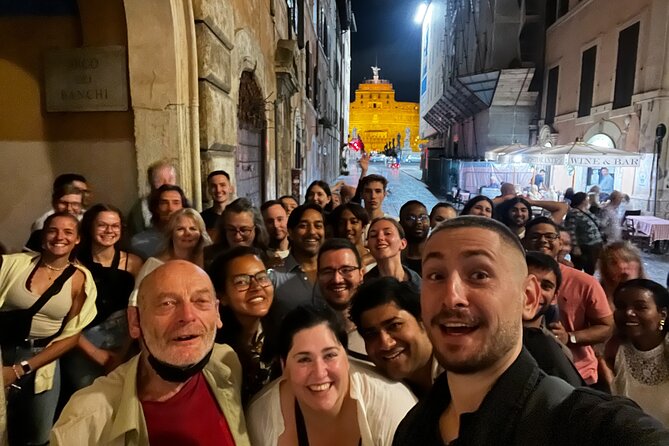
This is the kind of Rome tour that makes the city feel older, weirder, and more honest. One moment you’re looking at a grand monument on the Tiber; the next, the story shifts into executions, exorcists, witches, and Baroque symbols of death. The mix can feel like someone flipped the lights on the “other Rome” you don’t see in daytime photo stops.
What I like is that the tour stays practical. It’s not long, it’s not complicated, and you’re walking through an area you can orient around quickly once the route starts. Also, you’re not just collecting spooky moments—you’re getting a guided thread that connects why these places mattered.
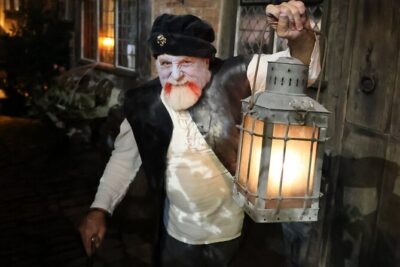
And yes, guides like Ivan and Simone are specifically mentioned for being fun, quick, and story-forward. Even when the tone turns dark, the delivery is meant to keep you engaged, not bored.
You can also read our reviews of more tours and experiences in Rome.


Meeting at Lungotevere Castello, 50 and ending by Campo de’ Fiori
The tour begins at Lungotevere Castello, 50, 00193 Roma RM and ends at Piazza Campo de’ Fiori, 00186 Roma RM. Starting by the river makes sense for a night route, since Castel Sant’Angelo is a natural anchor point and the walk can flow into the historic center.
The end at Campo de’ Fiori is handy. By day it’s famous for its market energy, and at night it’s the kind of square where you can grab a drink or keep walking without feeling stranded. Since Campo de’ Fiori is well connected (bus stops and taxi stands), your post-tour plans are usually easy.
Practical tip: arrive a little early. At 8:00 pm, Rome streets can be lively and signage can be easy to miss. Give yourself time to find the group so you don’t feel rushed the moment the stories start.
Castel Sant’Angelo: starting with Hadrian’s mausoleum and a prison past
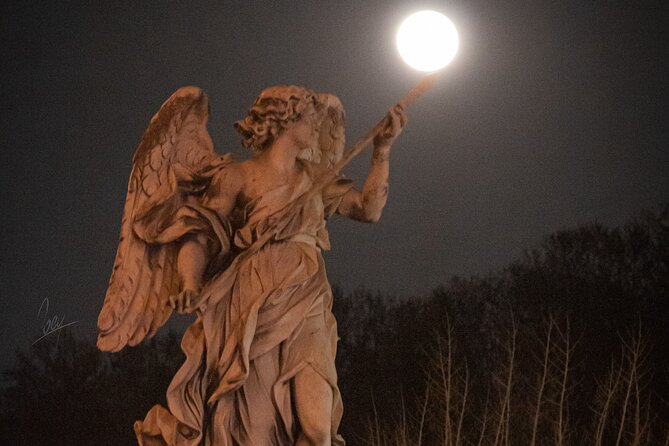
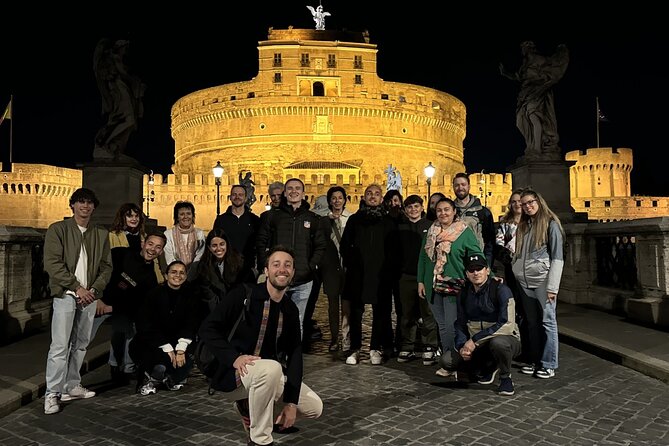
Stop 1 is Castel Sant’Angelo, originally built as Emperor Hadrian’s mausoleum and later used as a fortress, papal residence, and prison. That’s a big deal for an evening ghost tour, because the building already has layers—imperial, religious, and punitive—so your guide isn’t inventing horror from scratch.
You’ll spend about 15 minutes here, with admission ticket marked free. In other words, plan for viewing and storytelling time more than ticket lines. The cylindrical shape and its rooftop presence (including the Archangel Michael statue) are strong visual anchors, which helps when you’re listening to darker legends on a moving route.
What makes this stop work for the tour: it sets the tone with scale. Even if you don’t know the exact timeline, you can feel the shift from grandeur to confinement. Your guide uses that contrast as the first step in the night’s “Rome after dark” story.
Ponte Sant’Angelo: Bernini angels watching the Tiber
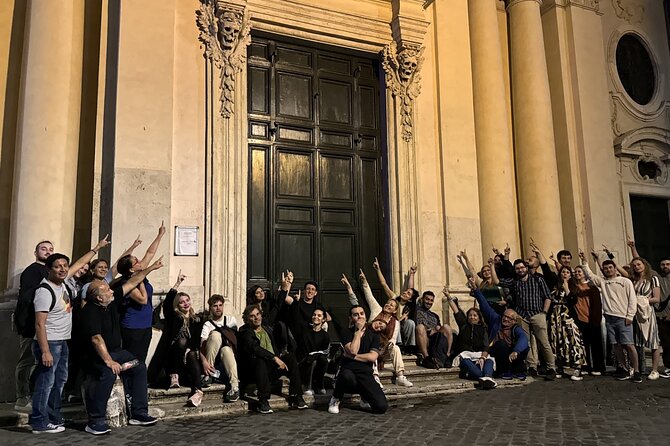
Next comes Ponte Sant’Angelo, the bridge that looms over the Tiber. The tour frames the bridge as a boundary between worlds, helped by the fact that it’s lined with ten angelic statues carved by Bernini and his students. Each statue holds symbols of Christ’s suffering, and at night, shadows can make everything feel more solemn.
This is a short stop (about 5 minutes in the schedule), but it’s a powerful one. A bridge is a natural storytelling stage: you’re not stuck staring at one wall, and you get a sense of movement while the guide explains the “why” behind the imagery.
Why it’s valuable: the tour uses art details as clues. Instead of saying “this is scary,” it points at specific symbols, so you leave with a reason the story sticks in your head.
Via Paola: the house of the kindest executioner in Rome
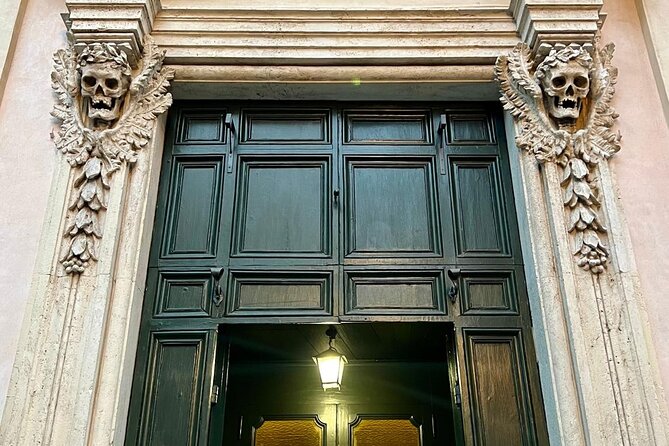
Stop 2 is Via Paola, described as the house of the kindest executioner in Rome. It’s a quick 10-minute stop, but it’s one of the clever ideas in the itinerary: it challenges the idea that cruelty always looks brutal.
This is where the tour leans into legend-as-history—how Rome turns human roles into moral stories. The name alone is built to hook you, and your guide uses it to show how the city’s institutions (justice, religion, punishment) got wrapped in folklore.
Potential drawback: if you want only “true ghost sightings” vibes, this stop is going to feel like dark character lore. But if you’re in Rome for stories that explain the city’s reputation, this is the kind of detail that makes the whole evening memorable.



Arco dei Banchi: the Haunted Arch and a controversial exorcist
Stop 3 is Arco dei Banchi, described as the Haunted Arch and tied to prayer for one of Rome’s most controversial exorcists. It’s only 5 minutes, so think of it as a rapid-fire legend stop that sets up later themes: witchcraft rumors, religious power, and the idea that some people were treated like gates between safe and unsafe.
This is where your guide’s pacing matters. Since you’re moving quickly, you’ll get the core story, but you won’t linger. If you’re hard of hearing or the street is noisy, try to stay near the guide so you catch the key points.
Largo Ottavio Tassoni: Benvenuto Cellini’s scandalous legacy
Stop 4 takes you to Largo Ottavio Tassoni, 319, tied to the 16th-century artist Benvenuto Cellini. The tour frames him as a genius, but also as someone notorious for serious crimes.
The time is 5 minutes, so again, it’s a “spot the story” stop. The value here isn’t building a biography in one evening; it’s seeing how Rome’s art and legends often share the same address.
If you’re the type who likes city tours that connect famous names with uncomfortable truths, this one clicks.
Vicolo della Moretta: Giulia Tofana and the witch stories
Stop 5 is Vicolo della Moretta, described as the haunted house of the witch Giulia Tofana, with stories tied to the Holy Inquisition. You’ll spend about 10 minutes here.
This stop is a clear shift toward folklore. It’s not just “people suffered”—it’s “Rome turned fear into narrative.” Your guide uses the alley setting as part of the mood, because narrow lanes make you feel like the story is happening in place.
If you’re sensitive to graphic or disturbing content, know that this tour includes graphic information and CSA topics and is not recommended for children under 12. I’d treat that as a real content warning, not a technicality.
Via di Monserrato: Corte Savella and Beatrice Cenci’s torture
Stop 6 is Via di Monserrato, pointing to Corte Savella, described as the only prison in Rome authorized to execute convicts inside its walls. This is also where the tour places the story of Beatrice Cenci, tortured before her execution.
Time on this stop is 5 minutes. That brevity can be both good and rough: good because you don’t drag out heavy details; rough because you can’t fully absorb everything if your mind needs a slower pace.
Still, the stop matters because it shows you that “dark Rome” isn’t just myth. It ties legends to real institutions—prison, punishment, and sanctioned violence.
Via Giulia: Bramante’s street and Renaissance palaces
Stop 7 is Via Giulia, a picturesque historic street designed in the early 16th century by Bramante for Pope Julius II. The tour describes it as lined with Renaissance palaces, ivy-covered facades, and hidden courtyards—quiet elegance after a string of darker stops.
This is a 5-minute stop. It works as a breather and a contrast: you see the kind of beauty and order that made Rome feel powerful, even when its systems were harsh.
Santa Maria dell’Orazione e Morte: Baroque death imagery
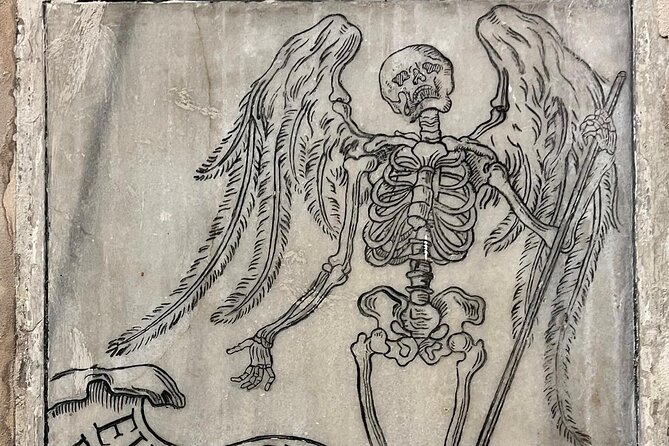
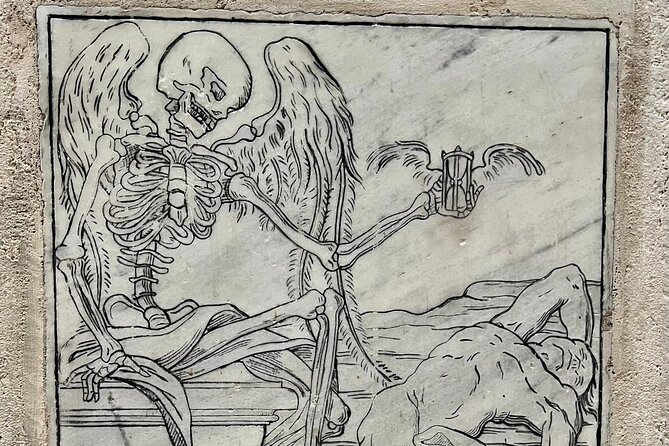
Stop 8 is Chiesa di Santa Maria dell’Orazione e Morte, a Baroque church built by a secretive confraternity dedicated to retrieving and burying abandoned corpses. The tour’s description emphasizes a chilling interior filled with skulls, bones, and death symbols, making the line between living and dead feel blurred.
Time is about 10 minutes.
This is one of the stops where you’ll feel the title of the tour. The “ghost” angle isn’t about transparent apparitions; it’s about death culture shown through art. If you’re the kind of traveler who likes your spooky with symbolism and meaning, this is a highlight.
Fontana del Mascherone: a grim mask and a kidnapping crime scene
Stop 9 brings you to Fontana del Mascherone, an eerie Baroque fountain on Via Giulia with a massive stone mask that seems to spit water from its mouth. The tour also calls it the site of a crime tied to John Paul Getty III’s kidnapping.
It’s 5 minutes, so don’t expect a long crime-history lecture. Think of it as an “in the city, stories overlap” stop: religion and death imagery near a famous modern crime.
This kind of connection is why the tour feels different from a checklist tour. Rome layers meanings, and the guide helps you notice the overlaps.
Campo de’ Fiori at night: market energy with Inquisition echoes
Final stop 10 is Campo de’ Fiori, where daytime means produce and flowers, and night means bars and restaurants. The tour also points to the shadow of Giordano Bruno’s statue as a reminder that this square was a site of executions during the Inquisition.
You’ll spend about 10 minutes here. It’s the right kind of ending: you get a famous public space where crowds gather, and the guide ties it back to what the space once represented.
This is also where you can reset mentally. If the earlier stops felt heavy, the open-air square helps you come up for air. And since the tour ends here, you can keep your evening going on your terms.
How scary is it, really: storytelling beats paranormal
This tour is meant to be a legends and mysteries walk, not a haunted-house performance. The content sits in the space between history and folklore—exactly the kind of “spookier side of Rome” you’d want if you like real places with grim stories.
If you’re hoping for jump scares, you may leave a bit underwhelmed. Some people are looking for goosebumps; others are looking for context. You’ll likely enjoy this more if you want the “why” behind the eerie reputation of specific corners of Rome.
On the other hand, if you like dark character stories—executioners, exorcists, witches, prisons, death confraternities—this is the right format. It gives you a sequence of stops so the stories feel connected rather than random.
Tips, tickets, and value: what $3.63 really buys you
The price is listed at $3.63 per person, for a tour that runs about 1 hour 30 minutes and is offered in English. Even if you don’t focus on the number, the value comes from what’s included: a licensed tour guide, a walking tour, haunted places, and urban legends and ghost stories.
A big practical note: it’s tip-based, and the guides work for tips alone. That means you should plan to tip based on the experience. If you love the way your guide tells the stories, tipping isn’t optional in spirit—it’s part of how the system works.
Also, the stops list admission ticket free at each point. That usually translates to a low-friction evening: you’re not hunting for entries or timing your night around ticketed attractions.
My take on the value: this is a budget-friendly way to see a concentration of “dark Rome” imagery and lore in a short window—ideal if you’re time-limited. The trade-off is that it’s not a full theatrical production, and you’re walking and listening in a group setting.
Who should book (and who should think twice)
This tour fits best if you:
- want a short evening activity that gets you outdoors after dark
- enjoy legends, folklore, and symbolism tied to real landmarks
- like guided structure more than wandering on your own
It’s not ideal if you:
- are traveling with kids under 12 (graphic information and CSA topics are included)
- want a paranormal investigation or a highly theatrical scare experience
- need a quiet, low-stimulation tour (dark themes + night walking + group audio)
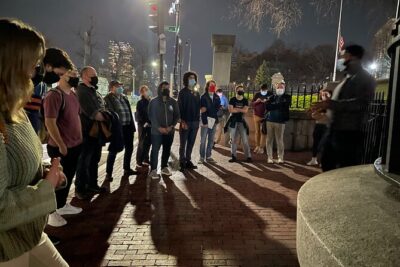
Because the tour is limited to 24 travelers, you should still be able to hear most of what the guide is saying—though any nighttime street can get noisy. I recommend staying close to the guide when the group stops.
And if rain rolls in, bring a plan. Rome can be wet at night, and you’ll still be walking.
Booking rhythm: when demand is already high
On average, this tour is booked about 20 days in advance. That’s a good sign of consistent demand. If you’re visiting during peak season or on a busy weeknight, it’s smart to lock it in earlier rather than hoping for last-minute availability.
You’ll get confirmation at booking, and the tour uses a mobile ticket. The meeting and ending points are also practical, both near public transport and easy to continue your night from.
Should you book this Rome ghost-lore walking tour?
Book it if you want a compact night tour that connects iconic landmarks like Castel Sant’Angelo, Ponte Sant’Angelo, and Campo de’ Fiori to the darker legends Rome is famous for. The guide-led storytelling structure is the whole point, and that’s exactly what makes it feel worth it—especially for short-on-time travelers.
Skip it if you’re chasing paranormal action, or if the tour themes won’t work for your group’s comfort level. With graphic information and CSA topics included, it’s best to treat this as a serious content tour, not a light spooky stroll.
If you do book: plan your night around it. Start at 8:00 pm, arrive early enough to find your guide at Lungotevere Castello, and finish in Campo de’ Fiori where you can cool down with something warm and non-scary.
FAQ
FAQ
What time does the tour start?
It starts at 8:00 pm.
How long is the Ghosts Legends and Mysteries of Rome Walking Tour?
It runs for about 1 hour 30 minutes.
Where do I meet the tour, and where does it end?
Meet at Lungotevere Castello, 50, 00193 Roma RM and the tour ends at Piazza Campo de’ Fiori, 00186 Roma RM.
Is the tour offered in English?
Yes, it is offered in English.
Is there a ticket cost for the stops?
The stops listed are marked as admission ticket free.
What is included in the tour price?
It includes a licensed tour guide, a walking tour, and haunted places with urban legends and ghost stories.
Is this a tip-based tour?
Yes. It’s tip-based, and the guides work for tips alone.
Is the tour suitable for children?
No. It includes CSA topics and graphic information, and it is not recommended for children under 12 years old.
How many people are in the group?
The tour has a maximum of 24 travelers.
Can I cancel for a full refund?
Yes. You can cancel up to 24 hours in advance for a full refund. If you cancel less than 24 hours before the start time, the amount paid will not be refunded.