REVIEW · ROME
Experience Rome in this Mysterious Ghost Tour
Book on Viator →Operated by Italy Wonders SRLS · Bookable on Viator
Rome feels different after dark. This 2-hour ghost walk takes you past some of Rome’s most famous landmarks while your guide ties together real locations with unsettling legends. You’ll move at night through stone streets and churchy corners where the stories sound almost too perfect.
I like the route because it hits major sites without making you fight the daytime crowds. Two stops I really like for atmosphere are Castel Sant’Angelo and Campo de’ Fiori, where the past feels written right into the walls.
One possible drawback: the tour is guided in English and most sights are viewed from outside, since some places will be closed when you arrive.
In This Review
- Key things to know before you go
- A dark Roman night walk, from Ponte Sant’Angelo to Campo de’ Fiori
- Price and what you’re really paying for at $23.95
- Your guide, your language match, and the small group dynamic
- Stop 1: Castel Sant’Angelo’s mausoleum-to-prison vibe
- Stop 2: Casa di Mastro Titta and the legend of the executioner
- Stop 3: Via di Monserrato and Tofana’s Water
- Stop 4: Chiesa di Santa Maria in Monserrato degli Spagnoli
- Stop 5: Regina Coeli and the poison plot aftermath
- Stop 6: Chiesa di Santa Maria dell’Orazione e Morte (the included indoor payoff)
- Stop 7: Fontana del Mascherone and the cursed drink story
- Stop 8: Ponte Sisto and the lost-souls bridge legend
- Stop 9: Piazza Farnese and palace haunting reports
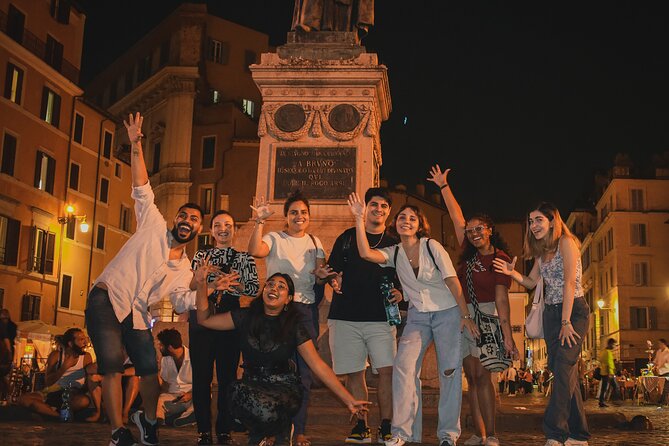
- Stop 10: Campo de’ Fiori, public executions, and Giordano Bruno
- Practical tips so you enjoy the walk (not just endure it)
- Should you book this ghost tour?
- FAQ
- Where does the tour start and end?
- How long is the ghost tour, and do I get a ticket on my phone?
- Is the guide English-speaking?
- Are entrance fees included for the stops?
- How far in advance should I book?
- What is the cancellation policy?
Key things to know before you go
- A tight 2-hour route from Ponte Sant’Angelo to Campo de’ Fiori
- Max 20 travelers, so you’re not stuck shoulder-to-shoulder
- English-speaking professional guide, with a mobile ticket for check-in
- Many stops are outside views, due to closures when you get there
- One major indoor stop included: Chiesa di Santa Maria dell’Orazione e Morte
- Price is low, but entry fees mostly aren’t (you may want to budget for any extras)
A dark Roman night walk, from Ponte Sant’Angelo to Campo de’ Fiori
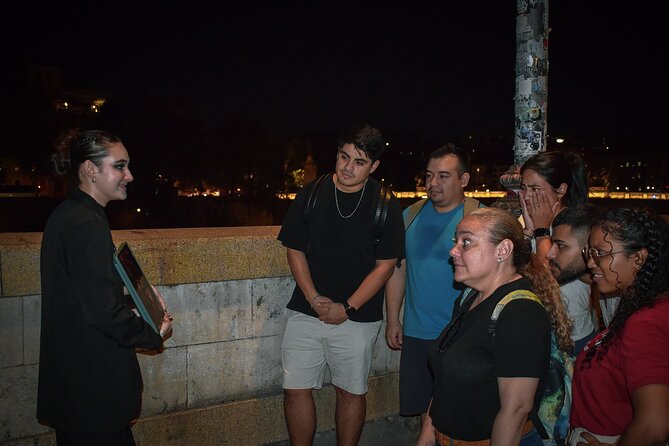
If your Rome plan is all columns and gelato, this tour is the left turn you didn’t know you needed. It’s built around a night walk that connects famous places with grim tales: executions, prisons, poison plots, and hauntings tied to very real addresses. The best part is how the tour uses the city as a set. You’re not just reading spooky stories—you’re standing in front of the scenery those stories cling to.
The tour lasts about 2 hours, and it ends at Piazza Campo de Fiori. That matters because Campo de’ Fiori is easy to use as a launch point for your next evening move—dinner, a night stroll, or just heading back toward where you’re staying. Start is St. Angelo Bridge (Ponte Sant’Angelo), so you’ll be near the Castel Sant’Angelo area from the very beginning.
Group size is capped at 20 travelers. That’s a sweet spot for a walking tour: small enough to feel like an actual tour, not a moving crowd. You also get a mobile ticket, which is convenient when you’re juggling directions, photos, and finding your guide.
You can also read our reviews of more tours and experiences in Rome.


Price and what you’re really paying for at $23.95
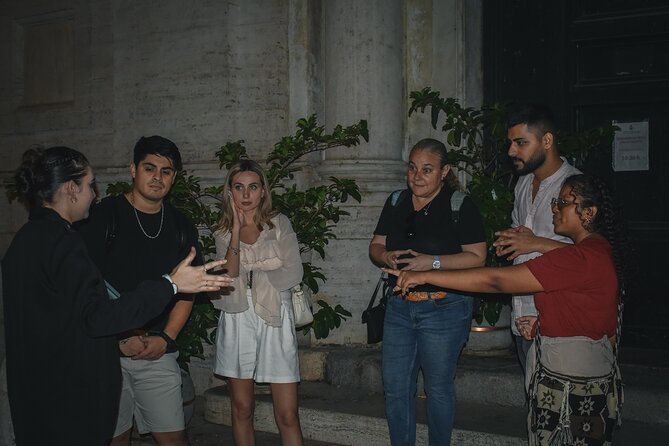
At $23.95 per person, this tour is priced like an evening bargain—and it mostly delivers that value. You’re paying for a professional English-speaking guide plus a route that touches multiple major landmarks tied to Rome’s darker story. In a city where guided tours can easily get pricey, the overall cost is a win.
Here’s the catch: entrance fees are not included for most attractions. The itinerary includes several stops where you’ll likely see things from outside because some places will be closed when you arrive. That’s not a bad thing, but it changes how you think about value. You’re paying for stories and orientation through the neighborhood and landmarks—not for a stack of museum tickets.
One exception is Chiesa di Santa Maria dell’Orazione e Morte, where admission is included. If you’re trying to justify the tour cost, that included church visit is where your money feels most tangible. It’s the kind of stop that goes beyond a quick photo and a few sentences.
Your guide, your language match, and the small group dynamic
The tour lists a professional English-speaking guide and service animals are allowed. That’s straightforward and helpful.
Still, I’d think about language fit before you go. One of the issues that showed up in past booking feedback was a language mismatch problem, where the guide couldn’t handle Spanish. Even if you’re comfortable with English, this is a good reminder to plan like you’re the one doing the negotiating. If you don’t want to risk discomfort, bring translation support on your phone and keep expectations clear in case anything changes last-minute.
The small group size (maximum 20) usually helps the guide keep things moving. In practical terms, it can make the tour feel more conversational, which matters for ghost stories. A spooky tale doesn’t land as well when you’re shouting over a crowd.
Stop 1: Castel Sant’Angelo’s mausoleum-to-prison vibe
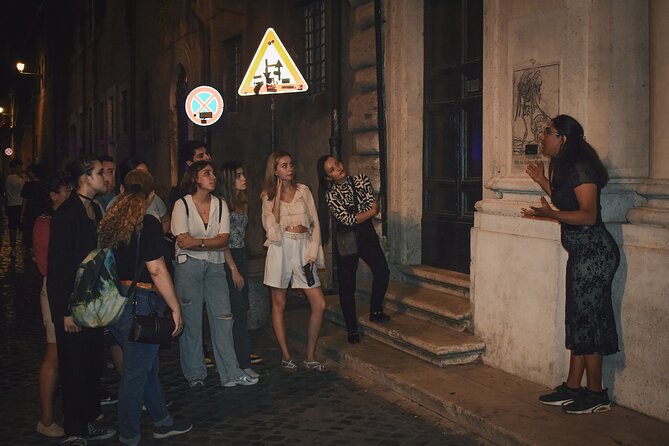
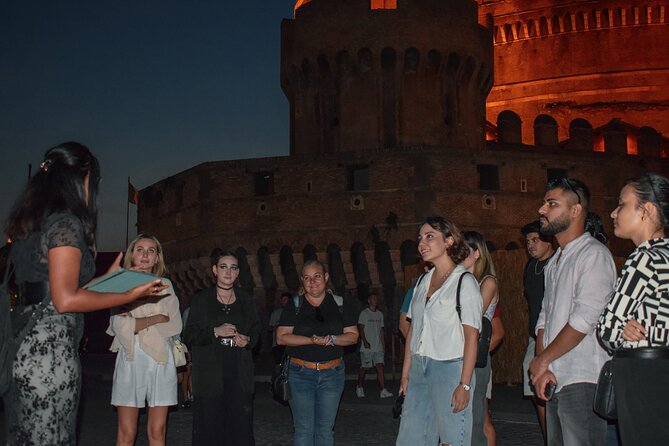
Your tour starts at Ponte Sant’Angelo, with Castel Sant’Angelo as the big landmark right away. The tour frames the site in a way that clicks fast: it began as a mausoleum for Emperor Hadrian, then later became a prison and execution site.
That timeline is why this stop works. Castel Sant’Angelo isn’t just “old.” It’s old and repeatedly repurposed for power and punishment. That makes the ghost-tour storytelling feel less like pure fiction and more like you’re watching history evolve into something darker.
You’ll get about 15 minutes here, and admission is not included. Also, since many sights are visited from outside, don’t expect a long indoor experience. If your goal is to see and hear the stories tied to the fortress shape—moats, stone bulk, river views—that outside portion will likely be enough.
Stop 2: Casa di Mastro Titta and the legend of the executioner
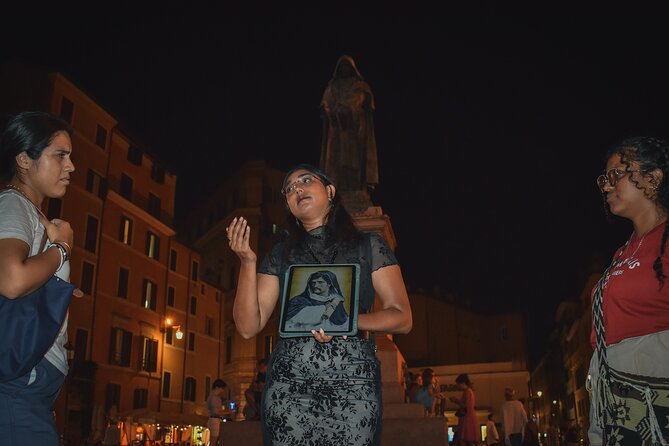
Next you’ll pause at Casa di Mastro Titta, a location tied to Rome’s most famous executioner, Mastro Titta. The tour’s angle here is the lingering spirit idea, with stories of a shadowy figure wielding an axe.
Even if you’re not the type who believes in ghosts, this is one of the most psychologically interesting stops. Executioners lived in the margins of respectability. Their role was official, but their reputation was personal and terrifying. Standing near a place associated with that kind of work makes the stories feel grounded in a social reality, not just a campfire theme.
This stop is only about 10 minutes, with admission not included. Think of it as a short, sharp scene-setting pause: hear the story, look around, and keep walking.



Stop 3: Via di Monserrato and Tofana’s Water
From there you head to Via di Monserrato, where the tour zeroes in on Giulia Tofana and Tofana’s Water. This is one of the clearest “history-meets-horror” parts of the itinerary because it’s about an actual woman credited with poisoning over time. The tour specifically says she was tied to the deaths of more than 600 men.
Whether you find that number shocking or hard to verify, it’s still useful as a storytelling device. Giulia Tofana’s name gives you a focal point for the darker side of social history: how poison can be quieter than a blade, and how fear can move through households and streets without anyone raising an alarm.
This stop runs about 10 minutes, and admission is free. It’s also one of the moments where you’ll probably get the most value from listening closely, since you won’t be spending time inside a building.
Stop 4: Chiesa di Santa Maria in Monserrato degli Spagnoli
Now you shift from poison and prisons to church interiors and burial lore—at least as the tour frames it. At Chiesa di Santa Maria in Monserrato degli Spagnoli, the story is about Spanish nobles buried within and spirits roaming the premises. Visitors sometimes report whispering voices and fleeting shadows among ornate tombs.
Even if you don’t treat these as literal claims, the tour uses them to get you to look. Churches like this often have dense symbolism: tomb placement, sculpted figures, and how the space directs your gaze. On a night walk, that “look closer” effect is stronger because you’re slower and more alert.
This stop is about 10 minutes, and admission is not included. If the church is closed or you’re viewing from outside due to the tour’s timing rules, you may get less of the interior vibe than you hoped. Still, the setting alone can do a lot of work for the story.
Stop 5: Regina Coeli and the poison plot aftermath
Regina Coeli is the name of a notorious prison, and the tour ties it directly to Giulia Tofana, saying she was held and executed there. The rumor angle is that her ghost haunts the area, with sightings of a sorrowful woman wandering at night.
Prison sites hit differently at night because you instinctively imagine confinement. Regina Coeli is a place where the walls were meant to restrict. A ghost story in that context feels less like a costume and more like a metaphor for how some places refuse to let go.
This stop lasts about 10 minutes, with admission listed as free. The tour timing may keep it brief, but it’s long enough to absorb the theme and keep the walk moving.
Stop 6: Chiesa di Santa Maria dell’Orazione e Morte (the included indoor payoff)
The itinerary’s most substantial “ticket-worthy” moment is the Chiesa di Santa Maria dell’Orazione e Morte. This church is dedicated to the care of souls who died without proper burial. The tour says the crypt contains skeletal remains and is said to be haunted by ghosts of those whose bones rest there.
Here’s why this stop matters for value: admission is included. It’s the one place where your money is most clearly tied to an actual site visit rather than just exterior storytelling. Even if you’re sensitive to morbid themes, you should treat this as a cultural and historical experience first, with the haunting element added as the tour’s framing.
You’ll spend about 15 minutes here, and admission is included. That’s enough time to see what’s there without turning it into a long fatigue session. If you’re the type who needs a controlled pace to enjoy dark themes, you’ll probably like the structure: quick stops outside, then an included indoor stop that actually changes your experience.
Stop 7: Fontana del Mascherone and the cursed drink story
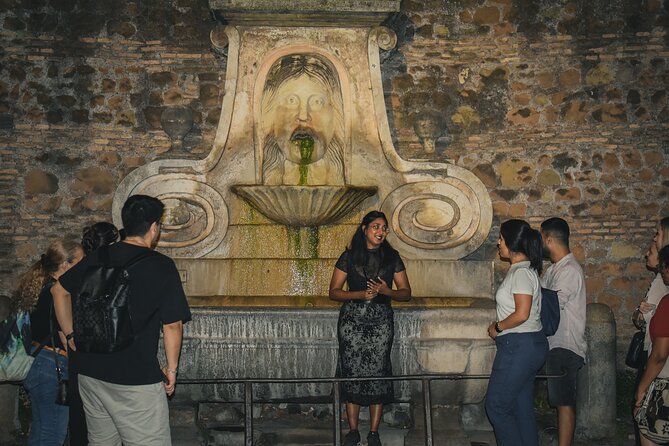
After the church, the tour heads to Fontana del Mascherone, a fountain known for its grotesque mask. The story says the fountain is cursed, and people who drank from it experienced misfortune.
Fountains are underrated on ghost tours. They’re public, everyday things—so a “curse” tied to them feels more plausible than a single haunted mansion. It also shifts the tone. Instead of executions and prisons, you get street-level supernatural folklore.
This stop is about 15 minutes, and admission is free. It’s also a good moment to reset your senses. If the last indoor stop felt intense, the outdoors and river-adjacent urban vibe can help you keep the experience enjoyable.
Stop 8: Ponte Sisto and the lost-souls bridge legend
Next is Ponte Sisto, crossing the Tiber River. The tour notes tragic events across centuries and tales of lost souls wandering the bridge at night.
Bridges are perfect for these stories. They’re thresholds. You cross them, and the city around you changes. On a night walk, that becomes more than a location fact; it becomes a mood. Even if you don’t buy ghost stories, you can appreciate why a bridge would become a setting for rumors.
This stop lasts about 10 minutes, and admission is free. It’s likely more of a story-and-view moment than a formal site entry.
Stop 9: Piazza Farnese and palace haunting reports
Then you arrive at Piazza Farnese, an elegant square tied to the Palazzo Farnese. The tour says palace spirits of the Farnese family have been reported.
This stop is useful because it balances the tour’s grimness. The architecture is grand and controlled, which makes the idea of “restless spirits” feel like a contrast rather than a continuation. You get to shift from bodies and prisons to people and legacies.
It’s about 10 minutes, and admission is free. If you like your ghost stories to sound less like gore and more like old-world tension, this is the kind of stop you’ll likely enjoy.
Stop 10: Campo de’ Fiori, public executions, and Giordano Bruno
The final stop is Campo de’ Fiori, a lively square that the tour identifies as a former public execution site. It ties the legend to Giordano Bruno, a philosopher burned at the stake here.
Campo de’ Fiori is one of Rome’s most useful squares because it’s not just scenery—it’s a place where life happens. That contrast is exactly why it works on a ghost tour. You end in a spot that feels alive now, which makes the execution past hit harder.
This stop is about 15 minutes and admission is free. It also serves as your literal ending location: the tour ends at Piazza Campo de Fiori.
Practical tips so you enjoy the walk (not just endure it)
A few details from the tour format will help you have a smoother night:
- Plan for a lot of walking and wear shoes that handle uneven sidewalks. The tour lists moderate physical fitness.
- Expect outside viewing for many stops because some places close when you arrive. Build your expectations around stories and street-level viewing, not constant interior access.
- Use public transportation nearby if you’re not starting exactly where you’re staying. The tour doesn’t include hotel pickup or drop-off.
- Bring your best night-walking attention span. Ghost stories are easiest to follow when you’re not trying to check your phone every two minutes.
Also, if you’re the kind of person who hates last-minute surprises, note that the tour confirmation is received within 48 hours of booking, subject to availability. That’s normal for many tours, but it’s worth remembering if your schedule is tight.
Should you book this ghost tour?
I’d book it if you want a Rome evening that feels different from the usual photo circuit. For a low price like $23.95, you get a professional guide, a manageable 2-hour route, and a set of recognizable locations tied to executions, prisons, poison stories, and church lore. I especially like that you get one included church visit rather than just standing outside everything.
I’d skip it or approach carefully if you need lots of indoor time at each stop, since the tour notes that many attractions are visited from outside. Also, if your comfort depends on a specific language (or you need explanations beyond English), the earlier language mismatch issue highlighted in past feedback is a real consideration.
If you’re flexible, bring curiosity, and want a darker lens on Rome, this tour is a fun, practical way to spend a night—one where your walk ends in Campo de’ Fiori instead of leaving you back at a hotel feeling like you missed something.
FAQ
Where does the tour start and end?
The tour starts at St. Angelo Bridge (Ponte Sant’Angelo, 00186 Roma RM, Italy) and ends at Campo de’ Fiori (Piazza Campo de’ Fiori, 00186 Roma RM, Italy).
How long is the ghost tour, and do I get a ticket on my phone?
The tour lasts about 2 hours and it uses a mobile ticket.
Is the guide English-speaking?
Yes. The tour includes a professional English-speaking guide.
Are entrance fees included for the stops?
Most entrance fees are not included. The itinerary lists Chiesa di Santa Maria dell’Orazione e Morte as having admission included, while other stops are marked as not included or free.
How far in advance should I book?
On average, this tour is booked about 42 days in advance. Booking earlier can help you secure a spot, since confirmation is subject to availability.
What is the cancellation policy?
You can cancel for a full refund up to 24 hours in advance. If you cancel less than 24 hours before the start time, the amount you paid will not be refunded. Free cancellation is available.