REVIEW · ROME
Ghosts and Crimes of Rome Night Walk
Book on Viator →Operated by E & D Guided Tours · Bookable on Viator
If you like your Rome darker, this walk delivers. You’ll cover Centro Storico at night while a story-teller guide connects executions, prisons, and strange legends into one creepy route.
I especially like the small group limit of 15 people. You’ll also get the rare extra touch of dowsing rods, so you’re not just standing around listening.
One thing to note: this is more crime-and-gore than full-on supernatural. Even with the ghost angle, don’t count on actual ghost sightings.
In This Review
- Key highlights you’ll feel on this night walk
- Why this Rome night walk works: stories you can track, not just facts you memorize
- What you’re really buying for $25.09: value, pacing, and an interactive gimmick that actually fits
- Meeting point and finish: how to start without stress
- The route in plain English: where the “ghost” feeling comes from
- Stop 1: Centro Storico and the opening shock of crime, dungeons, and false blame
- The piazzas of notorious violence: when Rome’s streets become evidence
- The prison stop for women: the emotional core of the walk
- Pope Julius’s secret street and the Brotherhood of Death
- A piazza without churches and the place where thousands burned alive
- The dowsing rods: interactive spooky theater, not a sci-fi promise
- Guides make or break it: why this tour’s storytelling gets such high marks
- Who this tour is best for (and who should think twice)
- Weather, walking comfort, and the Jubilee effect
- One last practical thought: time it so Campo de’ Fiori is your reward
- Should you book Ghosts and Crimes of Rome Night Walk?
- FAQ
- How long is the Ghosts and Crimes of Rome Night Walk?
- Where does the tour start and end?
- Is the tour in English?
- Do I get the dowsing rods to use during the tour?
- What’s the group size?
- Is food or drinks included?
- Can I cancel for a full refund?
Key highlights you’ll feel on this night walk
- Small group size (max 15): easier to hear, easier to keep pace in dark streets
- Interactive ghost hunting: dowsing rods put you in the story
- Entertainment-first storytelling: guides like Lara, Emma, Clara, Elvira, Yash, Bryan, and Arianna are repeatedly praised
- A route off the main tourist track: you walk dark streets and hidden corners
- A serious focus on Rome’s criminal underbelly: executions, prisons, and notorious characters
Why this Rome night walk works: stories you can track, not just facts you memorize
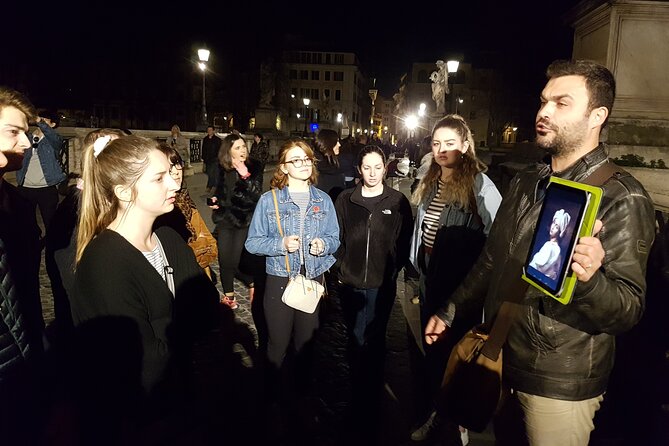
Rome by day can be impressive. Rome at night is different. The sidewalks narrow, the streetlights flatten the shadows, and suddenly the city feels like it has secrets.
This tour leans into that mood with a guide who tells real-life crimes and long-buried legends as a single connected story. You’re walking through the Centro Storico area, and the pacing is built around turning corners and stopping at the exact spots where the stories are supposed to have happened. That matters, because it’s much easier to picture an execution, a dungeon, or a torture chamber when you’re standing near the building scale and street layout.
Two practical reasons I think you’ll enjoy it. First, it’s only about 90 minutes, so you get a complete experience without burning your whole evening. Second, it’s capped at 15 people, so the guide can keep control of the group and you’re not stuck listening from 40 feet away.
The only caution: this is called a ghost tour, but the spine is crime history—executions, prisons, torture tools, and notorious killers. If you’re expecting purely spooky supernatural effects the whole time, you may feel a bit misled. If you’re excited by dark history with a haunted framing, you’ll likely have a blast.
You can also read our reviews of more tours and experiences in Rome.


What you’re really buying for $25.09: value, pacing, and an interactive gimmick that actually fits
At roughly $25.09 for about 1.5 hours, the value is mostly in the experience design: an expert storyteller, a timed route through historic streets, and an add-on activity (the dowsing rods) that makes it feel like more than a regular walking tour.
You’re not paying for museum tickets. You’re paying for someone to connect dots you might never connect on your own. Even if you’re a history fan, Rome’s darker stories are easy to miss when you’re bouncing between the Colosseum, Trevi, and the Vatican. This route aims at the places where the city did grim work—sometimes for political control, sometimes through organized punishment, and sometimes with shocking cruelty.
Also, the small group size is part of the value. For a dark, nighttime walk, hearing the guide clearly matters. A group of 15 makes a difference. You’ll also be less likely to get separated or have the tour feel like a slow-moving crowd scene.
Meeting point and finish: how to start without stress
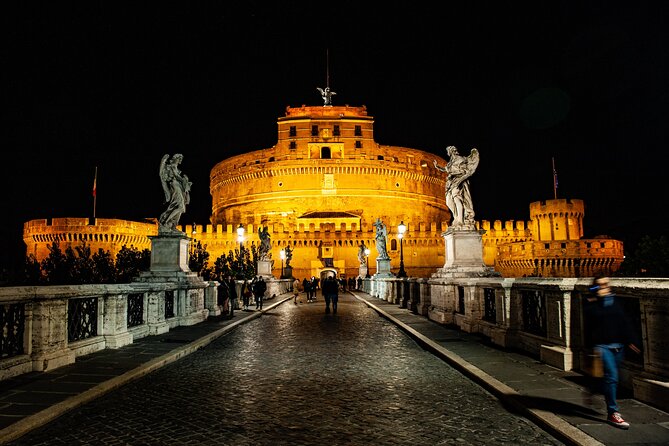
You’ll start at Lungotevere Castello, 50 (00193 Roma RM) and end at Piazza Campo de’ Fiori (00186 Roma RM).
This is a good setup if you’re sightseeing the rest of the night. Campo de’ Fiori is lively and central, so you’re not stranded somewhere isolated after the tour. And since the meeting point is near public transportation, it’s easier to plug into your day plan without a complicated taxi hunt.
One more detail I like: you receive the guide name and a number for communication. When you’re meeting at night, that kind of contact info can help you get oriented fast.
The route in plain English: where the “ghost” feeling comes from
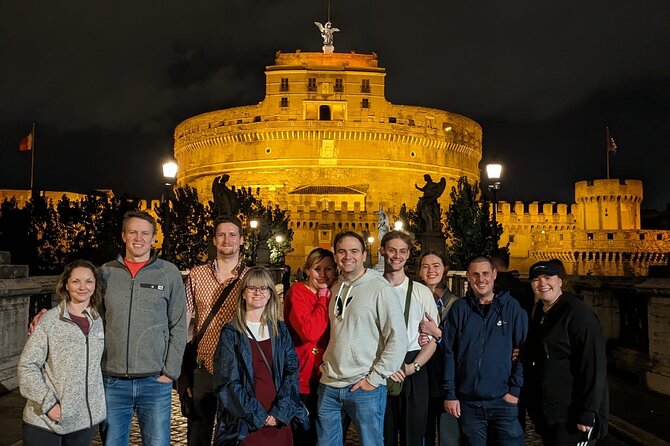
The tour moves through the darker side of Rome’s old center, following a narrative arc that starts with punishment and ends with infamous locations associated with mass suffering.
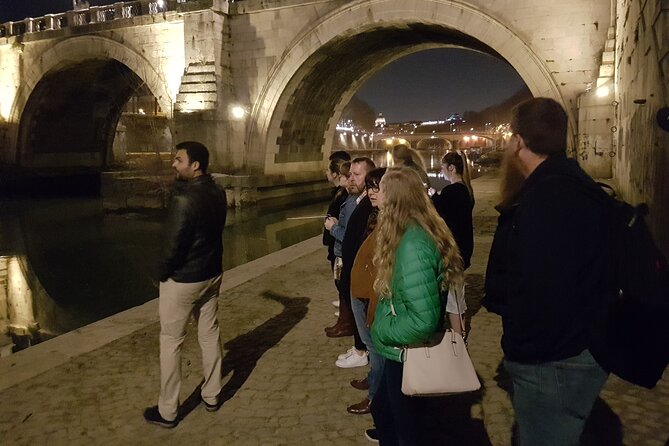
You’ll walk along dark streets away from the tourist track, pause at places described as witnesses to major crimes, and hear long stories of executions and punishment systems. The ghost layer is the wrapper, not the whole meal. Think of it like: the “ghost” is the echo left behind by brutality.
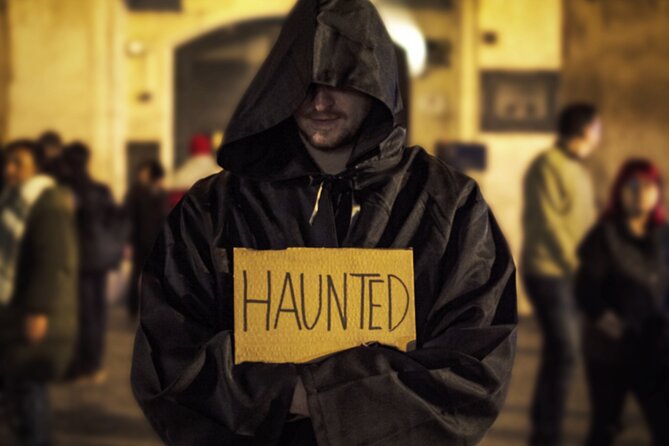
And yes, the experience leans theatrical. One review mentions flickering lights and witchy tool-style props. That doesn’t mean every departure is identical, but it tells you the vibe isn’t just a calm lecture. It’s designed to feel spooky while still being grounded in story.
Stop 1: Centro Storico and the opening shock of crime, dungeons, and false blame
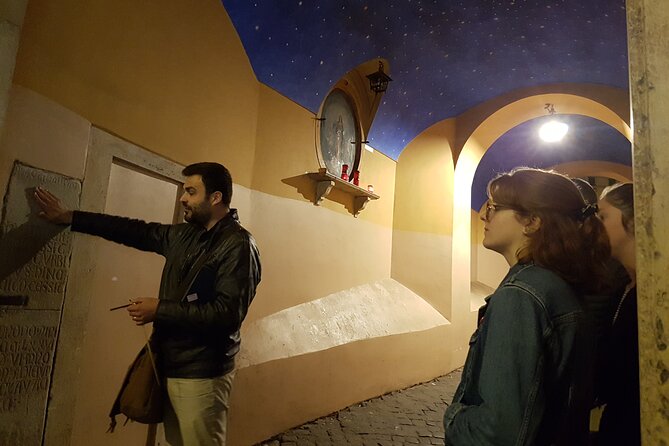
The tour begins in Centro Storico, with grim framing right away. Expect talk of people executed for crimes they didn’t commit, and the dungeons inside the Papal fortress.
This is a smart opener. It sets a theme: Rome wasn’t just art and architecture. It also ran on fear, control, and punishment. Hearing that first makes later stops land harder, because you’re already primed to understand why certain places carry so much dread in local lore.
From there, you move away from the busiest tourist corridors. The guide keeps you walking through the city’s darker streets and toward piazzas tied to major crimes in history.



The piazzas of notorious violence: when Rome’s streets become evidence
One of the strongest parts of this tour is the mix of famous-sounding narratives and very specific stop locations. You’ll hear about a serial killer who allegedly poisoned over 600 men, and you’ll learn about an executioner with a career spanning 65 years, described as having executed roughly half a thousand people.
Now, a quick reality check. You’re not on this tour to verify every claim like a courtroom document. You’re on it to experience a guided story of how Rome’s darker legends got attached to real places. If you like to read between the lines—how fear, power, and rumor get stitched into city memory—this will click.
Also, the route is built for atmosphere. Night walking helps the guide’s storytelling feel immediate. Streets feel narrower. Doors feel more ominous. And the pauses in piazzas give you just enough time to imagine what happened before you move again.
The prison stop for women: the emotional core of the walk
You’ll stop at an ancient prison connected to the torture and execution of hundreds of women. The guide describes the tools used to put people to death.
This is the part where the tour is likely to feel most intense. Even if you’re used to history, torture details are hard. If you’re sensitive to violence, this is where you should mentally prepare yourself.
The practical upside is that the tour doesn’t just name-drop. It ties the stop to the story’s purpose: showing how punishment worked and how it was meant to deter, control, or erase.
Pope Julius’s secret street and the Brotherhood of Death
Next, you’ll walk along a street said to have been built so Pope Julius could visit his mistresses in privacy. You’ll also see the head-church of the Brotherhood of Death.
This section is a nice change of pace because it’s not only about punishment systems. It also points to power and secrecy—how elite life and official religion could overlap with private scandal. Those contrasts make the whole tour feel more like Rome than a one-note horror attraction.
It also helps you see the city’s layers. Rome isn’t just one era; it’s a stack. A brotherhood, a church, a secret street—these details remind you the city runs on long memory.
A piazza without churches and the place where thousands burned alive
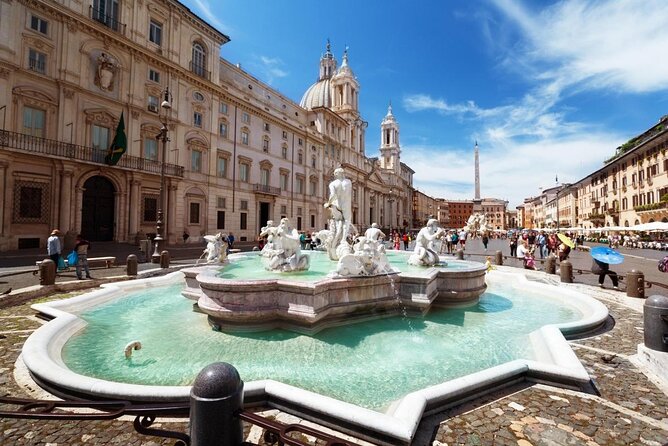
The tour continues to a piazza described as without churches, and then to the location where thousands were burned alive.
That’s the type of stop that, during a daytime visit, might pass quickly as just another square. At night, with the guide’s story queued up, it becomes heavy. You’ll likely feel a stronger sense of scale and tragedy when you’re standing in the open space the guide points to.
If you prefer tours that connect you to place-specific storytelling, you’ll appreciate how the route uses the city layout like a script.
The dowsing rods: interactive spooky theater, not a sci-fi promise
Yes, you’ll hunt for ghosts with authentic dowsing rods. The goal isn’t scientific proof. It’s participation.
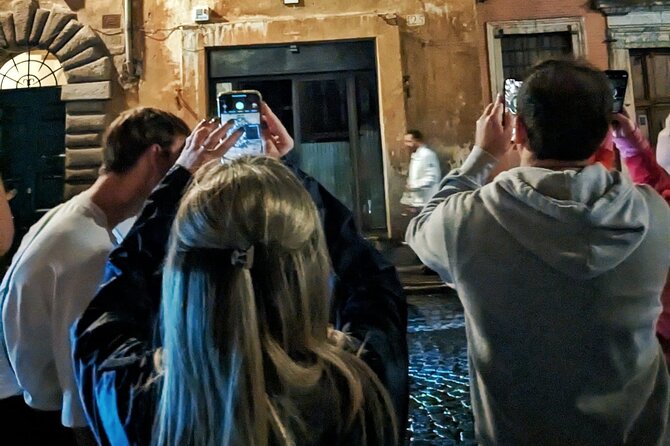
In practice, this is what turns a lecture into an experience. You’re expected to hold the rods, pay attention to the guide, and react as the story progresses. That shared moment gives you something to do with your hands, and it makes the tour feel less like you’re watching and more like you’re in it.
Some reviews also mention the overall atmosphere being enhanced with lighting effects. Combined with the rods, it can feel genuinely spooky—even if you keep one foot in reality.
Guides make or break it: why this tour’s storytelling gets such high marks
The review score is high for a reason: the guides are consistently praised for making the material fun to hear and easy to follow.
Names that came up repeatedly include Lara, Emma, Clara, Elvie, Amber, Yash, Arianna, Bryan, and Elvira. Multiple reviews highlight a mix of humor, friendly energy, and strong presentation skills—so you’re not stuck with a monotone lecture through dark alleys.
One careful note from the reviews: a few people felt it was less of a pure ghost tour and more of a gory crimes tour. That’s not a dealbreaker. It’s actually helpful to know the delivery style: you’re getting horror-history stories, with ghost elements as seasoning.
Who this tour is best for (and who should think twice)
This works best for you if:
- You like dark history and true-crime-style storytelling tied to real locations
- You enjoy interactive activities during walking tours
- You want a different side of Rome that doesn’t require advance museum planning
Consider skipping (or adjusting expectations) if:
- You want a purely supernatural, jump-scare ghost experience
- You’re strongly sensitive to torture or graphic crime themes
For families, one review mentioned a guide being enjoyed by teens and tweens, so it can be a workable choice depending on your comfort level. If your group is squeamish, you’ll want to keep expectations realistic before you go.
Weather, walking comfort, and the Jubilee effect
This tour operates in all weather conditions, so dress for the night. Rome nights can feel cooler than you expect, and a 90-minute walk means you’ll be outdoors the whole time.
Also, because of the Jubilee, some monuments may be under restoration. The operator says you should watch for messages that might change what you see. It’s rare to plan your whole evening around a single building, so keep your expectations flexible.
One last practical thought: time it so Campo de’ Fiori is your reward
Because the tour ends at Piazza Campo de’ Fiori, I’d plan your next steps around that. Have dinner nearby, or at least pick a spot to decompress. Night walking plus heavy stories can be mentally intense, even when it’s entertaining.
Also, if you’re doing multiple tours in a day, try not to schedule this as your last stop if you’re exhausted. You need enough attention to enjoy the guide’s storytelling rhythm.
Should you book Ghosts and Crimes of Rome Night Walk?
I’d book it if you want Rome at night with an engaging guide, a tight route, and hands-on participation through dowsing rods. It’s good value for the time, and the small group limit keeps the experience from turning into a noisy stampede.
I’d think twice only if you’re hunting for a classic ghost-hunting fantasy with lots of supernatural action. This tour is better described as crimes, prisons, punishment, and legends dressed up in a spooky frame. Go in wanting dark stories on real streets, and you’ll likely come away with a very different memory of Rome.
FAQ
How long is the Ghosts and Crimes of Rome Night Walk?
It’s about 1 hour 30 minutes (approx.).
Where does the tour start and end?
It starts at Lungotevere Castello, 50, 00193 Roma RM and ends at Piazza Campo de’ Fiori, 00186 Roma RM.
Is the tour in English?
Yes, it’s offered in English.
Do I get the dowsing rods to use during the tour?
Yes. Dowsing rods are included, and they’re part of the interactive ghost-hunting element.
What’s the group size?
It’s a small-group tour with a maximum of 15 travelers.
Is food or drinks included?
No. Food and drinks are not included.
Can I cancel for a full refund?
Yes, you can cancel up to 24 hours in advance for a full refund. If you cancel less than 24 hours before the start time, the amount you paid won’t be refunded.