REVIEW · MANCHESTER
Manchester Haunt Quest: Solve the Mystery of the Pusher
Book on Viator →Operated by Questo · Bookable on Viator
A mystery route turns Manchester into a puzzle box. I like how this private, self-guided quest turns famous buildings into game stops, with an app that tells you where to go and what to look for. I also like that you can pause, regroup, and go at your own speed, which matters in a city where you might want coffee or a quick restroom break. The main drawback to plan for: you’re depending on phone access and the app working properly from start to finish.
You’ll walk a spooky city loop that starts at Young Street and ends at Manchester Cathedral, with about 12 haunted stops and interactive puzzles meant to keep you moving and thinking. Total time is about 1 hour 30 minutes, and you can start whenever you like thanks to 24/7 availability. If your group wants a classic tour with a live guide answering questions, this isn’t that kind of experience.
In This Review
- Key things I’d plan for
- Manchester Haunt Quest: the idea, in plain terms
- Price and value: why $7.21 can feel like a steal
- Starting at Young Street: quick setup so you don’t lose time
- The Albert Hall opener: chapel to music hall, with a question hanging in the air
- Manchester Town Hall and the Murals: solving with statues and civic pride
- Rochdale Canal: a peaceful walk with a darker story behind it
- Manchester Cathedral: Henry V’s charter and the mystery of what came first
- Chetham’s Library: 1421 roots and 100,000 volumes of clue-fuel
- Albert Square and the Albert Memorial: finishing your thinking in the open air
- Royal Exchange Theatre: trading ideas to seal the mystery
- Where this quest shines, and where it might frustrate you
- What kind of people should book this?
- Should you book the Manchester Haunt Quest?
- FAQ
- How long is the Manchester Haunt Quest experience?
- How much does it cost per person?
- Is this a guided tour with a physical guide?
- What language is the quest offered in?
- Can we start at any time?
- Is it private for my group?
- What if our group is more than 15 people?
- What is the cancellation policy?
Key things I’d plan for
- A private route for just your group so you can set the pace without slowing down for strangers
- Phone-guided clues via a mobile app (no paper handout needed)
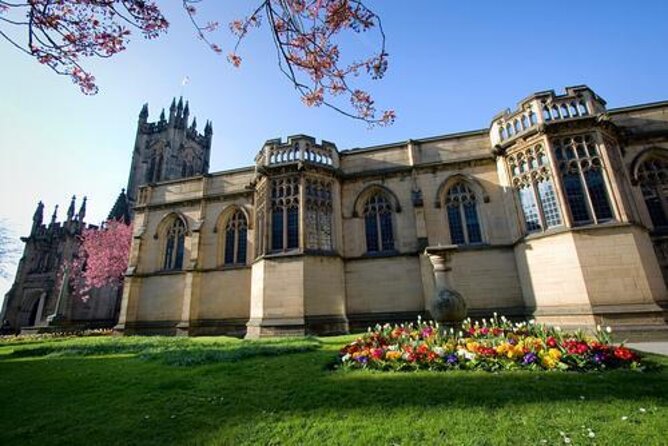
- Spooky-and-historical stops tied to recognizable places like Albert Hall and Chetham’s Library
- Pause anytime approach, so breaks don’t ruin the game
- Lifetime access means you can replay later when you’re back in town
- Some parts depend on on-the-ground signage and clear clue areas, so expect to use the app guidance
Manchester Haunt Quest: the idea, in plain terms
This is a “city mystery” style experience: you follow a route through central Manchester, solve puzzles at each point, and collect enough pieces to answer the bigger question running through the game. It’s set up as a private experience, so it feels closer to a family activity or a friend challenge than a standard group tour.
What makes it appealing is the balance between structure and freedom. The app gives you the next checkpoint and the next question, but you’re not locked into a rigid schedule. You can stop to look closely, slow down for photos, or call it early if your legs are done.
The setting is also a big part of the fun. Manchester has a real mix of religious buildings, Victorian civic architecture, and canal-side paths, so the game doesn’t feel like you’re repeating the same street vibe for 90 minutes.
You can also read our reviews of more tours and experiences in Manchester.

Price and value: why $7.21 can feel like a steal
At $7.21 per person, the cost is low enough that you can treat it like a high-impact activity rather than a major “tour budget” line item. You’re paying for the app-based story, the puzzle design, and the route planning that would be a lot more work to recreate on your own.
The value gets better if you’re traveling in a group. There are group discounts, and if you’re with a few people who like brain games, it’s easier to justify the time on your feet. Also, the experience includes lifetime access—so you’re not buying a one-time ticket to a single walk.
One caution on value: since it’s self-guided and app-led, you’ll want your phone to be ready. If you show up with a dead battery or you can’t access the game properly, you lose the main engine of the experience.
Starting at Young Street: quick setup so you don’t lose time

You begin at 36–38 Young St, Manchester (M3 3FT). The experience is listed as a mobile-ticket experience with a self-guided quest accessible via a mobile app, and it’s available 24/7 so you’re not forced into a specific start time.
Before you start walking, do three small things:
- Make sure your phone is charged enough for at least 90 minutes of walking plus extra time
- Confirm you can open the quest content in the app before you leave the meeting area
- Set your expectations: this isn’t a guided lecture, so you’ll be reading and solving on the go
If you run into technical trouble like download/access problems, there are support routes listed for this kind of issue. You can reach out at [email protected] or through the in-app chat, and for other problems there’s also [email protected].
The Albert Hall opener: chapel to music hall, with a question hanging in the air
One of the first major stops is Albert Hall, a restored chapel turned into a striking music venue. The building’s story is part of the game’s tone: it went from religious purposes to a place for events, performances, and atmosphere.
This is where you’ll likely get your first “mystery question” prompt in the app. The idea is that you’re not just looking at architecture—you’re using clues and context to answer something that connects back to the storyline.
Practical tip: because Albert Hall is a functioning venue, consider how your visit time lines up with what’s happening there. Even if there’s no event going on at the exact moment you arrive, the app’s prompts should still steer you to where the clue logic lives.
Possible drawback: if you’re expecting a quiet, empty inside moment, plan for normal public activity and crowds. You might need to stand back and read carefully instead of lingering in one spot.
Manchester Town Hall and the Murals: solving with statues and civic pride

Next up is Manchester Town Hall, the Victorian Neo-Gothic landmark designed by Alfred Waterhouse (completed in 1877). The game uses this setting because it’s full of visual storytelling—especially around the Manchester Murals and the statues of influential figures including Dalton, Joule, and Barbirolli.
In puzzle terms, this stop is good because it gives you real things to look at. Instead of just scanning for numbers, you can connect names, themes, and the city’s identity to answer the challenge the app sets.
What I like about including this kind of landmark: it helps you notice details you’d normally walk past. The architecture is impressive, sure, but the murals and statues also give you context for why Manchester matters historically.
A small consideration: if your group splits attention too much, it’s easy to miss the exact clue the app is steering you toward. I’d keep one person focused on the app instructions while the rest do the on-foot “look around” sweep.
Rochdale Canal: a peaceful walk with a darker story behind it
Then the quest takes you onto Rochdale Canal, where the scenery feels calm but the game asks you to find a darker thread in the calm. The canal’s story is tied to the late 18th-century push to build canals across the UK—and Manchester’s role in that growth.
One detail the route leans on is the geography: the canal route involved climbing over the Pennine moors rather than tunnelling through them. That’s the kind of fact that makes the city feel bigger than your immediate street corner.
This stop is valuable because it changes the pacing. After the tight “look at the building, read the clue” moments, canal-side walking gives your brain room to think. You’ll likely be working out puzzle logic while your eyes can take in the open space.
Possible drawback: canal edges can be uneven, and weather can make surfaces slick. Bring sensible shoes, especially if you’re visiting in wet months.
Manchester Cathedral: Henry V’s charter and the mystery of what came first

Now you approach Manchester Cathedral, a key spiritual and historical anchor for the city. The game ties the origins of the building to Henry V, who signed a royal charter in 1421 allowing a collegiate church to be built. Later, it became central to the creation of the Manchester diocese.
Here’s the spooky element: it’s suggested that the origins of Manchester’s first churches are obscure, which fits the quest’s theme of hidden history. In other words, the app is encouraging you to accept that not everything is obvious and to solve anyway using what you can see.
This stop is especially good for groups who like “story logic.” Cathedral architecture offers strong visual cues, and the app’s prompts can turn those cues into puzzle answers.
If you’re visiting when the cathedral is busy, you’ll likely need to be respectful of movement and quiet areas. Keep your group’s volume down and read instructions without blocking paths.
Chetham’s Library: 1421 roots and 100,000 volumes of clue-fuel
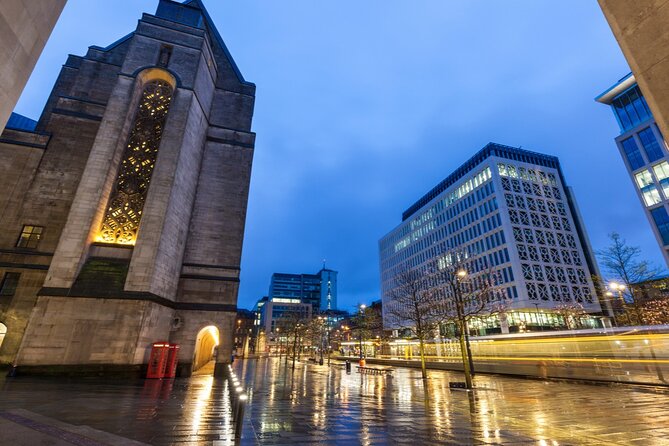
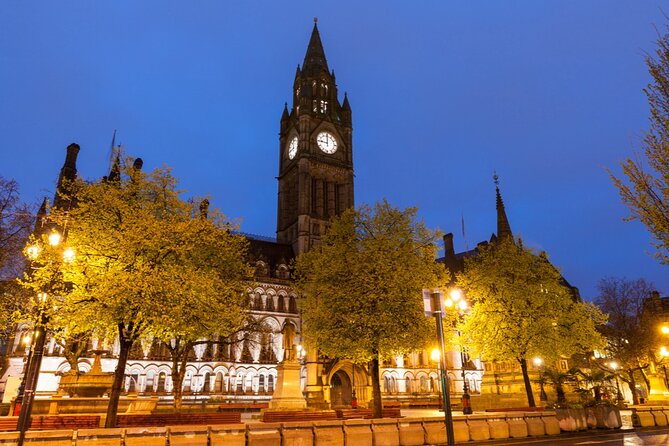
One of the most atmospheric pauses in the route is Chetham’s Library, a sandstone building dating from 1421. It began as accommodations for priests and became the oldest free public library in the English-speaking world. The game leans on that atmosphere by putting the puzzle logic close to the idea of books, records, and small print.
The clue concept here is specific: you’re guided toward information in the library context, with the idea that the answer sits in the details. The experience references a huge library collection—100,000 volumes—which is a dramatic way to frame why you should pay attention to fine details when the app tells you to.
What I like as a visitor: even if you’re not a “library person,” this setting makes the quest feel less like random street scavenging. It feels like you’re doing detective work inside a real institution.
Possible drawback: libraries can have rules about movement and quiet. Also, if your group wants lots of photos, remind them this is a place where reading and respectful behavior matter.
Albert Square and the Albert Memorial: finishing your thinking in the open air
As you work toward the end, you’ll reach Albert Square, a major public space with gothic character. The square is named for Prince Albert, husband of Queen Victoria, and the Albert Memorial is nearby.
This stop works well for the last stretch because it’s open, and the light is usually easier for puzzles than inside buildings. It’s also a natural place to take a breather if your feet are tired.
The game uses the “heart of the city” idea to move you toward the final question logic. I’d take a minute here to check your progress in the app and make sure your group is aligned on the answers you’ve entered so far.
Royal Exchange Theatre: trading ideas to seal the mystery
The route’s last listed stop is Royal Exchange Theatre. The theme here is “exchange,” tied to how the theatre brings together new drama and reinvigorated classics, with artists and locals sharing ideas.
In game terms, this is where you trade the final answer to complete the mystery and earn the last piece of the experience’s payoff. If you’ve been solving steadily, this part often feels like a clean finish line.
Practical note: theatres are active places. If there’s an event, be mindful of foot traffic and entrances. The app should guide you to the clue interaction point without needing you to linger in restricted areas.
Where this quest shines, and where it might frustrate you
This experience is at its best when your group enjoys problem-solving while walking between recognizable Manchester landmarks. The phone app gives you enough structure to keep you moving, but you don’t have to follow a strict time schedule.
It’s also a smart choice for mixed groups. Families can treat each stop like a mini-challenge, while adults can focus on the history-and-architecture connections. Because it’s private, you’re less likely to have someone bored and waiting at a curb.
That said, there are a few considerations worth taking seriously:
- Tech dependence: if your download/access fails, you’re stuck. Test access before you start the walk.
- Clue location accuracy: if a clue point is hard to find or signage is missing, you may waste time looking for something that’s not visible. In those cases, use app guidance and contact support if needed.
- Walking pace: it’s a 1.5-hour city circuit, so you’ll want decent shoes and a realistic pace for your group.
If you’re the kind of person who wants a classic “leader at the front” tour, this might feel too independent. If you like city roaming with built-in prompts, it’s a great fit.
What kind of people should book this?
I’d book this if:
- you want a fun, structured walk through central Manchester
- your group likes puzzles and story clues
- you’re traveling with friends or family and want something more interactive than a standard sightseeing route
- you like the idea of replaying later thanks to lifetime access
I wouldn’t prioritize it if:
- you dislike app-based experiences or you’re worried about phone connectivity and battery life
- your group wants a live guide to answer questions as you go
- you have trouble with walking between multiple stops
It’s listed as available in English, near public transportation, and service animals are allowed.
Should you book the Manchester Haunt Quest?
If you want an easy win in your Manchester plan—something that keeps your group engaged without turning the day into a rigid schedule—this is a strong choice. The route hits major landmarks like Albert Hall, Manchester Town Hall with its Murals and statues (Dalton, Joule, Barbirolli), Rochdale Canal, Manchester Cathedral, Chetham’s Library, Albert Square, and Royal Exchange Theatre. That’s a lot of variety for roughly 90 minutes.
My main advice is simple: come ready for a phone-guided quest. If your app works smoothly, you’ll likely have a smart mix of walking, history, and detective-style thinking.
If you want low-stress city culture and you don’t mind being the guide for your own group, book it.
FAQ
How long is the Manchester Haunt Quest experience?
It lasts about 1 hour 30 minutes.
How much does it cost per person?
The price is $7.21 per person.
Is this a guided tour with a physical guide?
No. It’s self-guided using a mobile app, and there is no physical tour guide.
What language is the quest offered in?
The quest is offered in English.
Can we start at any time?
Yes. It’s available 24/7, so you can start whenever you like.
Is it private for my group?
Yes. It’s private, meaning only your group participates.
What if our group is more than 15 people?
If your group is larger than 15, you’ll need to make multiple bookings.
What is the cancellation policy?
You can cancel for free up to 24 hours in advance for a full refund. If you cancel within 24 hours of the experience start time, the amount paid is not refunded.