REVIEW · LONDON
London’s Ghosts & Gruesome Past Nighttime Walking Tour
Book on Viator →Operated by Tours by Foot London · Bookable on Viator
London at night gets darker fast. This 2-hour ghost and gruesome past walking tour connects major historic sites, from Farringdon to the Old Bailey, with scholar-guided stories about hauntings, plague, and punishment. You’ll hear grim tales that feel tied to the pavement, not just to books.
I especially like how it keeps things group-safe while still letting you lean into the scary mood. And I like the pacing: short stop-and-story moments that make a big city feel walkable, even after dark.
One consideration: the content is built for scare-factor fans, so if you’re sensitive to execution stories or medical-hospital details from the past, this may feel a bit heavy.
In This Review
- Key points to know before you go
- A 6:00 pm London ghost walk that keeps the pace steady
- Getting started at Cafe Pronto, Farringdon Station
- Farringdon Station’s haunting story and the mind the gap theme
- Smithfield Market: executions as history with a brutal reality check
- Charterhouse Square plague pits and the discomfort of looking down
- Cloth Fair and the clever pre-execution stop for drinks
- St. Bartholomew the Great: tombstones, revenge, and what’s missing
- William Wallace Memorial: war history with gory clarity
- St. Bartholomew’s Hospital Museum: old medicine, hospital horror, and why it matters
- Holy Sepulchre London: empty grave pits and grave-robber economics
- Old Bailey finale: serial killer storytelling outside the Jack the Ripper frame
- Guides and the storytelling style that makes it click
- Price and what $49 buys you for 2 hours in London
- Who should book this London Ghosts & Gruesome Past tour
- Should you book this tour
- FAQ
- What time does the tour start?
- How long is the London Ghosts & Gruesome Past Nighttime Walking Tour?
- How much does it cost?
- Where do we meet the guide?
- Where does the tour end?
- Do I need to bring a paper ticket?
- How big is the group?
- Are service animals allowed?
- Is the tour near public transportation?
Key points to know before you go
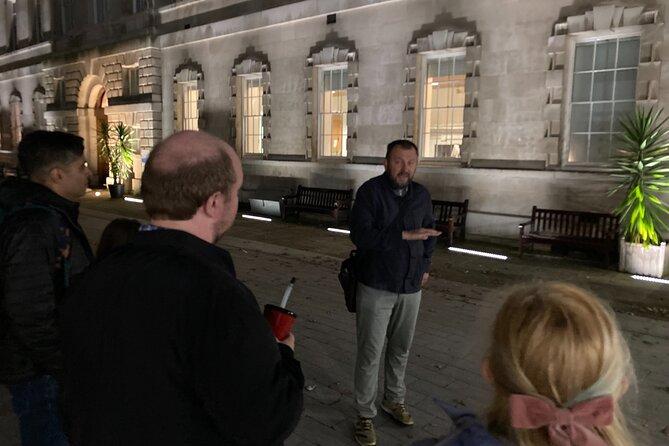
- Nighttime route from Farringdon to the Old Bailey that makes several well-known London sites feel linked.
- Scholar-style storytelling that mixes alleged hauntings with real historical tragedies.
- A small group size (up to 20), which helps the guide keep everyone together in narrow lanes.
- Mobile ticket convenience, so you’re not hunting for paper on arrival.
- All stops are short, meaning you’ll spend less time standing around and more time moving through the atmosphere.
A 6:00 pm London ghost walk that keeps the pace steady
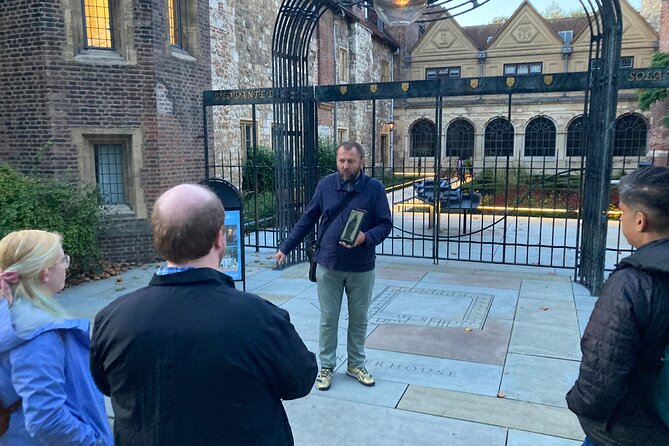
This tour starts at 6:00 pm, which is a great time to see London shift from daytime traffic to a darker, quieter feel. You’re out for about 2 hours, and the format is simple: brief introductions at each landmark, then a walk to the next. That structure matters because it stops the experience from dragging. It also helps you stay engaged, since every segment has a new scene and a new story angle.
You also get a clear sense of how London’s layers overlap. The guide doesn’t just point out old buildings; they connect locations that people often treat as separate stops into one continuous “grim timeline” feel.
You can also read our reviews of more tours and experiences in London.

Getting started at Cafe Pronto, Farringdon Station
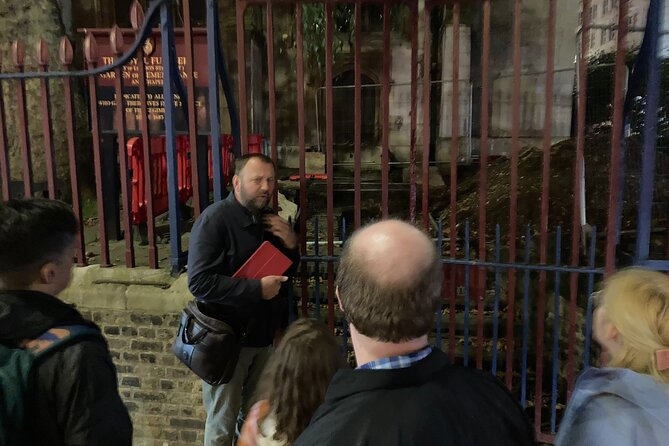
The tour meets outside Cafe Pronto, 43 Cowcross St, London EC1M 6BY. If you arrive a little early, you’ll have an easier time syncing with the group before the guide starts. The meeting point is also practical for getting there by public transport, and it’s in the Farringdon area where you’ll likely already be if you’re staying central.
The first stop kicks off quickly with a story tied to the station itself. That’s a clever way to set expectations: you’re not walking in the dark with a vague theme. You’re starting with a specific location and a specific alleged haunting.
Farringdon Station’s haunting story and the mind the gap theme
At Farringdon, the guide meets you just outside the station and immediately blends a safety reminder with the supernatural angle. The core of this moment is a ghost story about a girl said to haunt the station, framed as a tragic tale from the 18th century.
What I like about starting here is the contrast: the area is busy and colorful, yet the guide steers your attention toward the darker backstory. If you’re the kind of traveler who likes to experience a city through its stories, this is a good match because it forces you to listen past the real-world noise and focus on the narrative.
If you want the most dramatic atmosphere, the tour notes that you might feel it more if you come after midnight. Even without midnight, the 6:00 pm start still gives you low light, which helps the mood.
Smithfield Market: executions as history with a brutal reality check
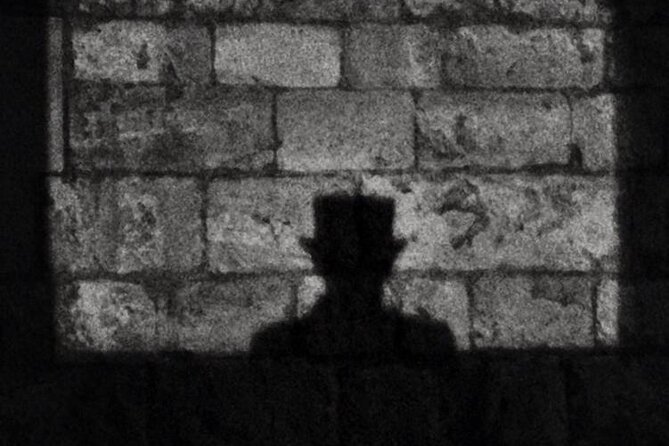
Next comes Smithfield Market, described not as a shopping stop, but as a setting for public executions for centuries. The guide has you close your eyes and imagine what the market looked like back then, which is one of the more effective storytelling tricks in the whole run. It turns a modern urban space into something closer to how it might have felt centuries ago.
This segment’s value is that it doesn’t just say executions happened. It emphasizes the inventiveness of executioners and the way punishment was performed publicly. That can be shocking, and it’s meant to be. Just go in knowing the tone is darker than a typical “spooky legends” walk.
Practical tip: if you don’t like graphic historical detail, you’ll still get the point here without needing every grim imagined beat.
Charterhouse Square plague pits and the discomfort of looking down
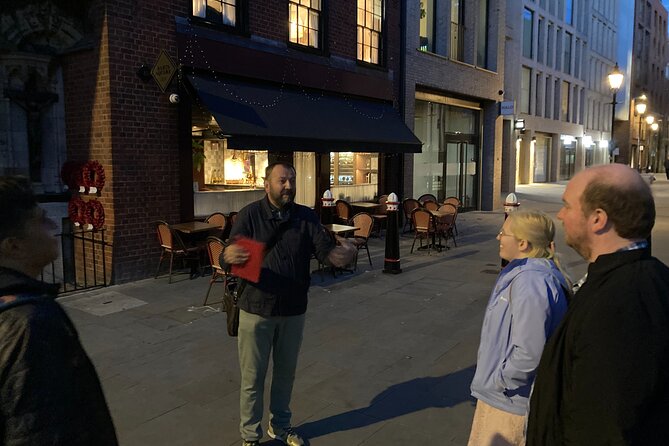
At Charterhouse Square, the mood shifts from street-level violence toward disease and survival. The story centers on plagues and how they changed London, including doctors’ attempts to stop outbreaks and what happened to those who survived.
The key visual cue in this stop is the guide’s push to look under your feet. The tour frames the area as being close to plague pits, and it leans into skull imagery as part of how the past remains physically present beneath a calm-looking park. It’s unsettling in a very specific way: the space feels peaceful in the moment, but the story keeps reminding you that the ground has a past.
If you’re the kind of person who finds history most real when it has a physical anchor, this is a strong stop. If you prefer your scares more ghostly than grim, you might find this one the hardest to enjoy.


Cloth Fair and the clever pre-execution stop for drinks
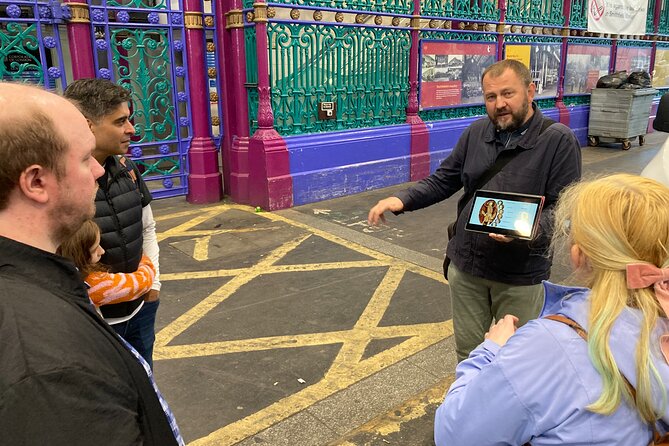
Cloth Fair is short, but it plays an interesting role. The guide points out where you might pick up a drink before attending an execution. That’s not just a spooky detail. It adds a human layer: people ate, drank, and went to public events even when those events ended in death.
This is also a reminder that the tour isn’t only about supernatural claims. It’s about how ordinary life ran alongside extraordinary cruelty.
St. Bartholomew the Great: tombstones, revenge, and what’s missing
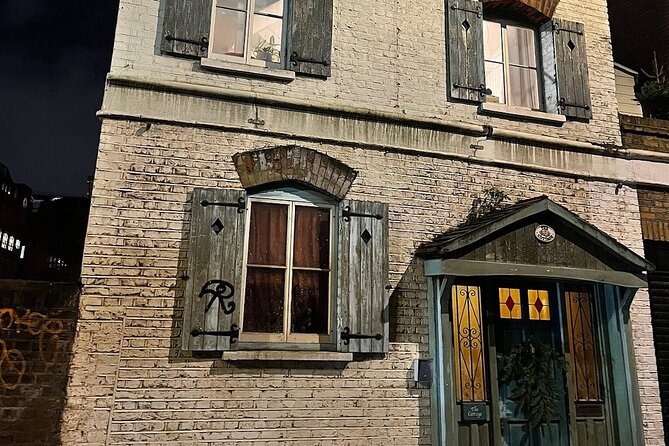
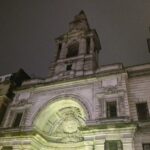
The tour reaches Church of St. Bartholomew the Great, a stop that’s built for atmosphere. You move through narrow passages and older streets until you arrive at one of London’s oldest churches. From there, the focus shifts to burial stories and the idea that rest can be disturbed.
The tour highlights a founder-related tale: something is missing from him now, and the story includes a kind of revenge attempt. The net effect is that the guide turns a tranquil churchyard setting into a place where the past feels active, not distant.
This stop is a good reset point if earlier segments felt too intense. You’re still in the same theme, but the setting is quieter and the mood has room to breathe.
William Wallace Memorial: war history with gory clarity
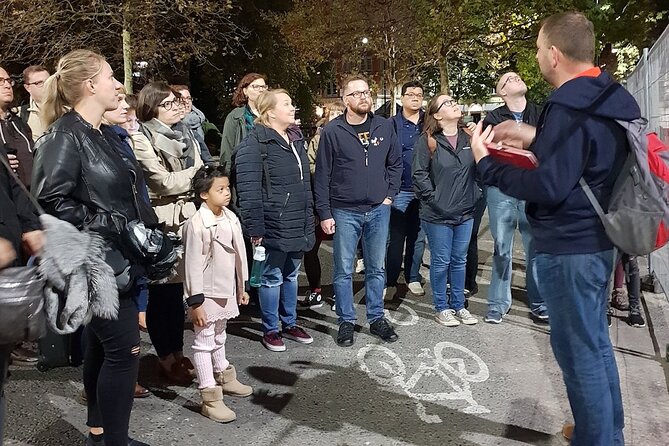
At the William Wallace Memorial, the stories shift toward conflict between England and Scotland. The guide focuses on William Wallace as a memory marker for his people and ties that into details about his triple execution and later consequences.
This is one of those segments where it can help to separate movie versions from the original story. The tour explicitly mentions inaccuracies of film portrayals loosely based on his life. Even if you already know Wallace, the “compare and correct” angle is useful.
If you like history that’s dramatic in a direct, factual way (even when it’s brutal), this stop is likely to land well.
St. Bartholomew’s Hospital Museum: old medicine, hospital horror, and why it matters
Next up is Saint Bartholomew’s Hospital Museum, where the guide introduces what older medical practice looked like. The story emphasizes the tools and methods used in the past, including frightening conditions like poor hygiene practices, shared beds, and an audience watching surgery or amputation.
This stop can be hard for modern comfort levels because it reframes medicine as something that could harm as easily as it could heal. The tour also hints that watching alone could be deadly, which underlines how serious the medical environment could be.
I like that the tour doesn’t treat this as pure shock value. It connects to the bigger theme of London’s suffering and survival across centuries. You’re walking through the aftermath of old systems, not just hearing ghost chatter.
Holy Sepulchre London: empty grave pits and grave-robber economics
At Holy Sepulchre London, the tour points out something missing: where the graves should be, there are empty pits. This segment ties those emptiness marks to times when people took dead bodies from graves and sold them.
It also raises a key question: was it stealing, or something else? The tour frames legality, profit motive, and who would buy remains as part of the story’s logic puzzle. That gives the “gruesome past” theme a different flavor. It’s not only about violence; it’s about commerce built on desperation and death.
If you tend to remember stories with clear cause-and-effect, this stop is strong because the guide lays out the chain of thinking.
Old Bailey finale: serial killer storytelling outside the Jack the Ripper frame
The tour saves its most intense moment for Old Bailey. The guide introduces a legendary courthouse setting and focuses on a serial killer story described as the worst England ever saw, with a clear note to think beyond Jack the Ripper.
This ending is set up as a courtroom-site conclusion, with the tour mentioning that the location stands on a former prison site and that the story connects murder, money, and chilling persistence. There’s also a “focus on an ordinarily looking woman” detail in the way the guide frames the character.
What makes this finale work is the setting. Even if you’ve been to Old Bailey before, nighttime changes how you feel about a courthouse. It stops being a landmark and starts being a stage for the worst decisions society made.
Guides and the storytelling style that makes it click
The tour is led by a local guide, and the energy matters because the subject matter is heavy. In feedback, guides named Matt and Carolina are praised for being patient with the group, telling the stories clearly, and creating the right atmosphere. One comment also notes a dramatic guide look for Halloween, which fits the theme without turning the tour into full theater.
If you want the best experience, engage with the group rules the guide sets. Since the stops are short and the route moves from Farringdon toward St. Paul’s area, you’ll get more out of it by listening actively rather than trying to multitask with photos every minute.
Also, if you’re a little nervous about nighttime walking, the small group format (max 20) helps. It gives the guide room to keep everyone together through narrow lanes and older streets.
Price and what $49 buys you for 2 hours in London
At $49.00 per person, this isn’t a bargain ghost story where you get ten minutes and a vague legend. You’re paying for an organized nighttime walk through major sites, with a guide who links the places into a coherent theme.
You also get real value from the structure:
- 2 hours keeps it focused.
- Multiple landmark stops give you context in different settings: station, market, park, churches, hospital yard, and courthouse.
- The group stays relatively small, which makes the storytelling feel personal rather than like a lecture in a crowd.
- Mobile ticket means smoother check-in.
In simple terms: you’re paying for a guided “London in the dark” narrative that you likely couldn’t stitch together on your own in one evening without planning.
Who should book this London Ghosts & Gruesome Past tour
This tour is ideal if you:
- Like historical stories that include executions, plague, and the harsh sides of public life.
- Want a night walk with organization and a guide keeping the group moving.
- Enjoy alleged haunting style stories alongside documented suffering.
It may not be for you if you:
- Prefer mild legends with no graphic historical tone.
- Get uncomfortable with medical-history details about old practices and surgery conditions.
- Hate nighttime walking or narrow passages, even with a guided group.
If you’re somewhere in the middle, you can still enjoy it. The stops are short, and the guide mixes settings so you don’t stay stuck in one kind of horror for too long.
Should you book this tour
Yes, if you want a guided London night with a clear theme and strong storytelling. The price feels reasonable for a 2-hour guided route through multiple landmark areas, ending at Old Bailey, and the guide style seems built for pacing and atmosphere.
Before you book, decide what kind of scares you want. This is not only “boo at the corner.” It’s ghost stories plus grim historical events, including executions and hospital-era horror. If that matches your travel taste, you’ll likely have a memorable evening.
FAQ
What time does the tour start?
The tour starts at 6:00 pm.
How long is the London Ghosts & Gruesome Past Nighttime Walking Tour?
It lasts about 2 hours.
How much does it cost?
The price is $49.00 per person.
Where do we meet the guide?
You meet at Cafe Pronto, 43 Cowcross St, London EC1M 6BY.
Where does the tour end?
The tour ends at 19 Old Bailey, London EC2A 9EA, and it finishes near St. Paul’s Underground Station.
Do I need to bring a paper ticket?
The tour uses a mobile ticket.
How big is the group?
The tour has a maximum group size of 20 travelers.
Are service animals allowed?
Yes, service animals are allowed.
Is the tour near public transportation?
Yes, it’s near public transportation.