REVIEW · KINGSTON
Ghost Tour of Queen’s University
Book on Viator →Operated by Haunted Walk of Kingston · Bookable on Viator
Ghosts feel close when you’re walking Kingston’s historic core at night. This Ghost Tour of Queen’s University is a tight, well-paced 1 hour 15 minutes with stories tied to specific buildings you can actually spot and picture.
I love how the guide connects each haunting to something real: the Greek Revival courthouse, Gothic Revival Chalmers United Church, and the campus buildings with past jobs like student housing and medical training. I also like the small group feel (up to 20 people) because it keeps the walk moving without turning the stories into background noise.
One thing to consider: it runs at 8:00 pm and depends on good weather, so if you hate night walks in the dark or wet air, plan your outfit and timing carefully.
In This Review
- Key highlights you’ll notice right away
- Meeting at the Kingston Courthouse: the night starts in the right place
- The 1 hour 15 minutes format: short enough for a quick win
- Stop-by-stop: how the route tells Kingston’s ghost story
- Chalmers United Church: Gothic Revival chills at street level
- Queen’s University campus: where the stories stay grounded
- Fleming Hall and the science-to-haunting bridge
- Four Directions: Indigenous student support meets tragic storytelling
- Summerhill: from villa to legislature boarding house to medical-school darkness
- Hospitals near Queen’s: Kingston General Hospital and the cost of empty rooms
- Agnes Etherington Art Centre: a museum stop with a haunting advantage
- Dunning Hall: economics lecture halls and modern stone hauntings
- John Deutsch University Centre: where the Alfie Pierce stories gather
- Price and value: what you get for $25.31
- Weather, night walking, and what to wear
- Who this tour suits best
- Should you book the Ghost Tour of Queen’s University?
- FAQ
- FAQ
- Where does the tour start and end?
- What time does the ghost tour begin?
- How long is the tour?
- How much does the Ghost Tour of Queen’s University cost?
- Is the tour offered in English?
- How many people are in a group?
- Do I need a printed ticket?
- What happens if the weather is poor?
- Can I cancel for a full refund?
- Are service animals allowed?
Key highlights you’ll notice right away
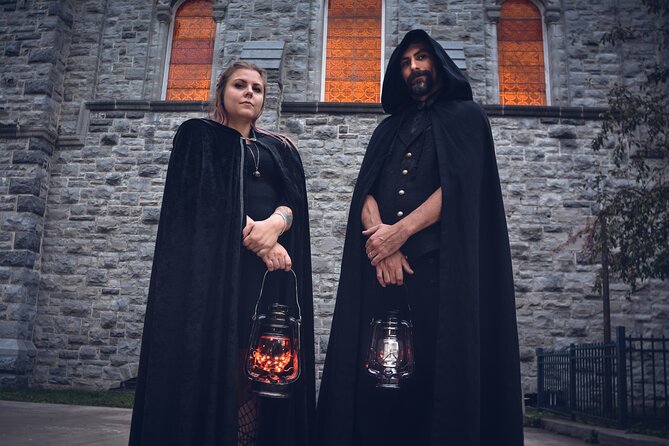
- Greek Revival Kingston Courthouse: a National Historic Site stop that kicks things off
- Chalmers United Church (Gothic Revival, 1890): one of the church stories on the route
- Queen’s University campus stops: from Fleming Hall to Summerhill to Dunning Hall
- Hospital history with spooky angles: Kingston General Hospital and a second hospital site
- Arts + hauntings: Agnes Etherington Art Centre is part of the itinerary
- Alfie Pierce at John Deutsch University Centre: where most of that spirit’s events happen
Meeting at the Kingston Courthouse: the night starts in the right place
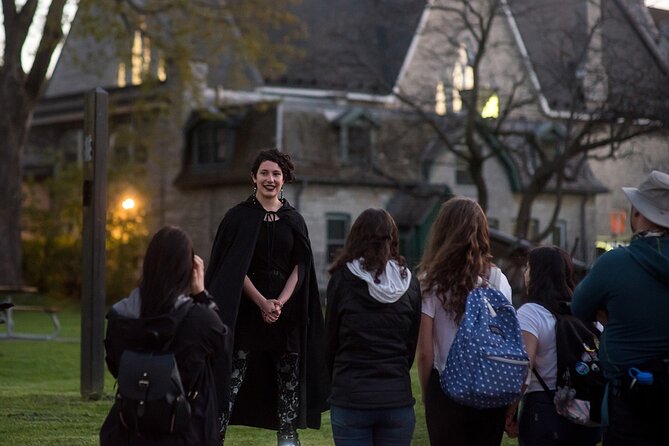
You meet at the Kingston (Frontenac County) Courthouse on Court Street, starting at 8:00 pm. The start point is easy to find, and it’s near public transportation, which matters in a city where you don’t want to burn time hunting parking spots.
The first stop is the courthouse itself, described as an imposing limestone building in Greek Revival style, built in the late 1850s and designated a National Historic Site of Canada in 1980. Even if you’re not chasing horror, that opening is a smart move: you get your bearings fast, and you’re standing in a place that already feels important and story-worthy.
This is also where the tour’s tone gets set. You’re not wandering randomly. You’re walking with a plan, hearing why each spot on the route matters before the stories get more campus-specific.
You can also read our reviews of more tours and experiences in Kingston.
The 1 hour 15 minutes format: short enough for a quick win
This is a compact evening tour, roughly 1 hour 15 minutes. That length is one of the biggest reasons I think it’s good value. You get multiple stops across Queen’s University and the surrounding historic core without losing an entire night.
The pacing matters, especially if you’re bringing kids. The experience is designed so it can work well for children, and the story format stays connected to visible buildings rather than becoming a long lecture. If you’re the type who likes your travel stories with a bit of action—walking, pointing, looking up—that format clicks.
Because the max group size is 20 travelers, you’re less likely to feel like one voice in a crowd. You can still hear the details, and it’s easier to keep track of where you are. You’ll also want to dress for a night walk. The tour requires good weather, so if the forecast looks shaky, check it and plan layers.
Stop-by-stop: how the route tells Kingston’s ghost story
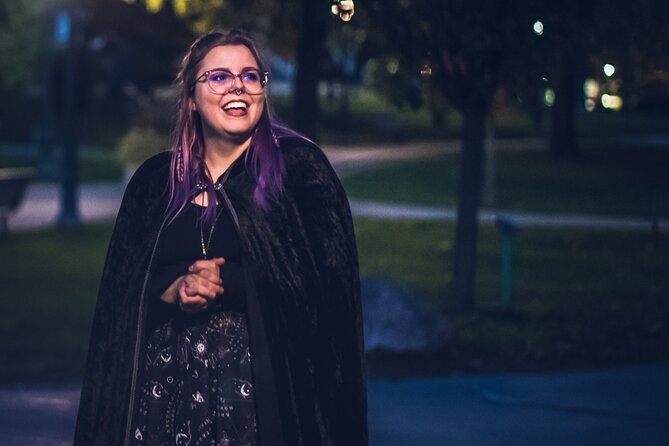
Chalmers United Church: Gothic Revival chills at street level
After the courthouse, the tour heads to Chalmers United Church. This is a striking Gothic Revival church built in 1890 and recognized as a heritage building. It’s the kind of place where architecture does half the spooky work, even before the first sentence of the story lands.
What I like about this stop is that the haunting doesn’t feel random. It’s tied to a real landmark with a clear identity in Kingston. Gothic Revival details make it easy to picture the mood the guide is describing, and you get a tangible sense of why this neighborhood has held onto stories for so long.
Practical watch-out: churches can be emotionally intense, so if you’re sensitive to heavy or upsetting themes, you may want to consider how your group handles that tone.
Queen’s University campus: where the stories stay grounded
Then you’re on the Queen’s University campus, which dates back to the 1840s. The campus is described as both historic and active, with a mix of older architecture, green spaces, and modern facilities. That blend is useful for a ghost tour. It means you’re not just looking at decayed ruins—you’re seeing everyday student spaces wrapped in older layers.
Most of the ghost stories are shared here, and that’s the heart of the experience. Instead of bouncing between unrelated spooky sites, the tour treats the campus like a timeline. Old buildings get past uses explained, and the hauntings make more sense because you understand what each space used to do.
This is also a strong stop for photo lovers who prefer “place-based” pictures. The buildings are part of the story, so you’ll know what you’re photographing and why.
Fleming Hall and the science-to-haunting bridge
One of the campus stops is Fleming Hall, which honors several figures connected to Queen’s. The original building was named for Sir Sandford Fleming, noted as a chancellor of Queen’s. The other honourees were affiliated with electrical engineering, which was housed in Fleming Hall until 1989.
This is where I like the tour’s smart trick: it treats engineering and campus life as part of the supernatural angle. You’re not hearing generic ghost lines. You’re hearing how the building’s purpose over time shaped the kind of stories people associate with it.
The Jemmett Wing is named for Douglas Mill Jemmett, connected to a chilling ghost story shared on the walk. If you like hauntings tied to a person (not just a vibe), this is a key stop.
Four Directions: Indigenous student support meets tragic storytelling
Next comes Four Directions, a home connected to supporting Indigenous students. It was founded in 1996, moved into this building in 2000, and the home itself dates to 1886. Notable residents have included Canadian poet Charles Sangster—and yes, the tour shares his tragic story here.
I appreciate this stop because it adds a human layer. The tour isn’t only about spooky architecture. It’s also about memory—who lived in these spaces, how communities formed, and how stories carry forward.
Consideration: this stop leans toward tragic themes, so it may hit harder than the lighter frights. If you’re coming with a mixed-age group, you can decide in advance how closely you want to follow each story.
Summerhill: from villa to legislature boarding house to medical-school darkness
Summerhill is one of the most cinematic stops on the route. It was constructed in 1839 and originally intended as the country villa of Archdeacon George O’Kill Stuart. Later, when Kingston became the capital of Canada, it was used for a time as a boarding house for members of the Legislative Assembly.
Then Queen’s purchased the building in 1854, and for many years it was the university’s only building. Later, it housed the medical school, and the tour points to macabre practices linked to that use.
This stop works because it’s a whole bundle of transformations in one place. You’re walking through a building that has worn different identities over time. That’s exactly the kind of setting where ghost stories feel plausible to your brain: the space keeps changing, and people keep attaching meaning to it.
If you like your history with an edge, this is one of the must-listen moments.
Hospitals near Queen’s: Kingston General Hospital and the cost of empty rooms
Kingston has many hospitals used for training medical students studying at Queen’s University, and the tour uses that connection to add another layer to the hauntings. Kingston General Hospital is built in 1835, and the story adds a detail that’s eerie in a different way: once the original building was completed, there wasn’t money left in the budget to purchase furnishings, leaving it standing empty for three years.
That empty stretch gives the story a strong emotional hook. It’s not just about ghost sightings; it’s about a place built to function but forced to wait. The tour also notes that the hospital had numerous uses over time, even acting as Canada’s first temporary parliament building.
The tour shares ghost stories from two hospital sites, but only one is named here. Even so, the effect is the same: you’ll leave with a clearer sense of how Kingston’s institutions and old buildings overlap.
Practical note: hospitals and institutional buildings can be darker-feeling at night. Wear shoes with solid grip.
Agnes Etherington Art Centre: a museum stop with a haunting advantage
On the route, you’ll also hit Agnes Etherington Art Centre, a renowned art museum on Queen’s campus. It has a collection of over 17,000 works of art, plus exhibitions and programming throughout the year. The tour even points out that it has tranquil outdoor spaces, which you might notice visually before the story lands.
Then comes the part that makes it a perfect ghost tour stop: the art centre is described as haunted. Museums are a great setting for this kind of evening story because the spaces feel public and quiet at the same time. You get contrast—beauty and calm, then a strange twist.
If you’re the type who likes the supernatural toned down just enough to stay interesting rather than scary, this is a strong midpoint before the last campus-focused stops.
Dunning Hall: economics lecture halls and modern stone hauntings
A lesser-known stop is Dunning Hall, built in 1960. It’s a modern stone building and home to Queen’s Department of Economics, with some of the university’s largest lecture halls.
This is another reason I like this tour: it doesn’t only cover old stone. It includes a newer building too, which makes the haunting feel like it belongs to daily student life—not only to the distant past.
If you’re curious how ghost stories survive changing campuses, Dunning Hall is a good example. The building is functional and institutional, and the story treats that reality with respect.
John Deutsch University Centre: where the Alfie Pierce stories gather
You’ll end at, or at least spend your final time at, John Deutsch University Centre, rebuilt in 1947 after the original Student’s Union was destroyed in a fire. This is where most of the ghostly events attributed to Alfie Pierce tend to take place.
This ending matters. It gives the story a focal point instead of spreading out too thin at the end. By the time you reach this final campus hub, you’ve heard enough about past uses and named individuals that Alfie’s story feels like the closing chapter.
Then the tour ends back at the meeting point.
Price and value: what you get for $25.31
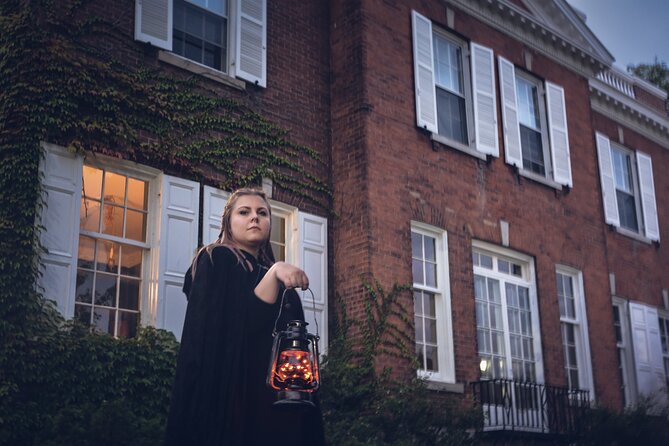
At $25.31 per person for about 1 hour 15 minutes, this tour is priced like a focused evening activity, not a day-long excursion. The value comes from how many meaningful stops you get for the time: multiple campus buildings, a major church, and hospital-adjacent history, all tied together into one walk.
You also get a mobile ticket, which is convenient if you hate printed paperwork. And with a maximum of 20 on the group, you’re paying for guided storytelling with enough spacing to hear it properly.
One practical tip on value: because this tour is often booked about 10 days in advance on average, I’d avoid waiting too long if your dates are fixed. Kingston can surprise you with demand in the summer and during school-related travel.
Weather, night walking, and what to wear
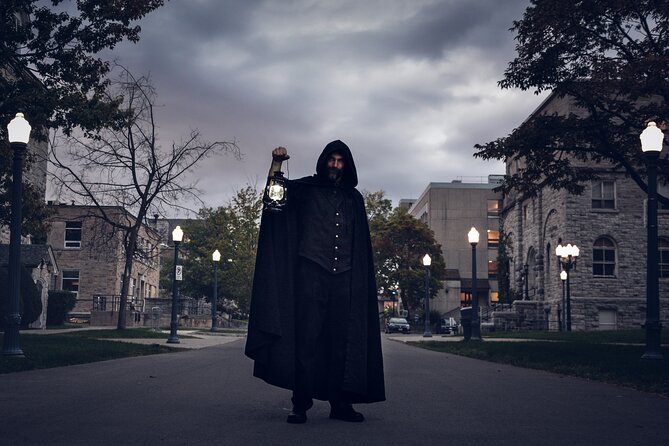
The tour requires good weather, and if weather is poor it’s canceled with an option for a different date or a full refund. That tells you how the route operates: this is an outdoor night walk with stops, not something you can easily “tune out” if it’s pouring.
Bring a light layer for the evening and wear shoes you trust on uneven sidewalks. Since the tour starts at 8:00 pm, the darker conditions can make you slow down. Building in a few minutes for that is a good call.
Who this tour suits best
This fits best if you like:
- Ghost stories tied to real buildings instead of vague rumors
- A short evening plan that uses walking to tell a story
- People-friendly pacing that can work for children
- A mix of campus life, church landmarks, art spaces, and institutional history
If you want jump-scare thrills every minute, this likely won’t be your only ghost fix. But if you want an evening that teaches Kingston and Queen’s University through story, it’s an easy yes.
Should you book the Ghost Tour of Queen’s University?
If you’re in Kingston and want one guided night activity that connects Queen’s University landmarks to darker uses and memorable names—Sir Sandford Fleming, Charles Sangster, Douglas Mill Jemmett, Alfie Pierce—this is a great pick.
I’d skip it only if you dislike nighttime walking or you know the weather will likely be rough. Otherwise, the combination of a small group, a clear 8:00 pm start, and multiple high-meaning stops makes this a strong way to spend a single evening in Kingston.
FAQ
FAQ
Where does the tour start and end?
You start at Kingston (Frontenac County) Courthouse, 5 Court St, Kingston, ON K7L 2N4, Canada, and the tour ends back at the same meeting point.
What time does the ghost tour begin?
The tour starts at 8:00 pm.
How long is the tour?
It runs for about 1 hour 15 minutes.
How much does the Ghost Tour of Queen’s University cost?
The price is $25.31 per person.
Is the tour offered in English?
Yes, it is offered in English.
How many people are in a group?
The tour has a maximum of 20 travelers.
Do I need a printed ticket?
No. The tour uses a mobile ticket.
What happens if the weather is poor?
The tour requires good weather. If it’s canceled due to poor weather, you’ll be offered a different date or a full refund.
Can I cancel for a full refund?
Yes. Free cancellation is available up to 24 hours in advance of the experience’s start time for a full refund.
Are service animals allowed?
Yes, service animals are allowed.