REVIEW · CHICAGO
Wind and Souls an Adults Only Ghost Tour in Chicago
Book on Viator →Operated by Ghost City Tours of Chicago · Bookable on Viator
Chicago’s ghosts have good street manners. This adults-only night walk mixes real tragedies with spooky lore at major landmarks, so you get stories you’ll never find in a typical guidebook. Two things I really like: you’re surrounded by fellow fright-lovers (not a random crowd), and you get plenty of chances to ask questions as you go.
One possible drawback: it’s a lot of outdoor walking, and if the weather is rough, it can be harder to hear the details. Dress for the cold, and be ready to keep moving for about 90 minutes.
In This Review
- Key Things To Know Before You Go
- How Wind and Souls Makes Chicago Feel Uncomfortably Real
- Price and What You’re Really Paying For
- Start Point at 8:30 pm: Getting Your Bearings Fast
- Stop 1: The Chicago Theatre and the Iroquois Theatre Tragedy (602 Lives)
- Stop 2: The Nederlander Theatre, the Oriental Theatre Link, and the Alley of Death
- Stop 3: Chicago Cultural Center and Frederick H. Hild’s Lingering Presence
- Stop 4: Millennium Park and the Burial Ground Connection
- Stop 5: The Art Institute of Chicago and the Haunted Collections
- Stop 6: Congress Plaza Hotel and Stephen King’s Room 441 Inspiration
- Stop 7: Exchequer Restaurant & Pub and the Ghost of Al Capone
- The Real Secret Sauce: The Guide and the Question-Friendly Format
- Walking Tour Reality: Pacing, Time at Each Stop, and How to Enjoy It
- Who This Tour Is Best For
- Should You Book Wind and Souls?
- FAQ
- How much does Wind and Souls cost?
- How long is the tour?
- What time does the tour start?
- Where does the tour start and end?
- Is the tour offered in English?
- Are tickets mobile?
- How large are the groups?
- Is it suitable for most people and are service animals allowed?
- What happens if the weather is poor?
- What is the cancellation policy?
Key Things To Know Before You Go
- Adults-only vibe: you’ll be with people looking for spooky history, not families or daytime tourists.
- Small group size: capped at 30 travelers, so it’s easier to hear and connect with the guide.
- Built-in question time: the format gives you real chances to ask follow-ups at each stop.
- Multiple Chicago icons in one loop: theatre history, a library figure, museum haunting, and a famous hotel and restaurant.
- Mobile ticket ready: no fuss with paper tickets—just your phone at check-in.
- Weather matters: the tour requires good weather, and you’ll be offered another date or a refund if it’s canceled for poor conditions.
How Wind and Souls Makes Chicago Feel Uncomfortably Real
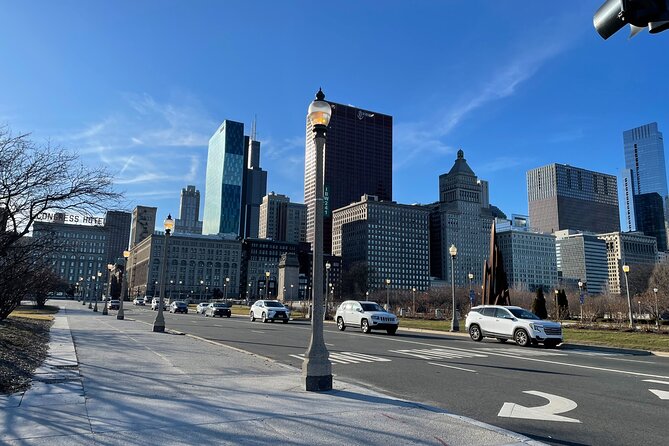
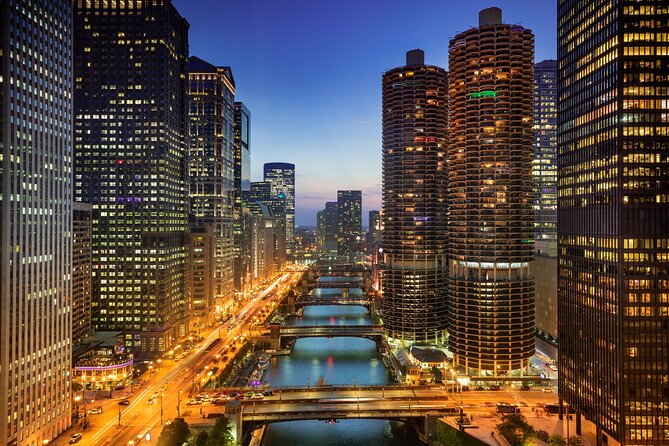
Chicago at night has a different rhythm. The streets look familiar, but the stories you’re hearing flip the meaning of the same buildings. That’s the whole point of this tour: you’re not just chasing jump-scares. You’re learning how the city’s biggest tragedies, famous names, and landmark walls became part of its ghost stories.
I love that the tour stays grounded in places you can actually point to: the theatre district, major civic buildings, and a world-class museum. I also love that the experience is social. With a maximum of 30 people, you’re not stuck yelling over a huge pack—more people can actually hear the guide, and conversation feels natural before and after each stop.
Here’s what to consider up front: it’s a walking tour at a fixed start time (8:30 pm). If you’re not comfortable with nighttime walking or cold air, plan accordingly. And if you already know Chicago history, you might still enjoy it for the spooky spin—but you’ll want to treat it like a story tour, not a deep museum lesson.
You can also read our reviews of more tours and experiences in Chicago.



Price and What You’re Really Paying For
At $34.99 per person for about 1 hour 30 minutes, you’re paying for a guided route through multiple landmark stops, plus a local guide who ties everything together. You’re not paying museum entry fees at the stops listed here—admission at each stop is noted as free—so the value comes from the pacing and the storytelling, not ticketed attractions.
Think of it like a concentrated “Chicago spooky night course.” If you want one evening activity that hits several iconic locations and gives you context fast, this fits well. If you’re hoping for a slow, sit-down experience with long explanations, this may feel brisk.
Start Point at 8:30 pm: Getting Your Bearings Fast
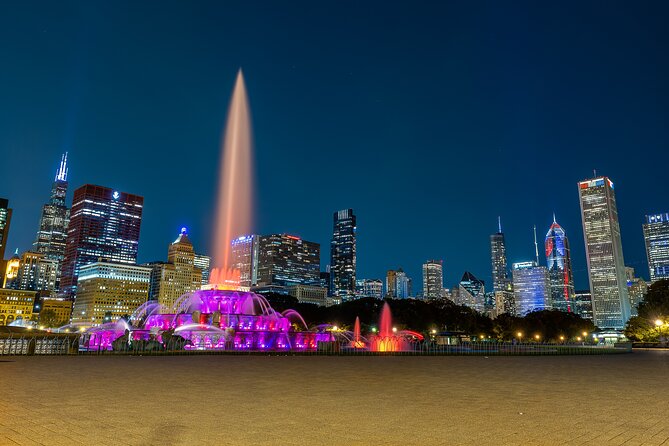
The tour starts at The Chicago Theatre, 175 N State St at 8:30 pm. The ending is at Exchequer Restaurant & Pub, 226 S Wabash Ave, though the exact end location may vary depending on the route.
This matters because it affects how easy the night will be for you:
- You’ll want to arrive a few minutes early so you can start on time.
- Because it ends near a different area, it’s smart to plan your dinner or transportation after the tour rather than during it.
- Since it’s a mobile-ticket tour, keep your confirmation accessible so you don’t waste time.
Also, it’s offered in English, and the tour allows service animals. It’s listed as doable for most travelers, which is encouraging if you’re traveling without special needs—just remember you should expect outdoor walking at night.
Stop 1: The Chicago Theatre and the Iroquois Theatre Tragedy (602 Lives)
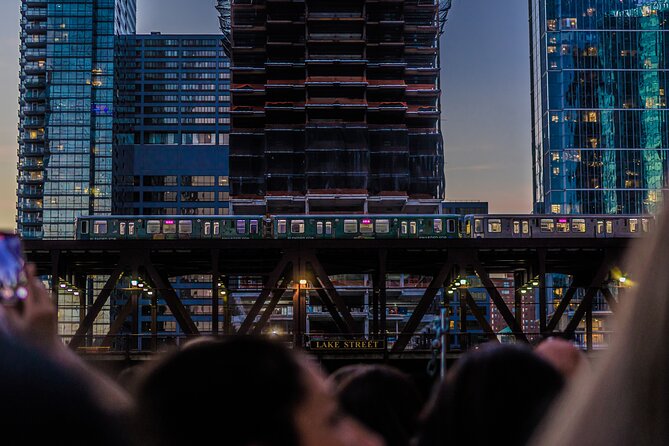
Your first big stop is The Chicago Theatre. The story goes to the heart of Chicago theatre history: the tragedy of the Iroquois Theatre in 1903, where 602 people lost their lives.
This opening is effective because it sets the emotional tone. Ghost tours can sometimes feel like campfire stories. Here, the tone is heavier. You start with real names and real stakes, so later “paranormal” talk lands with more weight.
What you might like about the way this stop is handled:
- You get a strong historical anchor early, so the rest of the route doesn’t feel random.
- It builds curiosity quickly. You’ll probably start noticing how many Chicago landmarks connect back to the theatre world.
Possible drawback: because the story is intense and it’s early in the tour, you may want to be attentive from the first minutes. If you’re distracted or arriving late, you’ll miss the thread that ties the stops together.
Stop 2: The Nederlander Theatre, the Oriental Theatre Link, and the Alley of Death
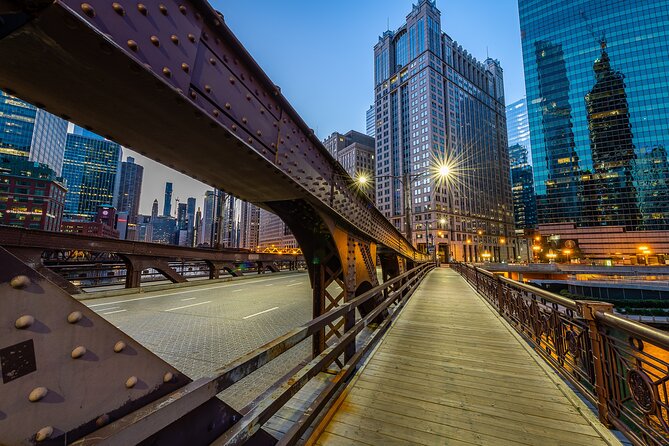
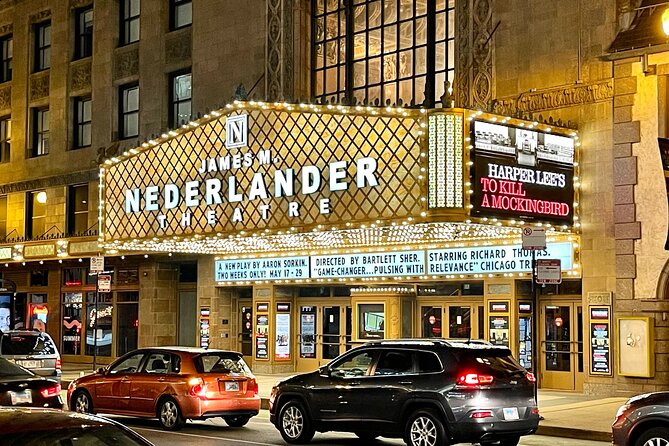
Next you visit James M. Nederlander Theatre, in an area connected to the former Oriental Theatre and—crucially—connected again to the Iroquois story. The guide continues the tragedy’s narrative and then turns toward reported paranormal activity in the Alley of Death.
Why this stop works: it’s not just one building. You’re learning how a whole cluster of city spaces became part of the same story web. Theatres, alleys, and backstage-adjacent spaces often carry their own myths—and here, the tour makes that idea tangible by moving you through the landscape.
Practical note: because it’s still early and you’re still getting your hearing dialed in for night talk, this is a good place to be positioned where you can actually see and listen. If cold air makes your ears go numb, you’ll feel it fast here, so warm layers help.




Stop 3: Chicago Cultural Center and Frederick H. Hild’s Lingering Presence
At the Chicago Cultural Center, the tour shifts from theatre to civic life—and that’s a nice change of pace. You’ll talk about Frederick H. Hild, noted as the second librarian in Chicago’s public library system history, and how his spirit is said to be connected to the building.
This is where the tour broadens. It’s easy for ghost tours to stay stuck in one lane—crime, death, and spooky corners. Here, you get a story tied to education and public service. Whether you take the paranormal angle literally or not, the “who mattered in Chicago” theme is a solid way to see the city in a new light.
What you’ll likely enjoy:
- Learning a specific historical figure and seeing how the tour ties him to a physical place.
- Getting a different kind of chill than the theatre stops, because the setting feels more civic and daytime-friendly—until the story reframes it.
Stop 4: Millennium Park and the Burial Ground Connection
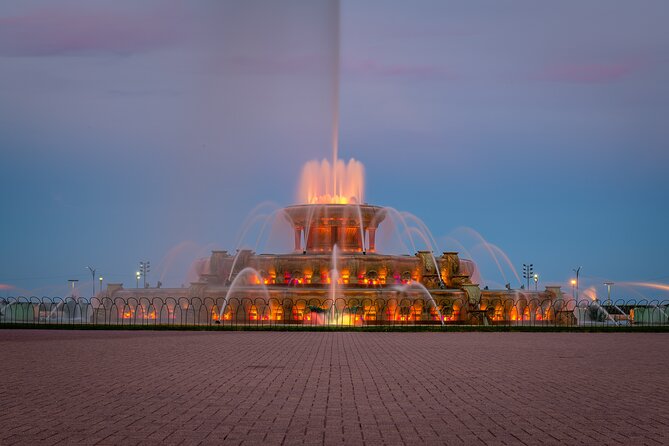
Then you move to Millennium Park. The tour covers stories from the area, including how Lincoln Park was once a burial ground.
This part is valuable because it reminds you that Chicago is layered. Parks aren’t just “green space.” They’re land with past lives—sometimes literally. Even if you don’t buy the ghost angle, this kind of context changes the way you look at the city.
One more practical benefit: Millennium Park is a recognizable destination. It helps you anchor what you’re hearing, instead of feeling like you’re chasing whispers down obscure streets.
Stop 5: The Art Institute of Chicago and the Haunted Collections
At the Art Institute of Chicago, the tour points out that the museum is the second-largest art museum in the country. You’ll also hear how some of the museum’s 300,000+ items are said to be haunted.
This is a big stop, and it’s also where your expectations should be set. A ghost tour in a museum can go one of two ways: either it’s all about art facts with a light spooky overlay, or it’s mostly ghost stories with just enough museum framing to make it believable. Here, the focus is on haunting—so think of it as guided storytelling rather than a full-on museum lecture.
What I like about including this stop:
- You’re getting the “haunted Chicago” theme while standing in a world-class cultural institution.
- It gives you a different kind of atmosphere—less tragedy-only, more mystery and atmosphere.
Possible drawback: if you’re hoping for deep art history, you’ll likely want other daytime plans too. This tour moves on quickly between points.
Stop 6: Congress Plaza Hotel and Stephen King’s Room 441 Inspiration
Next is the Congress Plaza Hotel & Convention Center, described as one of the most haunted hotels in the country. The story includes how Stephen King was inspired to write a short story by Room 441, plus the tragedies that helped turn it into a paranormal hot spot.
This stop is a crowd-pleaser because it ties something modern to something old. King is a recognizable name, and the “Room 441” reference gives the ghost story a direct bridge to popular culture. Even if you’re not a horror reader, it’s an easy hook to remember later.
Practical tip: hotels can feel windier at night and harder to hear in open areas. If you’re sensitive to noise or lose focus in the cold, be ready to concentrate here—this is one of the most story-dense stops.
Stop 7: Exchequer Restaurant & Pub and the Ghost of Al Capone
The tour ends at Exchequer Restaurant & Pub. On the way, you’ll hear the story of a figure that haunts not just one place, but the entirety of Chicago: the Ghost of Al Capone.
This ending is smart for two reasons:
- Al Capone is instantly recognizable, so it’s a satisfying “final boss” for the night’s storytelling.
- Ending at a restaurant makes the next step easy. You can grab food afterward without thinking about where you’ll go next.
Also, because the tour ends here, it’s a good moment to ask any last questions. If you’ve been collecting curiosities all night, this is when the guide can clear them up.
The Real Secret Sauce: The Guide and the Question-Friendly Format
This tour’s biggest strength is how social it feels without getting chaotic. With a maximum of 30 people, the guide can keep momentum while still letting you ask questions. That’s what turns “a list of haunted places” into a shared night story.
Guides can make or break ghost tours. Based on past experiences with this operator, you might get a guide like Joe, known for being funny and bringing plenty of fun and gory facts. Or you might get James, who’s been described as enthusiastic and charming, and the tour tends to feel smoother in a small group setting.
Even if you don’t get those exact guides, look for the same traits:
- Humor that doesn’t kill the mood
- Quick pacing that keeps the story moving
- A willingness to answer follow-ups rather than rushing to the next stop
One caution from the same sort of experience: if you’re in cold weather, hearing can get tough. Plan to wear layers and keep your attention. Ghost tours reward focus.
Walking Tour Reality: Pacing, Time at Each Stop, and How to Enjoy It
You’ll be on the move for about 1 hour 30 minutes, with each stop lasting roughly 11 to 13 minutes. That’s enough time for a solid story, but it’s not enough for a long museum-style explanation at every location.
This is the main “know before you go” point. If you want the most information about the places you personally care about, you’ll need to choose what type of experience you want:
- If you want a wide-ranging spooky tour that hits multiple icons, this pacing is a win.
- If you want deep detail at fewer locations, you might prefer a longer, more specialized tour.
The good news is that the question-friendly format helps. If there’s one stop you find especially interesting, asking targeted questions can help you get more out of the time you have.
Who This Tour Is Best For
Wind and Souls is a strong match if you:
- Want an adults-only evening activity in Chicago
- Like your ghost stories tied to real places and real tragedies
- Enjoy asking questions and talking with your group rather than silently following along
It also fits well for visitors who want to “see more of Chicago in one night” without spending all day doing indoor attractions. With major landmarks on the route, you’ll get a feel for different parts of the city after dark.
If you’re traveling with someone who loves horror history but doesn’t want a scary movie atmosphere, this hits a good balance: spooky, but grounded.
Should You Book Wind and Souls?
I’d book this if you want a social, question-friendly 90-minute walking ghost tour that connects Chicago’s biggest historic moments with its haunting lore. At $34.99, it’s also priced like a smart activity add-on rather than a major budget item—especially since the tour’s stops are described as free admission points.
Skip it (or plan carefully) if:
- You hate cold-weather outdoor walking
- You want long, slow explanations or deep dives into one specific museum or era
- You need an experience with minimal walking and lots of time to sit
If you can handle the night air and you’re in the mood for stories that mix theatre tragedy, civic figures, museum myths, and famous ghost references, this tour makes a memorable evening.
FAQ
How much does Wind and Souls cost?
It’s priced at $34.99 per person.
How long is the tour?
The duration is about 1 hour 30 minutes.
What time does the tour start?
The start time is 8:30 pm.
Where does the tour start and end?
It starts at The Chicago Theatre, 175 N State St, Chicago, IL 60601. It ends at Exchequer Restaurant & Pub, 226 S Wabash Ave, Chicago, IL 60604. The end location may vary depending on the route.
Is the tour offered in English?
Yes, it’s offered in English.
Are tickets mobile?
Yes, you’ll receive a mobile ticket.
How large are the groups?
There is a maximum of 30 travelers.
Is it suitable for most people and are service animals allowed?
Most travelers can participate, and service animals are allowed.
What happens if the weather is poor?
This tour requires good weather. If it’s canceled due to poor weather, you’ll be offered a different date or a full refund.
What is the cancellation policy?
Free cancellation is available. You can cancel up to 24 hours in advance for a full refund. If you cancel less than 24 hours before the start time, the amount you paid is not refunded.