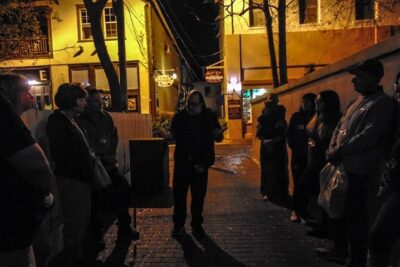
REVIEW · OAHU
Honolulu Night Marchers Ghost Tour
Book on Viator →Operated by Mysteries of Hawaii · Bookable on Viator
Honolulu at night gets extra spooky when you follow the stories. This 90-minute walking tour focuses on night marcher paths tied to ancient Hawaiian places, told by a local guide in a way that feels cultural, not gimmicky.
I especially like the Native Hawaiian ownership and the fact that the tour centers on mythology, history, and eyewitness-style accounts. I also like the small-group feel (up to 50 people), which helps the guide keep the tone personal and conversational.
One watch-out: this is a walking ghost tour with a heavy storytelling style, so if you dislike spooky lore or you arrive late, you can miss the setup and feel a bit lost.
Key things I’d zero in on
- Native Hawaiian storytelling with Lopaka Kapanui guiding the experience end to end
- Downtown Honolulu at night with multiple story stops along the walk, not just one photo moment
- Night marcher routes connected to the ancient sacrificial heiau site of Pakaka
- Documented-style paranormal accounts paired with images and evidence-style stories
- 90 minutes, $35 price that includes the guided experience (no food add-on)
- Max 50 travelers for a more manageable, interactive group vibe
In This Review
- Night marchers in Honolulu: why this tour feels different
- Starting at King Kamehameha I Statue: how you’ll find the group
- The core walk through Downtown Honolulu (the one big stop)
- Pakaka, heiau paths, and how the story connects the old to the new
- Lopaka Kapanui’s storytelling style: warm, interactive, and a little funny
- What you’ll actually do and notice during the 90 minutes
- Price and value: does $35 make sense here?
- Weather, timing, and what to bring for a smooth night
- Who should book this ghost tour—and who might skip it
- Should you book Honolulu Night Marchers Ghost Tour?
- FAQ
- Where does the tour start?
- What time does the night marchers ghost tour begin?
- How long is the tour?
- Is food included in the ticket price?
- What language is the tour offered in?
- Is the price $35 all-in, or does it require extra admission?
- How big is the group?
- What happens if weather is bad?
Night marchers in Honolulu: why this tour feels different
If you’ve done generic “haunted city” tours, this one changes the angle. Instead of treating ghosts like the main product, it treats them like a doorway into place-based Hawaiian tradition. The guide connects what people report in downtown Honolulu with older spiritual geography—where certain routes and sacred landmarks matter.
The tour’s spine is the night marchers concept: nighttime processions tied to Hawaiian mythology and local belief. What makes it compelling is that you’re not just hearing jump-scare legends. You’re getting the cultural framing that explains why night marcher paths are meaningful—and why modern streets and buildings can feel like they’re carrying echoes.
For me, the best part is the tone. It’s spooky, yes. But it’s also respectful and grounded in storytelling.
Starting at King Kamehameha I Statue: how you’ll find the group
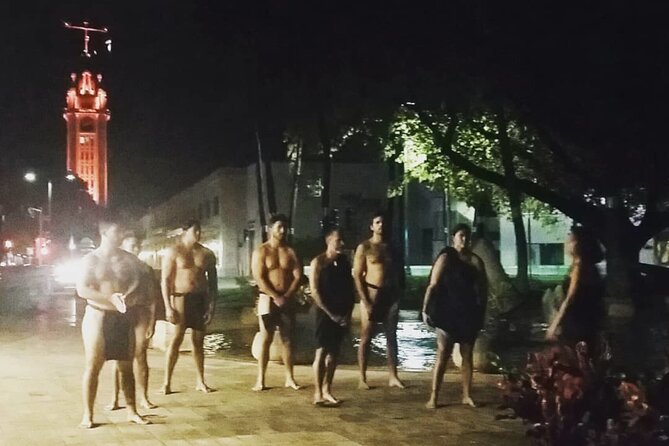
You’ll meet at the King Kamehameha I Statue at 447 S King St, Honolulu, right downtown. The tour starts at 7:00 pm and finishes back at the same meeting point, so you’re not dealing with transit puzzles at the end of a late evening.
This kind of location matters more than you might think. Downtown Honolulu is a big, spread-out area, and starting centrally helps keep the walk focused. It also means you can plan dinner before you come—then come dressed for an evening stroll rather than rushing across town.
A small practical note: the tour uses a mobile ticket, and it runs in English. If you’re traveling with anyone who needs extra time to get oriented, give yourself a few extra minutes so you don’t miss the introduction.
You can also read our reviews of more tours and experiences in Oahu.



The core walk through Downtown Honolulu (the one big stop)

The tour is built around Downtown Honolulu as the stage for the story. Expect a walking format designed for an evening rhythm: you’ll move from place to place, and each stretch of the route is tied to accounts of what people have seen, heard, or experienced.
You’ll also hear a theme that anchors the scariest moments: buildings and offices that supposedly show signs of nighttime activity. The guide covers types of experiences people describe—things like moving shadows, objects being relocated, and that eerie sense that something is “off” even when the environment seems normal.
From a “value for your time” standpoint, this structure works because it turns downtown into a living map. You’re not just looking at architecture; you’re learning how local belief connects sites, movement, and story. And since the maximum group size is 50, it’s easier for the guide to keep you on pace rather than turning into a lecture you can’t follow.
Pakaka, heiau paths, and how the story connects the old to the new
One of the tour’s most specific and memorable threads involves where night marcher routes are said to lead. The guide points to Pakaka, described as an ancient sacrificial heiau (a Hawaiian temple). In modern Honolulu, the tour frames that older spiritual geography as something you can still feel in downtown—through reports of hauntings along certain paths.
This matters because it keeps the supernatural from feeling random. If you’ve ever felt annoyed by ghost tours that use history like wallpaper, you’ll probably appreciate the tighter connection here. The story gives you a reason for the route, not just a list of “scary spots.”
Also, the tour clearly aims for more than thrills. The mythology isn’t presented as a cartoon. It’s presented as living cultural knowledge, carried forward through people—not just published facts.
Lopaka Kapanui’s storytelling style: warm, interactive, and a little funny
The experience is led by Master Storyteller Lopaka Kapanui, and the difference shows up in the way the tour is described. The tone is described as warm and approachable, with a style that keeps questions and conversation flowing rather than shutting the group down.
You’ll also notice the personal dimension. Several stories tied to Lopaka’s background are part of what makes the tour feel grounded—especially the sense that the stories come from family and community sharing, not just a script.
A subtle bonus: expect some humor. It’s not loud or cartoonish, but people describe his delivery as witty, even with a lightly sarcastic edge. That balance helps when the subject turns intense. You get breathing room, then you step back into the chills.
What you’ll actually do and notice during the 90 minutes

This isn’t a sit-and-watch production. You’re walking, listening, and picking up cues as you go. Based on the provided details, the tour is built to keep you engaged with story evidence—often through images and photos/videos referenced during the walk.
Some of the most talked-about moments in the accounts involve “evidence-style” experiences, like photos that seem clear when taken but look different later, or paranormal evidence that challenges a skeptical mindset. Even if you take everything with a grain of salt, the way it’s presented can make you pause.
You should also plan around the idea that you’ll be active. The tour is short—about 1 hour 30 minutes—but it still asks for comfortable walking. One helpful detail is that people mention it can work for different mobility needs, including use of a sit-down walker, so the pacing seems designed to accommodate more than just able-bodied marathoners.
And yes, small group moments can happen. One mention that stood out: someone loved a little orange cat seen during the experience. It’s the kind of real-life detail that makes an evening feel human, not stage-managed.

Price and value: does $35 make sense here?
At $35 per person, this isn’t the cheapest option in Honolulu, but it also isn’t priced like a big-ticket “attraction.” The key value point is what’s included:
- Admission to the guided experience is part of the ticket
- Authentic Hawaiian legends, history, and culture are central
- The guide is a named Master Storyteller
- The tour includes documented-style accounts of hauntings and paranormal activity
That means you’re paying for more than “spooky walking.” You’re paying for guided storytelling with cultural context and a specific interpretive framework for the night marcher tradition.
One thing you’ll want to remember: food and drink aren’t included, so if you’re hungry after, plan ahead. The tour starts at 7:00 pm, so I’d aim to eat beforehand or be ready for a post-tour snack.
Weather, timing, and what to bring for a smooth night
This tour requires good weather. If weather conditions are poor, you’ll be offered a different date or a full refund. That’s important in Honolulu—rain can be sudden, and a walking tour needs real footing and real visibility.
Timing matters too. The experience is short, and one unhappy note mentioned missing the introduction due to arriving late. So treat this like a show: show up early enough to settle in, not just early enough to find the statue.
What to bring (based on how people describe the walk):
- Comfy shoes for downtown sidewalks
- A light layer if you run cold at night
- Your phone for the mobile ticket
- Optional: a camera, but don’t assume it will “prove” anything—some stories focus on how photos can change later
Who should book this ghost tour—and who might skip it
This tour is a great fit if you want a ghost story that’s tied to Hawaiian mythology and downtown Honolulu’s spiritual geography. If you like guided storytelling, cultural context, and a guide who talks like a person instead of a robot, you’ll probably have a strong time.
It also fits well for groups who want to talk. People describe the tour as interactive, with opportunities to ask questions and connect with the guide’s perspective.
You might hesitate if:
- You want a loud, action-heavy haunted-house style
- You hate walking tours
- You prefer your history separated from the supernatural angle
And one more practical thought: if you’re the type who gets frustrated when a narrative is fast and you didn’t catch the start, arrive early. The introduction seems to matter.
Should you book Honolulu Night Marchers Ghost Tour?
I think this is a smart choice for most first-time visitors who want something more authentic than a generic “boo” tour. For $35 you get a guided, culturally framed night marcher story with Lopaka Kapanui leading, plus a downtown walk designed around place-based accounts rather than random scares.
Book it if you’re curious about Hawaiian mythology, you like nighttime walking, and you’re open to the idea that local stories deserve respectful attention. Skip it if you want a low-walking, low-story experience, or if you’re likely to show up late and miss the beginning.
If you do book, bring comfortable shoes, arrive a bit early, and treat the tour like a conversation with history—set after dark.
FAQ
Where does the tour start?
It starts at the King Kamehameha I Statue, 447 S King St, Honolulu, HI 96813, USA.
What time does the night marchers ghost tour begin?
The start time is 7:00 pm.
How long is the tour?
It runs for about 1 hour 30 minutes.
Is food included in the ticket price?
No. Food and drink are not included.
What language is the tour offered in?
The tour is offered in English.
Is the price $35 all-in, or does it require extra admission?
The tour includes an admission ticket in the price of $35 per person.
How big is the group?
The tour has a maximum of 50 travelers.
What happens if weather is bad?
The experience requires good weather. If it’s canceled due to poor weather, you’ll be offered a different date or a full refund.