REVIEW · OAHU
Honolulu Haunts and Hauntings Ghost Tour
Book on Viator →Operated by Honolulu Haunts By Us Ghost Adventures · Bookable on Viator
One sentence can say a lot: Honolulu gets spooky fast. This 1-hour ghost tour pairs dark lore with real landmarks tied to Honolulu’s monarchy era and missionary past, guided by storytellers who keep things local and respectful. I also like the chance to see the city in small-group mode at night, with stops designed to be easy to follow and not a hike.
That said, there’s one trade-off to keep in mind. The experience blends history with paranormal claims and legends, and one guest feedback line basically boils down to not all of it feeling equally verifiable. If you want cold, hard facts only, you might find the spooky stories lean modern or secondhand depending on the guide.
In This Review
- Key highlights to know before you go
- Entering Honolulu’s haunted storybook at Iolani Palace
- The Kaua’nona’ula intersection: rain, a red rainbow, and unexplained sightings
- The old building and the white kimono rumor
- Supreme Court grounds: orphanage, death sentences, and banyan-tree “laughter”
- A cemetery stop where sounds and smells do the talking
- Missionary homes, Protestant roots, and children’s sounds
- How much walking and how spooky is it?
- Guides: why the storytelling style matters more than you think
- Price and logistics: what $32 buys you
- Should you book Honolulu Haunts and Hauntings?
- FAQ
- How long is the Honolulu Haunts and Hauntings Ghost Tour?
- How much does the tour cost?
- Where does the tour meet, and where does it end?
- Is the tour in English?
- Is a mobile ticket used?
- What’s included in the price?
- What’s not included?
- Are service animals allowed, and can I cancel if plans change?
Key highlights to know before you go
- A tight, 1-hour route that fits a night out without eating your whole evening
- Iolani Palace grounds and banyan-tree lore, with stories that connect monarchy, exile, and lingering spirits
- Cemetery atmosphere: reports of whispers, strange smells, and a young boy’s ghost story
- Multiple named guides (Jade, Lon, Terry, Hope) who consistently focus on story flow and guest interaction
- Flat, easy walking pace that keeps the tour comfortable for many visitors, including families
Entering Honolulu’s haunted storybook at Iolani Palace
If you’re thinking about ghosts in Honolulu, start where the city’s power once sat—near the Iolani Palace grounds. This stop frames the evening with one of the most dramatic strands in Hawaii’s 1800s story: the palace area was built around 1879 and tied to royalty, plus a famous coup that still feels heavy in local memory. The tour’s ghost angle comes from the idea that the last queen’s spirit still lingers, watching over Honolulu.
What makes this stop worth your time is how the guide can use the setting to give context, not just chills. You’re not only hearing about tragedy; you’re also being shown how political change, sacred ground, and public memory overlap. One small detail that pops up in the vibe: people tend to notice visual oddities like flickering lights around the palace—though the tour keeps the focus on atmosphere rather than insisting you’ll see proof.
Possible drawback here: if you’re hoping for a big, paranormal “event,” this isn’t built like a full investigation. It’s more like a guided nighttime history walk with spooky overlays.
You can also read our reviews of more tours and experiences in Oahu.



The Kaua’nona’ula intersection: rain, a red rainbow, and unexplained sightings
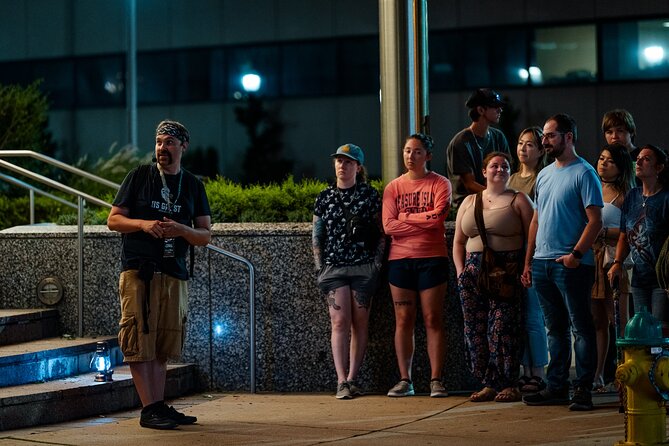
Next comes an intersection known as Kaua’nona’ula, which translates as rain with the red rainbow. The tour keeps this stop deliberately story-forward: there isn’t a specific historic event tied to the corner in the way there is for the palace or courthouse grounds. Instead, it’s all about the reports—creepy stories of what people have claimed to experience here.
This is one of those stops that works best if you’re open to what the tour is doing. It’s not trying to win a debate about evidence. It’s trying to show you how Honolulu’s locals and long-time visitors talk about places that feel unsettled. If you want a “spot the sign” kind of experience, keep your eyes up and your head on a swivel as you move through the intersection. It’s also a good moment to check in with your own comfort level: do you like atmosphere, or do you need documented history only?
The old building and the white kimono rumor
The tour then shifts into a more rumor-heavy chapter—an old building where stories come from workers and customers who spend time around it. The central ghost legend at this stop involves a spirit connected with a white kimono, and there’s even mention of a news article tied to a tragedy that follows after a host reveals herself to you.
Here’s how to think about this stop so it still feels fun: treat it like folklore anchored to a real location. You’re likely to hear multiple versions of the same core theme—what someone saw, what someone heard, and how the story got repeated. That’s exactly the kind of material ghost tours thrive on, but it’s also where you may personally feel the least “verifiable” part of the evening.
If you’re the type who needs everything sourced and footnoted, you can still enjoy this stop as entertainment—just don’t treat it like a courtroom transcript.
Supreme Court grounds: orphanage, death sentences, and banyan-tree “laughter”
One of the most emotionally loaded stops is the area connected with the Supreme Court. This court opened in 1871 and was part of a system where cases could end there as a last resort. The story doesn’t stop at justice and punishment; it also includes an earlier use of the grounds as an orphanage.
The tour adds a haunting layer with a specific image: sit under the banyan trees at the edge of the lot and you might hear laughter of children playing. It also includes reports of lost souls—people connected with criminals sentenced to death in the early 1900s.
This stop works on two levels. First, it forces you to confront how institutions (courts, shelters, schools) can be tied to both care and harm in the same place. Second, it gives the guide a chance to pace the story so you’re not just hearing names—you’re picturing what life might have sounded like there.
Small consideration: because the site is tied to real suffering, you’ll likely enjoy it more if you keep the vibe respectful and quiet. One of the strongest guide themes in feedback is that the tour pushes you to treat sacred and historic places with care.
A cemetery stop where sounds and smells do the talking
The tour then lands at the first Christian church built in Hawaii, and—just as important—at Honolulu’s oldest cemetery. The grave markers number 296, but the tour also shares a grim estimate: many more bodies may lie beneath the surface than the stones suggest.
In the spooky department, this is a high-impact stop. Reports include strange smells, quiet whispers, and even sightings described as the ghost of a young boy who wanders the cemetery. Even if you don’t believe every claim, the setting itself encourages the right kind of attention: you slow down, you look, and you listen for the gaps between normal night sounds.
The biggest tip I can give you here is attitude. If you approach the cemetery as a place where stories matter—whether paranormal or historical—you’ll get more out of the stop than if you try to “test” it. This is one of those evenings where the best souvenir is the feeling you carry when you leave.

Missionary homes, Protestant roots, and children’s sounds
The final stop moves back into Honolulu’s colonial-era roots through two of the oldest homes in Hawaii, built by missionaries from New England. The point of this location isn’t only “spooky house stories.” It’s about belief, community, and how imported religion shaped the city’s early institutional life.
The haunting reports here are quieter than the most dramatic legends. Witness accounts describe ghosts of missionary women in long dresses, plus sounds of children. And because this is framed as a historic museum area, you’re walking out of the evening with a sense of place—not just a set of chills.
One practical plus: this end-of-tour framing can make the whole experience feel balanced. You started near the power of the monarchy; you end near the power of belief systems.
How much walking and how spooky is it?
Plan for a short nighttime stroll with a moderate fitness level. The tour is designed for comfort: flat routes and a pace that gives you time at each site rather than rushing you into the next photo stop. It’s also described as safe for children, which tells you the vibe is more “story time after dark” than “extreme paranormal pursuit.”
As for goosebumps: you should treat that as optional. Some people want intense reactions—lights flicker, voices call, proof shows up. This tour doesn’t position itself that way. Instead, it offers a steady mix of history and legend, so you’ll get chills mostly from the storytelling, the setting, and the cumulative mood.
If you’re sensitive to audio or noise, take one note seriously: there have been complaints about guides speaking softly with traffic and other sounds around. That doesn’t mean it’ll happen to you, but it does mean you should pick a spot near the guide at the start and keep your attention up when the group is moving.
Guides: why the storytelling style matters more than you think
This tour stands or falls on the guide’s pacing and clarity. And in the feedback you can see a pattern: guides like Jade, Lon, Terry, and Hope are repeatedly praised for being friendly, interactive, and good at connecting the sites to what you’re seeing.
One especially useful thing the tour appears to do well is respect. More than one guide is described as sending a clear message about honoring sacred places. That matters because Honolulu’s haunting stories are tangled with real loss—royal upheaval, punishment, cemeteries, and colonization. A respectful guide turns a spooky walk into a meaningful night, not just a gimmick.
If you like your history with a pulse, this is also where group size helps. The tour caps at 35 people, but feedback includes very small groups—sometimes just a handful of people—which makes it easier for a guide to answer questions and slow down when you want more detail.
Price and logistics: what $32 buys you
At $32 per person for about an hour, this tour fits the “pay once for an evening activity” category. You’re paying for guided storytelling at multiple historic sites in the same neighborhood, plus fees and taxes are included.
Here’s what you still need to plan:
- Tips aren’t included, so if you like guides who bring a story to life, you should budget for gratuity.
- Food and drink aren’t included, so eat first.
- Motorized transportation isn’t included, so you’ll be on foot for the route.
There’s also a big practical plus: the tour uses a mobile ticket and the meeting point is clearly set at 447 S King St, Honolulu, HI 96813. That’s the kind of detail that saves time and stress after a long day of sightseeing.
If you’re trying to get value on Oahu, the math is simple: one hour, multiple major sites, and a guided narrative can beat spending that same hour wandering alone at night with no context.
Should you book Honolulu Haunts and Hauntings?
Book it if you want a light-to-medium spooky night that still teaches you how Honolulu’s monarchy era and missionary past shaped real places. It’s a great fit for couples, solo visitors, and families who want something different from the usual beach-and-shopping rhythm—especially if you like your history with stories you can remember.
Skip it if you need strict, verifiable history only. Because the tour blends legends with real landmarks, you may find some elements feel like folklore rather than fact, and the paranormal moments may not deliver the intense “proof” some people expect. Also, if you’re very sound-sensitive or easily distracted by street noise, choose your position near the guide so you can hear clearly.
If you go, go with the right mindset: respect the sacred sites, treat the ghost talk as part of Honolulu’s cultural memory, and let the night do what it does best—make the city feel alive.
FAQ
How long is the Honolulu Haunts and Hauntings Ghost Tour?
It runs for about 1 hour.
How much does the tour cost?
The price is $32.00 per person.
Where does the tour meet, and where does it end?
It starts at 447 S King St, Honolulu, HI 96813, and ends back at the meeting point.
Is the tour in English?
Yes, the tour is offered in English.
Is a mobile ticket used?
Yes, the tour uses a mobile ticket.
What’s included in the price?
All fees and taxes are included, along with professional guides and intensely researched true stories plus documented accounts of hauntings and paranormal activity.
What’s not included?
Tips and gratuities, food and drink, and motorized transportation are not included.
Are service animals allowed, and can I cancel if plans change?
Service animals are allowed. You can cancel for a full refund if you cancel up to 24 hours in advance of the experience start time.