REVIEW · GETTYSBURG
Ghosts of Gettysburg Self-Guided Driving Audio Tour
Book on Viator →Operated by Action Day Trips · Bookable on Viator
Spooky history, with your own wheels. This self-guided Ghosts of Gettysburg driving audio tour is narrated by Mark Nesbitt and triggered by your location, so the battlefield feels like a guided trip without the group hassle. I like that it layers eerie stories over real places, from Gettysburg Heritage Center to the First Delaware Infantry Monument area.
Two things I really liked: the offline maps and hands-free audio (so you’re not constantly tapping your phone), and the lifetime access so you can replay it on future visits. At $14.99 per group (up to 4), it can be a smarter value than paying per person for a bus tour.
One consideration before you buy: this is daylight only. The battlefield roads are open from about 30 minutes before sunrise to 30 minutes after sunset, and some common tech frustrations pop up if the app setup or directions don’t line up with where you’re driving.
In This Review
- Key Things to Know Before You Go
- Ghosts of Gettysburg by Car: Why This Format Works
- Price and Practical Value for a 1–2 Hour Drive
- Before You Start: Daylight Hours, App Setup, and Audio in the Car
- Stop-by-Stop: Heritage Center to First Shot Marker
- Stop 1: Gettysburg Heritage Center
- Stop 2: Mark Nesbitt Candlelight Walking Tours
- Stop 3: Battle of Gettysburg First Shot Marker
- Schmucker Hall, Devil’s Den, and Little Round Top
- Stop 4: Schmucker Hall (Old Dorm / Hospital Site)
- Stop 5: Devil’s Den
- Stop 6: Little Round Top
- George Weikert Farm and the Woman in White Moment
- Stop 7: The George Weikert Farm
- Stop 8: State of Pennsylvania Monument
- Eisenhower Farm, Codori House, and the Peaceful End on Seminary Ridge
- Stop 9: Eisenhower National Historic Site
- Stop 10: Codori Farm
- Final segment: West Confederate Avenue / Seminary Ridge feeling
- Sound Quality, Map Sync, and Common Frustrations (So You Can Avoid Them)
- Is This Ghost Tour Too Scary, Too Gory, or Just Right?
- Should You Book Ghosts of Gettysburg Self-Guided Driving?
- FAQ
- How long is the Ghosts of Gettysburg self-guided driving audio tour?
- Where does the tour start and end?
- Is this tour in English?
- Does the tour require cellular or Wi‑Fi?
- Is it a night activity?
- How much does it cost for a group?
- Do I need admission tickets for the stops?
- How do I start the tour when I arrive?
- What’s the best way to hear the audio in the car?
- Can I use the audio tour more than once?
Key Things to Know Before You Go
- Narrated by Mark Nesbitt with stories tied to Gettysburg places you’ll actually drive past
- Hands-free, location-triggered audio that plays as you reach each stop
- Offline operation after download so signal problems won’t kill your tour
- About 11 miles and 30+ stories designed to fit a 1–2 hour drive with short stops
- Some stops need admission tickets while others are free, so plan for a mix
- Follow the route and speed limits for best syncing between map and audio
Ghosts of Gettysburg by Car: Why This Format Works

Gettysburg can be overwhelming. There’s so much to see that you can end up rushing, missing the “why” behind the monuments. This tour solves that by giving you a simple structure you can control: drive the route, park briefly, and let the audio do the heavy lifting.
I also like that you’re not paying per person. The price is $14.99 per group (up to 4), which makes a big difference if you’re traveling with family or friends. Even when it takes a bit longer than you expect (battlefield traffic and quick photo stops add up), you still get a lot of narration for your money.
The ghost angle isn’t just for fun. You get stories that connect local lore to specific battlefield sites. If you already know the basic history, the spooky framing helps you notice details you might otherwise walk right past.
You can also read our reviews of more tours and experiences in Gettysburg.



Price and Practical Value for a 1–2 Hour Drive
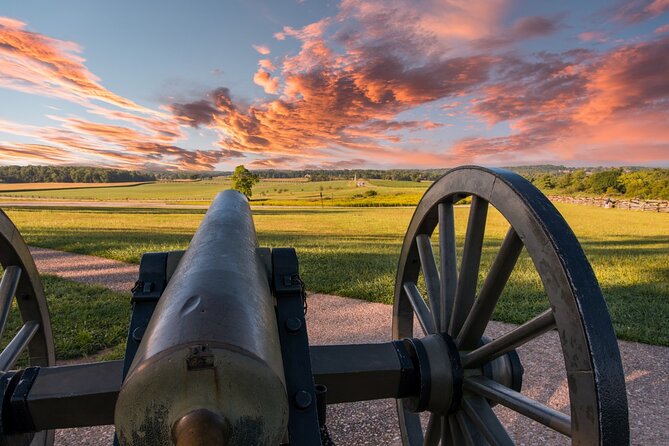
This doesn’t try to replace a full guided program. It’s built for a realistic visit: a self-paced route with short, focused stops and a total drive around 11 miles. That means it fits into a day that might also include the town square, museums you choose, or a longer battlefield walk later.
For value, focus on what’s included and what isn’t:
- You get location-triggered audio stories with offline support.
- You also get hands-free playback so you can keep your eyes on the road.
- But you should expect some sites to require tickets (not included).
If you’re the type who hates being herded, this format is likely your friend. If you hate tech at the best of times, it’s worth reading the setup tips carefully before you park.
Before You Start: Daylight Hours, App Setup, and Audio in the Car
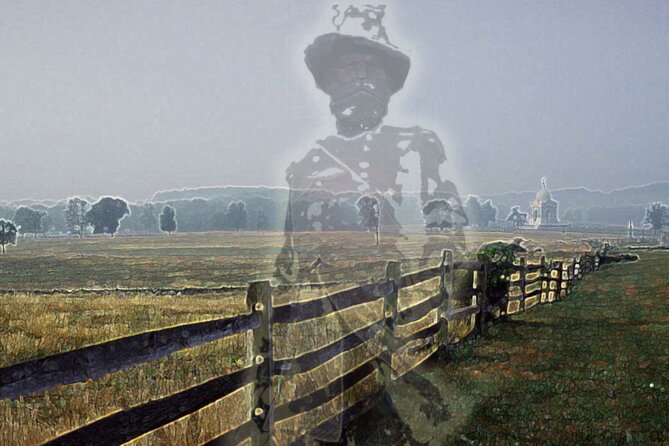
Plan this like a daytime battlefield activity. The tour notes that the battlefield and roads are open from roughly 30 minutes before sunrise to 30 minutes after sunset. This is not a night activity, and some parts go through areas that close at sunset. So don’t treat this like a 9 p.m. ghost story drive.
Setup is where your success starts. After booking, you’ll receive instructions by email and text, including a password. You must download the tour content in advance using strong Wi‑Fi or cellular. After that, the tour is designed to work offline.
On the audio side, the basic idea is simple:
- Connect your phone to your car stereo using Bluetooth, USB, or AUX.
- For walking parts, headphones can be helpful (the tour can include moments where you get out and look around).
- Car audio compatibility is mentioned, but if your setup feels finicky, fall back to the direct “phone to car speakers” approach.
The app experience is mostly smooth once you’re underway. The common problems tend to happen before you even start: people who skip the download step, start from the wrong location, or try to force the map while the phone isn’t paired correctly.
Stop-by-Stop: Heritage Center to First Shot Marker
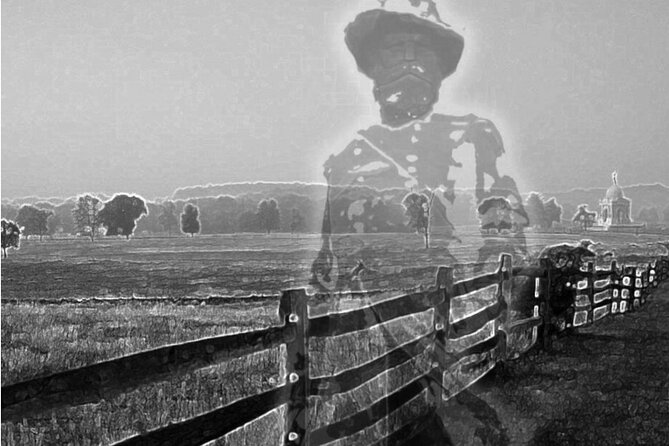
Stop 1: Gettysburg Heritage Center
Your tour begins at the Gettysburg Heritage Center at 297 Steinwehr Ave. This is a smart opening move because the battlefield makes more sense when you have context first. The Heritage Center is listed as a quick stop (about 5 minutes) and it’s where you’ll get oriented before the driving stories begin.
Admission isn’t included here, so think of this as either a quick museum stop (if you want it) or as a convenient kickoff point where you’ll be ready to start the audio.





Stop 2: Mark Nesbitt Candlelight Walking Tours
Next you’ll get story content tied to Mark Nesbitt, the author of Ghosts of Gettysburg. The audio frames his ghost storytelling as blending Gettysburg town history with the mystery of the spirit world. You’ll also see that this content is associated with his candlelight walking tours, though admission isn’t included.
What I like about this early stop is that it sets expectations. The tour isn’t purely documentary. It’s part history narration, part ghost storytelling, and it pushes you to look at the places with a different kind of curiosity.
Stop 3: Battle of Gettysburg First Shot Marker
This is where the tour starts putting you into the battle story directly. The audio describes how the first day’s fighting swirled across farm fields around Pennsylvania crossroads town—west, north, and east.
It’s a short stop (about 5 minutes), but it matters because the audio is telling you what you’re looking at, not just where to park. Also, this is one of the places where daylight timing matters, since the battlefield route is constrained by sunset closing.
Schmucker Hall, Devil’s Den, and Little Round Top
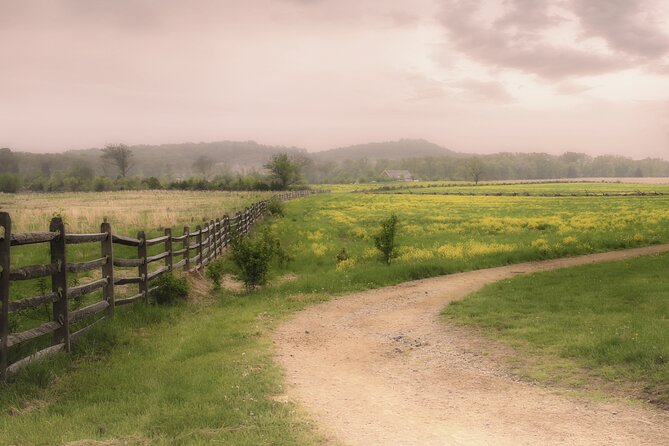
Stop 4: Schmucker Hall (Old Dorm / Hospital Site)
Schmucker Hall is described as an old dorm that saw horrors during and after the battle. It was repurposed as one of the first hospitals starting July 1st.
This stop can feel heavy, but that’s exactly the point. The ghost angle here isn’t only about spookiness; it’s about how quickly places changed during the fighting—buildings, people, and priorities.
Stop 5: Devil’s Den
Devil’s Den gets a full-on historical and eerie framing. The tour notes that no one knows for sure where the name came from, but the name fits the second deadly day of July, 1863.
This is a common highlight on battlefield routes for a reason: it’s dramatic terrain and it has strong storytelling potential. The audio makes you slow down mentally, not just physically.
Stop 6: Little Round Top
Little Round Top is presented through a ghost-question lens: how unexplainable sights and sounds from decades past might be interpreted when you’re standing there now.
It’s a short stop (about 5 minutes), but it pairs well with your own observations. Even if you’ve visited Gettysburg before, the audio’s phrasing can nudge you to look at angles and sightlines you’d otherwise ignore.
George Weikert Farm and the Woman in White Moment
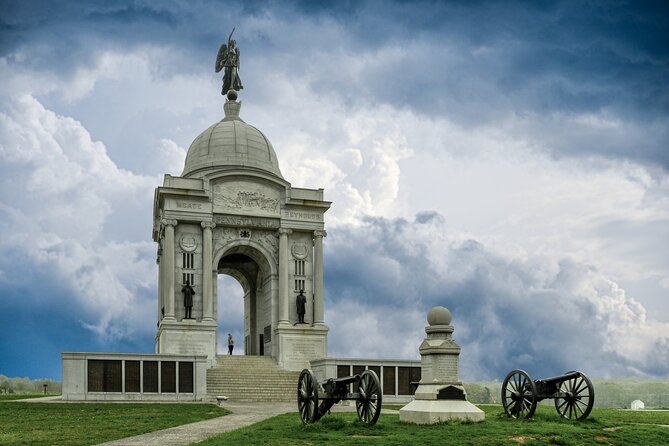
Stop 7: The George Weikert Farm
This story is built around a specific household-style experience: a roommate watching television, hearing another noise, and the unsettling sense that something else is in the space.
I like stops like this because they humanize the battlefield. You’re not just processing armies and formations. You’re hearing what it felt like when ordinary life collided with chaos, fear, and memory.
Stop 8: State of Pennsylvania Monument
This stop is longer (about 10 minutes) and leans into famous lore. The audio references sightings of a Woman in White at this area, and it also notes she’s more frequently associated with Spangler’s Spring to the right.
There’s also a practical tip baked into the experience: you can pause and click Learn More for added encounters tied to that legend. If you’re the type who likes optional extras, this is where you can spend a few extra minutes without derailing the full route.
Eisenhower Farm, Codori House, and the Peaceful End on Seminary Ridge
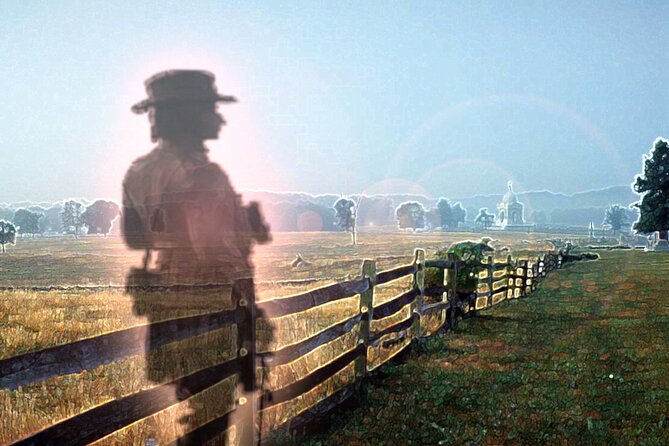
Stop 9: Eisenhower National Historic Site
This stop shifts you from battlefield carnage to a different kind of Gettysburg legacy. The audio explains that the fields beside your vehicle are part of Eisenhower’s farm. It also notes that Dwight David Eisenhower chose the battlefield area for retirement in 1961.
Admission isn’t included for this stop, so check your plan if you want to go inside anything on-site. Even if you don’t, the audio gives you a clear reason why this place still matters beyond the 1860s.
Stop 10: Codori Farm
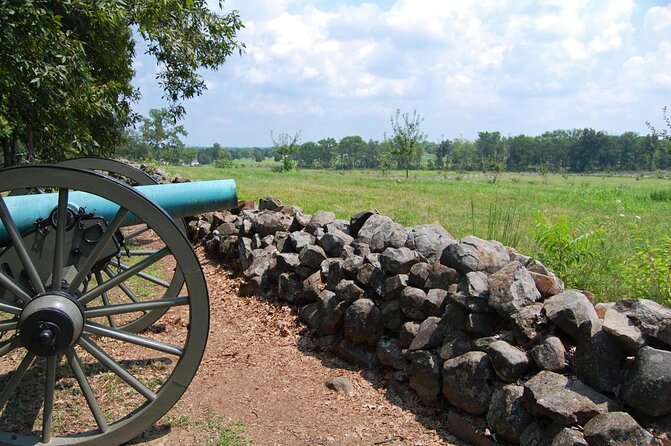
Codori Farm is framed as being in the middle of some of the worst carnage. The audio talks about marching over fields and fighting across the now-famous stonewall.
If you’re paying attention, this is one of the most effective narrative jumps on the route: the farm setting makes the battle feel closer to daily life, not abstract lines on a map.
Final segment: West Confederate Avenue / Seminary Ridge feeling
As you approach the end of your drive, the audio references West Confederate Avenue running along Seminary Ridge, the main Confederate battle line on July 2 and 3. Cannons and monuments mark unit positions that are gone now—leaving peaceful field space where history happened.
The tour ends around the First Delaware Infantry Monument and the 2nd Delaware Volunteer Infantry Regiment area along Hancock Ave. That ending works because it gives you a strong “wrap” to match the tone of the narration.
Sound Quality, Map Sync, and Common Frustrations (So You Can Avoid Them)

Let’s talk tech and timing plainly. Many people report that once the tour starts, it becomes easy. But a chunk of the frustration stories have a theme: the tour depends on you being in the right place and driving at the route’s intended pace.
Here are the issues that can trip you up:
- Audio gaps or silence can happen when the app loses location syncing or the route slips.
- Markers that don’t match your destination usually mean you’re off the route, driving in the wrong direction, or not following the speed guidance.
- Difficulty starting often comes from not downloading correctly beforehand or not launching the right tour version once you’re at the starting point.
- CarPlay confusion shows up in feedback. If you’re aiming for the smoothest audio, use the direct phone-to-car-speaker method listed in the tour guidance rather than forcing a complicated setup.
My practical advice is simple: treat the map like a pilot, not a suggestion. Stay on the route, keep to the speed limit shown, and when the audio says you’ve arrived, stop. If you detour, expect the audio-to-location syncing to get weird.
If you run into trouble, the tour notes that support is available if you contact them for audio issues. Keep your phone’s volume up and don’t rely on the car navigation screen for the tour map, since some setups don’t display it well.
Is This Ghost Tour Too Scary, Too Gory, or Just Right?
The content mixes history and ghost storytelling, and it can lean darker than some people expect. There’s feedback that the stories are longer and sometimes more gore-focused than a purely educational audio tour.
So here’s the fit:
- If you want history plus spooky tales, you’ll likely have a good time.
- If you prefer a lighter ghost vibe, you might find some scenes intense.
- If you’re visiting with kids, it can still work, but be ready for gruesome details in the narrative voice. Families who enjoy history-and-ghost blends tend to do best.
Also, keep your timing in mind. Since the battlefield route is daylight-limited, you won’t get the full night-atmosphere many people imagine when they hear the word ghosts. You can still get atmosphere during late afternoon, but you have to respect the sunset cutoff.
Should You Book Ghosts of Gettysburg Self-Guided Driving?
I think this is worth booking if you match the style:
- You want a low-stress self-guided drive with a clear sequence of battlefield stops.
- You like the idea of Mark Nesbitt telling ghost stories tied to specific places.
- You’re traveling with a group and want one purchase per car value.
I would skip it if you’re expecting an easy plug-and-play experience without any phone setup. This tour shines when you download correctly, start at the right point, and follow the route closely. If you already know you’ll ignore map directions, or you hate audio-on-a-phone, plan something else.
FAQ
How long is the Ghosts of Gettysburg self-guided driving audio tour?
It takes about 1 to 2 hours to complete, with a route around 11 miles long.
Where does the tour start and end?
The tour starts at Gettysburg Heritage Center, 297 Steinwehr Ave, Gettysburg, PA 17325, USA. It ends at the 1st Delaware Infantry Monument / 2nd Delaware Volunteer Infantry Regiment area on Hancock Ave, Gettysburg, PA 17325.
Is this tour in English?
Yes, the audio tour is offered in English.
Does the tour require cellular or Wi‑Fi?
No. You should download the tour content while you have strong Wi‑Fi or cellular, and the tour is designed to work offline after that.
Is it a night activity?
No. The battlefield and roads are open from about 30 minutes before sunrise to 30 minutes after sunset. This is not a night activity, and you should finish by sunset.
How much does it cost for a group?
It costs $14.99 per group, up to 4 people.
Do I need admission tickets for the stops?
Some stops include admission information as not included, while others are listed as free. For example, the Gettysburg Heritage Center stop is not included, and Eisenhower National Historic Site is not included. Schmucker Hall, Devil’s Den, Little Round Top, the George Weikert Farm, and the State of Pennsylvania Monument are listed as free stops.
How do I start the tour when I arrive?
After you reach the starting point, you launch the Action’s Tour Guide App on-site, then enter the password you received. The audio begins automatically when you’re at the first story’s point, and you follow audio cues to the next location.
What’s the best way to hear the audio in the car?
Connect your phone to your car stereo using Bluetooth, USB, or AUX.
Can I use the audio tour more than once?
Yes. The tour is described as having new lifetime access with no expiry, so you can use the audio file anytime on any trip as many times as you want.