REVIEW · GETTYSBURG
Civil War Ghosts: Echoes of the Fallen Gettysburg Ghost Tour
Book on Viator →Operated by Civil War Ghosts By Us Ghost Adventures · Bookable on Viator
Gettysburg turns intense fast. This walking ghost tour takes you past Civil War landmarks and reframes them through paranormal stories and battle facts. You’ll cover tightly packed spots tied to Confederate sharpshooters, civilian suffering, and famous tragedy like the Jennie Wade episode—without needing a car or a museum day plan.
What I like most is the mix: you’re not just hearing spooky lines. You get short stops with context—how the fighting and the danger played out in real places, then how those same places became the stuff of hauntings. I also like the pace and structure, since it’s built as a walk with a central start and finish back at the same spot.
One consideration: the tour is not an all-access, go-inside-everything experience. You’ll mostly stay outside, doing storytelling from the street and exterior viewing, and that can disappoint people who expect to enter the buildings to chase the ghosts.
In This Review
- Key things you’ll notice on this tour
- A walking ghost tour that starts with Gettysburg facts
- Meeting at 452 Baltimore St: what to plan for
- Brickhouse Inn: sniper vantage points and reported hauntings
- Witness Tree: hearing whispers in the rustle
- Farnsworth House Inn: sniper history in a famous haunted setting
- 777 Baltimore St: the orphanage and the darker side of civilian harm
- East Cemetery Hill: fighting, memory, and shadow stories after dark
- 789 Baltimore St and the Hall of Presidents basement burial story
- Jennie Wade House: tragedy that makes history personal
- Rupp House History Center: battlefield chaos and a basement refuge
- How guides connect the dots: history and the supernatural thread
- Price and value: is $32 a fair deal here?
- Who should book this Gettysburg ghost walk
- Should you book Civil War Ghosts: Echoes of the Fallen?
- FAQ
- FAQ
- How long is the Civil War Ghosts walking tour in Gettysburg?
- Where does the tour start and end?
- How much does the tour cost?
- Is the tour conducted in English?
- What is included in the ticket price?
- Are there any extra admissions required at the stops?
- Are service animals allowed?
- Is a guide tip included?
Key things you’ll notice on this tour
- Told-outside storytelling at multiple historic sites, not an indoor haunted house
- Battle details first, then the paranormal thread connecting them
- Tight walking route with a set start at 452 Baltimore St and an end back there
- Photo-and-story delivery style that several guides are praised for
- A short time commitment—about an hour, sometimes running a bit longer by pace
- Civilian focus, not just soldiers and uniforms
A walking ghost tour that starts with Gettysburg facts
Civil War Ghosts: Echoes of the Fallen is one of those trips where the town itself feels like the set. Gettysburg’s streets, inns, and house museums don’t sit in the background. They’re the stage.
This tour leans on two ideas at once. First, the Battle of Gettysburg was a turning point in a brutal war, and the town got pulled into it at street level. Second, people later connected particular buildings and corners to whispers, shadows, and unsettling stories. The result is a guided walk that treats the paranormal angle as a lens, not the whole movie.
The best part is how the stops are chosen. You bounce from vantage points used during the fighting to locations tied to civilians, children, and burial history. That keeps it from turning into random urban legends. Instead, each haunting story is anchored to what happened in those exact places.
You can also read our reviews of more tours and experiences in Gettysburg.



Meeting at 452 Baltimore St: what to plan for
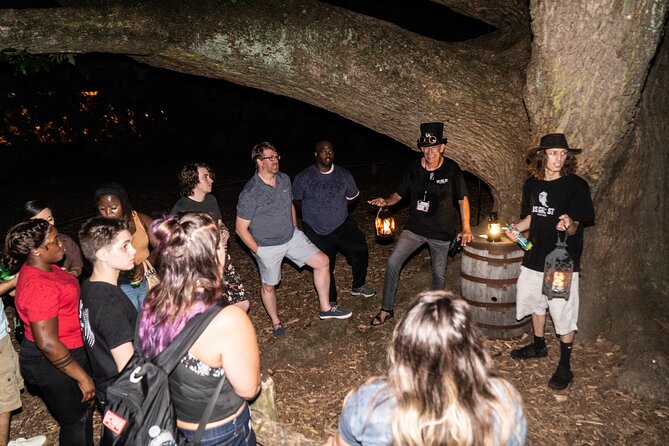
Your tour starts at 452 Baltimore St, Gettysburg, PA 17325, and it ends back where you began. That matters more than it sounds. In a place like Gettysburg—busy, walkable, and not huge—starting and finishing in one spot helps you avoid that wander-and-wait feeling.
Expect the tour to run about 1 hour, with some groups stretching closer to 90 minutes depending on the pace and how many questions come up. It’s also a walking tour with a moderate fitness level recommended. If you’ve got knee trouble, bring what you need, but the route is designed for a typical walking visit rather than a long hike.
A couple practical notes will save you stress:
- You’ll get a mobile ticket, so have it ready on your phone.
- The max group size is 35, which is big enough to be lively but small enough that you should still hear your guide without shouting over the whole street.
If you’re driving, do yourself a favor: do not park in Brickhouse Inn parking, because it’s reserved for overnight guests and you can get towed. There are parking spots on the nearby side streets and main street.
Brickhouse Inn: sniper vantage points and reported hauntings
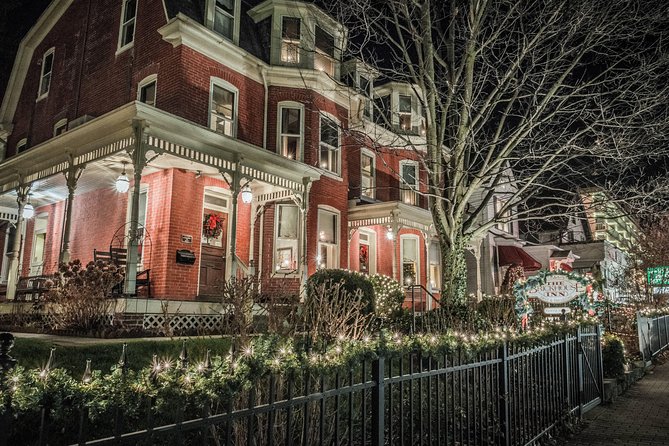
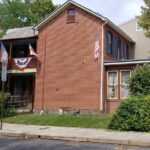
Stop 1 takes you to the Brickhouse Inn Bed and Breakfast, formerly the Old Welty House. During the Battle of Gettysburg, the inn became a key vantage point. Confederate sharpshooters reportedly used its second floor and attic positions, which is a big deal—because height changes everything in a battlefield.
In tour language, that’s where the haunting story starts. The building is tied to soldiers who were there for a purpose (watch, aim, strike), and now it’s known for paranormal accounts that people associate with those same locations. Even if you’re not chasing the supernatural, this stop works because it forces you to picture the sightlines: where a shooter could see, where a victim could be hit, and why the building mattered more than it seems today.
One drawback to keep in mind: this is a street-and-building-exterior kind of stop. You’re learning the story of what happened inside and around the structure, but you’re not getting a free-form walk through rooms the way you would at a standard museum visit.
Witness Tree: hearing whispers in the rustle
Next is the Witness Tree along Baltimore Street. The simple power of this stop is that it’s not a building. It’s a living landmark, and it’s described as having been present during the brutal fighting.
You’ll hear the haunting idea here as a kind of echo—whispers of the past linked to the tree’s rustling leaves. That’s a classic ghost-tour concept, but it fits Gettysburg well because the landscape itself is part of the story. Trees, fences, and street alignments don’t just “sit there” during wartime. They become reference points—good cover, bad cover, landmarks soldiers remember.
If you’re the type who worries the tour will be all spooky fog with no grounding, this is a good midpoint. You get back to the idea of why a place becomes memorable: it was literally around when the battle happened.
Farnsworth House Inn: sniper history in a famous haunted setting
Stop 3 is the Farnsworth House Inn, a location tied to Confederate snipers taking position during the fighting. Farnsworth House is already known in Gettysburg ghost lore, but what makes this stop useful is the way the tour connects its battlefield role to the modern reputation.
You’ll be told that the building is notorious for paranormal activity, with visitors reporting eerie sensations. The key value here is not whether you personally believe in ghosts—it’s how your guide ties the stories to why the structure would have mattered during the battle.
This is one of the places where the ghost-tour format can either click or feel repetitive, depending on your expectations. If you want a true Civil War primer that happens to include hauntings, Farnsworth House is a win because the battle context gives the paranormal claims something to orbit.




777 Baltimore St: the orphanage and the darker side of civilian harm
Stop 4 brings you to 777 Baltimore St, the National Soldiers Orphanage Homestead. This is where the tour turns from “war mechanics” into “human cost,” especially for civilians and children.
The story focuses on the hardship and abuse associated with the matron in the 1870s. From there, the haunting accounts shift to mistreated children and unsettling echoes tied to the building’s history.
For a lot of people, this becomes the emotional anchor of the tour. Gettysburg isn’t just about uniforms and tactics. It’s also about what war did to noncombatants—people who didn’t choose the battlefield. If you’re visiting with family, this stop is often a strong educational moment, even though it’s not cheerful.
A heads-up: if you expected purely “spooky thrills,” this can feel heavy. It still counts as part of the haunted narrative, but it’s rooted in real suffering.
East Cemetery Hill: fighting, memory, and shadow stories after dark
Stop 5 is East Cemetery Hill, tied to some of the fiercest fighting. This stop has a built-in memorial quality, which changes the mood of the tour right away. You’re standing where the battle’s pressure and losses left a permanent mark.
Then the ghost angle comes in. You might hear reports of shadowy figures resembling soldiers after dark, as if the conflict is still being replayed at night.
What I like about including a cemetery-adjacent stop is that it keeps the paranormal stories from floating free. Even if you don’t buy into the haunting claims, the place itself forces you to confront the cost. And because the tour is daytime or early evening depending on your slot, your guide’s framing becomes the bridge between solemn ground and ghost stories.
789 Baltimore St and the Hall of Presidents basement burial story
Stop 6 takes you to 789 Baltimore St, connected to the Hall of Presidents Museum. The tour focuses on what was underneath the bright museum idea. Before it became a museum, the site is described as serving as a makeshift burial ground during the Civil War, and some believe restless spirits remain in the shadows.
This is the kind of stop where storytelling quality matters. If the guide keeps it grounded—explaining how and why burial sites worked under wartime conditions—it lands. If the tone becomes too vague, it can feel like you’re being asked to accept a leap.
Still, the historical premise is strong: war leaves behind practical infrastructure, and sometimes the “boring” stuff is where the most haunting ideas grow. This stop gives the tour a grim, realistic edge.
Jennie Wade House: tragedy that makes history personal
Stop 7 is the Jennie Wade House, a name you’ll hear in Gettysburg history. The story here is specific and unforgettable: a Confederate sniper’s stray bullet fatally struck Jennie Wade while she was sheltering inside.
That’s not a ghost-farm rumor. It’s a famous tragedy, and the tour uses it as the pivot point from the large-scale battle down to a single civilian story.
Then the paranormal accounts come in—eerie occurrences and ghostly presence tied to the home. Even if you’re not hunting hauntings, this stop often feels like the tour is talking directly to you. You can’t help but think about how random a stray bullet is, and how the war reaches into ordinary rooms.
Rupp House History Center: battlefield chaos and a basement refuge
Stop 8 is the Rupp House History Center, connected to the moment when John Rupp took refuge in the basement as chaos erupted upstairs during the fight.
The paranormal accounts here focus on unsettled phenomena and the idea of ghostly apparitions tied to those who met their end within these walls. The basement refuge detail is key, because it’s easy to imagine what people would do during an attack: hide where you think you might survive.
This stop also helps you understand why Civil War ghost stories often cluster around particular structures. In battle, buildings are not neutral. They are either protection or exposure, refuge or trap. Rupp House is presented in that way—and the haunting story follows the same logic.
How guides connect the dots: history and the supernatural thread
One reason this tour earns strong ratings is the way guides blend the “why” and the “what.” The better guides don’t treat the paranormal as a separate attraction. They treat it like a storytelling layer placed over battlefield reality.
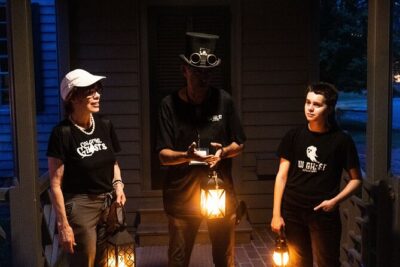
You’ll see that style described with different guides by name, including Linda, Amber, Richard, Jim, Michala, Taylor, Dan, Aurora, and others. In the strongest versions of the tour, the guide uses photos on a phone and explains how each stop fits into the battle story, so you don’t feel like you’re only hearing spooky hints.
A second praised element is clear delivery and pacing. Some people specifically note guides who speak at a volume that’s easy to hear and keep a walking rhythm that doesn’t require sprinting.
There are also a few caution signs worth noting for your decision:
- Some people found the paranormal side weaker than the history side.
- A small number of reviews mention incorrect information or a guide who wasn’t as engaging.
- A few mention time changes close to the start.
So aim to keep your expectations flexible. If you want top-tier historical context with ghost stories layered on top, this format fits well.
Price and value: is $32 a fair deal here?
At $32 per person for about an hour (sometimes around 90 minutes), this tour sits in the “short and concentrated” category. That usually makes sense for a battlefield destination: you’re paying for guided interpretation rather than spending hours driving or bouncing between major attractions.
Here’s the value logic I’d use to decide:
- You get multiple stops at famous structures and memorial ground in one outing.
- You’re paying for a guide who brings researched stories and documented hauntings into the walk.
- The tour is designed to be easy to plug into a Gettysburg day, since it starts and ends at the same place and doesn’t require extra admissions listed for the stops.
If you’re the kind of traveler who likes local stories, this is a reasonable spend. If you’re chasing only high-action paranormal encounters, you might find the experience more “storytelling” than “proof.” Still, the historical angle gives it more staying power even if you’re skeptical about ghosts.
Who should book this Gettysburg ghost walk
This tour is a strong match if you want:
- A guided way to see Civil War Gettysburg without building your own route.
- Paranormal storytelling that stays tied to real places and documented battle connections.
- A shorter outdoor outing that doesn’t swallow an entire day.
It’s also a good fit for families who want the civilian side of the war explained. The orphanage stop and the Jennie Wade tragedy both help show that the war impacted people beyond the battlefield.
If you hate walking, or you need to go inside lots of buildings, this may feel limiting. The format here centers on external storytelling rather than interior access.
Should you book Civil War Ghosts: Echoes of the Fallen?
I’d book it if your ideal Gettysburg day includes history with atmosphere. The price is low enough that you can try it without feeling like you need a full-day commitment, and the stop selection covers major themes: sharpshooters and vantage points, civilians and children, memorial ground, and burial-story darkness.
I’d skip it if your goal is an indoor haunt experience where you move through rooms and actively look for paranormal activity. This walk is more about guided narrative than about unlocking locked doors.
If you want a smart strategy: plan it early in your Gettysburg visit. A tour like this helps you understand the town fast, then you can use that context for the self-guided parts of your trip.
FAQ
FAQ
How long is the Civil War Ghosts walking tour in Gettysburg?
The tour runs about 1 hour (approx.). Some groups may take closer to 1.5 hours depending on pacing and the flow of the walk.
Where does the tour start and end?
The meeting point is 452 Baltimore St, Gettysburg, PA 17325, and the tour ends back at the same location.
How much does the tour cost?
It costs $32.00 per person.
Is the tour conducted in English?
Yes. The tour is offered in English.
What is included in the ticket price?
You get professional, courteous guides, researched true stories of history, and documented accounts of hauntings and paranormal activity.
Are there any extra admissions required at the stops?
The stop list indicates admission tickets are free for each listed location, meaning you shouldn’t need separate pay-at-the-door admissions for those stops.
Are service animals allowed?
Yes. Service animals are allowed.
Is a guide tip included?
No. A guide tip is listed as not included.