REVIEW · GETTYSBURG
Gettysburg Self-Guided Audio Ghost Tour
Book on Viator →Operated by Ghost Tour Fun · Bookable on Viator
Gettysburg gets a new audio spin. This self-guided audio walk turns your phone into a Civil War storyteller, priced at $10 and designed to move you from historic houses to major battlefield ground. I like that the route includes free admission for key sites, so your money goes further than a standard narration-only tour.
One thing to keep in mind: this is not a jump-scare, hide-in-the-dark kind of ghost experience. If you expect creepy and scary, you’ll probably feel a mismatch—think more historical narration than supernatural vibes.
In This Review
- Key highlights at a glance
- What This $10 Gettysburg Audio Ghost Tour Actually Delivers
- Starting at Tillie Pierce House Inn on Baltimore Street
- The Farnsworth House Inn: bullet holes with a story attached
- Jennie Wade House: the civilian tragedy stop
- Gettysburg Orphanage: aftermath and survival
- Cemetery Hill: Union defense and the later memorial
- Ending at Evergreen Cemetery Gatehouse: easy to keep going
- How Spooky Is It, Really?
- Price and Value: is $10 fair for this route?
- Best Fit: who will enjoy this most?
- Quick timing strategy for a smooth walk
- Should You Book This Gettysburg Self-Guided Audio Ghost Tour?
- FAQ
- How much does the Gettysburg Self-Guided Audio Ghost Tour cost?
- About how long is the tour?
- Where does the tour start and where does it end?
- Is the tour offered in English?
- Is the tour self-paced?
- Which stops include free admission?
- What should I expect from the experience if I want something scary?
- Are service animals allowed?
- Is it refundable if I cancel?
Key highlights at a glance
- Mobile ticket + self-paced timing: go at your own pace without herding
- Free stops included: Jennie Wade House, Gettysburg Orphanage, and Cemetery Hill come with admission
- Historic house settings: Tillie Pierce House Inn and the Farnsworth House Inn shape the story
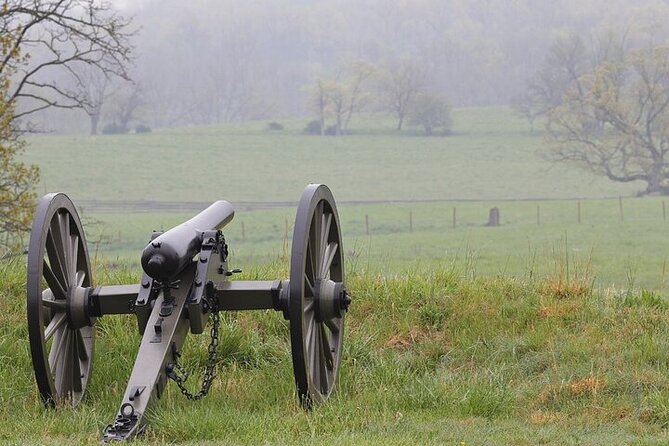
- Strategic battlefield focus: Cemetery Hill is tied to real Union defense and later memorialization
- Ends near Gettysburg National Cemetery: you finish at Evergreen Cemetery Gatehouse and can keep exploring
What This $10 Gettysburg Audio Ghost Tour Actually Delivers
For $10 per person, you’re buying a guided-style walking route with audio prompts you can follow on your phone. The big win here is that the experience is built around a sequence of real Gettysburg locations—starting at Tillie Pierce House Inn and finishing at Evergreen Cemetery Gatehouse—so you’re not just listening while staring at a street corner.
The route is about 1 hour in length, but I’d plan a little extra buffer. The stops you’re given run around 10 minutes each for the Jennie Wade House, the Gettysburg Orphanage, and Cemetery Hill. Ten minutes is enough to absorb a story, but it’s also long enough to stop, read, and look around like you would on a self-directed visit.
You also get a practical format: English audio, a mobile ticket, and an ending point that’s easy to keep using for more sightseeing. And because the tour is marked for a longer validity window (one account noted it worked across days), it’s a good fit when you can’t fit everything into a single afternoon.
You can also read our reviews of more tours and experiences in Gettysburg.



Starting at Tillie Pierce House Inn on Baltimore Street
Your tour begins at Tillie Pierce House Inn, 301 Baltimore St. This matters because you start in a home connected to a young Civil War eyewitness, Tillie Pierce, before the narration moves you out into the broader battle story.
What I like about beginning here is the tone. Instead of starting at a monument and working backward, you begin at a lived-in historical setting. A house stop does two things for your brain: it makes the events feel personal, and it gives you a physical sense of where people moved through daily life before the war swallowed the town.
Also, since Tillie Pierce House is close to where you’ll want to be for walking and town exploring, it’s easier to stitch this tour into an evening plan. The tour’s timing is flexible in practice because it’s available throughout the day during the stated operating window.
Practical tip: give yourself a few minutes at the start to get your phone ready and your audio queued. If you hit any setup hiccups, you don’t want to be rushing while you’re still trying to follow the first directions.
The Farnsworth House Inn: bullet holes with a story attached

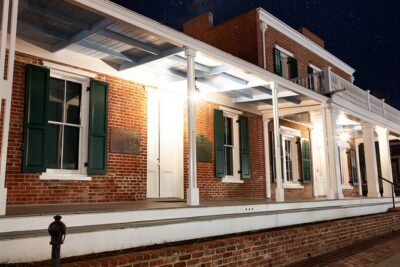
Next up is the Farnsworth House Inn, right in the heart of Gettysburg. This stop is famous because it served as a Confederate sharpshooter’s nest, and there are visible bullet holes on the exterior that mark what happened.
This is the kind of stop that makes the audio feel more grounded. When you can see damage and then hear the connection explained, it turns a scary-sounding detail into something you can actually picture. If you’re the type who learns best by connecting narration to a concrete object, Farnsworth is a strong anchor point.
The potential drawback: this isn’t a guided walkthrough where someone points and explains in real time. You’re depending on the audio to connect the dots. If you’re the type who needs constant interpretation, you might want to pair the audio with a bit of on-site looking—pause at the exterior points the narration leads you to, and take the time to visually match what you hear.
Jennie Wade House: the civilian tragedy stop

The tour then moves to Jennie Wade House. This is the spot tied to Jennie Wade, the only civilian killed during the Battle of Gettysburg. You’re given about 10 minutes here, and the admission is marked as free with the tour.
What makes this stop valuable is that it changes the lens. You’re still in battle territory, but the story turns toward what conflict costs people who are not soldiers. Even if you know the name already, seeing how the stop is framed helps you remember the war wasn’t only artillery and uniforms.
A realistic expectation: in a self-guided format, your pace is your pace. Ten minutes can feel quick if you’re reading slowly or stopping for photos. If you want to really absorb this one, plan to spend the full time rather than speed-running the narration.
Gettysburg Orphanage: aftermath and survival

Next is Gettysburg Orphanage, another 10-minute free-admission stop. The focus here is on children who were orphaned by the Civil War—especially kids impacted by the devastating aftermath of the 1863 Battle of Gettysburg. The narration frames the orphanage as refuge, with care and education that helped vulnerable children rebuild some sense of home.
This is one of the strongest parts of the tour for emotional context. Many battlefield tours focus on strategy and troop movement. This stop asks you to look at what came after the cannon stopped: the human cleanup, the losses, and the attempt to keep kids learning and safe.
If you’re traveling with kids or teens, this is also a useful middle ground. It’s historically serious without being abstract. You can point to the location and use the audio to keep the story coherent.






Cemetery Hill: Union defense and the later memorial
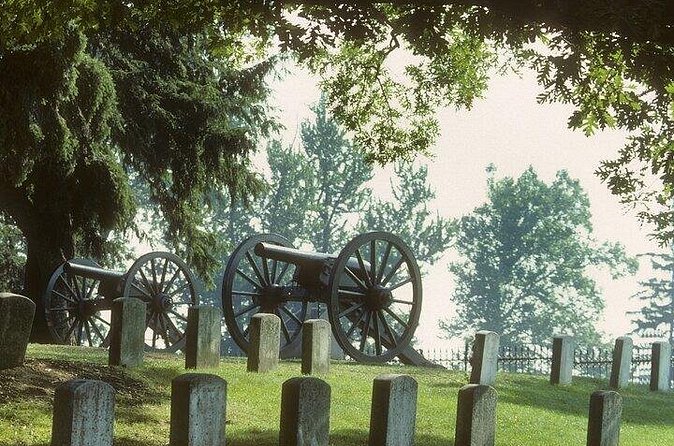
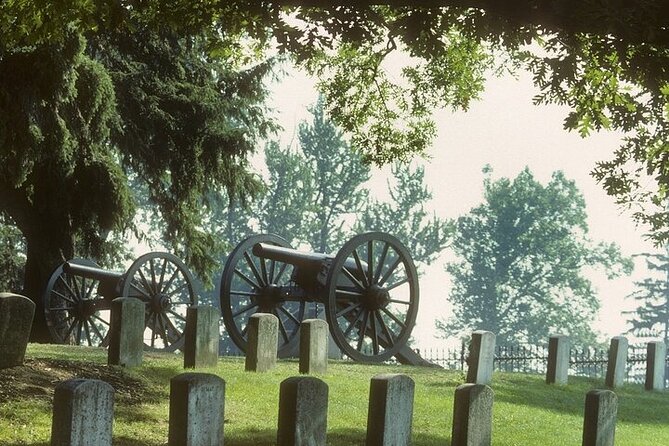
Then you reach Cemetery Hill, a key strategic high ground defended by Union forces during the Battle of Gettysburg. The tour notes that Cemetery Hill later became the site for the Soldiers’ National Cemetery.
This is where the narration helps you see the landscape as more than scenic ground. High ground mattered because it shaped visibility, movement, and survival in battle. Later, the hill became memorialized, which means your walk becomes part history lesson and part remembrance.
Again, because it’s self-guided, your job is to slow down just enough to connect the audio to what you see. If you’re tempted to walk straight through like it’s just another stop, you’ll miss the emotional weight that comes from knowing the hill’s dual role—fight ground first, cemetery later.
Ending at Evergreen Cemetery Gatehouse: easy to keep going
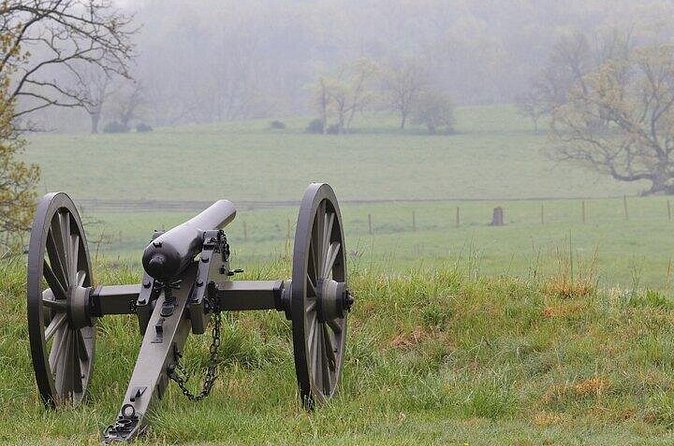
The tour ends at Evergreen Cemetery Gatehouse, just south of Gettysburg National Cemetery. You’re given a clear finish point, and from there you can exit, explore nearby landmarks, or return toward your starting area at your leisure.
I like ending at a cemetery edge because it gives you control. Some guided tours push you out at the exact moment your legs are tired. Here, you can decide what to do next based on energy: take the long route for a final look, or cut back toward town if you have dinner plans.
It also turns your “ghost tour” into a practical battlefield walking strategy. You finish near one of the most recognizable areas of the Gettysburg experience, which makes it easier to continue with other self-guided stops without retracing your whole route.
How Spooky Is It, Really?

Call it a ghost tour, but don’t expect a horror movie. The experience is described as informative and historical, and that matches the way the route is built: houses tied to named people and events, plus battlefield-linked ground.
If what you want is creepy and scary, you may feel let down. The audio format can’t really fake fear the way an actor-in-costume show can. Instead, it leans into story atmosphere—sad, tense, and historically grounded rather than spooky.
My advice: treat it like a walking history audio tour that happens to live under the ghost-tour label. If you go in for context, you’re likely to have a good time.
Price and Value: is $10 fair for this route?
Yes—assuming you use the tour format as designed.
You’re paying $10 for a planned sequence of stops that includes free admission at multiple locations (Jennie Wade House, Gettysburg Orphanage, Cemetery Hill). Even if you don’t count the audio value, the included admission makes the price easier to justify. Then you add the benefit of being self-paced, which is huge in a town where schedules and energy levels vary.
The only cost beyond your ticket is your time and walking shoes. The route is set up for roughly 1 hour, but if you linger at the houses or spend more time on the hill viewpoints, you may stretch it. That’s not a problem, just plan for it so you’re not rushing at the end.
Best Fit: who will enjoy this most?
I think this works best for three types of people:
- You like Civil War stories tied to real places, especially named civilians and specific sites.
- You want a low-pressure activity after dinner or between museum visits, where you can walk and learn without booking a live guide.
- You’re comfortable following an audio trail on your phone and adjusting pace based on what grabs your attention.
If you need a high-energy, scary, or actor-driven experience, you might want a different kind of ghost tour. The structure here is history-forward.
Also, if you’re the type who starts tours right on schedule, do a quick setup check before you rely on it. One account mentioned a password issue and another mentioned that starting required extra steps. That’s enough to suggest you should not wait until you’re standing at the first stop in a hurry.
Quick timing strategy for a smooth walk
To keep this from feeling rushed, here’s a simple approach:
- Give yourself a 45–75 minute window, depending on how fast you move.
- Budget 10 minutes per major site where you’re told the stop length.
- At house stops (Tillie Pierce and Farnsworth), spend a little time looking at what’s physically there before your brain moves on to the next part of the story.
If you’re splitting the tour across days, the audio-tour format can help you return to it without feeling like you missed everything. The key is staying organized so you know where you left off.
Should You Book This Gettysburg Self-Guided Audio Ghost Tour?
Book it if you want a self-paced Gettysburg walk that blends named Civil War locations with audio narration and includes free admission stops. It’s a good value at $10, and the route ends in a practical spot if you want to keep exploring.
Skip it if you’re mainly chasing a truly scary ghost experience or if you hate audio setups and prefer a live guide. And if you do book it, arrive ready to handle the phone-based access steps smoothly—your best experience starts when your audio starts working without delay.
FAQ
How much does the Gettysburg Self-Guided Audio Ghost Tour cost?
It costs $10.00 per person.
About how long is the tour?
The tour is listed as approximately 1 hour.
Where does the tour start and where does it end?
It starts at Tillie Pierce House Inn, 301 Baltimore St, Gettysburg, PA 17325, and ends at Evergreen Cemetery Gatehouse, 799 Baltimore St, Gettysburg, PA 17325.
Is the tour offered in English?
Yes, it is offered in English.
Is the tour self-paced?
Yes. It’s self-guided with a mobile ticket and an audio route you follow on your phone.
Which stops include free admission?
The Jennie Wade House, the Gettysburg Orphanage, and Cemetery Hill are listed with free admission ticket notes.
What should I expect from the experience if I want something scary?
Based on how the tour is described and what it focuses on, it leans more historical and informative than truly spooky.
Are service animals allowed?
Yes, service animals are allowed.
Is it refundable if I cancel?
No. The experience is non-refundable and cannot be changed for any reason.