REVIEW · NEW ORLEANS
Treasures of New Orleans: Ghosts & Voodoo Private Tour
Book on Viator →Operated by Withlocals · Bookable on Viator
New Orleans walks start with the spooky. This private Ghosts & Voodoo tour threads folklore through real landmarks in the French Quarter, from the pharmacy museum to the cathedral. I love the small-group, private pace, so you can ask questions without feeling rushed. I also like that you hit several big names in 2.5 hours, including St Louis Cathedral and the New Orleans Pharmacy Museum. The main drawback: you’re on foot for much of the experience, so if you have limited mobility you’ll want to plan for slower stops and frequent seating breaks.
What makes it especially appealing is how it treats these stories like part of the city’s everyday life, not just spooky entertainment. You’ll get one included drink, and the tour is listed as carbon neutral, which is a nice bonus when you’re walking anyway. It’s also a mobile ticket situation, which keeps things simple once you arrive.
Your tour starts at 214 Royal St and ends on Bourbon St, so you can roll right into dinner or a last drink afterward.
In This Review
- Key things to know before you go
- Ghosts and voodoo in the French Quarter, in a way that actually makes sense
- Hotel Monteleone to Jackson Square: where the tone gets set fast
- La Riviera rooftop stories and the Louisiana Supreme Court area
- St Louis Cathedral, the Cabildo, and why sacred sites attract ghost stories
- Chartres Street and St Mark’s Church: architecture as a story machine
- Royal Street and the Delphine Lalaurie story that keeps resurfacing
- Lafitte’s Blacksmith Shop Bar: Jean Lafitte’s after-hours vibe
- Guide style and the small-group advantage (including families)
- Value check: is $37 worth your time and energy?
- Practical tips so your ghost walk stays comfortable and fun
- Should you book this Ghosts & Voodoo tour?
- FAQ
- What’s the duration of the Treasures of New Orleans Ghosts & Voodoo Private Tour?
- Where does the tour start and end?
- Is this tour private?
- What’s included in the price?
- Do I need to buy tickets at each stop?
- Can I cancel for a full refund?
Key things to know before you go
- A private tour for just your group: better questions, fewer distractions, and a more personal feel.
- Iconic stops in tight walking distance: Pharmacy Museum, St Louis Cathedral area, and Royal Street legends.
- One included drink (alcoholic or non-alcoholic) helps keep the mood relaxed.
- A guide-led blend of ghosts and voodoo: stories tied to places, not random jump scares.
- It’s mostly walking: moderate fitness is the best match.
- One itinerary-based caution: there has been at least one report of a guide not showing, so do confirm day-of.
Ghosts and voodoo in the French Quarter, in a way that actually makes sense
New Orleans is good at mixing the sacred with the strange. This tour leans into that idea by using landmarks as anchors for the stories, so you’re not just hearing legends—you’re standing in the places people associate with them. If you like history, you’ll notice how the city’s buildings and old institutions keep showing up in the tales.
A big plus is the private format. You can steer the conversation toward what you care about most—ghost stories, voodoo culture, architecture, or the darker side of famous addresses. That also helps if you’re traveling with kids. One guide (Neil, mentioned in feedback) was praised for adjusting the story level for children, which matters if you don’t want the experience to swing too grown-up.
One thing to keep in mind: the subject matter can get unsettling at times, especially around famous hauntings and notorious figures. This isn’t a classroom lecture, so your comfort level depends on how you feel about ghost stories and the real-world tragedies behind some legends.
You can also read our reviews of more tours and experiences in New Orleans.

Hotel Monteleone to Jackson Square: where the tone gets set fast
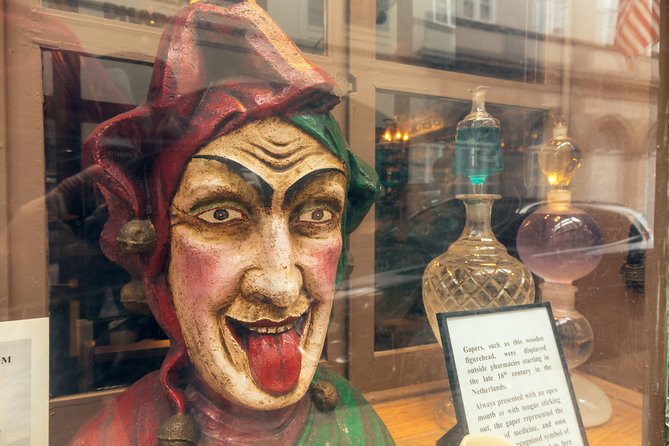
You start at Hotel Monteleone, a long-running family hotel in the French Quarter. The appeal here is practical: it’s a real landmark with layers, and your guide uses that setting to explain how local life and politics have historically brushed up against the supernatural folklore. Even if you aren’t a hotel person, it’s a strong first stop because it gives the tour a grounded start.
From there you move into Jackson Square, and that’s where the tour really begins to feel like a walk through story hotspots. Around the square, you’ll focus on two specific attractions: the Napoleon House and the New Orleans Pharmacy Museum. The museum stop is especially worth your time because pharmacies in old New Orleans weren’t just about medicine—they were places tied to knowledge, herbs, and old remedies. In ghost-story terms, that makes it the kind of setting that naturally attracts rumors.
This is also a good segment for photos and orientation. If you’re meeting the city for the first time, you’ll get bearings quickly: streets, sightlines, and the way the Quarter compresses everything into walkable blocks. The tour time at these early stops is short, but your guide is there to connect the dots, so you’re not left guessing what to notice.
La Riviera rooftop stories and the Louisiana Supreme Court area
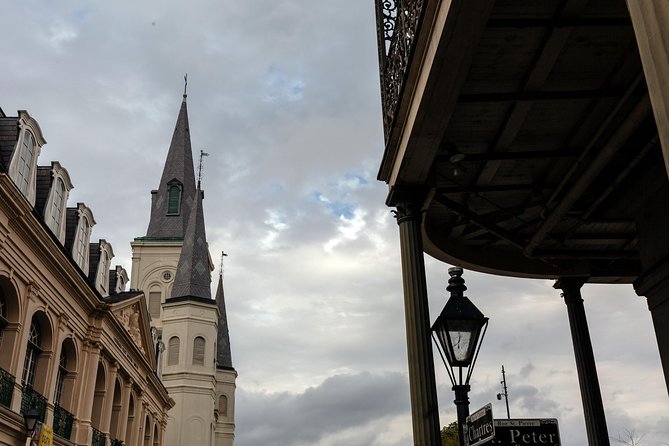
Next you head toward the area of the Louisiana Supreme Court Clerk. Instead of making that feel like a random government stop, the tour uses the surrounding area to point you to a specific story setting: the La Riviera rooftop bar at the Omni Hotel. You get an included stop here, and it’s a smart choice because rooftop viewpoints make the Quarter feel more readable.
The guide ties the moment to the Zack and Addie story, which is the kind of local legend that benefits from hearing context out loud while you’re standing in the right place. The rooftop setting also changes the vibe from street-level spooky to something more dramatic and airy. Even if you’re not taking drinks in the moment (you still get the included drink somewhere on the tour), you’ll probably appreciate the change of pace.
Time-wise, this part is brief, so don’t expect a long hang. What you’ll get is atmosphere and story continuity—like a scene shift in a movie. It’s also a useful reset if you’re traveling with people who get tired easily on French Quarter sidewalks.
St Louis Cathedral, the Cabildo, and why sacred sites attract ghost stories
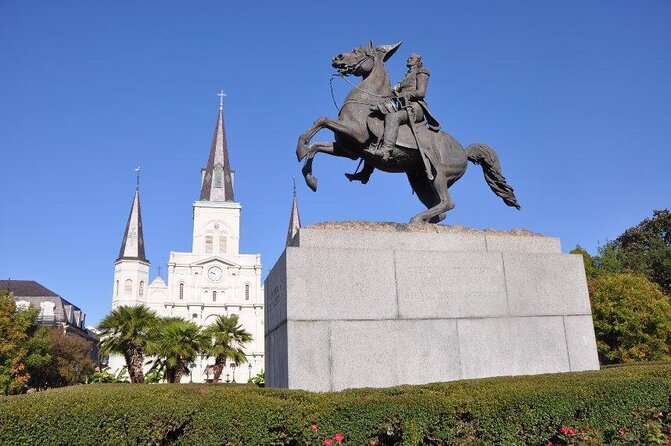
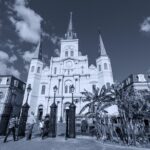
One of the most famous parts of New Orleans is the St. Louis Cathedral area, and this tour places it right in the center of the ghost-story narrative. You’ll stop near the Cabildo, then look toward the cathedral and the surrounding square.
What makes this stop special is how the guide connects architecture and belief. The cathedral is described as the oldest Cathedral in the USA, and the area is also where New Orleans was first settled. That alone gives the tour instant weight: when a place is that old and still used, stories tend to cling to it.
You’ll also hear that the cathedral is still a Catholic church and a working part of local life, used for weddings and funerals. That detail matters. Ghost stories feel different when you know people still go there for real milestones. It turns the supernatural talk into something more about community memory than about a theme-park scare.
The tour time at this point is also short, but it’s enough for you to notice the scale of the square and the way the cathedral dominates the area. If you’re sensitive to large crowds, you might want to position yourself early. Otherwise, just expect that this is one of the busiest photo zones.
Chartres Street and St Mark’s Church: architecture as a story machine
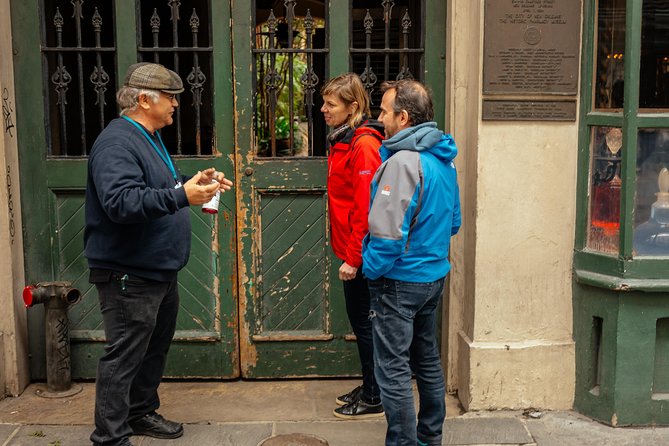
After the cathedral/Cabildo area, you head toward Chartres Street. This stop is quick, but it’s aimed at a specific kind of New Orleans legend: a story where a restaurant can allegedly produce a ghost photo—linked to the idea of a ghost sitting at a table. The tour even notes that you can reserve the table for food, which turns a spooky rumor into something you can potentially try on your own time.
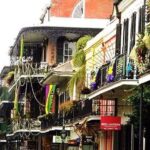
Here’s my practical take: don’t plan your entire evening around catching a ghost in a picture. Treat it as a fun extra if the restaurant lines up with your schedule. The real win is that Chartres Street is a great street to experience the Quarter’s rhythm—balconies, texture, and the sense that everyday life and old stories share the same sidewalks.
Then you reach St. Mark’s United Methodist Church, described as the oldest building in the Mississippi River bottom and also one of the two French structures in the French Quarter. That’s an unusually specific fact, and it’s the kind of detail that makes the stop more than just spooky ambiance. When a building’s age and origin are clear, the ghost stories feel more like folklore built on real survival.
This segment is also a good place to pause mentally. The tour shifts from famous-square mythology to a quieter, more architectural kind of intrigue. If you like noticing small differences—brickwork, layout, the feel of older streets—you’ll probably enjoy this stop even if you’re not the biggest believer.
Royal Street and the Delphine Lalaurie story that keeps resurfacing
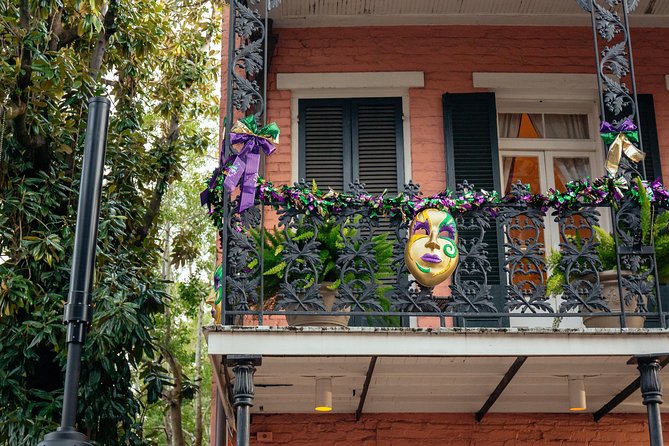
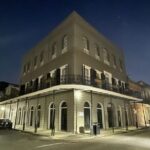
Next is Royal Street, and this is where the tour leans hardest into famous horror legends. You’ll hear about the Story of Delphine Lalaurie, which is noted as being featured on American Horror Story and referenced in other TV appearances. It’s also described as the subject of a new movie, which tells you the story keeps getting retold in pop culture.
Royal Street is perfect for this kind of stop because the street itself feels like a stage. You’ll see how grand facades sit right beside narrow sidewalks, and that contrast helps explain why people remember these stories. The guide uses the setting to talk about why these stories stick—and how they can move from local rumor to mainstream entertainment over time.
One good thing about keeping this part inside a walking tour format: you’re not stuck watching someone describe horror for an hour. You’re outside, seeing the addresses and the street geometry as you go, which helps everything feel more concrete.
This is also a moment to be honest with yourself about what you want. If you prefer gentle folklore, you might find this stop darker than the others. If you’re here for the spooky side of New Orleans, this is the stop most people will remember.
Lafitte’s Blacksmith Shop Bar: Jean Lafitte’s after-hours vibe
Your final stop is Lafitte’s Blacksmith Shop Bar, described as a place that’s probably haunted by Jean Lafitte, the pirate. This is a great ending because it shifts the energy from museum-like stories to lived-in nightlife atmosphere.
The bar setting does two things well. First, it gives you an off-ramp from spooky talking—your guide can end on a note that feels like legend-in-the-room, not lecture-facts. Second, it matches New Orleans behavior: people do not treat the Quarter like a museum. They treat it like a place to linger.
Since the tour ends on Bourbon St, you can also connect the experience directly to your evening plans. If you like to keep things flexible, this is ideal: you finish where the action is, so you can choose what kind of night you want next.
Guide style and the small-group advantage (including families)
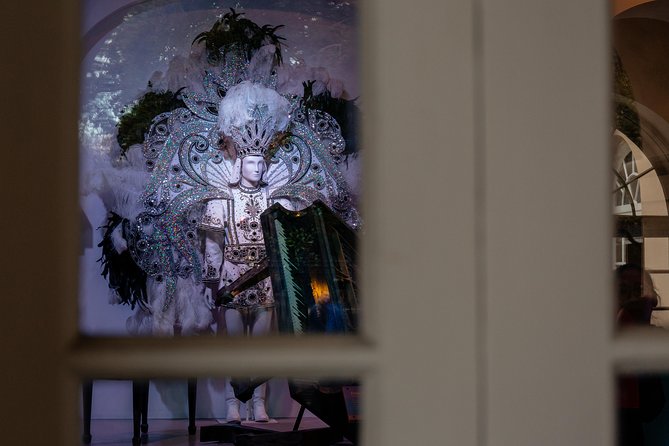
The best part of this tour, according to feedback, is the guide performance and pacing. People call out that it packs a lot in without feeling chaotic, and that the tour pace can shift based on what you want to hear. That matters because ghost and voodoo topics can go in different directions fast: cultural context, local legends, famous cases, or theatrical storytelling.
In one positive note, Neil is described as fantastic and entertaining, with strong grasp of the stories and history. Another review adds a practical detail: when kids were in the group, the guide adapted the content to the right level. That’s not a trivial thing. A good guide can keep the spooky fun while keeping it age-appropriate.
On the flip side, there is at least one negative report about a guide not showing and not messaging. I can’t soften that with spin. The practical takeaway for you is simple: arrive early, check the meeting point address, and keep an eye on start time. If your plans are time-sensitive, don’t schedule another tight commitment right at the tour start.
Value check: is $37 worth your time and energy?
At $37 for a 2 hours 30 minutes private tour, the value is strongest if you want story context at multiple landmarks. You’re not paying for one museum admission and a single viewpoint. You’re paying for a guide to connect the places—pharmacy museum, cathedral area, church, Royal Street, and a bar—into one storyline.
The included drink is also a real value piece. It’s listed as one alcoholic or non-alcoholic drink, and that keeps the tour comfortable, especially if you’re walking in warm weather or you want a calmer finish.
You’re also getting a stated carbon-neutral approach with small, non-intrusive tours. That doesn’t change what you feel on the ground, but it’s aligned with how the French Quarter works best anyway: walking, looking, and learning in situ.
One more value angle: it’s described as free admission for several stops and an included admission for the rooftop bar. Even if you don’t care about the ticket math, it means you’re not constantly stopped by payment steps mid-tour. It stays more like a continuous experience.
Practical tips so your ghost walk stays comfortable and fun
This tour is built for walking, so wear shoes you can trust. French Quarter streets can feel uneven, and you’ll be moving from Royal St to the cathedral area and back out toward Chartres and Royal Street again.
Bring a phone charge, but don’t obsess. The tour uses a mobile ticket, so you’ll want your confirmation ready. Also, if you want to try that Chartres Street photo-table story, plan to do it as an optional add-on later. The tour stop itself is brief, and your best results depend on reservations and timing you control.
If you’re traveling with mixed ages, say so upfront. One guide adapting content for kids shows that the experience can flex, and that usually leads to everyone enjoying the stories instead of just tolerating them.
Lastly, set expectations for tone. This is about ghosts and voodoo traditions, so expect spooky talk. It’s also about places that still matter to locals, like the cathedral and active church spaces. That balance is part of what makes New Orleans feel like New Orleans.
Should you book this Ghosts & Voodoo tour?
If you want a private, guided story walk through the French Quarter, this is a strong pick. The combination of iconic landmarks (Pharmacy Museum, St Louis Cathedral area, St Mark’s) plus famous legends (Delphine Lalaurie, Jean Lafitte) gives you variety without doubling back endlessly.
Book it if:
- you like stories tied to specific addresses and buildings
- you want a guide who can adjust for your group, including families
- you’d rather do one well-paced tour than piece together multiple stops on your own
Skip it or think twice if:
- you need a low-walking pace
- you’re uncomfortable with darker legends
- your schedule is so tight that a rare no-show would ruin your day
FAQ
What’s the duration of the Treasures of New Orleans Ghosts & Voodoo Private Tour?
It’s listed at about 2 hours 30 minutes.
Where does the tour start and end?
The tour starts at 214 Royal St, New Orleans, LA 70130, USA, and ends on Bourbon St, New Orleans, LA.
Is this tour private?
Yes. It’s a private tour/activity, and only your group participates.
What’s included in the price?
It includes a local guide, a private tour, and one alcoholic or non-alcoholic drink. It’s also listed as carbon neutral.
Do I need to buy tickets at each stop?
Admission is listed as free for several stops, with one stop that includes admission for a rooftop bar.
Can I cancel for a full refund?
Yes. You can cancel up to 24 hours in advance for a full refund. If you cancel less than 24 hours before the start time, the amount paid is not refunded.