REVIEW · SALEM
Salem Ghost Tour: Witches & Wicked Whispers
Book on Viator →Operated by Salem Ghosts By US Ghost Adventures · Bookable on Viator
Salem has a way of getting under your skin. This 1-hour Salem Ghost Tour focuses on witch-trial history plus multiple haunted locations, explained by a licensed guide you can ask questions to. One thing to consider: if you want full costume-and-stage theatrics, you might find it more story-forward than showy.
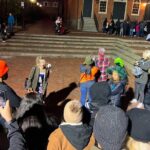
The route is short, but the stops are big names in Salem’s paranormal conversation. You’ll go from the site tied to Bridget Bishop to the Salem Inn and end at Wicked Good Books, where the guide wraps up with more eerie tales. With groups capped at 35, it should feel social rather than packed, though cold weather can make the walk less fun if you’re not dressed for it.
In This Review
- Key Things to Know Before You Go
- Salem’s Witch Trials, Seven Haunted Stops, One Tight Hour
- Price and Logistics: What $30 Buys (and What It Doesn’t)
- Meeting Point at 210 Essex St, Then a Short Walk to Wicked Good Books
- Stop 1: Turner’s Seafood at Lyceum Hall and Bridget Bishop’s House Site
- Stop 2: The Witch House in Salem and Judge Jonathan Corwin
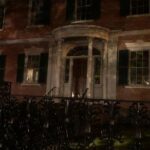
- Stop 3: Ropes Mansion and Garden and the Abigail Ropes Fireplace Story
- Stop 4: Salem Athenaeum and the Great Fire Refuge
- Stop 5: The Salem Inn and Haunted Hotel Encounters
- Stop 6: John Ward House and Restless Spirits Linked to the Witch Trials
- Stop 7: Wicked Good Books and the Final Spooky Wrap-Up
- What Makes This Tour Work: Guides, Humor, and Q&A
- The Best Fit: Who Should Book This Salem Ghost Tour
- Should You Book Salem Ghost Tour: Witches & Wicked Whispers?
- FAQ
- How long is the Salem Ghost Tour
- How much does it cost
- Is the tour offered in English
- Where do I meet the guide, and where does the tour end
- What is included in the price
- Does the tour run in bad weather
- Are service animals and children allowed
Key Things to Know Before You Go
- Tight timing (about 1 hour): you’ll hit seven sites without lingering long at each one
- Research + eyewitness-style storytelling: the vibe is less jump-scares, more why Salem thinks these things happened
- Popular stop pairings: you get both the Witch House area and other landmark hauntings like Ropes Mansion and John Ward House
- Ask-and-answer is part of the experience: guides encourage questions, which can make the tour feel personal
- Weather won’t stop it: the tour operates in all weather, so layers matter
- Good for families who like spooky stories: kids have been especially engaged when guides keep the pace clear and interactive
Salem’s Witch Trials, Seven Haunted Stops, One Tight Hour
Think of this as a history-first ghost tour. You’re walking Salem’s older corners and hearing how the witch trials of 1692 shaped people’s fear, reputations, and later ghost stories. The tour brand of “witch trials research and eyewitness accounts” matters, because it keeps the chatter anchored in events rather than just spooky noise.
At $30 per person for about an hour, it’s priced like a focused walking experience, not a whole-day excursion. The value depends on what you want: if you enjoy learning the why behind Salem’s hauntings, $30 can feel fair. If you mostly want entertainment without context, you might judge it as just a quick walk for the money.
The tour is also offered in English, which is a practical plus if you’re traveling with a mixed group. And because you get a mobile ticket, you don’t have to juggle paper tickets while you’re trying to find the right starting spot on Essex Street.
You can also read our reviews of more tours and experiences in Salem.
Price and Logistics: What $30 Buys (and What It Doesn’t)
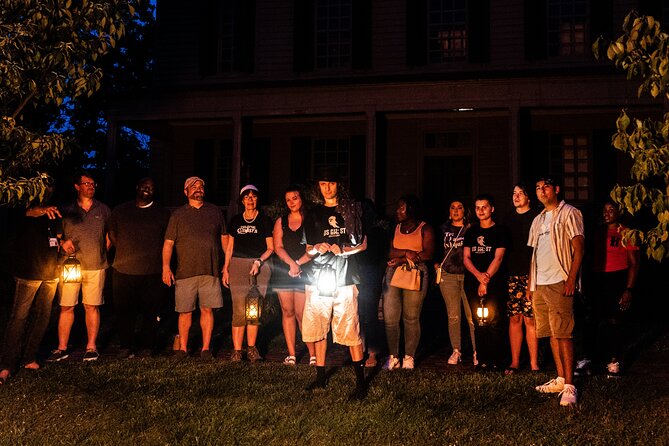
Here’s the honest math of it: you’re paying for a licensed guide and a curated route through stops that are meaningful in Salem’s witch-trials and haunting lore. You’re not paying for museum admission, since the stops are presented without saying the tour requires entry fees at each location.
What you should not expect is time to wander on your own between stops. This is built to move, and the walk-and-talk structure is part of the format. One review complaint that pops up around tours like this is disappointment when expectations are for a more theatrical presentation or longer time at fewer spots—so set your expectation as story pacing, not a show.
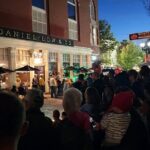
Group size is capped at 35 travelers, which helps. Still, in November or colder months, being outside while the group relocates can make the tour feel rushed if you’re not bundled up. Wear something you can move in, not just something warm.
Meeting Point at 210 Essex St, Then a Short Walk to Wicked Good Books
You start at 210 Essex St, Salem, MA 01970, and the tour ends at Wicked Good Books, 260 Essex St. That matters because it lets you plan the rest of your visit: once you finish, you’re already in a useful central area for browsing shops and continuing on foot.
The tour is smart casual, which is Salem-sensible. You don’t need formalwear, but you also want to look put-together enough for an evening walk that might include historic-site exterior viewing. Because the tour runs in all weather conditions, check the forecast and dress for wind as much as cold.
If you’re thinking about comfort, plan for a moderate walking requirement. Also note the tour is described for moderate physical fitness, and children must be accompanied by an adult. Service animals are allowed, and the tour is near public transportation, so you’re not forced into a car-only Salem plan.
Stop 1: Turner’s Seafood at Lyceum Hall and Bridget Bishop’s House Site
Your first stop is Turner’s Seafood at Lyceum Hall. The big hook here is that this building sits over the historic site of Bridget Bishop’s house, tied to the first woman executed during the 1692 witch trials. The tour uses that connection to set the tone: Salem’s ghost stories aren’t treated as random myths, but as fear that grew out of specific people and events.
This stop works well if you like grounded storytelling. It gives you a starting point that feels real, not just spooky legend. The drawback is also pretty predictable: you’re learning the context fast, and you won’t spend a long time here before moving on.
If you’re the kind of person who asks questions early, this is a good place to do it. The group is just getting underway, and a good guide can explain the witch-trial machinery and why Bridget Bishop’s name matters.
Stop 2: The Witch House in Salem and Judge Jonathan Corwin
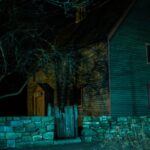
Next up is The Witch House at Salem, tied to Judge Jonathan Corwin, one of the key figures who presided over the witch trials in 1692. This is one of the most famous witch-trial associations in the city, and the tone here tends to shift from “this happened” to “this happened under a roof like this.”
Because the Witch House is central to Salem’s identity, it can easily become a blur if your guide doesn’t pace it well. The good part: if your guide is strong at explaining details clearly, this stop gives you a vivid sense of power, accusation, and consequence—without turning the story into a lecture.
Expect reports of ghostly apparitions to show up as part of the narrative. The tour’s value is that it connects those haunting claims back to the human tragedy of the trials rather than treating ghost lore as pure spectacle.

Stop 3: Ropes Mansion and Garden and the Abigail Ropes Fireplace Story
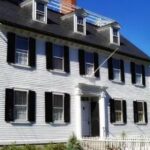
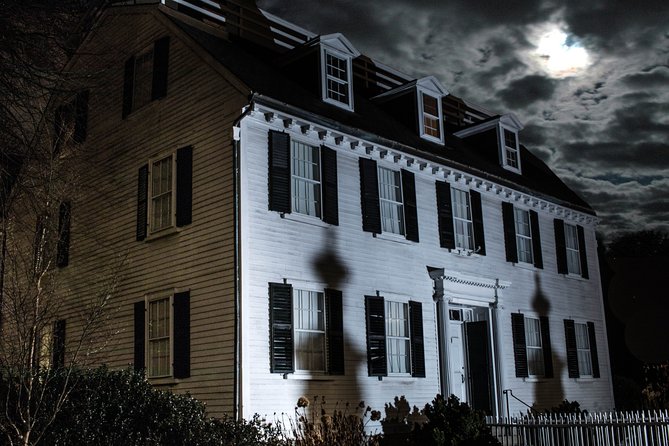
Then you’ll head to Ropes Mansion and Garden. The mansion dates to 1727, and the tour highlights Abigail Ropes, described as the daughter of Judge Nathaniel Ropes Jr. The story centers on her fatal accident by the fireplace, and the haunting angle follows: Abigail’s spirit is said to linger in the rooms.
What I like about this stop is how it broadens Salem’s haunting map beyond the trials. Even if you’re primarily in Salem for witch history, this shows how tragedy, family ties, and local legend blend over time. It’s also a nice contrast after the Witch House stop.
A small consideration: because you’re on a walking route with limited time, you may not get the kind of slow sightseeing you’d do if you were just touring the building on your own. That’s the tradeoff for a guided hour.
Stop 4: Salem Athenaeum and the Great Fire Refuge
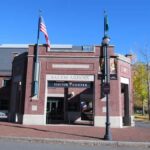
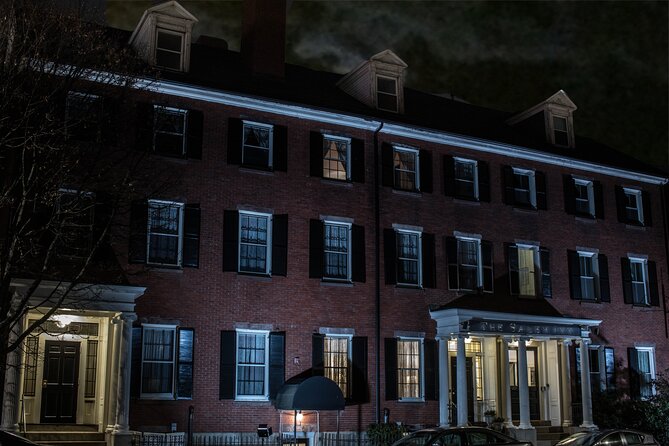
The tour continues to Salem Athenaeum, built of solid brick and associated with shelter during the Great Fire of Salem in 1914. The tour frames it as a community refuge in a disaster that tragically took many lives. Today, it’s known as a library with an eerie reputation, and the haunting stories connect to the fire’s legacy.
This stop can hit surprisingly hard if you care about the way tragedies leave residue in a place. The ghost angle isn’t just about witches. It’s about how fear, loss, and survival stories stick to walls and schedules and habits.
Because it’s a brick building tied to a specific event, it also works as a grounding moment. Even if you’re skeptical of ghosts, it’s a reminder that Salem’s scariest chapters are often historical, not supernatural. (And yes, the tour includes the unexplained phenomena chatter too.)
Stop 5: The Salem Inn and Haunted Hotel Encounters
Next is The Salem Inn, a historic hotel tied to Salem’s dark past. The tour describes reported eerie encounters and unexplained phenomena connected to its centuries-old history.
This stop is useful because it shows how haunting stories live alongside everyday life. You’re not just hearing about trial sites; you’re hearing how locals and staff allegedly experience the strange side of old buildings.
If you’re expecting a dedicated “inside the hotel” look, adjust expectations. The tour stop is described as part of the route, which suggests exterior viewing and story time rather than a full hotel tour.
Stop 6: John Ward House and Restless Spirits Linked to the Witch Trials
Your next stop is John Ward House, built in 1784. The tour describes a notorious reputation for haunting and notes that it was tied to witch-trial activity, including being used as a headquarters at some point in that dark period.
This is one of those stops where a great guide can make the story feel larger than the room. The building’s age helps, but what really carries it is how the guide connects the house to the people who shaped Salem’s fear.
A possible drawback: if you’re sensitive to heavy themes, this is the point where the tour tone can feel most intense. Still, it’s also where the tour’s educational promise is strongest—because the haunting stories are tied to specific human consequences, not just folklore.
Stop 7: Wicked Good Books and the Final Spooky Wrap-Up
The last stop is Wicked Good Books. You’ll hear additional history and ghost stories before the tour ends. Since your tour ends here, it’s a practical place to linger if you want to keep the mood going—either by browsing themed reads or simply walking off with the stories still fresh.
This stop works because it gives closure. After six haunted-site connections, the bookshop ending feels like a natural transition from “stand here and listen” to “take the story with you.”
If your group includes kids, this final stop often helps keep attention. It’s a different setting, and a good guide can make the last minutes feel like a satisfying payoff rather than just the last stop on a checklist.
What Makes This Tour Work: Guides, Humor, and Q&A
This tour lives or dies on the guide’s storytelling. In the feedback I’ve seen reflected in guide names like Elizabeth, Jon, Sam, Noelle, Erin, Topher, William, Laina, Mark, and Geoffrey, the recurring strengths are clear: articulate narration, strong pacing, and the ability to hold a group’s attention.
One detail you should plan for: you may get interactive moments where you can ask questions. That’s a big deal in Salem, because the witch trials raise complicated issues and people naturally want context. The best guides use those questions to clarify the timeline and why certain places get linked to later ghost stories.
Also keep an eye out for small added tools. At least some versions of this tour have been described as including EMF detectors, which kids often latch onto. I wouldn’t plan your entire evening around it, but if it happens during your departure, it can add a hands-on twist to a story-driven experience.
The Best Fit: Who Should Book This Salem Ghost Tour
You’ll likely enjoy this most if you want Salem’s hauntings explained in plain language and connected to specific historical events. If you like ghost stories with structure—who, what, where, and why—this format tends to feel worth it.
It’s also a smart pick for families who want a shorter outing. Kids can stay engaged when the guide uses humor and keeps things clear. For teens, it can land well if they’re interested in Salem’s history rather than expecting a full costume performance.
If you hate cold weather walks, plan carefully. The tour runs in all weather, and the route is outdoors until it finishes. Dress like you’ll be standing outside for a while, not just walking quickly between stops.
Should You Book Salem Ghost Tour: Witches & Wicked Whispers?
If you’re doing Salem for the first time and want a fast, guided path through the city’s most talked-about sites, I’d say book it. The $30 price makes sense as “guided storytelling through key stops” rather than “spend all day in museums,” and the end at Wicked Good Books is a convenient finish.
Skip it or go in with adjusted expectations if you want a theatrical show with costumes and heavy acting. This is more about story and research-style context, with a guide-led walk that moves you from landmark to landmark. If that matches what you want from Salem, you’ll probably leave feeling like you learned something real—and a little spooked.
FAQ
How long is the Salem Ghost Tour
The tour lasts about 1 hour.
How much does it cost
It costs $30.00 per person.
Is the tour offered in English
Yes, the tour is offered in English.
Where do I meet the guide, and where does the tour end
Meet at 210 Essex St, Salem, MA 01970. The tour ends at Wicked Good Books, 260 Essex St.
What is included in the price
The price includes a licensed guide and a trained professional tour guide.
Does the tour run in bad weather
Yes, it operates in all weather conditions, so dress appropriately.
Are service animals and children allowed
Service animals are allowed, and children must be accompanied by an adult.