REVIEW · NEW ORLEANS
Ghosts, Gods, & Gangsters of New Orleans
Book on Viator →Operated by Spirit Empire Tours · Bookable on Viator
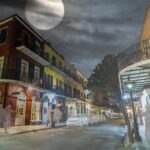
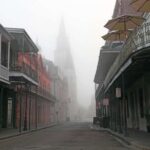
The French Quarter gets spooky fast. This tour stitches together ghost legends and true-crime history at real street corners, with tight timing at each stop so the night keeps moving. I love the way the guide turns famous facades into clear stories you can picture, and I love the humor that keeps the mood fun instead of cheesy. One watch-out: the themes are dark and occasionally graphic-adjacent, so it’s not for the faint of heart.
I also like the fact that you stay outside for most of it, which keeps things comfortable and avoids awkward inside rules. The pacing is smart too: you get about 10 minutes per stop, long enough for the story and short enough to stay alert on a night walk. If you get cold, plan for it; people have said winter tours feel much better with warm layers.
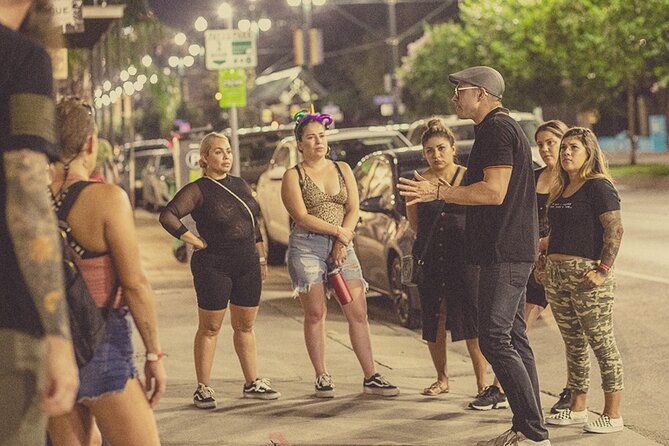
This is led by Dr. Edward Simmons, and his energy is a big reason the reviews run so consistently high. It’s an adults-only experience (17+), and the small group size (max 20) makes it easier to hear and ask questions without shouting over the street.
In This Review
- Key things that make this tour worth your time
- Ghosts, Gods, & Gangsters: the night-walk vibe
- Price and value: what $34 buys you
- Why Dr. Edward Simmons is the main event
- Stop 1: Old Ursuline Convent Museum and the Casket Girls
- Stop 2: BK Historic House and Gardens, from Beauregard to a mafia hit
- Stop 3: Lalaurie Mansion and Madame Delphine’s cruel legacy
- Stop 4: French Market and Gallatin Street’s danger under a different name
- Stop 5: Jackson Square executions and the contrast with carnival music
- Stop 6: New Orleans Pharmacy Museum and plague-era rumor
- Stop 7: Omni Royal Orleans and tragedy behind the lobby lights
- What to expect on the walk (and how to prepare)
- Who should book Ghosts, Gods, & Gangsters
- Should you book it?
Key things that make this tour worth your time
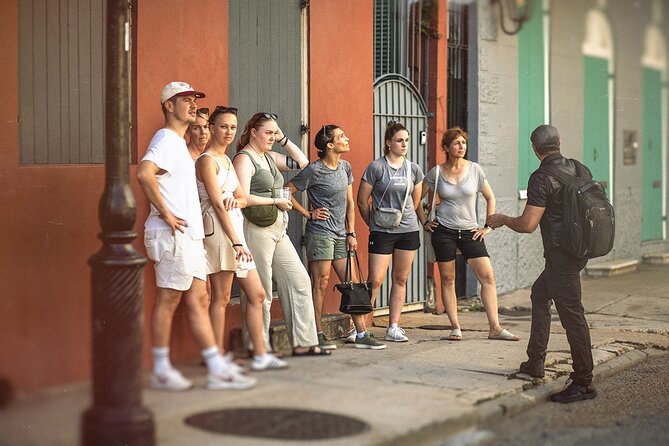
- A small-group cap of 20 keeps the storytelling interactive and personal.
- Dr. Edward Simmons runs it with high energy and a voice built for night streets.
- Seven major stops connect casket-girl legend, mafia violence, and execution history in one route.
- A careful balance of humor and seriousness helps you enjoy the spooky parts without ignoring the facts.
- All outdoors, mostly outside the buildings means it feels like a real walk through the French Quarter’s past.
Ghosts, Gods, & Gangsters: the night-walk vibe
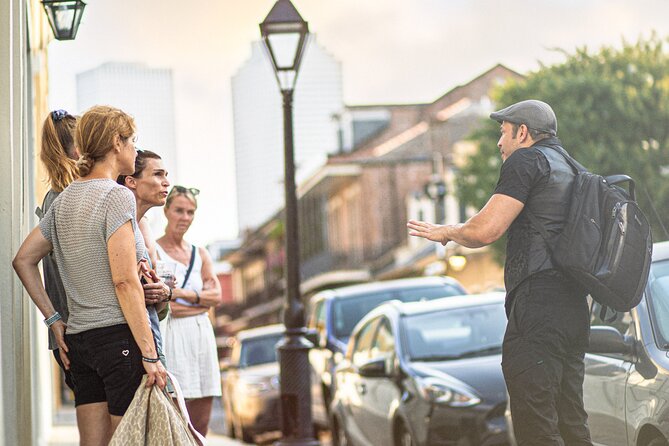
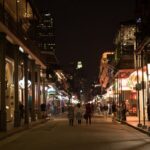
This is the kind of New Orleans tour that starts like a fun stroll and slowly turns into a mental “wait, what?” tour. You’re not in a museum. You’re standing on sidewalks, looking up at old architecture, and listening as the guide ties each location to a story about power, fear, and the city’s darker side.
What makes it work is the structure. Each stop is short, but the guide doesn’t just name-drop. He gives you a scene: who lived there, what happened, and why the rumor still sticks. The result is that you walk away with a New Orleans map in your head, not just a pile of ghost claims.
You can also read our reviews of more tours and experiences in New Orleans.

Price and value: what $34 buys you
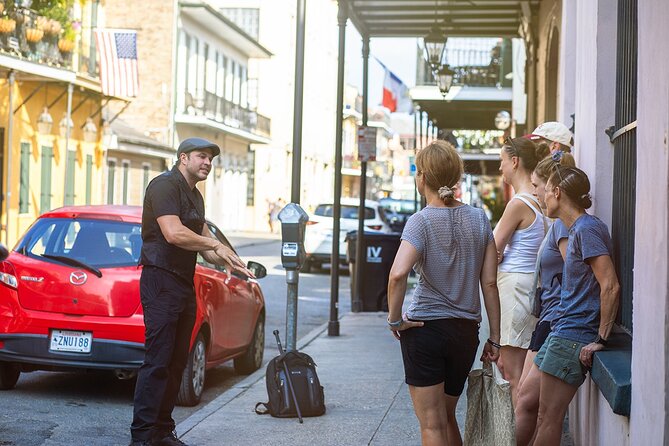
At $34 per person for about 1 hour 45 minutes, this lands in the “worth it even if you’re picky” category. You’re paying for a licensed, certified walking guide and for the ability to see multiple headline sites in one evening without renting transport or building your own route.
Also, it’s not a long sit-down event. You get real time outside, moving between places that matter historically. And because the group size is capped at 20 (with some small groups reported), you’re less likely to feel like you’re being talked at from the back row.
Why Dr. Edward Simmons is the main event
If you want a guide who can hold a room on a dark street, this is a strong match. Dr. Edward Simmons has a storytelling style people keep praising for being funny, animated, and grounded. He’s good at pacing his voice so the room can hear him, and he’s good at linking history to what you’re looking at right then.
A detail I think you’ll appreciate: the stories aren’t just tossed out as spooky folklore. The approach aims to keep things rooted in the city’s real past. That balance is why this tour tends to satisfy both true-crime fans and people who came mainly for ghosts.
Stop 1: Old Ursuline Convent Museum and the Casket Girls
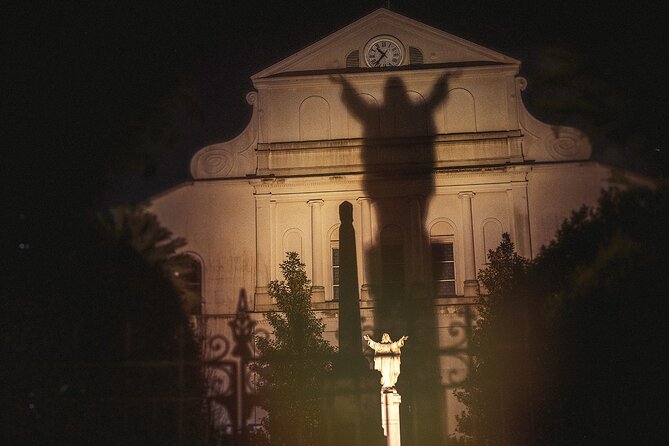
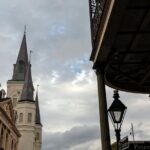
You start outside the gates of the Old Ursuline Convent, a site tied to the early days of the city. The guide frames the legend of the casket girls: young women traveling with unusual chests, and lore suggesting these cases carried unholy stowaways that still haunt nearby spaces in vampiric form.
What I like about this start is how it sets the tone without pretending you’re in a movie. You’re literally looking at decaying walls and imagining whispers on the wind. The story also gives you a theme for the whole night: New Orleans has a habit of turning “unknown cargo” into mythology, and then letting time do the rest.
Consideration: you’ll be outside near historic masonry, so if it’s humid or cold, come ready for wind.
Stop 2: BK Historic House and Gardens, from Beauregard to a mafia hit
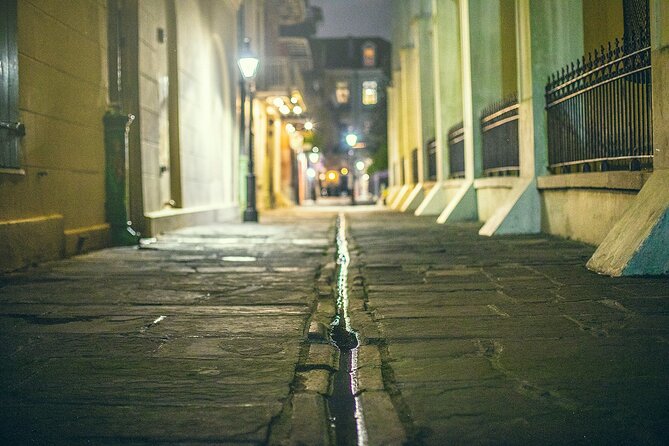
Next you head to a grand white-columned mansion associated with Civil War general P.T. Beauregard. It later ties into bestselling author Frances Parkinson Keyes. Then the tour pivots into the darker side: this home’s connection to one of the city’s infamous mafia hits.
This stop works because it doesn’t force you to choose between “history” and “true crime.” It shows how New Orleans’ power stories can move from war and literature to organized violence, all within the same walls and the same grand façade.
Tip for your night: pay attention to where you stand. The guide’s timing and positioning matter here because the story is tied to what you can see outside.
Stop 3: Lalaurie Mansion and Madame Delphine’s cruel legacy
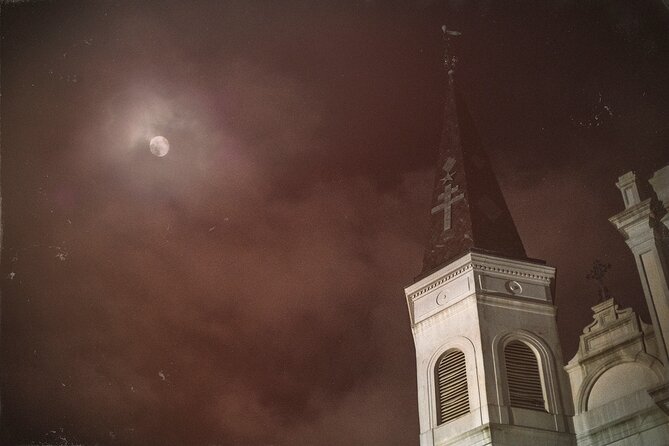
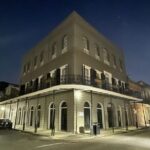
Then comes the Lalaurie Mansion—imposing on the outside, heavy on the legend. You’ll be standing before the residence once occupied by Madame Delphine Lalaurie, whose secrets were exposed after a fateful turning point. The guide recounts tales tied to diabolical experiments and unimaginable human suffering.
You might notice the tour’s big skill here: it invites you to hold the tension. Are there spirits still lingering, or does public imagination keep feeding the story? The guide doesn’t have to push you to believe either way. The location itself does the work.
Consideration: this is one of the more disturbing stops emotionally. If you’re bringing anyone sensitive to cruelty narratives, be ready for this moment.
Stop 4: French Market and Gallatin Street’s danger under a different name
At the French Market, the tone shifts from private tragedy to street-level predation. The guide points toward what was once Gallatin Street, a late-1800s red light district that pulled in sailors and “slummers” with the promise of illicit desire.
The story is full of danger: men lured into dead ends, establishments masking murderous histories behind respectable facades. The guide also uses sensory cues—like the imagined swap of laughter into screams and perfume over coppery scents—to help you picture how quick the city could turn hostile.
This stop is valuable because it helps you see the French Quarter not as a single vibe, but as layers. The storefronts and food smells you associate with today sit over streets that once functioned differently.
Stop 5: Jackson Square executions and the contrast with carnival music
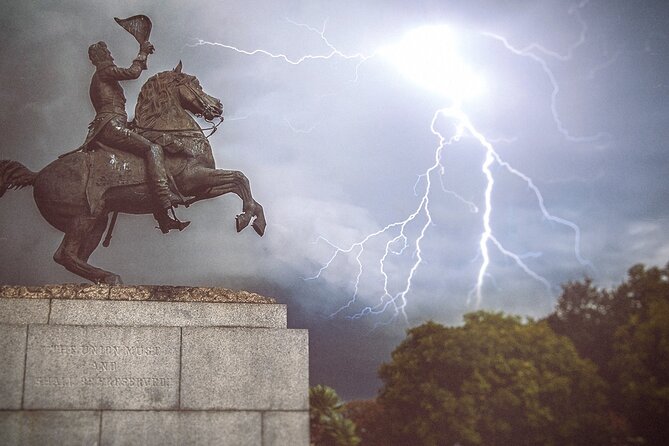
Jackson Square is bright during the day. At night, it can feel strangely serious. The guide explains that before the green space took its modern shape, these grounds witnessed shocking public executions.
You’re told about hangings from crude wooden structures and other brutal methods based on alleged crimes. The story brings in the jeering crowds and the slow, suffocating horror for some—then contrasts that with how the square feels now when carnival tunes drift through the air.
This is one of the most important stops on the route because it turns today’s scenery into a question: how many tragedies happened right where people now picnic and pose for photos? The tour makes you look back at the same view with a different mental lens.
Stop 6: New Orleans Pharmacy Museum and plague-era rumor
Next you pause near the New Orleans Pharmacy Museum, an unassuming building that now houses a museum. The guide shares plague-year rumors tied to the building’s shadowy role: stories about fringe doctors conducting lethal experiments in the name of identifying vaccines.
The tour keeps one key point clear: details are elusive, and facts are hard to lock down. Yet the stories persist—lost souls seen in windows, nameless victims who never returned home, and a moral cost attached to the promise of medical help.
What makes this stop resonate is how it shifts the type of fear. It’s not only about supernatural hauntings. It’s about ethics, desperation, and what a city will rationalize during outbreaks. Even if you treat the most extreme parts as legend, the uncomfortable “what if” lingers.
Stop 7: Omni Royal Orleans and tragedy behind the lobby lights
You end by lingering outside the Omni Royal Hotel. On the surface, it’s polished and welcoming. Under that shine, the guide connects the building to misfortune and sorrow, including fiery disasters and mafia underworld dealings.
The most chilling piece is a recent suicide plunge from the high roof, with speculation about deeper anguish. The guide also points to the idea that these kinds of tragedies can echo—how pain can remain “unfinished” and how chaos can sometimes seem to attract itself to certain places.
This final stop helps you process the whole tour. Earlier you saw legends and executions; here you see modern tragedy tied to an iconic hotel. It’s a reminder that “history” isn’t always far away.
What to expect on the walk (and how to prepare)
This tour is designed for an evening walking pace. You spend short stretches at each location, with the guide telling stories while you stand close enough to actually hear and see what matters.
Here’s how to prepare so you enjoy it more:
- Dress for the weather. It’s outdoors and you’ll feel wind and damp quickly in New Orleans at night.
- Bring layers even if the day felt warm. Winter tours are often colder than people expect.
- Wear shoes you can walk in for nearly two hours. You’re moving between corners and stopping often.
- If you want the full effect, arrive early enough to check in without stress. You can’t drift in late and expect the route to accommodate you.
And one more note: the tour doesn’t go inside private buildings. So you’re not waiting in lines or dealing with museum time. It’s more about street-level atmosphere and storytelling than rooms and exhibits.
Who should book Ghosts, Gods, & Gangsters
This is a great pick if you like:
- True crime history mixed with a light supernatural tone
- walking the French Quarter area at night in a guided way
- a guide who can be funny without losing the serious facts
It’s also a solid choice for people who have tried other ghost tours and found them too repetitive or too “made up.” The tone here aims for that sweet spot: spooky enough to feel fun, grounded enough to feel credible.
It’s not ideal if:
- you need something kid-friendly (it’s adults-only, 17+)
- you get uncomfortable with execution stories and cruelty-related legends
- you hate outdoor walking in evening weather
Should you book it?
Yes, if you want a short, high-energy night tour that gives you multiple dark chapters of New Orleans in about 1 hour 45 minutes, with Dr. Edward Simmons as the star. The small group size and the guide’s voice-driven storytelling seem to be exactly what makes people want to recommend it.
If you prefer purely historical facts with zero creepy atmosphere, this might feel too spooky for you. But if you like the city the way it really is—beauty layered over violence and rumor—this tour is an easy yes.