REVIEW · STOCKHOLM
Bloody Stockholm 2h – ghosts, horror and Dark Folklore Tour
Book on Viator →Operated by Sweden History Tours · Bookable on Viator
Death stories in pretty Stockholm sound wrong. This tour turns the city’s charming lanes into a map of dark folklore and street-level history, linking scary beliefs to real places you’ll actually pass. I especially love the execution-era details at Stortorget and how the guide explains folk rules for staying safe at doors, baptisms, and near water.
I also like that the tone stays human—facts, storytelling, and even humor—so it feels like an informative stroll rather than a jump-scare ghost marathon. With guides such as Jonathan (and Åsa, when she leads), you get a careful pace where questions are welcome. One drawback to plan for: if you’re hunting for strictly supernatural ghost vibes, expect more history and folklore beliefs than theatrical “ghost tour” moments.
In This Review
- Key highlights you should know before you go
- How the Bloody Stockholm tour really feels in Old Town
- Stop 1 at Stortorget: executions and the “magic” of body parts
- Stop 2 on Prästgatan: a street that once had a darker name
- Stop 3 in Old Town: protection with iron, Tomte, and the door
- Stop 4 at Logårdstrappan: Näcken and the dangers of water
- Stop 5 at Kungsträdgården: huldran, Skogsrået, and Myrling
- Stop 6 at S:t Jacobs Kyrka: the church as a protection system
- Timing, walking comfort, and how to plan your evening
- Value for money: where this tour pays off
- Who should book Bloody Stockholm, and who might skip it
- Should you book Bloody Stockholm 2h – ghosts, horror and Dark Folklore Tour?
- FAQ
- How long is Bloody Stockholm?
- Where does the tour start and end?
- Is the tour offered in English?
- What’s included?
- How big is the group?
- Can I get a refund if my plans change?
Key highlights you should know before you go
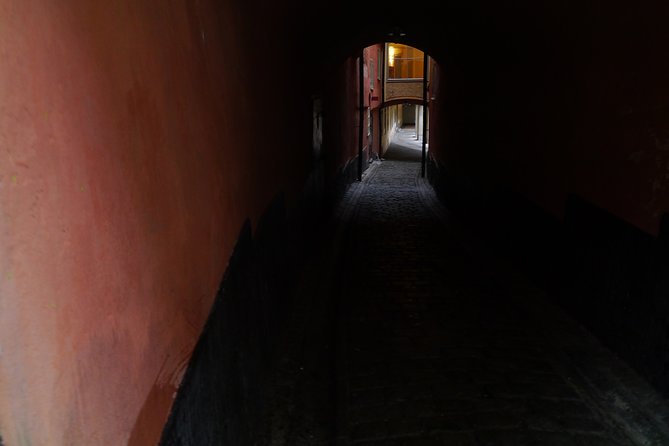
- Stortorget’s body-part folklore: how people in the past imagined blood, body pieces, and curses.
- Door-protection mythology: iron, elves in mist, Tomte, trolls, and what to do around a doorway.
- Water vaesen like Näcken: monsters and lures tied to rivers, streams, and the dangerous edge of the deep.
- Kungsträdgården’s creatures: Skogsrået/huldran and the undead child Myrling among other beings.
- Church-door weak points and exorcism at baptism: S:t Jacobs Kyrka’s role in folk protection logic.
- A tight Old Town route: small enough to feel personal (max 30) with an easy finish near Kungsträdgården.
How the Bloody Stockholm tour really feels in Old Town
This is a 90-minute walk through Stockholm Old Town that treats the city like a living folklore textbook. You’ll move from square to street to church edge, with the guide pulling threads between gruesome historical events and the old Swedish ideas about spirits and protections. It’s “dark” in topic—death, executions, curses, and dangerous beings—but it stays grounded in how people used to think.
The best part is that the stories aren’t just random spooky bits. The guide keeps bringing it back to practical-sounding rituals: where protection matters, which places feel vulnerable, and why certain creatures are tied to fog or water. If you like your sightseeing with a twist of folklore logic, this format works well.
Group size is capped at 30, and the tour uses a mobile ticket, so you can focus on walking instead of logistics. It’s also English, which matters in Old Town where many directions and signs are Swedish-first.
You can also read our reviews of more tours and experiences in Stockholm.



Stop 1 at Stortorget: executions and the “magic” of body parts
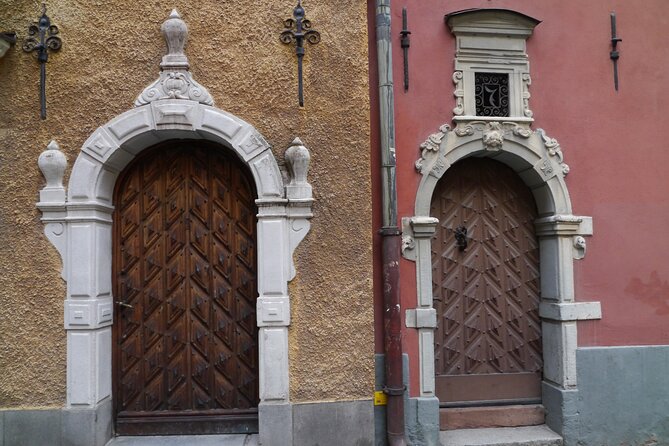
You start at Stortorget, one of the most historically loaded spots in central Stockholm. Here the guide talks about death in a very literal way, including the execution of around 90 souls connected to when the Danish King Kristian took Stockholm. That alone makes the square feel heavier than it looks in photos.
Then it turns into folklore rather than pure history. You’ll hear how people imagined the blood of the dead could be used for curses, and how other parts associated with hanging or execution could be used in folk magic—everything from “brew good tale” style ideas to darker practical beliefs about using what’s left behind. It’s unsettling, but it’s also fascinating because the stories explain how people tried to make sense of violence and fear.
What I like about this stop: it gives you a historical anchor before the tour goes fully mythic.
What to consider: if you prefer light sightseeing, this is the darkest topic right up front.
Stop 2 on Prästgatan: a street that once had a darker name
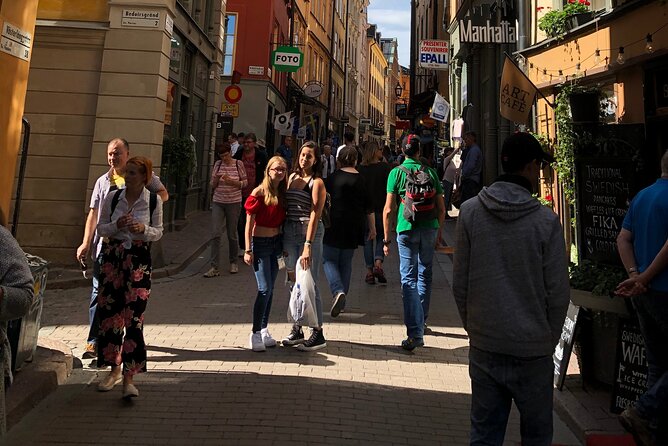
From Stortorget you’ll walk to Prästgatan, where the tour explores the street’s older nickname: a version of “Hell.” The point here isn’t to pretend Stockholm was literally haunted in the modern sense. It’s to show that towns often carry rough reputations and folk labels, and those labels become part of local storytelling.
This stop is short, but it works as a mood shift. You’re moving from the spectacle of execution history into the more everyday fear that can cling to neighborhoods—places people avoid, streets people whisper about, and the feeling that something bad once happened right there.
Stop 3 in Old Town: protection with iron, Tomte, and the door
Now you get into the practical magic—the kind that sounds like superstition, but the tour treats it like a whole system of safety rules. In Stockholm Old Town, you’ll stand near the door of a house and hear how people used iron as protection against vaesen (supernatural beings).
The guide also covers myths around elves that arrive with mist, plus Swedish household folklore such as Tomte. You’ll hear why doorways mattered so much, and how protection was especially urgent for a newborn before baptism, when folk belief said the child lacked protection against threats including trolls and the Devil.
This is one of the tour’s smartest stretches, because it explains the “why” behind symbols you might otherwise ignore as decoration. Doors, thresholds, iron details—these weren’t just architectural choices in the folk imagination. They were part of a defense plan.
My takeaway: this stop makes Old Town feel “alive,” because you start noticing the spaces where people believed danger could enter.
Stop 4 at Logårdstrappan: Näcken and the dangers of water
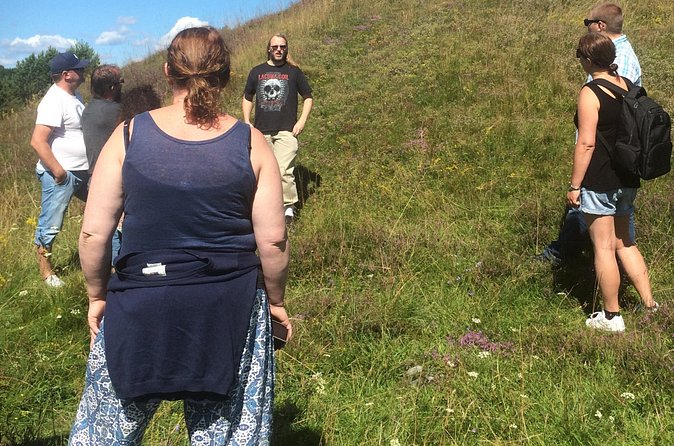
At Logårdstrappan, the folklore turns to water vaesen—creatures tied to streams, rivers, and the dangerous promise of a deeper place. You’ll hear about Näcken and also the bäckahästen, a Swedish cousin to the kelpie-type water spirits found in other Northern traditions.
The tour also mentions Sjörå (sea-rå) and skepps-rå (skiprå), with the shared theme that these beings try to drown people and lure them toward the deep. The guide keeps the tone story-driven, so it feels like folklore theater—but you still get the sense of a consistent threat landscape: water as a boundary zone where the normal world can fail.
Practical tip: if it’s raining or cold, water-stories hit harder. Bring a layer and be ready for the chill that makes this part of the route feel extra atmospheric.

Stop 5 at Kungsträdgården: huldran, Skogsrået, and Myrling
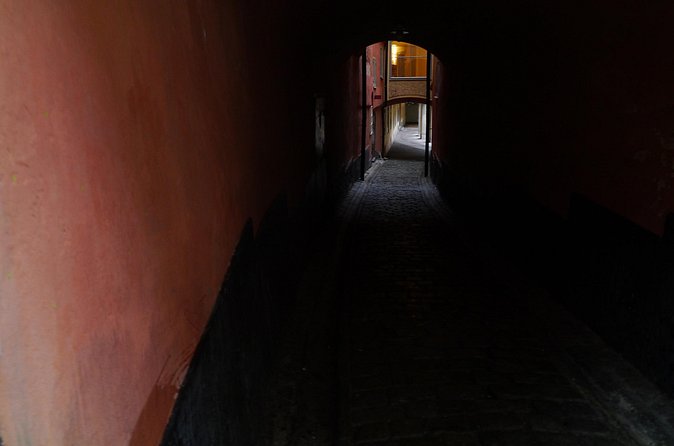
Next you reach Kungsträdgården, where the tour expands to other vaesen with more human edges. This includes Skogsrået / huldran, a being that can be as eerie as it is compelling, plus the undead living child called Myrling.
What makes this stop stand out is that it doesn’t just stack monsters. The guide explains how folklore uses different types of fear: nature fear, family fear, and fear of the unresolved dead. Even if you don’t memorize every name, the pattern helps you understand why these stories survive. They give meaning to loss, warning, and the uneasy feeling that some places or creatures never fully leave you alone.
If you’re the type who enjoys learning “who’s who” in mythology, this stop delivers.
Stop 6 at S:t Jacobs Kyrka: the church as a protection system
The final stop is at S:t Jacobs Kyrka, where the tour stays outside and focuses on the church’s role in folk protection. You’ll hear about the church door and what the guide calls weak points—basically, where belief said protection could fail.
The tour also brings in exorcism themes around a kid at baptism, which ties back to the earlier newborn protection story from Old Town. Then it goes darker still with what folk logic suggested you could do if you had a worst enemy and wanted to punish them. The message isn’t “do this today.” It’s that the folk mindset treated life events like birth and religion as part of a bigger defensive system against supernatural threat.
What I like about the ending: it closes the loop. Doors, thresholds, and sacred spaces keep appearing, so the tour feels coherent instead of random.
Timing, walking comfort, and how to plan your evening
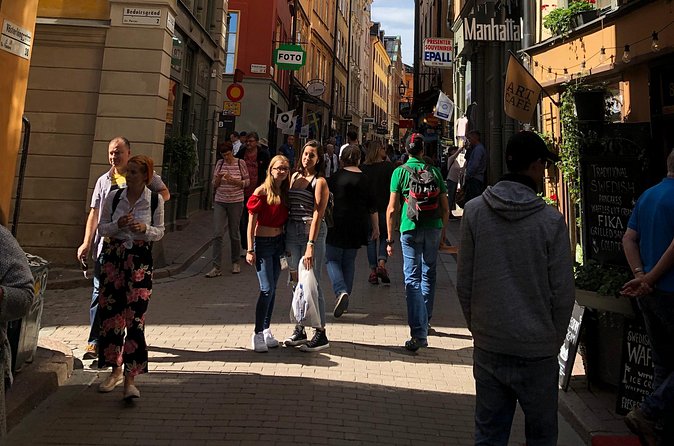
On paper, this runs about 1 hour 30 minutes. In real life, guides can spend more time answering questions or building the story, and one full evening walk can stretch a bit longer when the group stays engaged. If you’ve got dinner reservations, I’d plan a small buffer.
This is a street-walk through Old Town, which means you’ll want comfortable shoes. Cobblestones plus uneven footing plus winter or rain equals a sore ankle waiting to happen. If the weather is messy, bring a rain layer and don’t expect to sprint between stops.
The route also ends just outside Old Town on the north side near Kungsträdgården, with roughly a 10-minute walk back to the start. So you’re not just dropped somewhere far away—you can still make a clean loop in the area afterward.
Value for money: where this tour pays off
Even without a price listed here, you can judge the value by what’s included and how efficiently the story covers ground. You get a guide plus a full storyline across multiple key Old Town locations, with the tour covering history, folk curses, household protections, and water monsters.
A big “value” factor is that the tour doesn’t require you to buy separate entrances at each stop. Instead, you get explanation time right in front of the places, which is the best use of paid tour time. And because the group is capped at 30, you’re less likely to feel like you’re being herded through a script.
If you like “why people believed what they believed,” this is a strong deal. If you want a pure scare-fest with dramatic scenes, you might find the tone more educational than cinematic.
Who should book Bloody Stockholm, and who might skip it
Book it if:
- you like dark history and folk mythology side by side
- you enjoy hearing how beliefs shaped daily life (doors, baptisms, iron protection)
- you want a guided walk that works for both adults and curious kids who can handle grim themes
Consider skipping if:
- you only want spooky entertainment with minimal history context
- you’re very sensitive to execution-related details and curse-and-blood themes
- you’re expecting a standard modern ghost-horror performance
Should you book Bloody Stockholm 2h – ghosts, horror and Dark Folklore Tour?
I’d book it if you’re spending time in Old Town anyway and you want a tour that turns familiar streets into a story you’ll remember. The balance of execution-era context plus folklore “rules” makes the whole thing feel more meaningful than a random haunt tour.
I’d also book it if you like asking questions or picking up names—this tour gives you a lot to talk about afterward. If you’re unsure, think of it this way: you’re paying for a guided explanation of why Stockholm’s darkness ended up attached to doors, water, churches, and squares.
If you’re there for atmosphere only, you might be happier with a lighter walking tour. But if you want the city’s eerie logic, this one is a solid match.
FAQ
How long is Bloody Stockholm?
It lasts about 1 hour 30 minutes.
Where does the tour start and end?
It starts at Nobel Prize Museum, Stortorget 2, 103 16 Stockholm, and ends just outside Old Town near Saint Jacob’s Church, Västra Trädgårdsgatan 2A, 111 53 Stockholm.
Is the tour offered in English?
Yes. The tour is offered in English.
What’s included?
You get a guide, and you’ll use a mobile ticket.
How big is the group?
The tour has a maximum of 30 travelers.
Can I get a refund if my plans change?
Yes—free cancellation is available. Cancel up to 24 hours in advance for a full refund. If you cancel less than 24 hours before the experience starts, the amount paid is not refunded.