REVIEW · BARCELONA
Walking Tour Mysteries and Legends of Barcelona and its Ghosts
Book on Viator →Operated by Mediaticos en ruta · Bookable on Viator
Barcelona gets spookier at dusk. This guided walk leans into Barcelona’s mysteries and ghost stories, using buildings and monuments that rarely show up on the usual daytime routes. It’s all about legends from the city’s chronicles, read through what you can actually see in the streets.
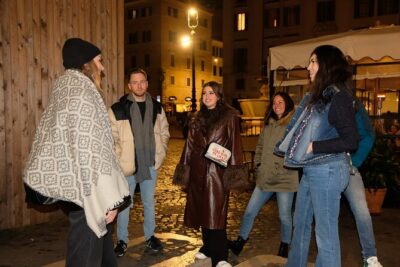
I like the small-group feel (up to 20 people) and the fast pace that keeps you moving without feeling rushed. I also love how the guide-led storytelling connects details street by street, with a guide named Violant (also called Yolanda) noted for being friendly, empathetic, and willing to answer questions.
One possible drawback: the tour needs good weather, and a good chunk of the sights are outside-only. If you’re hoping for lots of museum-style interior time, you may wish you had planned other stops for daytime.
In This Review
- Key things to know before you go
- Dusk ghost stories in Ciutat Vella: why this timing matters
- Price, duration, and small-group value at $16.21
- Your evening path from Carrer d’Estruc to Plaça de l’Àngel
- Stop 1: Carrer d’Estruc and the story behind the plates
- Stop 2: Portal de l’Angel and the medieval entrance you’re meant to notice
- The Romanesque jewel: folklore, location, and treasures inside
- The ancient Roman necropolis: the clue that changes the map
- Carrer de la Portaferrissa and the oldest Masonic lodge
- The Gothic cathedral myths and the streets that frame them
- Plaça Sant Felip Neri: strange phenomena and the blackest day
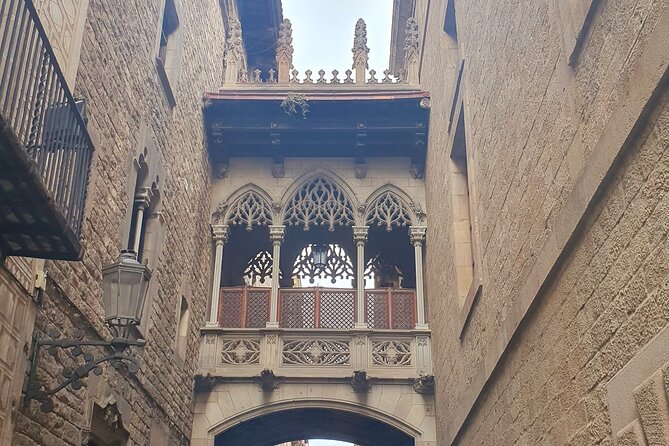
- Pont del Bisbe: what it was built for, and the black history in the stones
- Plaça del Rei: beauty, a saying, and why the clue is funny
- Baixada de la Llibreteria and the Roman gate to Rome
- Finish at Plaça de l’Àngel: Sta. Eulalia’s mystery and the transfer
- What I’d do to get the most from the guide
- Practical tips for a night walk in Barcelona’s old lanes
- Should you book this Barcelona ghost legends tour?
- FAQ
- Where does the tour start?
- Where does the tour end?
- What time does the tour begin?
- How long does the walking tour take?
- How much does it cost?
- What group size can I expect?
- Do I need an admission ticket for the stops?
- Is the tour outdoors?
- Can I get a full refund if my plans change?
Key things to know before you go
- Dusk timing in Ciutat Vella makes the legends feel more grounded and less like a lecture
- 1.5-2 hours with up to 20 people keeps it personal and manageable
- Many stops are free to view from the outside, with a few external-only sights where admission isn’t included
- A clue-by-clue route moves you from Jewish history to Roman remnants to Gothic myths
- Your finish point is practical: Plaça de l’Àngel by Jaume I metro (L4)
Dusk ghost stories in Ciutat Vella: why this timing matters
Barcelona in the evening has a different tempo. The light changes the stone. Shadows slide across doorways and narrow lanes. That’s not just mood for mood’s sake. The tour’s whole concept is built for dusk: you’re not chasing jump-scares. You’re learning how people in earlier centuries explained the strange, the sacred, and the unsettling—then spotting those stories in the city fabric.
This route also helps you experience Ciutat Vella without needing to “know” anything first. You start in a street full of visual clues, then you’re guided to entrances, squares, and architectural details. Each stop is short—think 10 to 15 minutes—so you’re always moving from one concrete landmark to the next.
It also avoids the common problem with ghost tours: when they lean only on atmosphere, you end up remembering vibes, not places. Here, the places get equal billing. You’re asked to notice plates and numbers, follow a location tied to a medieval miracle, and connect a square to the story of a saint’s transfer.
You can also read our reviews of more tours and experiences in Barcelona.


Price, duration, and small-group value at $16.21
At $16.21 per person for about 1 hour 30 minutes to 2 hours, this is priced like an easy add-on to your evening—especially in a city where “special experiences” can get pricey fast. The real value is the format: you get guided interpretation, a tight route, and a group size capped at 20.
Why the small group matters: when you only walk a short stretch each stop, the guide can keep the story moving and still handle questions. The notes tied to the guide style (Violant/Yolanda being empathetic and responsive) suggest you’ll get more than a one-way monologue.
What you’re not paying for here is museum admission. Many stops are explicitly marked as external visit only, so your money goes toward the walking, the storytelling, and helping you read what you’re seeing. If you treat the tour as a nighttime orientation to lesser-known corners—rather than as a ticketed attraction—this price makes sense.
Your evening path from Carrer d’Estruc to Plaça de l’Àngel
The walk starts at Carrer de Fontanella, 10 (Ciutat Vella) and ends at Plaça de l’Àngel, near Jaume I metro on the Yellow Line L4. The start time is 7:00 pm, which is perfect for that in-between light when the city feels awake but not chaotic.
The tour runs stop to stop through a sequence of streets and squares, mixing Jewish references, medieval legend, Roman remnants, Gothic myths, and saint-focused lore. Here’s how the evening unfolds.
Stop 1: Carrer d’Estruc and the story behind the plates
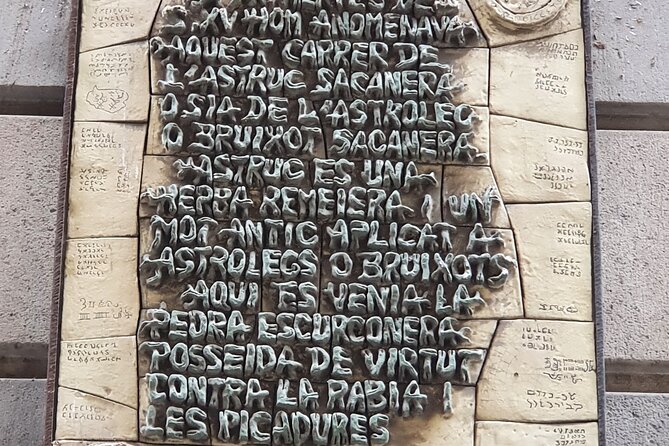
You begin at Carrer d’Estruc, described as one of the city’s more magical streets. The focus is Jew Estruc Sacanera, chosen by name as the person connected to locating his backyard. You’ll look at the street’s plates and numbers, not as random decoration, but as a reading of place—small clues tied to people and events.
This stop also points you toward the House of the severed heads. Even if you just take in the street-level context, the concept is clear: Barcelona’s legends often hide in plain sight, embedded in naming and architecture. The key is that the guide frames what you’re seeing so it doesn’t pass you by.
Stop 2: Portal de l’Angel and the medieval entrance you’re meant to notice
Next comes Portal de l’Angel, where you’re asked to visualize an entrance of medieval Barcelona. This isn’t just a photo stop. The guide’s angle is story-driven: you’ll learn about a miracle attributed to the portal and then go hunting for the angel that’s said to hide in it.
That “hunt” approach is one of the reasons this tour stays fun. Instead of standing and listening, you’re scanning details—doorways, shapes, and clues—so the legend feels like something you can test with your eyes. It’s a small shift in how you experience a familiar-looking place, especially in a city full of carved stone.
The Romanesque jewel: folklore, location, and treasures inside
After the medieval portal, the tour steps into a different layer of the city. You’ll learn the location of a Romanesque jewel, along with the mystery and folklore that surround it. You’ll also hear about the treasures it hides inside.
Important practical note: you get external visit only, and admission is not included. That means your value here is mostly interpretation—how the guide helps you understand what the building represents and why it’s talked about in the way it is. If you want to see interiors later, plan a daytime return.
The ancient Roman necropolis: the clue that changes the map
Another short segment brings you to the ancient Roman necropolis. You’ll learn its location and the reason it’s connected to the area.
This is a smart pivot in the tour. Ghost legends often get treated like separate from archaeology, but here the route quietly reminds you that the city’s spooky layer isn’t only supernatural. Under many legends are real older uses of the land—burial sites, crossings, and remnants that later cultures reinterpret.
Carrer de la Portaferrissa and the oldest Masonic lodge
At Carrer de la Portaferrissa, you’ll be pointed toward the oldest Masonic lodge in Barcelona, plus the four elements that identify it.
Again, the key is not just the claim—it’s how the guide gets you to connect symbolic details to a street-level landmark. You’ll likely notice features you might otherwise ignore, because the guide gives you a way to look: not only where it is, but what it’s supposed to represent.
The Gothic cathedral myths and the streets that frame them
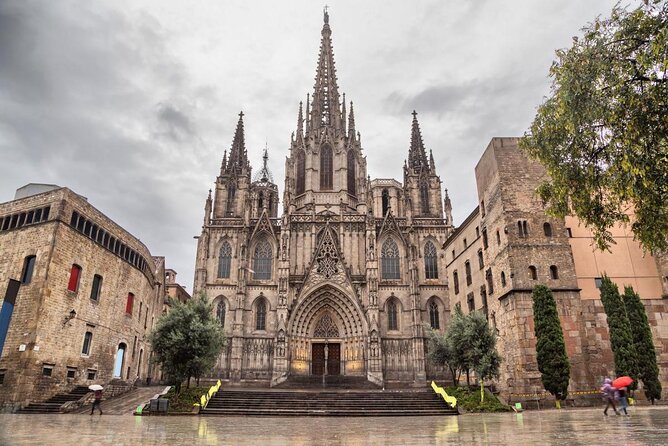
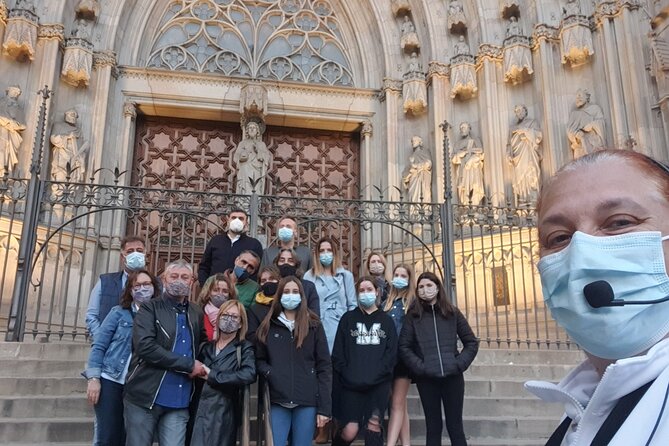
The route then turns toward a Gothic cathedral, where you’ll hear about myths tied to the building. You’ll also learn about the ghosts said to inhabit it and the mysteries of the streets that circumvent it.
You’ll notice a pattern: each stop is built around a “what you might think vs what you’re learning” contrast. This section is external-only, with admission not included. So your job is to treat the cathedral area like a stage set. The guide helps you see how the surrounding lanes and approach routes contribute to the story.
That matters because in places like this, the walking itself is part of the storytelling. You’re not just reading about the cathedral—you’re moving around it, and that changes what you notice.
Plaça Sant Felip Neri: strange phenomena and the blackest day
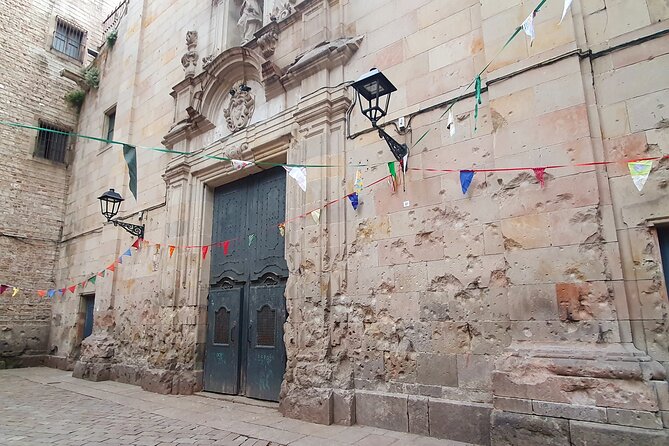
Next is Plaça Sant Felip Neri, presented as a small enclave with unknown history. The guide connects it to strange phenomena and also to its blackest day, without skipping the timeline nuance.
One especially useful point here: the guide emphasizes that although it’s known as Gothic, in the Gothic era it did not exist as such. That kind of correction is gold, because it keeps the legends from turning into pure folklore. You learn how labels can be misleading—and how a guide’s job is to put the timeline back in place.
Pont del Bisbe: what it was built for, and the black history in the stones
At Pont del Bisbe, you’ll discover what the bridge was built for and what black history its stones hide.
This stop works because bridges are naturally narrative connectors. They link two spaces and make it easy for a guide to talk about movement—people crossing, stories traveling, meaning accumulating in architecture over time. Even if you only spend a short window here, you’ll leave with a better sense of why the structure matters beyond its looks.
Plaça del Rei: beauty, a saying, and why the clue is funny
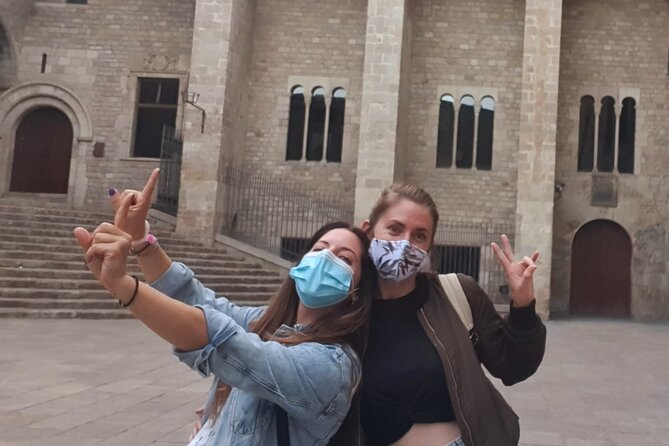
At Placa del Rei, you’ll learn about the square’s beauty and why a Barcelona saying compares someone being hard to find to the city’s snail.
That detail is practical in a different way. Humor is often how locals keep history alive. When the tour includes a saying like this, it’s doing more than telling a joke—it’s showing you that culture and language preserve the way people used to talk about place.
Baixada de la Llibreteria and the Roman gate to Rome
Then you head to Baixada de la Llibreteria, where you’ll locate the Roman gate that led to Rome. The route also brings you to the Angel Square connected to the miracle of Sta. Eulalia.
This is a strong “threaded story” moment. You’ve been moving through eras, and suddenly the guide ties the urban layout back to the idea of connection—Rome as a destination, a direction, a gravitational pull. When you hear that you’re looking for a gate, it makes the street feel less like a random alley and more like a planned passage.
Finish at Plaça de l’Àngel: Sta. Eulalia’s mystery and the transfer
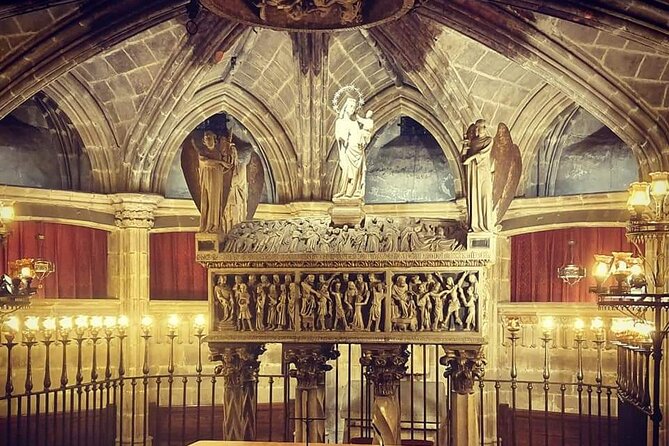
You end at Plaça de l’Àngel, where the finale focuses on the mystery of Sta. Eulalia and her transfer from the hermitage of Ntra. Sra. De las Arenas to the crypt of the Cathedral.
The ending is satisfying because it circles back to what earlier stops introduced: sacred symbols, legends embedded in structures, and stories tied to specific locations. You finish with a clear narrative arc: the saint’s story isn’t generic. It’s tied to a transfer, a place change, and the crypt setting that gives the legend its weight.
What I’d do to get the most from the guide
If you want this tour to feel more like a story you can walk alongside, do two things.
First, treat each stop as a visual scavenger hunt, not just a listening exercise. When the guide tells you to find an angel in Portal de l’Angel or points you toward the four elements at Carrer de la Portaferrissa, you’ll have an easier time remembering the details later. You’ll also keep your attention sharp.
Second, ask follow-up questions during transitions. A guide who enjoys sharing knowledge makes a big difference here. The human style attached to Violant (also called Yolanda)—empathetic, quick to answer, and fun with the pacing—sounds like the tour’s secret ingredient. If you’re the type who asks why a legend sticks around, you’ll probably enjoy this.
Also, don’t feel forced to memorize everything. With ghost-and-mystery tours, the goal is pattern recognition: you should leave understanding how legends attach to names, doorways, plaques, and squares.
Practical tips for a night walk in Barcelona’s old lanes
This is a walking tour in Ciutat Vella, and that means the biggest practical factor is your comfort.
Wear shoes you can trust. The itinerary is short but dense, and you’ll be on old streets. Bring layers too, since evenings can feel cool even when the daytime is warm.
Bring your eyes, not just your phone. A mobile ticket is used, so you won’t be hunting paper. But the stories rely on noticing what’s around you: street numbers, entrance details, and how a place looks from multiple angles.
Planning-wise, it’s a good fit for an evening when you want something different from a standard sightseeing loop. You’ll be done in about 1.5-2 hours, so you can still go for a meal afterward—ideally somewhere not too far from Plaça de l’Àngel.
Two last notes from the tour details:
- You’ll likely encounter external visit only spots where admission isn’t included.
- The experience requires good weather, so have a Plan B day in mind.
Should you book this Barcelona ghost legends tour?
I think you should book it if you want your Barcelona evening to feel like a guided walk through lesser-known layers—Jewish references, Roman remnants, Gothic myths, and saint-centered lore—connected by real street-level details. It’s also a solid choice if you like guides who answer questions and keep the tone friendly, not overly academic.
Skip it if you need lots of interior access or paid attractions included in the price. This one is about seeing and understanding what’s outside: the city as a living archive of stories you can still read in stone and street layout.
If you’re choosing between a standard sightseeing stroll and something themed but still grounded in place, this is the more memorable option for people who enjoy mysteries—and for anyone who wants to experience Ciutat Vella after dark with a clear plan.
FAQ
Where does the tour start?
The tour starts at Carrer de Fontanella, 10, Ciutat Vella, 08010 Barcelona, Spain.
Where does the tour end?
The tour ends at Plaça de l’Àngel, Ciutat Vella, Barcelona, next to the Jaume I metro stop of the Yellow Line L4.
What time does the tour begin?
The tour starts at 7:00 pm.
How long does the walking tour take?
It lasts approximately 1 hour 30 minutes to 2 hours.
How much does it cost?
It costs $16.21 per person.
What group size can I expect?
The tour has a maximum of 20 travelers.
Do I need an admission ticket for the stops?
Some stops are marked as admission ticket free, while certain sights are external visit only and admission is not included.
Is the tour outdoors?
Yes, it’s a walking tour and it requires good weather.
Can I get a full refund if my plans change?
You can cancel for a full refund up to 24 hours before the experience’s start time.