REVIEW · CHARLESTON
Real Hauntings of Charleston! (Small Group Ghost Tour)
Book on Viator →Operated by Holy City Walks · Bookable on Viator
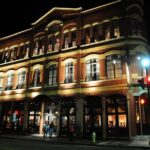
Charleston looks different after dark. This small-group ghost tour with a city-licensed guide turns famous sites like Old Exchange and Provost Dungeon into story stops full of pirates, duels, and graveyard apparitions. You’ll walk past alleys, pubs, and churchyards where the spooky lore is tied to real people and real places.
I love the limited group size (max 12), because it keeps the walk lively instead of chaotic. I also love how the guide points you toward places you’d miss if you explored alone, like Gateway Walk’s haunted alley romance and the churchyard tales around St. Philip. One thing to consider: it’s a night walk for about 90 minutes, so wear comfy shoes and dress for the weather, since the tour needs good conditions.
In This Review
- Key Things to Know Before You Go
- Charleston After Dark: Why This Ghost Walk Works
- Meeting at 122 E Bay St and What the 90 Minutes Feel Like
- Old Exchange and Provost Dungeon: Pirates, Punishment, and Fear That Ages Well
- The Churchyard at St. Philip and Other Spirit-Safe Places
- Gateway Walk Alleyway: Waiting for a Soul That Never Came Back
- The Old Exchange Dungeon Story and the “Unfinished” Feeling
- The Doctor’s Duel Whistle and the Quiet-Night Challenge
- The Four-Legged Spirit: Pets, Legends, and That Extra Human Detail
- Paranormal Tech on the Route: EMF Meters Without the Hype
- Price and Value: Why $35 Makes Sense for This Kind of Night
- Who Should Book This Tour (and Who Might Want to Skip)
- Should You Book Real Hauntings of Charleston With Holy City Walks?
- FAQ
- How long is the Real Hauntings of Charleston! ghost tour?
- How much does the tour cost?
- What’s the group size limit?
- Where do I meet, and where does it end?
- What’s included in the price?
- What is not included?
- Is the tour offered in English?
- Do I need to print anything, or can I use a mobile ticket?
- What is the cancellation and weather policy?
Key Things to Know Before You Go
- Max 12 people keeps the tour personal and interactive
- Old Exchange + Provost Dungeon get real attention through pirate stories
- Churchyard stops focus on lingering spirits tied to specific sites
- Gateway Walk centers on a soulmate-searching spirit in a narrow alley
- Paranormal tech may be used part of the route (EMF meters are described by the operator)
Charleston After Dark: Why This Ghost Walk Works
If you’ve only seen Charleston in daylight, this tour flips the switch. The city is already photogenic, but at night it feels tighter, louder, and more personal. You’re not just hearing ghost talk in the abstract—you’re moving through a real, historic street grid while the guide stitches together why these spots got their reputations.
What makes it work best is the format. You get a 90-minute guided walk with a licensed professional tour guide, and you keep a steady flow of stops instead of standing around waiting for scares. The stories are built around Charleston’s landmarks—plus the darker side corners like dungeons, alleys, pubs, and graveyards.
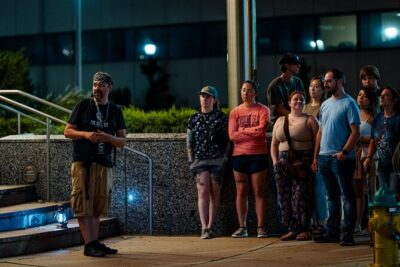
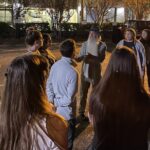
Also, you’re not stuck with a huge crowd. With a cap of 12 people, you can actually follow the narrative and ask questions. That matters on ghost tours, because the best moments come when the guide can read your group and slow down when someone has a good question.
You can also read our reviews of more tours and experiences in Charleston.


Meeting at 122 E Bay St and What the 90 Minutes Feel Like
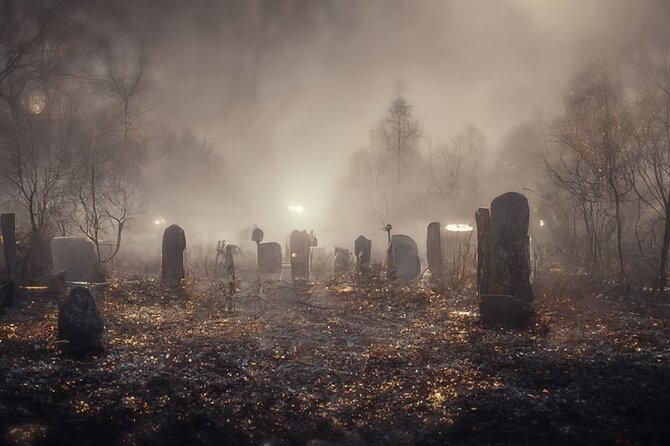
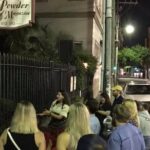
You start at 122 E Bay St in downtown Charleston. The walk ends around Cumberland Street and East Bay Street, about two blocks from where you begin, so you’re not stranded on the far edges of the peninsula.
Plan for night walking. The tour runs about 1 hour 30 minutes, and several stops are clearly designed for short pauses where the story lands before you move on. One review notes that the pace can feel fairly brisk, so I’d treat this as an active walking tour rather than a slow “stroll and stand” experience.
Shoes matter more than you’d think. If you’re used to soft vacation footwear, upgrade to something with real grip and support. And if you’re going in the cooler months, add a light layer—night air makes Charleston feel honest, not cozy.
Old Exchange and Provost Dungeon: Pirates, Punishment, and Fear That Ages Well

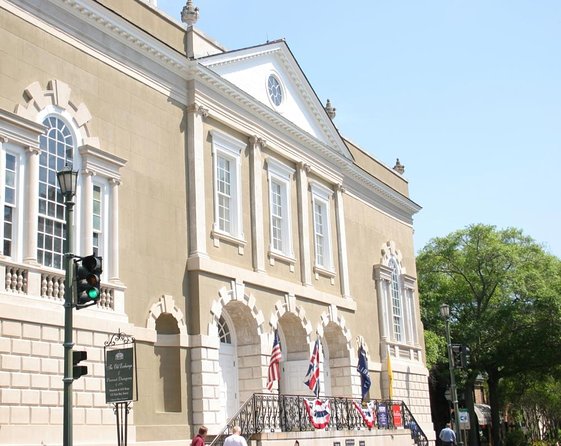
One of the core stops is the area tied to the Old Exchange and Provost Dungeon. The story focus here is on pirates from centuries ago, and the idea that the dungeon still carries the energy of what happened inside those walls.
Even if you’re not a “horror person,” this part hits because it’s grounded in how Charleston worked: trade, power, crime, punishment, and the kind of reputation a city builds when it has seen too much. The guide frames the dungeon not as a random spooky site, but as a piece of local history that later generations turned into hauntings.
The practical upside: this stop gives you a mental anchor. After you hear the pirate-and-punishment angle, other stories on the route feel connected instead of random. You’ll start spotting patterns—how an alley becomes a legend, how a churchyard becomes a rumor, how a single event can echo through decades.
The Churchyard at St. Philip and Other Spirit-Safe Places
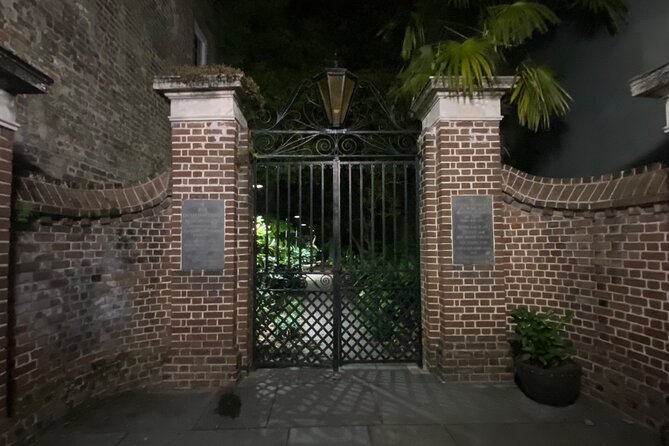
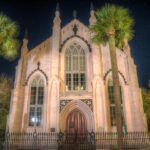
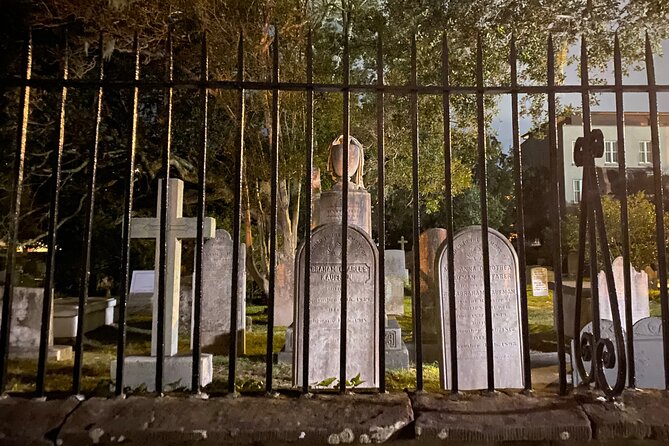
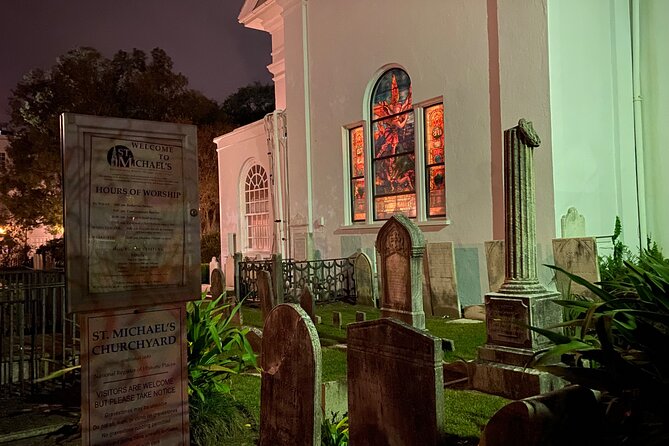
Charleston’s haunted reputation isn’t only about ghosts in the wild. A lot of it lives in churchyards, especially around older sites and long-standing congregations. You’ll spend time with stories linked to the churchyard connected to the oldest church in Charleston, where apparitions have been reported.
Then you get the St. Philip churchyard material, including multiple haunted tales. The guide also builds the stories around the idea that these sites weren’t silent even when life moved on—people kept returning, whispering, and remembering.
This is a great section if you like your spooky stuff with context. You’re not just chasing jump scares. You’re learning what locals associated with fear—places where communities gathered, buried their dead, and carried rumors forward.
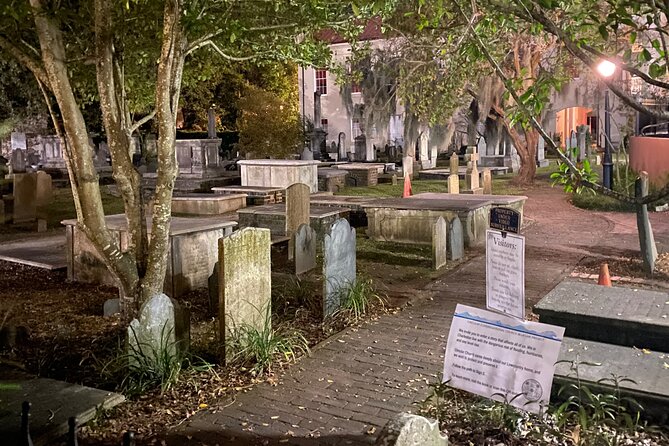
One practical note: churchyard areas can be uneven or darker than you’d expect at night. Bring the right kind of patience. You’ll enjoy this more if you slow down slightly, keep your footing, and listen for the details the guide points out.
Gateway Walk Alleyway: Waiting for a Soul That Never Came Back
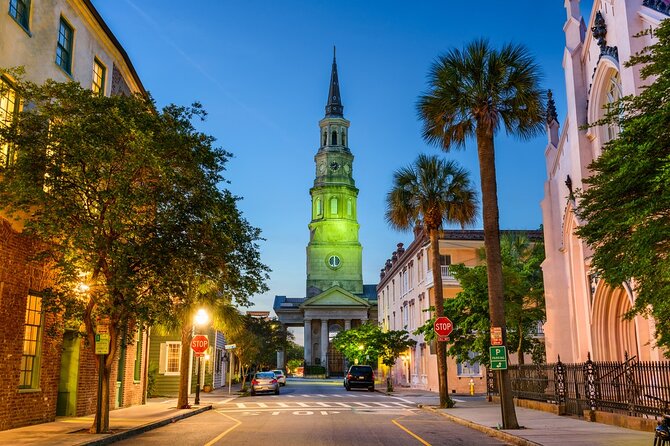
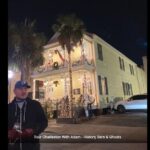
Gateway Walk is where the tour leans harder into legend. The alleyway story is built around a spirit searching for her soulmate to return. It’s a focused tale, not a scatter of spooky trivia, and it’s timed so you can absorb it before the group moves on.
The best part about a stop like this is how it changes your perception of the street. At daytime, you’d probably just see a narrow passage and keep walking. At night, after hearing the story, you notice the way the space channels sound, the way corners feel closed off, and the way a legend can attach itself to a specific bend in the road.
For me, this is also the section where a small group really helps. When only a dozen people are listening, the mood stays tight. The guide’s tone can shift toward story mode, and you get fewer interruptions from the surrounding sidewalk crowd.



The Old Exchange Dungeon Story and the “Unfinished” Feeling
One of the stops explicitly sets up that the pirates have a haunting presence in the dungeon—stories that are said to persist through time. That’s more than just creepy wallpaper. It creates a sense that something in the past didn’t fully get resolved.
You can feel why this works. Charleston was built on layers: living quarters, commerce, punishment, worship, and burial grounds all within walking distance. When you connect those layers through a guide’s storytelling, the city starts to feel like one long narrative, not separate attractions.
If you’re a true-crime fan, this section is worth your attention. Ghost stories often piggyback on fear: unresolved violence, suspicious deaths, and communities trying to make sense of chaos. Even if you don’t believe literally, you’ll still understand why these legends grew.
The Doctor’s Duel Whistle and the Quiet-Night Challenge
Another standout detail is the doctor story tied to a duel, with the suggestion that on a quiet night you may hear a whistle. This is the kind of haunted clue that sounds like folklore until you realize it’s also a trick for focus.
It’s basically a prompt to listen. When the guide sets up the story and the timing, the group has a reason to get still and pay attention to the soundscape. That makes the tour more fun than a tour where you’re only hearing words.
Is it guaranteed? No. But as a tour mechanic, it’s smart. You’ll take in the street noises, the distance between buildings, and the way night in downtown Charleston can feel layered. That makes the whole ghost angle feel less like theater and more like you’re catching the city mid-breath.
The Four-Legged Spirit: Pets, Legends, and That Extra Human Detail
One of the described haunted tales includes more than one spirit, with a special mention of a four-legged furry spirit that shows up from time to time. That human detail helps the tour breathe.
Ghost stories can get heavy fast. Adding a “furry” element turns fear into something more curious than grim. It also makes the stories feel less like a single villain plot and more like the city’s folklore catalog—different types of hauntings, different vibes.
If you’re traveling with kids or teens, this kind of detail can be a great hook. Even adults who prefer “history stories with a chill” tend to engage more when the guide doesn’t treat every haunting like a test of your nerves.
Paranormal Tech on the Route: EMF Meters Without the Hype
Some ghost tours rely on theater. This one adds a practical tech element in parts of the walk, using EMF meters according to the operator’s response to a concern about fake equipment. The idea is to demonstrate that the streets are indeed haunted, using the tools as part of the experience.
Here’s how to approach it: treat EMF readings as part of the show, not a scientific proof. I like this method because it gives the guide a reason to pause, explain, and involve the group. It can be fun even if you stay skeptical.
If you’re someone who hates gimmicks, you’ll still get plenty of story content. The tech isn’t the whole point. It’s more like a spice added to the narrative, timed to keep things engaging.
Price and Value: Why $35 Makes Sense for This Kind of Night
At $35 per person for about 90 minutes, you’re paying for three things: a licensed guide, a small group size, and focused storytelling tied to major landmarks and lesser-known corners.
The main value driver here is the cap of 12 travelers. In a big crowd, you often get an entertaining talk but a rushed experience. Here, the guide can actually keep the mood controlled and you can hear the story without straining.
The second value driver is the pairing of famous and specific sites. You’re not only hitting the headline stops. You’re also getting churchyard legends, alleyway tales, and the kind of “wait, I’ve never noticed that” moments that come from being shown a route by someone who knows Charleston at street level.
And yes, it’s a ghost tour, not a museum. If you want quiet, museum-style interpretation with no spooky framing at all, you might prefer another kind of walking tour. But if you want your city time at night to feel like a story, this price feels fair.
Who Should Book This Tour (and Who Might Want to Skip)
This tour is a strong match for:
- History buffs who like local events turned into legend
- Horror or true-crime fans who enjoy stories tied to specific locations
- Families who want a spooky outing that can stay fun and interactive
- People who prefer a guided night walk over navigating dark streets alone
It might be less ideal if:
- You hate walking at night or you’re dealing with mobility limits
- You expect a slow, lightweight stroll with lots of seated time
- You’re looking for purely factual history without any ghost framing
Still, the tour’s mix is the point. The guide isn’t just listing dates. You’re connecting place to rumor to memory, all while seeing Charleston up close after dark.
Should You Book Real Hauntings of Charleston With Holy City Walks?
I’d book this if your ideal Charleston evening includes a guided route, a small group, and stories built around the city’s real landmarks and churchyard legends. At $35 and roughly 1.5 hours, it’s a good use of nighttime time, especially if you want to do something different from the usual dinner-and-shopping loop.
I’d also book it if you care about storytelling quality. The guides named in recent experiences, including Brandon and Darian, are described as engaging, humorous, and willing to keep the group involved. That matters because ghost tours can be hit-or-miss depending on the guide’s voice and pacing.
Just don’t pretend it’s a no-effort activity. Bring comfy shoes, plan on listening closely, and be ready for the tour to feel a little brisk. If you do that, you’ll leave with a new way of walking through Charleston—one where certain alleys, churchyards, and dungeon-linked corners don’t look ordinary anymore.
FAQ
How long is the Real Hauntings of Charleston! ghost tour?
The tour runs for about 1 hour 30 minutes.
How much does the tour cost?
It costs $35.00 per person.
What’s the group size limit?
The maximum group size is 12 travelers.
Where do I meet, and where does it end?
You meet at 122 E Bay St, Charleston, SC 29401. The tour ends at Cumberland Street & East Bay Street, about two blocks from the start.
What’s included in the price?
Included are a 90-minute guided tour and a city licensed professional tour guide. You’ll also hear real stories of actual events and hauntings tied to places like dungeons, alleys, pubs, churches, graveyards, and more.
What is not included?
Bottled water is not included. Tips are not required, but they’re appreciated if you had a great time.
Is the tour offered in English?
Yes, the tour is offered in English.
Do I need to print anything, or can I use a mobile ticket?
It uses a mobile ticket.
What is the cancellation and weather policy?
You can cancel for a full refund up to 24 hours before the tour starts. The experience requires good weather; if it’s canceled due to poor weather, you’ll be offered a different date or a full refund. Service animals are allowed, it’s near public transportation, and most people can participate.