REVIEW · DUBLIN
North Quay Ghost Walk Tour
Book on Viator →Operated by Hidden Dublin Tours · Bookable on Viator
Dublin’s night streets tell darker stories. I like the 1.5–2 hour walking format that keeps you moving through real neighborhoods, and I also love the named historical characters that turn legends into something you can place on a map. The main catch is simple: it’s a night walk with a decent amount of steps, so if you’re already tired, plan accordingly.
You start outside the Church Bar on Jervis Street at 8:00pm, then follow a route through centuries of Dublin’s oldest quarters and specific, eerie sites. The tour ends at the Brazen Head around 10pm, so it’s long enough to feel like an event, but short enough to still enjoy the rest of your evening afterward.
This is guided by a local host, and the experience stays pretty well-paced and safety-minded. In the mix, you’ll hear tales that lean more toward dark local history plus ghost lore than full-on scream-the-whole-time scares.
In This Review
- Key things to know before you go
- Start outside Church Bar at 8pm, finish near the Brazen Head
- Why Oxmantown and Viking Dublin fuel the stories
- Croppie’s Acre: the mass grave that sets the tone
- St. Mary’s Abbey ruin: medieval power, modern anonymity
- Lord Norbury and Robert Emmet: treason stories with a haunting edge
- Scaldbrother, Smithfield tunnels, and Billy the Bowl
- Hendrick Street: Nos. 7 and 8, and why the houses still matter
- The guides: keeping the pace, adding the personality
- Price and value: listed at $0, but the payoff isn’t free
- Who should book this ghost walk?
- Practical planning: make the night easier on yourself
- Should you book the North Quay Ghost Walk Tour?
- FAQ
- What time does the tour start and where does it end?
- How long is the North Quay Ghost Walk Tour?
- Is food or drinks included?
- Is hotel pickup included?
- What’s the minimum age for the tour?
- Can I cancel for a full refund?
Key things to know before you go
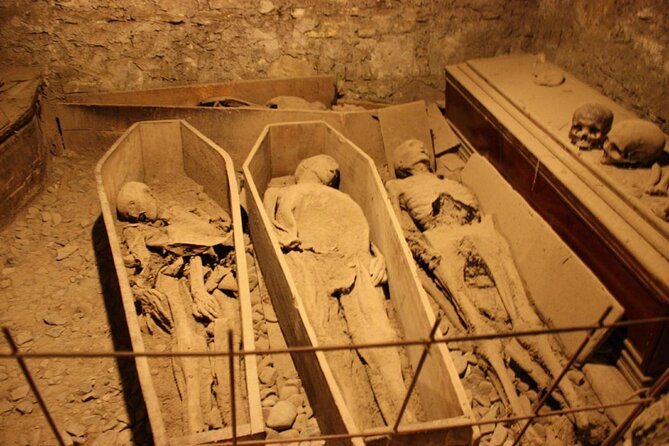
- Viking Oxmantown route: You’ll walk through the old Viking enclave where ghost sightings have been reported for generations.
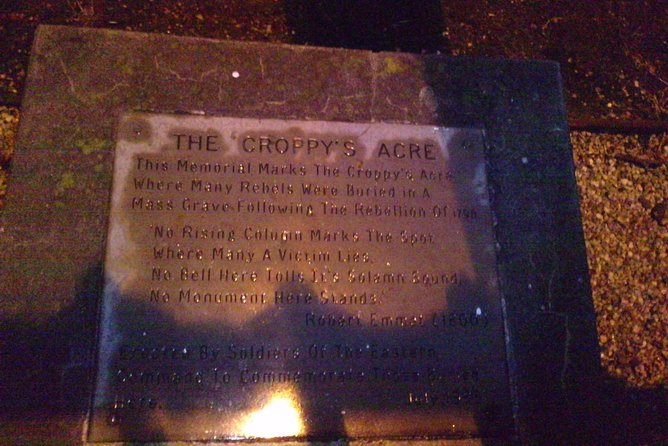
- Croppie’s Acre nerve check: A mass grave tied to the 1798 rebellion, with a reputation for eerie encounters.
- St. Mary’s Abbey ruin: A medieval monastic site now mostly a small ruin you’ll spot in a back-alley setting.
- Hanging judge and revolution stories: Lord Norbury and Robert Emmet appear in the storytelling, with Emmet linked to the Brazen Head legend.
- Hendrick Street ghost houses: Focuses on the former hauntings at Nos. 7 and 8, demolished in the 1960s.
- Small-group feel: The tour caps at 55 people, and guides typically keep the group together and moving smoothly.
Start outside Church Bar at 8pm, finish near the Brazen Head
This tour is built around an evening that starts at 8:00pm and wraps up around 10:00pm. You meet outside the Church Bar on Jervis Street, then you spend the next couple of hours walking Dublin’s Northside and learning how the past haunts the present.
There’s no hotel pickup, so you’re responsible for getting to the starting point yourself. The good news is the meeting area is described as near public transportation, which usually makes an 8pm start easier than it sounds.
You’ll also want to think of this as a true walking tour, not a sit-and-tell lecture. If you’ve done lots of walking that day, wear shoes that don’t punish you at night. A couple of people specifically called out that it felt like a long walk back to where they were staying.
You can also read our reviews of more tours and experiences in Dublin.

Why Oxmantown and Viking Dublin fuel the stories
After a brief introduction, the tour heads into the area once known as Oxmantown—described as one of the oldest parts of Dublin and formerly a Viking enclave. That matters, because old neighborhoods tend to stack layers of story on top of each other: early settlement life, medieval power, later rebellions, and the modern city that grew over it.
I like the way this tour uses geography as the backbone. Instead of tossing random legends at you, you’re walking from place to place and hearing why those specific locations became part of the local supernatural talk.
If you’ve got even a mild interest in how cities evolve, this part clicks. You’re seeing how an area can stay in use while its meaning changes—alleyways, back streets, and everyday routes that still carry reputations after dark.
Croppie’s Acre: the mass grave that sets the tone
One of the first stops is Croppie’s Acre, and yes, the tour basically tells you to steel your nerves before you get there. This long-abandoned site was used as a football pitch in the 20th century, which makes the setting feel extra unsettling once you know the backstory: it’s a mass grave for hundreds of rebels executed after the 1798 rebellion.
This is the part where the tour shifts from “spooky history” into “dark history.” If you’re sensitive, it’s worth knowing that you may come away disturbed, and sometimes the site is described as having a reputation for attempted communication.
Even if you’re not worried about the supernatural angle, this stop is valuable because it gives context. You understand why these stories stick around in Dublin—history that was traumatic doesn’t just vanish when the grass grows back.
St. Mary’s Abbey ruin: medieval power, modern anonymity
Next you’ll reach the site of St. Mary’s Abbey, introduced as a medieval monastic settlement with deep importance in Ireland’s past. Today, it’s described more like a small ruin down an alleyway—something commuters and passersby can move past without realizing what’s there.
That contrast is part of the eerie effect. The abbey is old, serious, and tied to monastic life, but in the night walk you’re looking at it with a different lens: whispered legends, the shadow of the medieval world, and the feeling that you’re standing somewhere people once depended on.
If you like your ghost stories grounded in real places, this stop is a good one. You’re not just hearing names—you’re being pointed toward a specific ruin that has been quietly sitting within the city for centuries.
Lord Norbury and Robert Emmet: treason stories with a haunting edge
One of the standout storytelling threads involves Lord Norbury, described as the infamous hanging judge who presided over the trial of Robert Emmet. The tour frames him as returning to continue a reign of terror even after death, which gives the stories an extra bite because it connects legal power with cruelty.
Then comes Robert Emmet himself. The tale includes a legend that Emmet might appear peering out of the window at the Brazen Head, watching to see whether anyone approaching is friend or foe. That kind of detail is exactly why this walk works: it ties the supernatural feeling to a concrete point in your route, rather than keeping everything abstract.
This segment also fits well if you’re traveling with someone who usually cares more about history than horror. The stories bring in Ireland’s political struggle and the human consequences, then layer in the haunting folklore afterward.
Scaldbrother, Smithfield tunnels, and Billy the Bowl
The tour also shares legends of Scaldbrother, an infamous medieval thief tied to a rumor that stolen treasure still lurks beneath the city, possibly within tunnels under Smithfield. You’ll hear this as a maze-like kind of legend—an underground world you’re not seeing, but imagining as you move through Dublin’s streets.
Another character you’ll encounter is Billy the Bowl, described as an 18th-century murderer born without legs, who once terrorized areas such as Stoneybatter and Grangegorman. These stories can feel grim, but they also show how Dublin folklore often holds on to people at the edges of society—criminals, judges, revolution figures—and then turns their names into local myth.
If you’re hoping for an all-ghost-all-the-time show with only supernatural creatures, you should know the focus tends to be specific Dublin characters and the darker side of the city’s past. Still, the supernatural thread is present, just woven through history rather than replacing it.
Hendrick Street: Nos. 7 and 8, and why the houses still matter
The last major haunting area is Hendrick Street, where the tour takes you down the road associated with two notorious haunted houses. Specifically, it points to Nos. 7 and 8, described as places that housed no fewer than six different ghosts.
Those houses were demolished in the 1960s, which makes the legend feel extra strange. The buildings are gone, but the stories remain attached to the street itself—like Dublin’s memory refuses to get bulldozed.
This is also where I think the walk delivers its most “city-at-night” feeling. You’re not just standing at one famous monument; you’re moving through ordinary streets and hearing why certain stretches became warning labels for locals.
And since the tour ends at the Brazen Head around 10pm, the Hendrick Street segment acts like a lead-in to the final stop—history-to-the-doorstep, then you’re back in a lively pub setting.
The guides: keeping the pace, adding the personality
The tour is led by a local guide, and the hosting style comes through clearly. Names you may encounter include Darragh, Calum, Dara, Aisling, and Derrick, and the consistent theme is that they blend local storytelling with humor and a clear sense of how to hold a group together at night.
A lot of people highlight that they felt safe walking around with the guide, and that the pacing works even though you’re outside after dark. One person even described a guide as professional and direct about expectations, which is the kind of practical hosting that makes a “dark” tour feel less chaotic.
I also like that the tour tends to give you more than just a scare story. There’s usually enough history in the framing to make you understand why certain places earned their reputations, and that turns the walk into something you can talk about later without sounding like you only heard spooky nonsense.
Price and value: listed at $0, but the payoff isn’t free
The tour is listed as $0.00 per person, which is the rare travel deal that makes it worth considering even if you’re on a tight budget. If the price stays $0 at checkout, this is a rare case where you’re not paying a premium for a niche evening.
That said, the value doesn’t come from “cheap.” It comes from a focused route, a guided narrative, and the fact that you’re spending your evening learning how Dublin connects dark historical events to locations you can actually find later.
One thing to keep straight: food and drinks aren’t included. You finish around the Brazen Head, so you might be tempted to treat that as part of the plan, but you’ll want to budget for your own pint or snack.
Who should book this ghost walk?
This tour is a great fit if you:
- like Dublin neighborhoods and want to see more than the usual postcard stops
- enjoy stories tied to real locations, not just generic spooky soundbites
- want a night walk that blends history and ghost lore without getting so intense that it ruins the rest of your evening
It’s less ideal if you want heavy folklore like banshees and fairies to take center stage. One person felt those elements weren’t included as much as they expected. If that’s your main interest, you might want to adjust your expectations and look for a tour that centers on that specific kind of supernatural tradition.
It’s also not a short, casual stroll. Even with a 1 hour 20 minutes to 2 hours range, you’re still walking. Save your energy if you can.
Practical planning: make the night easier on yourself
A few simple prep steps can make this tour feel smooth instead of tiring.
Wear comfortable, grippy shoes. You’ll be walking at night in urban streets, and the tour is long enough that sore feet can steal your attention from the stories.
Bring your patience for dark history. Croppie’s Acre is emotionally heavy, and even if you’re not worried about spirits, the context about rebel executions after the 1798 rebellion can weigh on you.
For your timing, plan to arrive before the 8pm start so you can meet the group without stress. You’ll have a mobile ticket, and confirmation is provided at booking time.
If you’re coming with kids, keep the age rules in mind: the minimum age is 10, and children must be accompanied by an adult. Service animals are allowed.
Should you book the North Quay Ghost Walk Tour?
Book it if you want an evening in Dublin that feels personal to the city—built on place-based stories, named figures, and a walk that connects medieval ruins, rebel history, and haunted street legends.
Skip it or rethink it if your idea of a ghost tour is mostly jump scares, nonstop supernatural creatures, and a short route. This one leans hard into dark local history plus ghost lore, and it’s also a proper walk.
If you’re deciding between couching it with a regular nightlife stop and taking one organized evening walk, I’d choose this—especially at the listed $0 price—because it gives you a memorable way to understand the city instead of just passing through it.
FAQ
What time does the tour start and where does it end?
The tour starts at 8:00pm outside the Church Bar on Jervis Street. It finishes at the Brazen Head around 10pm.
How long is the North Quay Ghost Walk Tour?
It runs about 1 hour 20 minutes to 2 hours.
Is food or drinks included?
No. The tour includes the guide, but food and drinks are not included.
Is hotel pickup included?
No. There is no hotel pickup and drop-off.
What’s the minimum age for the tour?
The minimum age is 10, and children must be accompanied by an adult.
Can I cancel for a full refund?
Yes. You can cancel for a full refund up to 24 hours before the experience’s start time.