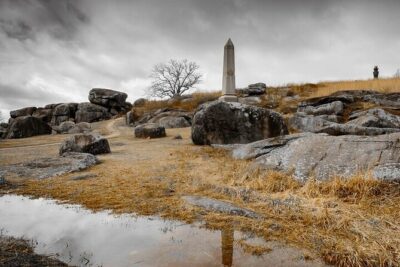
REVIEW · WINNIPEG
Winnipeg’s Most Haunted: a Smartphone Audio Ghost Tour
Book on Viator →Operated by Tripvia Tours · Bookable on Viator
Ghost stories in Winnipeg, without the group shuffle. This smartphone tour turns downtown landmarks into a move-at-your-own-pace walking route, with narration that starts as you get close. I like the self-paced setup because it lets you linger on the buildings you care about.
Two things I especially like: it’s offline-friendly. You download on Wi‑Fi ahead of time and you’re not using data during the tour, and the app includes a location-based trivia game if you want a fun challenge. One thing to consider: it covers real parts of downtown, and at least one party found the areas around the route made them feel uneasy, so you’ll want to go in with the same street smarts you’d use anywhere at night.
In This Review
- Key things to know before you start
- Ghost stories with GPS: how this smartphone tour plays
- Price, time, and what $6.72 really buys you
- Starting at The Forks: set up for a smooth night
- Stop-by-stop route: haunted Winnipeg from The Forks to the Pantages
- Stop 1: The Forks National Historic Amphitheatre
- Stop 2: St. Andrew’s on the Red (old stone church legend)
- Stop 3: Secret Tunnel (Winnipeg underground rumours)
- Stop 4: The Fort Garry Hotel (spookiest room lore)
- Stop 5: 50 Hargrave St (The Demon Hotel)
- Stop 6: Dalnavert Museum and Visitors’ Centre (Victorian house + possibility)
- Stop 7: Manitoba Legislative Building (supernatural or occult features)
- Stop 8: Vaughan Street Jail (who may have stayed)
- Stop 9: Sir Arthur Conan Doyle + Hamilton House
- Stop 10: St. Norbert Monastery (reported creepy occurrences)
- Stop 11: Canada Life Centre (arena and spectres)
- Stop 12: Masonic Temple (abandoned and mischievous spirits)
- Stop 13: The Marlborough Hotel (spooky happenings + grisly crime)
- Stop 14: Burton Cummings Theatre for the Performing Arts (hopeless souls)
- Stop 15: La Barrière Park (creepy park experiences)
- Stop 16: The Millennium Centre (bank office past + former employees)
- Stop 17: Manitoba Theatre Centre (chilling theatre legend)
- Stop 18: Pantages Playhouse Theatre (vaudeville owner lore)
- Getting the most out of it: my practical advice
- Who should book this audio ghost tour (and who might skip it)
- Should you book Winnipeg’s Most Haunted?
- FAQ
- How long is the Winnipeg Most Haunted smartphone audio tour?
- Where does the tour start and end?
- Do I need an internet connection during the tour?
- Do I need headphones?
- Is the tour in English?
- Does it use GPS to guide me?
- Are trivia questions included?
- Can I start or stop the tour whenever I want?
- How many people are on the tour?
- Is free cancellation available?
Key things to know before you start

- GPS audio that triggers nearby: commentary plays automatically when you reach each spot.
- A full walking route with a built-in schedule: most stops are short, about 5 minutes each, so it’s easy to keep moving.
- Optional trivia at each location: quick questions you answer right on your phone.
- Bring charged phone + optional headphones: the audio plays through your device too, but a full battery matters.
- It’s designed to be flexible: you can pause, start later, and stop/start anywhere along the route.
Ghost stories with GPS: how this smartphone tour plays
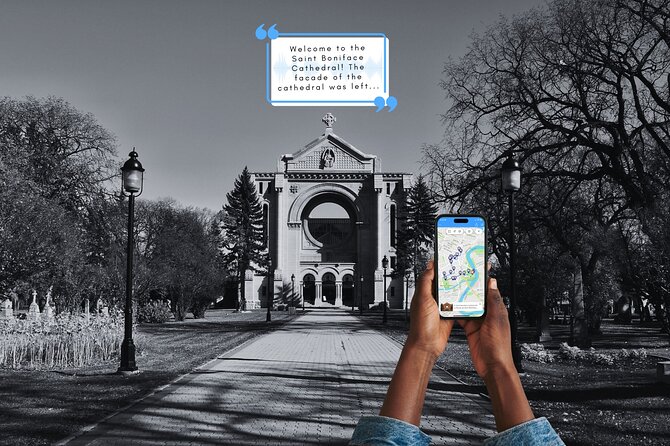
This is the kind of tour that works best if you like to set your own rhythm. You’re not stuck with a group pace, and you’re not stuck waiting for a guide to catch up to everyone. Instead, you walk your own line through the city and let the app guide you from point to point.
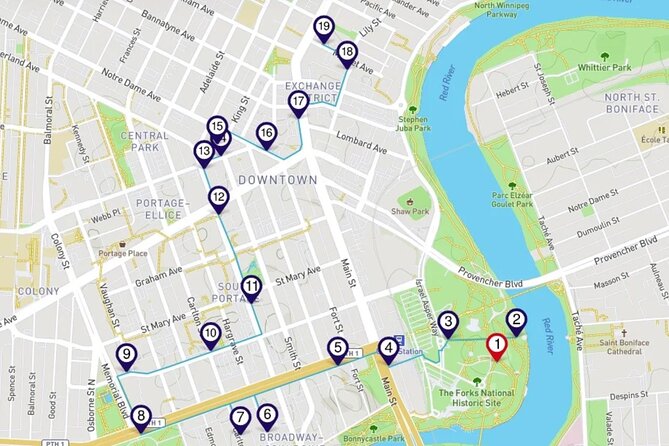
The core mechanics are simple. You download the tour ahead of time, then use the phone’s location to see a live GPS map showing where you are and where to go next. As you approach each stop, the narration begins automatically. It’s part audio guide, part city game—without needing a ticket booth or an escort.
You also get that small but useful “you’re there” feeling. One of the nicer details is that the app can vibrate as you reach the next destination. That helps when you’re juggling street noise, traffic, and trying to keep your phone angled correctly while you’re walking.
This setup is also why the tour can feel different from standard ghost tours. You spend less energy tracking a person in front of you and more energy looking up at what’s actually in front of you—facades, signage, and the corners where old buildings sit.
Price, time, and what $6.72 really buys you
At $6.72 per person, this is budget-friendly—mostly because you’re paying for narration and navigation, not attraction entrances. The tour itself is built around outside stops and quick listening moments. Many of the stops list admission as free, and the attractions you’re hearing about are mostly things you can see or approach without buying extra tickets.
The expected time is about 1 to 2 hours, depending on how often you pause and how long you linger at each location. Most stops are designed around short segments (roughly 5 minutes), so even if you skip a couple, you’re unlikely to feel lost or stuck.
One more value angle: you can use it like a flexible media download. The tour is yours to keep for later use, and it can be used anytime, not only on a specific booking date. That matters if you’re scheduling around weather, daylight, or dinner plans.
If you want a long, story-heavy performance by a live guide, you might feel like the narration is brief per stop. A couple of people noted that the stories felt short and wished the tour went deeper. Still, short segments can be a plus if you’re touring on a cold night or you want to keep your evening moving.
Starting at The Forks: set up for a smooth night
Your tour begins at The Forks Market (1 Forks Market Rd, Winnipeg). From there, the route takes you through a string of downtown and historic buildings, finishing at the Pantages Playhouse Theatre area. The end point is at the Westbound Market at Main (Concert Hall) area, and the tour effectively comes to rest near that theatre district.
The biggest practical tip is to start ready. One review specifically warned to make sure your phone is fully charged. That’s not small talk. GPS, audio, and a bright screen can drain batteries fast—especially in colder weather when phones lose power more quickly.
Also plan a quick tech moment before you step outside:
- Download on Wi‑Fi first.
- Bring your phone charging plan if you’re doing this in winter.
- If you want a more private listening experience, headphones can help, but the tour can still play through your device speaker.
Finally, note the tour runs daily from 12:00 AM to 11:30 PM. That wide window is great for flexible scheduling. If you’re sensitive to how downtown feels after dark, you can still pick a start time that matches your comfort.
Stop-by-stop route: haunted Winnipeg from The Forks to the Pantages
This route is built like a chain. You’ll hit a major cluster of Winnipeg’s historic downtown landmarks, including theatres, hotels, churches, a jail, and a few more “myths and rumours” type stops. Most places are close enough that you can keep moving without needing rides, but you’ll still want good walking shoes.
Stop 1: The Forks National Historic Amphitheatre
You launch at The Forks, one of the best starting points in Winnipeg because it gives you instant context. This is where the narration sets the tone: Winnipeg’s ghostly past, with stops that include museums, theatres, and hotels you’ll see later.
What makes this first stop work is the variety. You’re listening while taking in a central heritage area, and it’s a quick way to get your bearings before you head into the more specific haunted-building stories.
In this tour, you’ll also run into some of the strongest “anchor” locations early—places like the Burton Cummings Theatre and the Fort Garry Hotel show up later on the walk, so the app is building momentum from the start.
Stop 2: St. Andrew’s on the Red (old stone church legend)
Next up is St. Andrew’s on the Red. The tour story here focuses on the oldest surviving stone church in Western Canada and an urban legend that grew around it.
If you like ghost lore that’s tied to real architecture, this is a good match. Churches are easy to respect from a distance, and the story format gives you a reason to slow down and look at the building details instead of just passing it.
Stop 3: Secret Tunnel (Winnipeg underground rumours)
Then you get the more mysterious angle: a secret tunnel and the rumours about Winnipeg’s underground.
This kind of stop is less about pinpointing an exact entrance and more about the imagination. You’ll learn the kind of local storytelling that people repeat when they want Winnipeg to feel stranger than it is on a map.
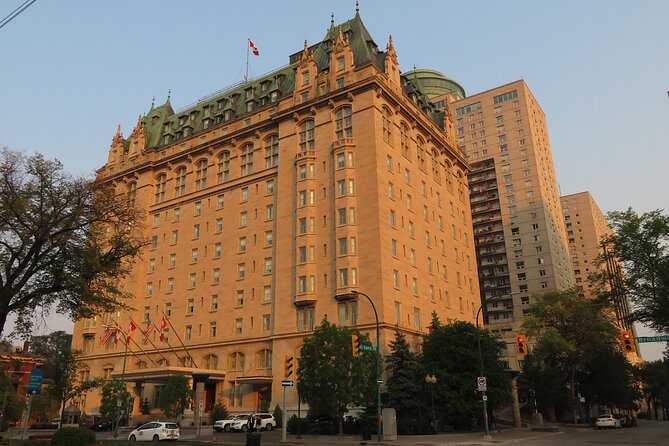
Stop 4: The Fort Garry Hotel (spookiest room lore)
At the Fort Garry Hotel, the narration points to Winnipeg’s most famous haunted location and the history of the spookiest room.
Hotels are perfect for ghost stories because they’re built on human stories—arrivals, departures, secrets, and late-night events. Here, the tour’s best value is turning a well-known building into a specific story you can carry with you as you keep walking.
Stop 5: 50 Hargrave St (The Demon Hotel)
Now you hit 50 Hargrave St, tied to The Demon Hotel. The tour frames it around a previous building and a reputation that became terrifying.
This stop can feel like a shift from general hauntings into darker crime-and-myth territory. If you’re doing this as a date-night walk, you may find it’s a conversation starter: you’ll both be looking at the same property and trying to decide what part of the story you buy.
Stop 6: Dalnavert Museum and Visitors’ Centre (Victorian house + possibility)
At Dalnavert Museum and Visitors’ Centre, you get a Victorian house story tied to Sir John A. Macdonald’s son—plus the suggestion that something may still linger.
Places like this work well for audio tours because you can imagine the era without needing an entrance ticket. Even when you’re just outside, the narration gives you hooks to build mental pictures.
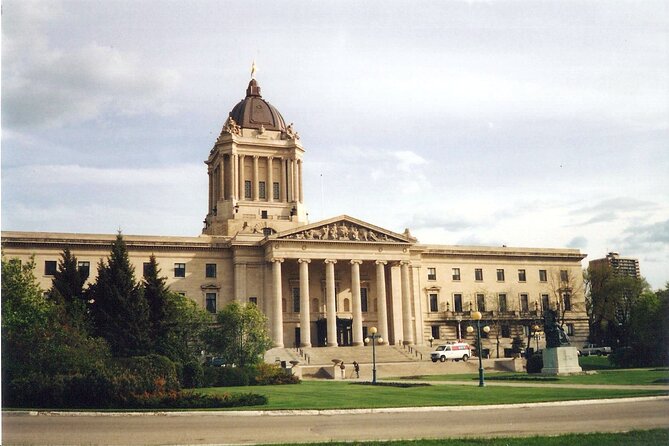
Stop 7: Manitoba Legislative Building (supernatural or occult features)
At the Manitoba Legislative Building, you’ll hear about the meeting place used by the Manitoba legislative assembly, plus supernatural features that some people associate with the site.
This is one of the stops that makes the tour feel more than “creepy buildings.” It’s also about how communities explain strange stories around power and institutions. Even if you take the claims with a grain of salt, you’ll still learn how folklore attaches to civic spaces.
Stop 8: Vaughan Street Jail (who may have stayed)
Next is Vaughan Street Jail. The focus here is on the jail that once held some of Canada’s worst criminals, and how some prisoners may have stuck around.
Jails are heavy on atmosphere. The tour’s narration gives you a reason to treat the place as more than a structure. You’re watching for details and timing your thoughts with the audio.
Practical note: if any part of the route makes you tense, you can pace yourself. The tour is set up so you can take breaks, and you don’t have to rush to keep “on time.”
Stop 9: Sir Arthur Conan Doyle + Hamilton House
This stop brings in a famous name: Sir Arthur Conan Doyle and the Hamilton House. You’ll hear about his spiritual visit to Winnipeg and the specific home where he conducted research.
This is a fun pivot for people who like when ghost stories connect to real historical figures. It also adds variety. Instead of only focusing on a building’s reputation, the story includes a person and a time period.
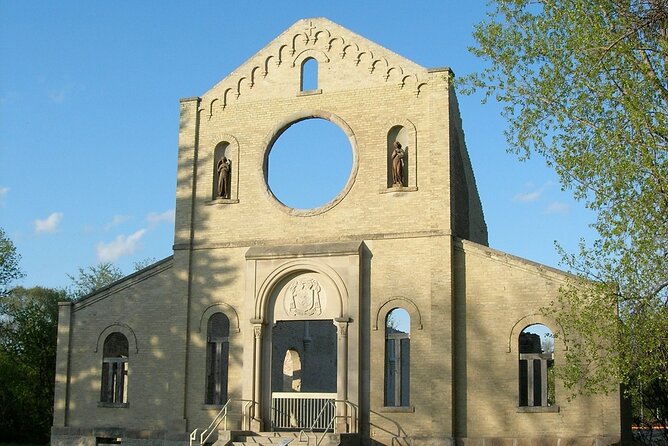
Stop 10: St. Norbert Monastery (reported creepy occurrences)
The route includes St. Norbert Monastery, described as a trappist monastery just outside Winnipeg. The narration covers creepy occurrences that people have reported there.
This stop can feel like a change in texture. Monasteries often carry a quiet, old-world vibe, and the audio story gives that vibe a supernatural edge. It also helps break the “downtown only” feeling.
Stop 11: Canada Life Centre (arena and spectres)
At the Canada Life Centre, the tour points out an important arena where both spectres and spectators seem to gather.
If you’ve ever noticed how people talk about “spirits” in old theatres and arenas, this stop ties that theme together. It’s also a nice reminder that the “haunted” label often sticks to places people gather in large numbers.
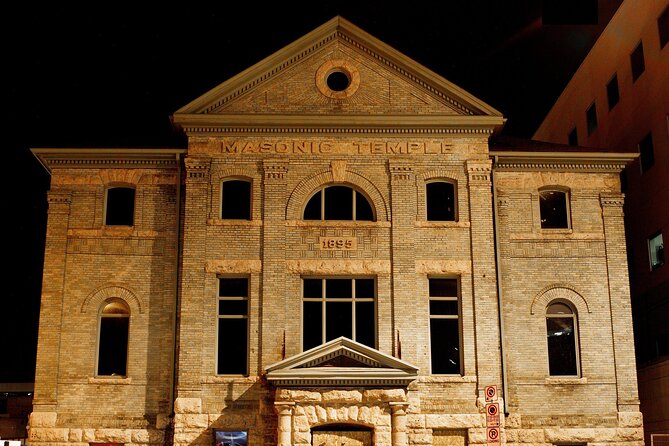
Stop 12: Masonic Temple (abandoned and mischievous spirits)
Next is the Masonic Temple. The story here involves an abandoned former Masonic Temple and claims about spirits causing mischief.
This stop is good if you like folklore with symbols and secret-society energy. Even if you’re not into conspiracy-style thinking, the audio will nudge you to look at the building as a cultural object, not just a structure.
Stop 13: The Marlborough Hotel (spooky happenings + grisly crime)
At the Marlborough Hotel, you’ll hear about spooky happenings and a grisly crime that may have caused their reputation.
Hotel + crime is a classic ghost recipe, and this stop likely hits the most intense notes on the route. If you’re prone to getting spooked, you can plan to finish this part earlier in the day—or walk past quickly and keep moving.
Stop 14: Burton Cummings Theatre for the Performing Arts (hopeless souls)
Back toward the theatre district, the narration covers the Burton Cummings Theatre and the hopeless souls said to be trapped inside.
Theatres are built for echoes—of sound, of stories, of performance. That makes them natural settings for ghost lore. The audio tour helps you notice what a theatre building “feels like” even if you’re not going in.
Stop 15: La Barrière Park (creepy park experiences)
Then you head to La Barrière Park, described as one of Winnipeg’s creepiest parks with ghostly activity people have experienced.
Parks are a different mood than hotels and theatres. Depending on the time of day, the same path can feel calm or eerie. This stop works best if you’re okay with a quieter kind of ghost story, not loud drama.
Stop 16: The Millennium Centre (bank office past + former employees)
At the Millennium Centre, the tour points out a building that used to be the Western head office of the Canadian Bank of Commerce, and suggests it may still house former employees.
That “corporate building as haunted office” angle is surprisingly effective. It turns a place you might treat like modern infrastructure into something tied to names, routines, and workdays that ended long ago.
Stop 17: Manitoba Theatre Centre (chilling theatre legend)
Next is the Manitoba Theatre Centre (MTC). The narration focuses on an allegedly haunted theatre and the chilling legend tied to it.
This is the kind of stop that can make the route feel like a themed tour of performance spaces. You start linking stories: echoes, backstage lore, and the idea that some buildings remember how they were used.
Stop 18: Pantages Playhouse Theatre (vaudeville owner lore)
The tour finishes at the Pantages Playhouse Theatre, tied to a historic vaudeville theatre and the possibility of haunting by its owner and namesake. The tour notes this theatre as one of Alexander Pantages’ many vaudeville theatres in North America.
Ending here gives you a satisfying close: a place that feels like it’s still in show-business mode. Even if you don’t go inside, the area is made for lingering—so you can turn the ending into a stroll, a snack break, or a final photo stop.
Getting the most out of it: my practical advice
This tour shines when you treat it like a walking playlist with stories. Don’t try to rush through it like an errand. Instead, use the audio triggers as a prompt to look at the building you’re standing in front of.
If you’re the type who likes interaction, the trivia game is a fun way to keep attention. After the narration plays, you tap your guess on your phone. It’s optional, but it nudges you to listen closely instead of just letting the audio roll past.
Pair this with a simple planning trick:
- Decide your comfort level before you start. If you’re doing it at night and you’re sensitive to how downtown feels, choose a start time that fits you.
- Keep a charged phone and consider bringing headphones for a calmer experience.
- Wear shoes that handle urban sidewalks and possible ice.
One more reality check: the tour can be done at your pace, with no tight schedule. But that does not mean the city around you always feels the same. You may encounter people loitering in downtown areas, and one review mentioned that made a group cut their walk short. If you feel that tension, don’t power through. Pause, switch to a brighter route, or head toward familiar areas.
Who should book this audio ghost tour (and who might skip it)

Book it if you want:
- a low-cost spooky evening without paying for multiple attractions
- a self-guided route with GPS audio and optional trivia
- a date-night style walk where you can stop for lunch or pause whenever you want
You might skip if:
- you want long, detailed stories at each stop. Some narration segments can feel brief.
- you’re not comfortable with walking through real downtown blocks, especially at night. This is where one party felt unsafe and ended early.
Best fit: couples, solo history-and-folklore fans, and anyone who enjoys city-walking with an audio guide. It’s also a smart choice when you want something fun that won’t chew up your whole day.
Should you book Winnipeg’s Most Haunted?
If you’re curious about Winnipeg’s haunted lore and you like exploring on your own terms, I’d say it’s a solid pick for the money. At $6.72, you’re buying flexibility, not a pricey scripted show. The GPS-triggered audio and trivia game give you a structure that still feels personal.
But be honest about your comfort. If you know you get uneasy in certain urban areas after dark, plan a safer time to start, go with a friend, and don’t treat it as a must-finish challenge.
FAQ
How long is the Winnipeg Most Haunted smartphone audio tour?
The tour is listed as about 1 to 2 hours, depending on how you pace yourself.
Where does the tour start and end?
It starts at The Forks Market and ends at the Westbound Market at Main (Concert Hall) area, with the tour ending at or near the Pantages Playhouse Theatre.
Do I need an internet connection during the tour?
No. You download the tour on Wi‑Fi before you go, and it says no signal or data is required during the tour.
Do I need headphones?
Headphones are optional. Audio can play from your device speaker too.
Is the tour in English?
Yes, it’s offered in English.
Does it use GPS to guide me?
Yes. There’s a live GPS map showing your location and the route, and commentary plays automatically as you get close to each stop.
Are trivia questions included?
Yes. There’s a location-based trivia game at stops, and it’s optional.
Can I start or stop the tour whenever I want?
Yes. You can enjoy it anytime, and you can stop and start anywhere along the route.
How many people are on the tour?
The tour notes a maximum of 20 travelers.
Is free cancellation available?
Yes. You can cancel for a full refund up to 24 hours before the experience starts.