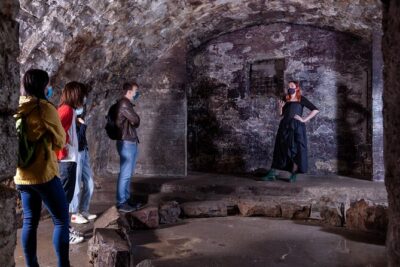
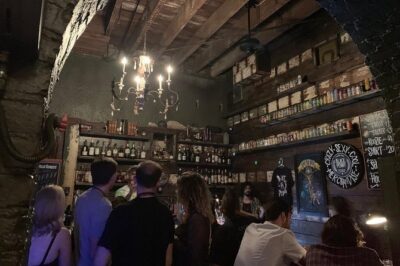
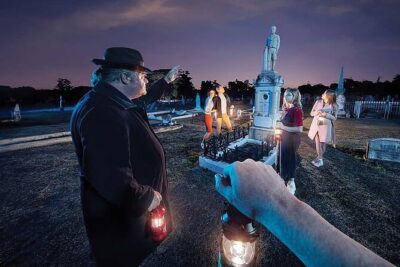
Haunted streets, with real Bogotá landmarks. This evening tour in La Candelaria turns local myths into street theater around famous corners like Chorro de Quevedo, guided by a professional host. You’ll hear stories in both English and Spanish, plus see staged performances that make the darkness feel like part of the neighborhood, not just a gimmick.
I love the way it mixes place-based history with spooky narrative, so you’re not just chasing jump-scares. I’m also a fan of the value: for $7.99, you get a guide, multiple “house” and site entries, live performances, and snacks (aguapanela with quesito) included. The main drawback to consider is that the tone can run more theatrical than academic, and language can shift depending on the group mix, so if you want a strictly English-led experience with lots of context, you should confirm expectations ahead of time.
Quick hits before you go
- La Candelaria at night: You’ll connect myths to real landmarks, from Chorro de Quevedo to university-area lanes
- Live ghost performances: Interpretations like LAPOLA, LABRUJA, and LOCAMARGARITA add energy at each stop
- Bilingual storytelling: English and Spanish are part of the plan, but the exact balance may depend on the group
- You get more than a walk: Snacks plus entrance to older houses and spooky stops are included
- Small-group feel: Max 25 people, with a start at 7:30 pm and a 2 to 3 hour pace
- Dark themes show up: Murders, torture stories, and violent legends are part of the show, so read the room
In This Review
- Why La Candelaria at 7:30 pm feels like a different city
- Price and value: $7.99 plus entries and performances
- How the group moves (and what that means for you)
- Stop 1: Chorro de Quevedo, Callejón de las Brujas, and a pigeon-feeding legend
- Stop 2: Conjunto Michonne and the first residential set vibe
- Stop 3: La Salle area and the legend of Rodrigo Lara Bonilla and José Raimundo Russi
- Stop 4: Calle del Calvario and Calle del Fantasma
- Stop 5: Gilberto Alzate Avendaño and the Fantasmas de la Casaca Verde
- Stop 6: Restaurante La Bruja, the Conjunto del Sol, and SIC-era cell stories
- Stop 7: Museo Casa Silva and the poet ghost myth
- Stop 8: Casa Magola and the ritual finale scene
- Practical tips so you enjoy it (instead of wrestling with it)
- Should you book Tour de fantasmas /GhosTour La Candelaria Bogotá?
- FAQ
- What time does the tour start?
- How long is the experience?
- Where do I meet, and where does it end?
- Is this tour in English?
- What’s included in the ticket?
- What is not included?
Why La Candelaria at 7:30 pm feels like a different city
This tour starts at 7:30 pm, and that timing matters. In the evening, La Candelaria’s lanes feel narrower, quieter, and more cinematic. Instead of treating the neighborhood like a daytime postcard, you experience it like people actually live it: walking streets, passing old façades, and hearing stories matched to the shadows.
You’ll move at a steady pace, with brief pauses that give the guide time to set the scene. The route is designed for atmosphere as much as information—think street theater in between landmark “stop-and-legend” moments. If you like your Bogotá with a little drama (and don’t need a museum lecture voice), this kind of tour is great.
Price and value: $7.99 plus entries and performances
At $7.99 per person, the biggest value isn’t the scare part—it’s everything wrapped around it.
Here’s what you’re effectively getting:
- A professional guide leading you through multiple named locations
- Snacks included, specifically aguapanela with quesito
- Performances included (the tour lists LAPOLA, LABRUJA, LOCAMARGARITA and others)
- Entrance included to older houses and key stops, including Restaurante La Bruja and its associated calabozo/cell-type area
- A souvenir ticket
If you were to pay separately for a guided walking tour, a couple of entries, and a snack stop, you’d likely spend more than the base price. The tour also runs with a small maximum of 25 people, which helps the guide keep energy up and keeps things from feeling like a conveyor belt.
One confusing note: the tour highlights say alcoholic beverages are included, but the reservation terms also say no alcoholic beverages are admitted. I’d treat that as a “confirm with the coordinator” item. Plan for snacks either way, and don’t count on alcohol as a sure thing.
How the group moves (and what that means for you)
Plan on about 2 to 3 hours total. That’s long enough for multiple stops and live performances, but short enough that you won’t feel trapped for half the night.
Stop timing is built in—some moments are quick, some are longer. For example, you’ll spend around 10–20 minutes at many key places, then wrap with a longer final scene. Practically, that means:
- You should expect some waiting while the guide cues performances and narration
- You may need to stand close together in tight lanes, especially where the story is tied to narrow passages
- If you’re sensitive to jumpy theatrical moments, you’ll want to keep expectations aligned: this is horror-themed storytelling, not a calm history walk
Also, you should arrive with time to get oriented. The tour is clear that impunctuality or no-show can cost you your spot.
Stop 1: Chorro de Quevedo, Callejón de las Brujas, and a pigeon-feeding legend
The tour kicks off near Plaza del Chorro de Quevedo and Avenida Calle 13, starting at the old Capilla del Palomar del Príncipe area. The story here is dark and very visual: a legend about a blond child who feeds pigeons—except, in the myth, he doesn’t belong to the living world.
Then you head into the Callejón de las Brujas, a narrow, shadowy passage tied to colonial rumors of witchcraft. This is the kind of stop where the guide’s job is half narration, half “set design,” because the lane itself does a lot of work for the atmosphere.
Finally, you reach Chorro de Quevedo, described as sacred for Indigenous communities and an early founding epicenter of Bogotá. The tour frames the location as still carrying a sense of presence and inexplicable phenomena. Even if you don’t buy the paranormal angle, it’s a strong “tone setter” stop because you’re connecting myth to a real public space people pass every day.
Practical note: this area is ideal for photos, but the lighting at night can be moody. If you want clear pictures, consider turning on portrait/night mode and holding steady.
Stop 2: Conjunto Michonne and the first residential set vibe
Next comes Cra. 3 #11-41, tied to Conjunto Michonne / Pasaje Michonik. The tour describes it as the first residential complex in Bogotá, built in 1930. Today it’s said to be closed to the public, but the tour operator historically gained access before the pandemic to document paranormal experiences.
This stop is less about a dramatic outdoor scene and more about “what lies behind walls.” The payoff is that you’re not only walking streets; you’re also learning how Bogotá’s quieter, older structures feed the ghost stories.
If you’re someone who likes architecture and urban layers, you’ll probably enjoy this transition. If you want only “big action scares,” this might feel more like a story break—still worth it because it changes the pace.
Stop 3: La Salle area and the legend of Rodrigo Lara Bonilla and José Raimundo Russi
You then move toward Natural Science Museum La Salle University, and the tour weaves together three threads:
- A plaque honoring Rodrigo Lara Bonilla, an ex-minister killed in 1984 by narcotrafficking
- Rumors of strange presences connected with nearby spaces linked to La Salle
- The “maldita” lawyer story tied to José Raimundo Russi
This is where the tour gets heavier. The guide points out an old house story: Russi is described as defending the overlooked, accused of heresy, and found dead under mysterious circumstances. The legend says he offered his soul for justice, and the tour mentions three skulls displayed as part of the lore.
Whether you believe the supernatural part or not, this stop is valuable because it shows how tragedy can become local storytelling material. It also gives context for why the rest of the tour feels so intense—this is not random spooky marketing. It’s built around real names and real historical pain, turned into mythic narrative for an evening audience.
Stop 4: Calle del Calvario and Calle del Fantasma
Now you climb into Calle del Calvario and head toward the story’s more theatrical spine: Calle del Fantasma.
The tour’s framing here is dramatic—laments, steps without a body, and doors that slam on their own after 10 pm. Then the narration escalates, tying back to José Raimundo Russi and the bloodshed associated with Rodrigo Lara Bonilla.
When you enter Calle del Fantasma, the legend shifts into a devil-pact scenario: a contractor and a mayor are said to have made an agreement with the devil. The myth adds that their distorted faces remain carved into the story’s setting due to an eternal fire.
This stop is best if you’re the type who likes being led through scenes like a play. It’s also the place where you should take care if you’re easily startled. The show uses tension and sudden moments to keep you engaged.
Stop 5: Gilberto Alzate Avendaño and the Fantasmas de la Casaca Verde
At the Fundación Gilberto Alzate Avendaño, you pause in front of a historic corner house connected to the idea of Fantasmas de la Casaca Verde—ghosts tied to a green military-style coat.
The guide tells the story of witnesses seeing a ghost with the green casaca under a balcony marked in green. The performance element leans into archaic Spanish style language and prayer-like speech. It’s a different flavor than the previous stops: less legal-history tragedy, more “local legend costume ghost.”
If you enjoy when the tour switches themes—history to witchcraft to legal legends to military-style haunting—this is a good mid-route reset.
Stop 6: Restaurante La Bruja, the Conjunto del Sol, and SIC-era cell stories
Next is Restaurante La Bruja at Cl. 12 #3-35, plus the story connection to the Conjunto del Sol.
The tour says this area was once the SIC (Servicio de Inteligencia Colombiano) site, and it describes clandestine cells, torture, disappearances, and screams said to still echo through windows of apartments. It also includes an entry-type component tied to the restaurant area and its calabozo/cell setting.
This is one of the most emotionally intense parts of the tour. If you’re sensitive to dark content, go in knowing the tour includes it as part of the narrative arc. I think it’s handled as part of Bogotá’s lived history converted into legend—but it’s still heavy.
On the way, the guide also points out another older structure near a corner by the restaurant Quarteto, with a historic photo used to frame the change over time.
Stop 7: Museo Casa Silva and the poet ghost myth
Heading toward Museo Casa Silva, you meet the story of the Fantasma del Poeta.
The tour connects the house to a tragic biography: Silva is said to have died by suicide at age 30, with his life shaped by the death of his sister Elvira and an intense, enigmatic connection. The myth element focuses on an impossible tragic love rumor.
This stop works well if you like human-scale stories inside older neighborhoods. It’s also a “tone adjuster,” because the theme is heartbreak and obsession, not just fear.
Stop 8: Casa Magola and the ritual finale scene
The final stop is Casa Magola. Here, the guide coordinates the closing moment through chat, with the suggestion that the remaining ghosts will appear in the background of the old estate.
The experience is described as a walk through the house toward the backyard patio, where the story centers on secrets hidden in walls—and bodies under bricks and earth. The ending idea is that souls there never found peace.
This last scene is the tour’s payoff: you’ve moved through legends for 2 to 3 hours, and now you get a structured finale designed to feel like a closing act. If you’ve been feeling a little skeptical along the way, I often find these finales are where the performance style wins. Even if you don’t believe the claims, the storytelling timing can make it memorable.
Practical tips so you enjoy it (instead of wrestling with it)
A few things will make or break your evening.
Wear shoes you can walk in
You’ll be moving through older streets and up/down routes, including the climb associated with Calle del Calvario. Comfortable footwear matters.
Bring a light layer
It’s an evening walk, and Bogotá nights can feel cool. A light jacket helps you stay focused on the story instead of shivering.
Use your camera wisely
You’ll get photo moments, and the tour basically dares you to catch the “presence” vibe with your lens. For the best shots, keep your camera steady and don’t block other people during performances.
Expect some group language variation
The plan is English and Spanish storytelling, and the guide may adjust based on the predominant language in your group. If English is your priority, you should confirm what that looks like for your exact booking.
Know the content is dark
The tour includes murder, violent historical themes, torture/disappearances in the Conjunto del Sol story area, and other grim legends. If you’re booking for someone who dislikes heavy subject matter, it’s better to know up front.
About included alcohol
Because the highlights say alcoholic beverages are included but the reservation terms say no alcohol is admitted, I’d treat alcohol as uncertain. Don’t plan around it; assume snacks and the show are the constants.
Should you book Tour de fantasmas /GhosTour La Candelaria Bogotá?
Book it if you want:
- A fun, theatrical ghost walk in one of Bogotá’s most story-heavy neighborhoods
- Real named places tied to myths, not just invented street corners
- Included extras for the price: snack, performances, and entries
Think twice if you:
- Want a strictly academic, deeply sourced history walk with minimal jokes
- Need guaranteed English-only narration in every stop
- Are very sensitive to dark historical themes and horror-style storytelling
If your goal is a spirited night out in La Candelaria—part local legend, part performance—this tour is a strong value at $7.99 and a solid 2–3 hour use of your evening.
FAQ
What time does the tour start?
The tour starts at 7:30 pm.
How long is the experience?
It lasts about 2 to 3 hours.
Where do I meet, and where does it end?
Meet at Cra. 2 #12-52 in La Candelaria, Bogotá. It ends at Casa Magola, Cra. 3 #17-60, Bogotá.
Is this tour in English?
The tour includes ghost stories in English and Spanish. The guide conducts interventions in the language that best fits the group.
What’s included in the ticket?
Included are snacks (aguapanela with quesito), performances, admission to older houses and the Restaurante La Bruja/calabozo area, a professional guide, live scares and storytelling, and a souvenir ticket.
What is not included?
Dinner and any kind of food are not included. Private transportation is also not included.