REVIEW · CARCASSONNE
Medieval Carcassonne: Interactive Ghost Story & City Game
Book on Viator →Operated by Questo · Bookable on Viator
Phone puzzles make Carcassonne feel alive.
This Medieval Carcassonne experience turns the medieval citadel into a walk-and-think game, with local stories at major landmarks and a tragic theme running through it. I like how it’s self-paced (start when you want, pause when you need), and I also love that you get to explore real spots like Porte de l’Aude and Château Comtal at your own rhythm.
The best part is the combination: 10 interactive puzzles spread across a ~3 km route, plus short historical stories that help you notice details you’d otherwise miss. One more thing I really appreciate is the “contactless” setup—no waiting for a guide, and it’s just you and your group with step-by-step directions in the app.
One consideration: this is entirely phone-based, so you’ll want a charged battery and a smooth app start. If you hit setup trouble, you may lose time, and the experience is offered in English, so you’ll want to be comfortable with that.
In This Review
- Key things to know before you go
- What $6 gets you: a city game with a real historical backbone
- Getting started near Square Gambetta: the app is the tour guide
- Square Gambetta and La Bastide de Saint Louis: your first clue in the walled city
- Notre Dame de la Santé: a plague-era chapel tucked into the passageways
- Pont-Vieux area and the Manufacture Royale: follow the money through stone
- Saint-Gimer Church: Viollet-le-Duc’s work and the value of noticing the form
- Porte de l’Aude: the iconic gate view and why it’s more than a photo stop
- Inquisition Museum: instruments, Cathar castles context, and the heavy side of the story
- Romanesque cathedral roots and Château Comtal: the route’s logical finale
- Pacing it well: how to avoid rushing a puzzle route
- Who should book this Carcassonne ghost story game?
- Should you book this one?
- FAQ
- FAQ
- How long does the experience take?
- Where does the experience start and end?
- What app do I use?
- Can I start at any time?
- Can I pause and resume?
- How many puzzles are included?
- Is there a physical tour guide?
- Is the tour available in English?
- Are monument or attraction entry tickets included?
- Is it a private experience for my group?
- What’s the cancellation policy?
Key things to know before you go
- Self-start, self-pace: begin anytime and pause/resume freely through the Questo app
- 10 puzzles on a ~3 km route: structured enough to guide you, flexible enough to break as needed
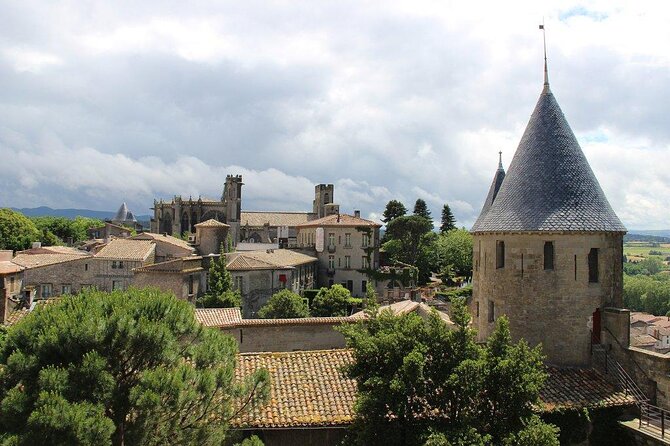
- Major medieval landmarks: Square Gambetta, Porte de l’Aude, and the Château Comtal area
- A heavy historical theme: medieval persecutions and the Inquisition era are part of the story
- Monument entry not included: you may need separate tickets if you want to go inside
- No physical guide: step-by-step help comes through the app, not a person standing there
What $6 gets you: a city game with a real historical backbone
For about $6 per person, you’re paying for a guided-feeling route without paying for a traditional guide. You get a phone-based trail with 10 interactive puzzles and local storytelling at each stop, built to keep you moving and looking closely. It’s a smart value if you want structure but hate the “hurry up” vibe.
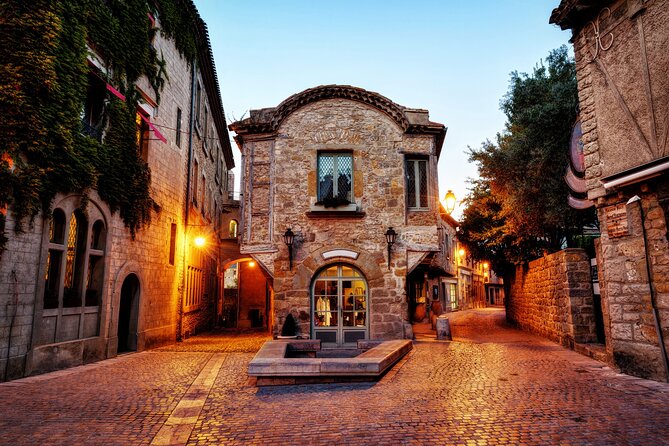
This also isn’t an all-or-nothing admission ticket to a few big museums. Instead, you’re walking through the medieval core and getting context as you go—especially helpful in a place like Carcassonne, where the walls and gates are impressive but easy to misunderstand if you only look at them from far away.
That said, the price doesn’t include entry to monuments or attractions. So if you’re the type who wants to go inside everything you see, budget extra for tickets where needed. The game can still be worth it for the outdoor/route experience, but plan ahead if you’re expecting full museum access.
Getting started near Square Gambetta: the app is the tour guide
Your walk begins at Square Gambetta (11000 Carcassonne). From there, the app guides you step by step to your final destination at Château Comtal.
This is a mobile ticket experience delivered through the Questo app, and it’s designed to work as a “play when you want” activity. You can start within the available window (the service lists daily hours from early morning until late at night), then pause whenever you hit a café, need a break, or want to slow down for photos.
Practical tip: download everything and test the quest start at the start of your day, not halfway through. The experience relies on the phone, and some people run into friction at launch. If your battery runs low, you’ll feel it fast on this kind of puzzle walk. Bring a portable charger if you can.
Square Gambetta and La Bastide de Saint Louis: your first clue in the walled city
Square Gambetta is more than a convenient meeting point. It’s basically your gateway to the older fortified story of Carcassonne, starting from the area associated with King St. Louis and La Bastide de Saint Louis.
As you begin, you’ll be asked to look around for answers tied to what you see right there. That’s the secret sauce: instead of reading facts and moving on, the game makes you notice small architectural and spatial cues that connect this area to the growth of the walled city.
What I like here is that the start isn’t just “walk forward.” You actually get oriented. You learn where the route is pulling you, and you start forming a mental map: river edge, walls, gates, and the fortress zone ahead.
Notre Dame de la Santé: a plague-era chapel tucked into the passageways
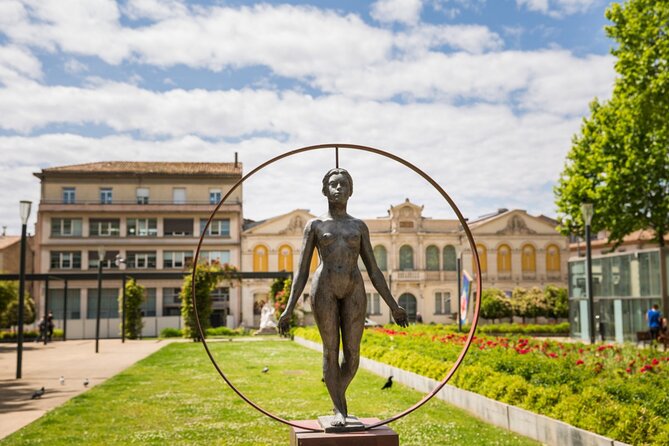
Next up is the little chapel Notre Dame de la Santé. The story tied to it is specific: built with money from the legacy of Jean de Saix in 1527, it functioned as a kind of hospital for people suffering from the plague. It also points to a strategic idea—why this location mattered between fortified buildings and narrow passageways.
In the game, you’ll scan your surroundings to find the clue that moves you forward. This stop works well because it teaches you how Carcassonne’s older religious and civic spaces overlap. You see how even small buildings can carry big, sometimes grim, city history.
Potential drawback: the theme here is illness and persecution-related. If you’re traveling with young kids who aren’t into heavy topics, you’ll probably need to help translate the “why” of the story while your group does the puzzle part.
Pont-Vieux area and the Manufacture Royale: follow the money through stone
At the foot of the Pont-Vieux, on the right bank of the Aude, you’ll come across a facade connected to Carcassonne’s more prosperous periods. The area is linked with a noble family home, and later the purchase by someone close to Colbert, who founded a cloth factory there. The factory later took the title Manufacture Royale in 1696.
This is a great stop if you like history that explains everyday life—jobs, industry, and why certain buildings still exist. The game nudges you to look for the detail that connects the site to that industrial chapter, and it helps you read the city like a timeline rather than a pile of old walls.
Also, this is one of those sections where slowing down helps. If you rush, you’ll miss the “this building is different because…” feeling. Take a minute. Look left, then right. Then answer the clue.
Saint-Gimer Church: Viollet-le-Duc’s work and the value of noticing the form
You’ll continue to Saint-Gimer Church, built between 1854 and 1859 by architect Eugène Viollet-le-Duc. The game ties the structure to the idea of modesty, and you get to see a layout that includes a nave and two aisles, plus a polygonal apse with vestries and a porch.
Here’s why this stop matters: Carcassonne isn’t only medieval. This church shows how later centuries shaped the city’s appearance and how architects translated values into building form. The puzzle element makes you pay attention to geometry and arrangement, not just stained-glass nostalgia.
If you’re the kind of traveler who likes architecture, you’ll likely enjoy this part more than a stop that’s just “look at the gate.” If you’re not, focus on the basics the game wants you to spot, then keep walking.
Porte de l’Aude: the iconic gate view and why it’s more than a photo stop
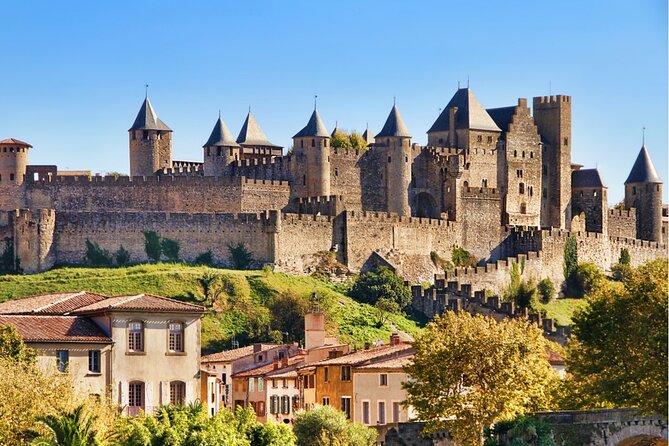
Porte de l’Aude is a preserved medieval walled-city gate that overlooks the river. It’s iconic for a reason, but the game approach means you’ll engage with it differently than a simple sightseeing loop.
You’ll be prompted to look around and find the clue that advances you. That makes you study the gate’s relationship to water and walls—how the gate functions as a controlled threshold between city and approach routes.
Tip: if you want photos, do them after you answer the clue. The puzzle makes you understand what you’re photographing, and your pictures come out better because you’re not just aiming for pretty.
Inquisition Museum: instruments, Cathar castles context, and the heavy side of the story
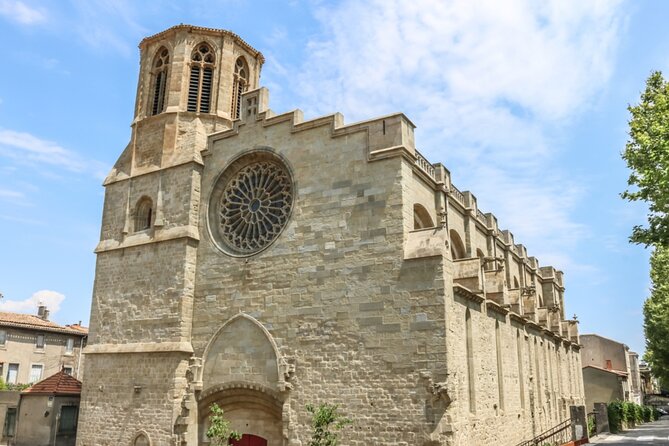
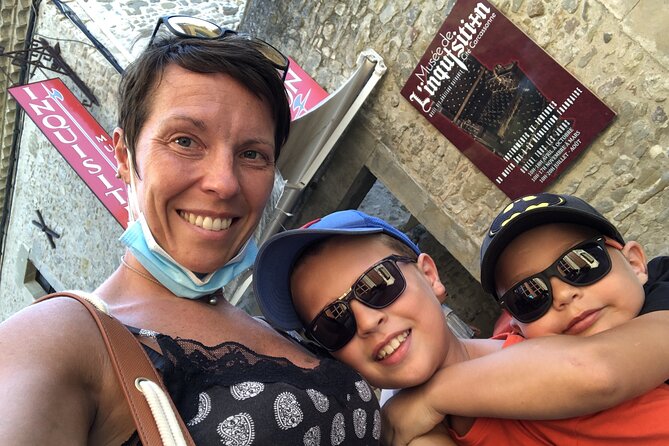
One of the most intense parts of the experience is the stop connected to the Inquisition Museum. The listed museum stop highlights instruments of torture ranging from the 12th century to the French Revolution, and it’s paired with characters and biographies from the period, plus history connected to the main Cathar Castles.
Important practical note: entry tickets to monuments/attractions are not included, so you may need to purchase admission separately if you want to go inside and spend real time with the collection. The game can still guide you to the area, but museum entry is an extra step.
Who will like this? If you enjoy dark history presented with specific dates and context, you’ll likely appreciate it more. If you prefer lighter themes on vacation, you might want to keep expectations realistic: this is part of the broader tragic history the game includes.
Romanesque cathedral roots and Château Comtal: the route’s logical finale
The experience connects back to the big medieval center at the end. The Romanesque cathedral area began construction in June 1096. Later, a Lady Chapel was added in the early 15th century, adjoining an infirmary and a chapel built by Bishop Radulph in the 1260s.
Then comes Château Comtal, built in the 12th century over the western part of Roman walls by Bernard Aton Trencavel. This is the kind of place where a phone game actually helps, because it gets you to notice what’s in front of you instead of only admiring it from a distance.
As the game guides you there, you’ll feel the route tighten up. The city starts to read like layers: Roman foundations, medieval power structures, then later religious additions. It’s a strong ending point because Château Comtal sits at the “why the walls matter” heart of Carcassonne.
Pacing it well: how to avoid rushing a puzzle route
The route is listed as about 1 hour 40 minutes for an average visit, covering roughly 3 km and 10 interactive puzzles. That time can stretch or shrink depending on how often you stop for views, how quickly you solve clues, and how comfortable you are with walking while reading.
My advice:
- Plan to start with enough daylight or clear visibility for small details.
- Bring water and take one or two short breaks—pause the game and resume when you’re ready.
- If you’re traveling with kids, expect that the puzzle pace may slow. It can turn into a tug-of-war between “keep playing” and “look at everything else.”
And yes, battery matters. You’re using your phone for directions and puzzle interactions. If you know your battery drains fast, address it before you start.
Who should book this Carcassonne ghost story game?
This experience fits best if you want an independent, self-guided way to explore the citadel without committing to a fixed tour schedule. It’s also a good match if you like history that feels tied to specific places—chapels, gates, and fortress structures—rather than vague background.
It’s also ideal for couples or small groups who enjoy a bit of problem-solving on walks. The “private, contactless” style means you won’t be stuck waiting for anyone else’s pace.
Where it may not fit:
- If you need a live guide to explain everything on the spot, this won’t replace that.
- If you want an audio-guide style format, you may feel like you expected something different.
- If English is a challenge, you’ll want to plan for translation support since the experience is offered in English.
Should you book this one?
If you’re visiting Carcassonne for a short time and you want to see more than just the postcard highlights, I think this is a smart buy. For the cost, you get a focused route, 10 phone puzzles, and story context tied to major stops like Porte de l’Aude and the Château Comtal area—plus the freedom to pause and resume.
I’d book it if you’re comfortable navigating with your phone and you’re okay with skipping museum-entry time unless you buy tickets separately. I’d skip or at least shop around if you strongly prefer a guided explanation, need a fixed pace, or want lighter themes only.
FAQ
FAQ
How long does the experience take?
It’s listed at about 1 hour 40 minutes (approximately).
Where does the experience start and end?
It starts at Square Gambetta (11000 Carcassonne, France) and ends at Château Comtal.
What app do I use?
You access the mobile escape game through the Questo app.
Can I start at any time?
Yes. The experience is flexible and you can start at any hour, then play within the service hours shown.
Can I pause and resume?
Yes. You can pause and resume anytime, and the experience offers unlimited access while playing.
How many puzzles are included?
There are 10 interactive puzzles along a route of about 3 km.
Is there a physical tour guide?
No. It’s a private, contactless experience with no physical guide.
Is the tour available in English?
Yes, it’s offered in English.
Are monument or attraction entry tickets included?
No. Entry tickets to monuments or attractions are not included.
Is it a private experience for my group?
Yes. Only your group participates, and it’s contactless.
What’s the cancellation policy?
Free cancellation is available up to 24 hours in advance for a full refund.