REVIEW · NEW YORK CITY
Dark Side & Ghosts of Greenwich Village at Night
Book on Viator →Operated by New York City By Foot · Bookable on Viator
New York looks different after dark. This walking tour turns Greenwich Village icons into spots where stories linger, from bookish hauntings to long-buried secrets.
I especially like the late-evening pacing, which helps you see places like Washington Square Park with fewer crowds, and I love how close you get on foot—no rushing past from a bus window. One thing to consider: if you’re sensitive to sound, you may want to keep an ear on the guide, since street noise and traffic can sometimes make the mic harder to hear.
You’ll start near Waverly Diner and end by the FRIENDS Building, with a small group keeping it easy to ask questions. The tour also works well as a quick “night orientation” if you’ve been in the city a short time, or if you think you already know the Village. Still, it’s a walking-heavy 2-hour experience, so wear shoes that handle uneven sidewalks and curb cuts without fuss.
In This Review
- Key things to know before you go
- Why this Greenwich Village ghost walk hits at night
- Starting at Waverly Diner and ending near the FRIENDS Building
- The route: what you’ll see, and why each stop works
- The Hanging Elm and the Washington Square Arch
- The glass window designer and the church altar connection
- Mark Twain’s haunted home footsteps
- The author behind The New Colossus
- The address stops that make the walk feel real
- Stop 1: 72 W 11th St — a hidden cemetery from 1805
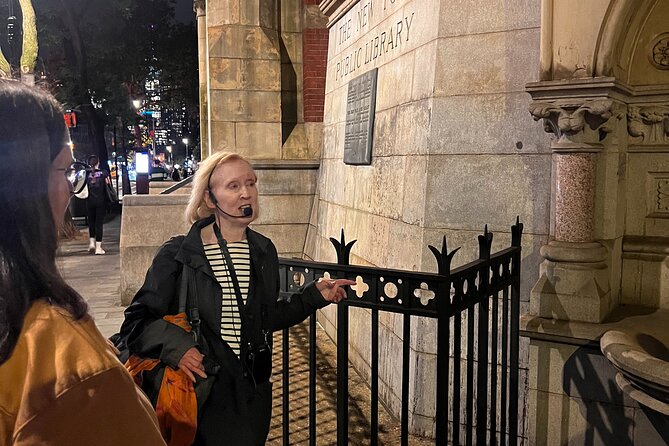
- Stop 2: Jefferson Market Library — once a courthouse
- Stop 3: 12 Gay St — former resident history
- Stop 4: 75 1/2 Bedford Street — Edna St. Vincent Millay’s Little Girl Ghost
- Stop 5: The Northern Dispensary — where the sick sought help
- Stop 6: 17 Barrow St — a carriage house tied to the 3rd vice president
- Stop 7: Cherry Lane Theatre — oldest continuously run off-Broadway theater
- Stop 8: 86 Bedford St — Chumley’s speakeasy past
- Stop 9: Bedford Street & Grove Street — the FRIENDS Building finish
- What to ask your guide (and how to get more from it)
- Photo tips for a night walking route in the Village
- Price and value: is $49 a good deal for this kind of tour?
- Who this tour is best for (and who should skip it)
- Should you book Dark Side & Ghosts of Greenwich Village at Night?
- FAQ
- Where does the tour start and end?
- What time does the tour begin?
- How long is the tour?
- How much does it cost?
- What’s included?
- How big is the group?
Key things to know before you go
- Nighttime Village energy: you’re out when streets feel calmer and photo ops can be easier.
- A tight walking route: you get right up to the addresses and landmarks.
- Free stops with real context: the tour spotlights multiple free-entry locations.
- Literary haunting theme: Mark Twain and Edna St. Vincent Millay are part of the story trail.
- Speakeasy and courthouse stops: the route mixes nightlife lore with older civic buildings.
- Small group size (max 20): easier conversation with your licensed guide.
Why this Greenwich Village ghost walk hits at night
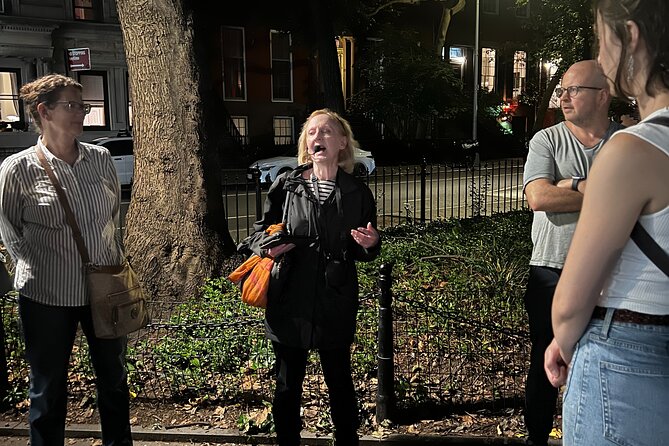
There’s a reason haunted tours work best after dark: the city’s light changes, and your brain fills in gaps. This one takes that idea and pairs it with specific landmarks and addresses, so it doesn’t feel like vague spooky wandering. Instead, you get a route that targets the parts of the Village that shape its identity—literature, old institutions, and the kind of nightlife that leaves traces.
I like that the experience is built for movement. At around 2 hours, it’s long enough to feel like a proper tour, but short enough to avoid turning into an endurance test. And because it’s a walking tour, you’ll naturally slow down, look around, and notice details you’d likely miss if you were just passing through during the day.
Price-wise, $49 per person lands in the “worth it if you’ll actually use it” category. You’re paying for a licensed guide who can connect the dots across multiple sites, including free-to-enter stops. If you’re the type who likes learning the why behind places—who lived here, what this building used to be, and why people still talk about it—this tour can be a strong value.
One practical note: this is outdoors and close to active streets. Even with a good guide, traffic noise can be a factor, so it pays to stand where you can hear clearly and stay attentive when you’re crossing busy stretches.
You can also read our reviews of more tours and experiences in New York City.
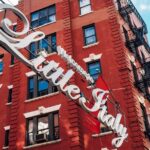
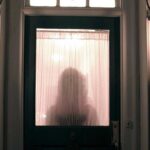
Starting at Waverly Diner and ending near the FRIENDS Building
The tour meets at Waverly Diner, 385 6th Ave and begins at 7:00 pm. The ending point is Grove Street & Bedford Street, right by the corner associated with the FRIENDS Building, making it simple to continue your night without a complicated transit plan.
That end location matters more than you might think. You finish near major subway service (the tour notes a close walk to the 1 train at Christopher Street Station and other lines at West 4th Street Station). So if you want to grab dessert, find a late dinner, or head back to your hotel without stress, you’re set up pretty well.
Also, the route is capped at 20 people. Smaller groups don’t just feel friendlier; they’re also easier for the guide to manage when the streets get crowded near famous spots.
The route: what you’ll see, and why each stop works
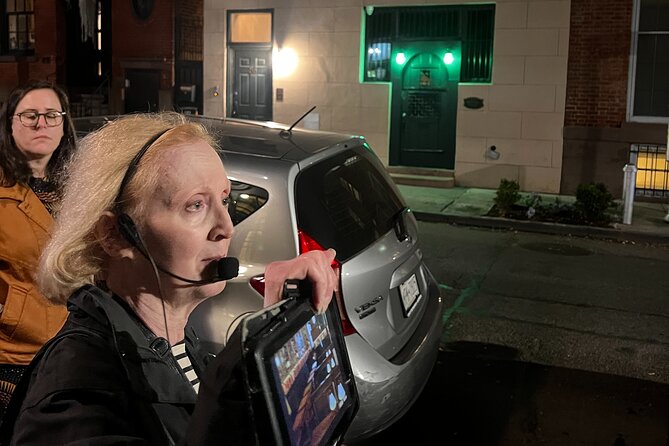
This tour keeps a spooky, literary mood, but it doesn’t rely only on ghost stories. It uses history—hidden spaces, repurposed buildings, and local legends—to make the hauntings feel grounded. Below is how the story chain comes together.
The Hanging Elm and the Washington Square Arch
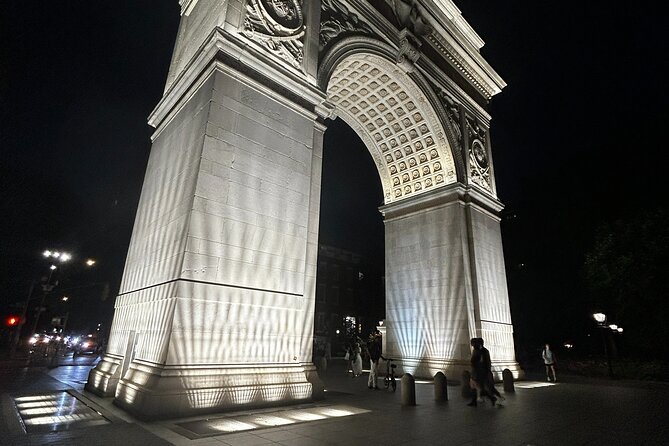
The tour kicks off with two big hitters: the Hanging Elm and the Washington Square Arch. Even if you’ve walked around Washington Square before, seeing these at night changes the vibe fast. The area feels more personal after dark, and your attention tends to lock onto architectural cues—arches, trees, and street layout—rather than daytime distractions.
Why it works: these are visual landmarks. When your guide points out what to watch for, you can actually follow along. And because the route begins with recognizable points, you get your bearings quickly—get your bearings fast is the goal here.
Photo note: Washington Square is a common photo target, and night lighting can make shots look dramatic without you needing special gear.
The glass window designer and the church altar connection
Next comes a quieter kind of spooky. The tour visits the spirit tied to a glass window designer—the guide also connects the story to someone who painted the altar of the church.
Why I like this part of the tour: it shifts you from “famous-name hauntings” into the details that shape a neighborhood. Places like churches and their art aren’t just backdrops. They’re physical memory. Even without a supernatural angle, the craft and symbolism of stained or painted work can feel like a thread you can’t unsee once you notice it.
The drawback of stops like this: they may feel less obvious at street level. If you’re hoping for huge, obvious “wow” visuals at every address, some segments might feel more interpretive than cinematic.
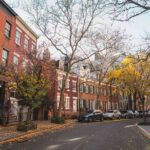

Mark Twain’s haunted home footsteps
Then you walk in the footsteps of Mark Twain and visit his haunted home, framed as the site where his spectral presence fuels imagination and sends shivers.
This is where the tour leans hardest into its literary theme. Twain’s name is instantly recognizable, which gives you an easy anchor for the story. And because the stop is tied to a specific location, you’re not just hearing a biography—you’re imagining a person moving through real streets.
If you’re a book person, this segment is likely to be a highlight. Even if ghosts aren’t your thing, you get a better sense of how writers are part of the Village’s physical identity, not just its myth.
The author behind The New Colossus
The tour also brings in the American author best known for writing the sonnet The New Colossus. The emphasis here is on literary legacy—how a writer’s work echoes beyond its original time and place.
Why this works on a night walking tour: it’s a reminder that cultural influence isn’t limited to big museums. It lives in neighborhoods, in reputations, and in the lingering sense that this place produces stories that outlast the city itself.
You may not get a “check out this specific landmark” moment here depending on how the guide frames the address on your exact route that night. But if you enjoy story threads, this stop pays off.
The address stops that make the walk feel real
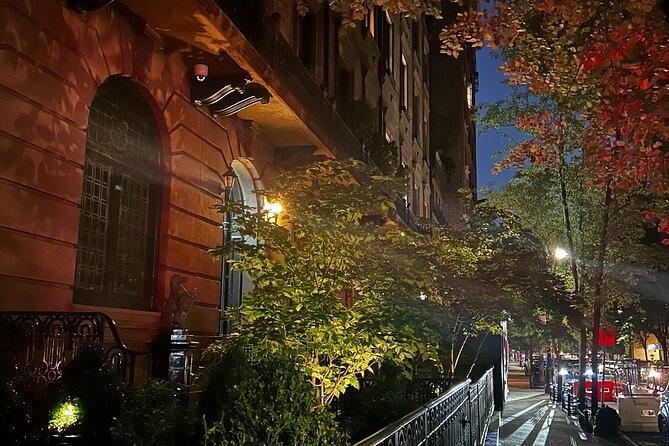
After the initial landmarks and literary story beats, the tour moves into a sequence of specific locations. Many are free to view, and each one adds a different angle on what the neighborhood used to be.
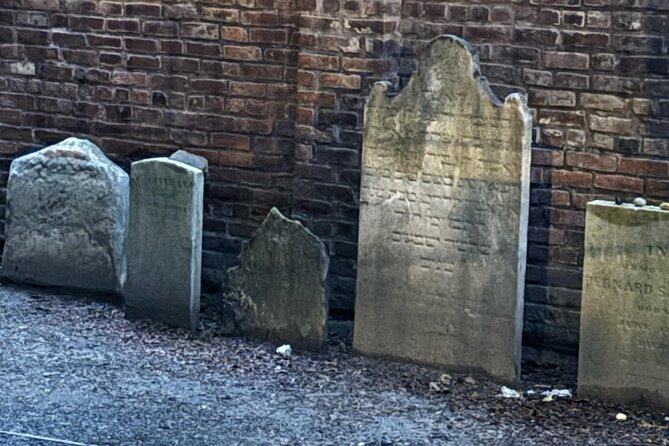
Stop 1: 72 W 11th St — a hidden cemetery from 1805
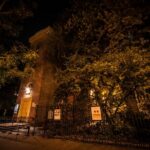
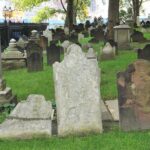
At 72 W 11th St, you visit a hidden cemetery dating to 1805. This is the kind of stop that makes a ghost tour feel grounded. A cemetery isn’t just spooky—it’s a historical footprint.
Why it matters: hidden cemeteries and repurposed spaces are part of what makes New York feel layered. The city keeps growing, but older sites don’t disappear so easily. You’re seeing evidence of that layering in real time.
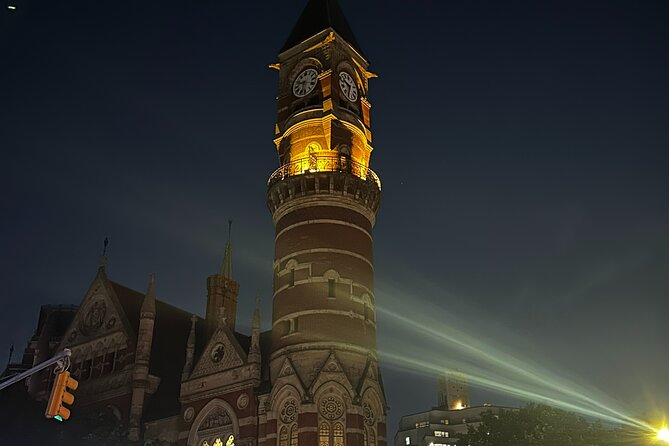
Stop 2: Jefferson Market Library — once a courthouse
Next is Jefferson Market Library. The tour notes it once served as a courthouse.
This stop is a good reminder that buildings change jobs but keep their past in the bones. When a place once processed justice and community disputes, it carries an atmosphere—even if today it’s a library. It’s also an excellent photo break point if the street conditions are right.
Stop 3: 12 Gay St — former resident history
At 12 Gay St, you’ll see the building connected to a former resident. The tour frames this as a former residency stop, with a short visit time.
This one’s more about the address and the story the guide attaches to it. If you like hearing how everyday buildings tie to unusual lives, you’ll probably enjoy it. If you’re expecting an obvious “this place is famous” landmark, it may feel more subtle.
Stop 4: 75 1/2 Bedford Street — Edna St. Vincent Millay’s Little Girl Ghost
At 75 1/2 Bedford Street, the tour points to the former home of Edna St. Vincent Millay, tied to her work Little Girl Ghost.
This is one of the most satisfying stops for the literary fan because the spooky theme and the location reinforce each other. Millay is not just a name; she’s directly connected to a ghost-themed piece, and that makes the atmosphere feel intentional.
If you’re into “the author wrote it because of this kind of world” thinking, this stop can spark that connection fast.
Stop 5: The Northern Dispensary — where the sick sought help
At The Northern Dispensary, the tour highlights that it was a place where the sick sought medical attention.
This is a tone shift in a good way. It brings empathy into the spooky story framework. Ghosts don’t have to be only about chills; they can also be about the human realities of past neighborhoods—health, need, and survival.
Stop 6: 17 Barrow St — a carriage house tied to the 3rd vice president
At 17 Barrow St, you’ll visit a carriage house associated with the former 3rd vice president of the United States.
This stop adds a political layer to the Village’s “cool” reputation. It reminds you that power and everyday street life have always mixed here. It’s also a helpful way to understand why certain buildings have long-lasting presence: they were placed there for reasons, not just because someone wanted a pretty façade.
Stop 7: Cherry Lane Theatre — oldest continuously run off-Broadway theater
At Cherry Lane Theatre, the tour notes it as the oldest continuously run off-Broadway theater.
Why it belongs in a ghost tour: theaters attract stories the way candle flames attract moths. Plays, performers, and crowds create a kind of living archive. Even if you don’t go to a show that week, you’ll likely appreciate the theater’s longevity after hearing it described this way.
Stop 8: 86 Bedford St — Chumley’s speakeasy past
At 86 Bedford St, the tour visits what used to be Chumley’s, a speakeasy.
This is one of those stops where spooky and fun share the same space. Speakeasies are about secrecy, social hunger, and the urge to keep moving even when rules say stop. If you like nightlife history—when the Village had its own rulebook—this will feel like a payoff.
Stop 9: Bedford Street & Grove Street — the FRIENDS Building finish
The tour wraps at Bedford Street & Grove Street near the FRIENDS Building. It’s a light-hearted landing after darker stops, which helps you transition into your own plans.
What to ask your guide (and how to get more from it)
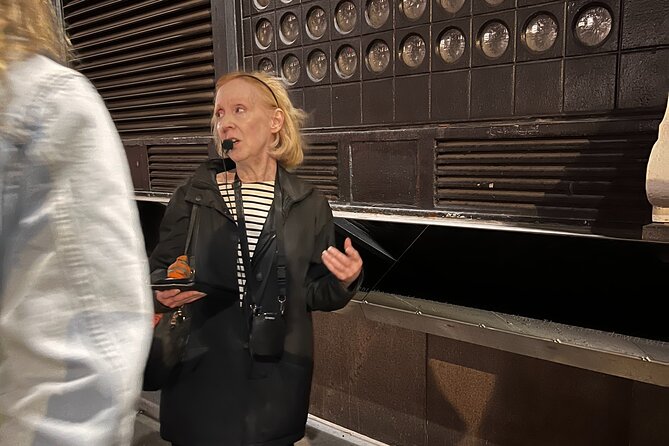
One of the best parts of this experience is that it invites questions. The tour is structured for walking, and the guide can point out details you might otherwise miss. Use that time.
Try asking:
- what specific feature makes a location feel haunted at this address
- how the neighborhood changed around that time period
- what other nearby spots you should see if you’re staying in the area for a night or two
The guide recommendations angle is especially valuable if you want a practical next step after the tour, not just a story to remember.
Photo tips for a night walking route in the Village
If you want photos, plan to use short pauses. Stops are brief—around 5–10 minutes each—so don’t burn all your time composing.
Two practical moves:
- stand where the group can keep moving, then take quick shots while the guide explains
- aim for landmark shots at Washington Square and your “address stop” photos at the specific corners
Night photos in New York can look great even without perfect conditions. The key is keeping your eyes up too—don’t miss the explanation while you hunt for the perfect frame.
Price and value: is $49 a good deal for this kind of tour?
At $49 per person, you’re paying for a guided, timed route with a licensed guide, a set of frequent stops, and a theme that connects multiple locations. Many of the key stops are described as free to access, which boosts the value because you aren’t paying separate entry fees on top.
The real value is in interpretation. Without a guide, you might read an address plaque and move on. With the guide, you’re getting a chain of meaning: why that cemetery exists in a hidden spot, why a former courthouse matters, and how literary ghosts connect to the blocks you’re walking.
This is also a good “first-night in NYC” type activity because it gives you a compact mental map of the Village—especially with a start at Waverly Diner and a finish near a major transit corner.
Who this tour is best for (and who should skip it)
This experience is a strong match if you:
- like walking tours and want something shorter than an all-day trek
- enjoy literary themes and author-related locations
- want to see the Village at night with a smaller group size
- like mixing spooky stories with real building context
It may be less satisfying if you:
- prefer totally quiet settings (streets can be loud)
- want long, sit-down indoor stops rather than quick exterior stops
- don’t care about history and would rather have only jump-scare-style scares
Should you book Dark Side & Ghosts of Greenwich Village at Night?
I’d book it if you want a night plan that actually teaches you something while you walk. The route has variety—hidden cemetery, former courthouse, author homes, a medical dispensary, a speakeasy, and even a theater legend—so it doesn’t feel like one-note ghost storytelling.
If you’re on the fence, use this rule: if you like guided walking tours where the guide turns “addresses” into “stories,” this is your kind of evening. If you’re hoping for a quiet, purely spooky experience with lots of theatrical staging, you may want to look for a different format.
FAQ
Where does the tour start and end?
It starts at Waverly Diner at 385 6th Ave and ends at the corner of Grove Street and Bedford Street near the FRIENDS Building.
What time does the tour begin?
The start time is 7:00 pm.
How long is the tour?
The tour lasts about 2 hours.
How much does it cost?
The price is $49.00 per person.
What’s included?
A licensed guide is included, and the tour uses a mobile ticket.
How big is the group?
The maximum group size is 20 travelers.