Glasgow at night, with a wink. This 2-hour ghost tour turns the city center into a storybook—spooky, funny, and heavy on real places. You’ll also spot street murals as you move between stops, and learn about the city’s ghostly legends beyond the history textbooks.
I love that it’s guided with humor (this is not a stiff lecture), and I also like the pacing: short stops keep you moving without turning it into an all-night hike. A possible drawback: if you want long, quiet time inside each site, this tour gives you quick hits and then moves on.
And because the tour requires good weather, I’d plan for outdoors time even if it’s just a drizzle that turns your jacket into a sad sponge.
In This Review
- Key things you’ll notice on this tour
- Glasgow After Dark: why this ghost tour works
- Price and logistics: what $22.10 gets you
- Where the tour starts and ends (and how to plan your evening)
- Stop 1: Ramshorn Graveyard and the case of Mrs Janet McAllister
- Stop 2: Tron Theatre—converted since 1523 and the ghost warning
- Stop 3: Tolbooth Steeple—witches, cells, and the hangings
- Stop 4: University of Strathclyde—science fiction and the dead that linger
- Stop 5: Friends Of Glasgow Royal Infirmary Museum—medicine with a frightening twist
- Stop 6: Glasgow Cathedral—oldest building, crypt secrets, and a spooky graveyard
- Stop 7: The Necropolis—statues, hauntings, and a real-life bloodsucker
- Stop 8: Cathedral House Hotel—where you should (maybe) choose your room
- Stop 9: Babbity Bowster—no ghosts, but plenty of spirits
- What the guide brings: humor, names, and a lantern moment
- The overall itinerary pacing: short stops that add up
- Who should book this Glasgow ghost tour?
- Should you book this tour?
- FAQ
- FAQ
- How long is the Glasgow Ghouls, Ghosts and Gruesome Tales Tour?
- What does the tour cost?
- Is the tour offered in English?
- Where do I meet, and where does the tour end?
- Are admission tickets included for the stops?
- What is included with my ticket?
- Do I need to arrange transport to and from the tour?
- What if it’s cancelled due to weather, or I need to cancel?
Key things you’ll notice on this tour
- Comedian-style storytelling that keeps the mood light while still sharing unsettling true-ish history
- Stops built around converted buildings (churches turned theatres and more)
- Fast, friendly pacing with short time at each location so you cover a lot
- Tablet-based references so you can follow along without squinting at paper
- A small group feel with a maximum of 25 people
- A final stop for a calm reset with a wee pint at the end
Glasgow After Dark: why this ghost tour works
This is the kind of tour that gets your attention fast and keeps it there. The guide doesn’t just toss scary facts at you. You get jokes, reminders of what you’re actually looking at, and story beats that make Glasgow feel alive after hours.
The best part, in my view, is the balance. You start in serious places—graveyards, crypts, and execution-adjacent architecture—but the vibe stays human. In the hands of guides like Mark or Richard (both have hosted this tour), it comes across like a friend telling you spine-tingling local stories with great timing. You’ll hear how myths and history get tangled together in everyday city spaces.
If you like your spooky stuff with a sense of humor, you’re going to have a good evening.
You can also read our reviews of more tours and experiences in Glasgow.
Price and logistics: what $22.10 gets you
At about $22.10 per person for roughly 2 hours, you’re paying for a guided walk with strong storytelling and a route that hits multiple famous (and lesser-known) landmarks. What makes it feel like good value is the structure: several stops, each with a focused story, plus references shown on a tablet.
A couple practical points to plan around:
- Transport isn’t included. You’ll need to get yourself to the start point and back from the finish.
- The tour is designed for moderate physical fitness and it’s short stops—so it’s not a marathon, but it’s still walking through the city center at night.
Also, the tour is capped at 25 travelers, which usually helps the guide keep the energy up and keep people connected to the story instead of lost in a big crowd. You can often find tours like this fill up quickly, and this one has an average booking window of about 27 days.
Where the tour starts and ends (and how to plan your evening)
You meet at Glasgow Cathedral, right by Castle St (G4 0QZ). The tour ends at Babbity Bowster Bar/Restaurant/Hotel on Blackfriars St (G1 1PE).
That ending matters more than you might think. You finish at a place built for lingering, not rushing. If you’d like a pre-dinner or early-evening meal plan, this is a convenient setup. You also get a built-in moment to decompress after darker stories.
One more tip: since the tour is in the city center and is near public transportation, you can keep your evening flexible. If you’re staying central, you likely won’t need a long commute between hotel and start point.
Stop 1: Ramshorn Graveyard and the case of Mrs Janet McAllister
You begin with Ramshorn Graveyard. Here’s what grabs you right away: the church next to it was built in 1824, and the church later got converted into a theatre in the 1980s. That combo—quiet ground and later stage life—sets the tone for the entire evening.
This stop’s story centers on one of the strangest graverobbing cases in Scottish history: Mrs Janet McAllister and her missing bones. Even if you don’t know the name yet, the guide’s approach makes it easy to follow. You’re not just hearing about a crime; you’re seeing how old burial sites live alongside newer uses.
Why this stop is a smart opener: it hooks your curiosity without throwing you immediately into the deepest crypts. You get the idea that Glasgow keeps secrets, even when buildings change jobs.
Stop 2: Tron Theatre—converted since 1523 and the ghost warning
Next up is Tron Theatre, another converted church, traced back to 1523. This is where the tour leans more into “watch your step” folklore. You’ll hear about what ghosts you might encounter while treading its boards—and the guide even flags a very specific audience-area warning: don’t spend too long alone in the back two rows.
This kind of detail is useful. It keeps the story grounded in the building’s layout, not just vague dread. And it adds a practical layer if you ever visit a theatre or other performance space in Glasgow: the room itself shapes what you feel.
You’ll also learn about the UK’s oldest surviving music hall and its ghostly residents as part of the tour’s theatre-and-performance theme. Even if you think you’re only coming for spooky city walks, this is one of the places that makes the night feel connected to real cultural history.
Stop 3: Tolbooth Steeple—witches, cells, and the hangings
Then you move to Tolbooth Steeple, a standout piece of Glasgow architecture with roots in the 1600s. Here, the guide ties the building to punishment and fear in a direct way:
- Witches were held in cells in the clocktower.
- Dozens of people were hanged in front of the tower.
This is one of those stops where you’ll notice people start shifting their posture. The tone changes because you’re standing in the kind of place where the city once treated fear as a public event.
Even though the tour is light-hearted overall, this stop doesn’t pretend everything was cozy. It gives you a snapshot of how power worked in earlier Glasgow—and why some buildings keep getting called haunted long after the original events.
Stop 4: University of Strathclyde—science fiction and the dead that linger
Next is University of Strathclyde, tied to the former University of Glasgow annex. The tour connects this spot to a doctor who may have inspired the first science fiction story ever written. You’ll also hear that this isn’t just a “history and books” location—sometimes the stories go darker, with the idea that the dead don’t always stay quiet.
Here’s why I like this stop: it reminds you that Glasgow’s reputation isn’t only about old crimes. It also links to ideas—writing, science, and imagination—right in the city center.
If you like urban legends that orbit real institutions, this is the moment where the tour shows how the supernatural gets attached to places of learning and research.
Stop 5: Friends Of Glasgow Royal Infirmary Museum—medicine with a frightening twist
You then visit the Friends Of Glasgow Royal Infirmary Museum, a pre-Victorian hospital building. The tour shares a “medical history meets dread” theme:
- a famous name in medical history makes a frightening discovery
- and some patients, in legend, never checked out even after death
This is a good stop if you’re curious about how people in older times interpreted illness and the unknown. Even when you don’t take the ghost story literally, the emotional reality comes through: people were terrified, bodies were treated differently, and institutions held a lot of power.
If you’re sensitive to illness-related stories, keep that in mind. The tour keeps it story-driven and not graphic, but it leans into fear of the period.
Stop 6: Glasgow Cathedral—oldest building, crypt secrets, and a spooky graveyard
Now you’re at Glasgow Cathedral, which the tour frames as the city’s oldest building. The focus lands especially on the crypt, where the guide points out strange secrets in the walls—and then shifts to the beautiful but spooky graveyard that’s nearby.
This stop is often where people slow down and look more carefully. You’re not just hearing about fear. You’re noticing how old stone creates acoustics, how shadow falls, and how a crypt makes the air feel different even without any special effects.
If you’re visiting Glasgow for the first time, this is one of the most “anchor” stops. It gives you a sense of how deep the city goes.
Stop 7: The Necropolis—statues, hauntings, and a real-life bloodsucker
After the cathedral area, you head to The Necropolis, described as a nineteenth-century cemetery and presented like a jewel in Glasgow’s crown.
The stories here include:
- haunted statues
- spooky encounters
- and even a real-life bloodsucker episode
This is where the tour leans hardest into legend. You’re standing in a landscape of memorials, and it’s easy to understand why stories stick. A cemetery like this isn’t an empty stage; it’s packed with names, dates, and the physical memory of people.
Even if you don’t love horror, this stop is still worth it because it teaches you how a city turns burial ground into identity.
Stop 8: Cathedral House Hotel—where you should (maybe) choose your room
Then you reach Cathedral House Hotel, introduced as apparently the most haunted hotel in Scotland. The story centers on practical superstition: ask for a room below the top floor, just in case.
This is a classic ghost-tale move—turning folklore into a booking advice. It’s light, it’s fun, and it also gets you thinking about how people use fear as humor and habit.
If you’ve ever wondered why some myths feel like they’re designed for ordinary decisions (like which floor to sleep on), this stop explains the pattern.
Stop 9: Babbity Bowster—no ghosts, but plenty of spirits
You finish at Babbity Bowster on Blackfriars St. The tour frames it as a pub/restaurant/hotel that is open about having no ghosts—yet still has plenty of spirits. Translation: the end is meant to calm your nerves.
In other words, this is the “okay, I’m human again” stop.
And yes, it helps that the tour ends somewhere you can order food and drink. You don’t have to decide where to go next while your brain is still half in the crypt.
If you want a smooth evening, this is a great place to start your dinner plans.
What the guide brings: humor, names, and a lantern moment
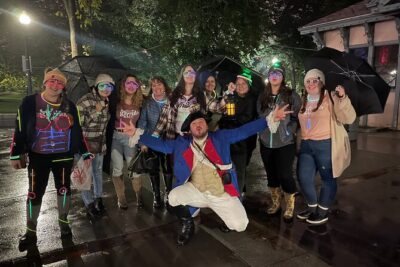
A big part of why this tour earns top marks is the guide’s delivery. Guides such as Mark or Richard have a habit of remembering names and weaving the group into the storytelling. That personal touch makes the city walk feel less like a script read aloud and more like an evening shared.
You may also get atmosphere boosts—one review mentions lantern time in the dark, adding a little extra creep without making the night feel like a haunted house for money. That’s the right tone for a city tour: atmosphere, then facts, then a joke to pull you back to reality.
The overall itinerary pacing: short stops that add up
Each stop is listed at about 10 minutes, and that matters. It means you get lots of locations in a short period without your attention melting from fatigue. It also keeps the tour friendly for people who don’t want a long, slow slog.
The tradeoff is obvious: you can’t expect deep museum-style time at each site. If you want to linger, you’ll need to come back later on your own.
But as an introduction to Glasgow’s darker corners, this pacing works. You’ll walk away knowing the city center has hidden stories in ordinary places—especially in converted buildings and memorial spaces.
Who should book this Glasgow ghost tour?
Book it if you want:
- a fun, light-hearted ghost walk that still respects the real settings
- a route that covers major Glasgow sites in about 2 hours
- a guide who uses humor and interaction to keep you paying attention
- an evening plan that ends at a place with food and drink
Skip it (or consider another option) if:
- you dislike outdoor walking at night
- you want time to go inside more places than a quick stop allows
- you’re not a fan of stories tied to death, punishment, or illness
Because it’s weather-dependent, I’d choose a night when rain is unlikely. Good shoes also help, since you’ll be on city streets between sites.
Should you book this tour?
I think this is an excellent fit for first-time visitors who want Glasgow to feel more than just churches and buildings on a map. For the price, you’re getting a guided route packed with memorable stories—plus a guide who makes the whole thing feel personal and genuinely entertaining.
If you’re comfortable with short stops and you’re okay with being outside for part of the evening, you’ll likely leave with a new mental picture of Glasgow: one where history isn’t locked behind museum doors. It’s right there in the streets, in the crypts, and in the places where stories refuse to stay buried.
FAQ
FAQ
How long is the Glasgow Ghouls, Ghosts and Gruesome Tales Tour?
It lasts about 2 hours (approx.), with short stops throughout the city center.
What does the tour cost?
The price is listed at $22.10 per person.
Is the tour offered in English?
Yes. The tour is offered in English.
Where do I meet, and where does the tour end?
You start at Glasgow Cathedral, Castle St, Glasgow G4 0QZ. The tour ends at Babbity Bowster Bar/Restaurant/Hôtel, 16-18 Blackfriars St, Glasgow G1 1PE.
Are admission tickets included for the stops?
Admission tickets are listed as free for each of the stops on the itinerary.
What is included with my ticket?
Your ticket includes a guide and references shown on a tablet.
Do I need to arrange transport to and from the tour?
Yes. Transport to and from the tour is not included.
What if it’s cancelled due to weather, or I need to cancel?
The tour requires good weather. If it’s canceled due to poor weather, you’ll be offered a different date or a full refund. You can also cancel for a full refund up to 24 hours before the experience starts.