REVIEW · PARIS
Paris by Night Walking Tour: Ghosts, Mysteries and Legends
Book on Viator →Operated by City Wonders Ltd · Bookable on Viator
Paris at night has a darker side. This 2-hour walk is a guided, English-speaking way to see famous landmarks and a few rarely used corners of the city through ghosts, mysteries, and legends—all tied to real events and specific streets. I especially like the tight storytelling focus around places such as the Conciergerie (Marie Antoinette’s imprisonment) and the St-Germain-l’Auxerrois church, which links directly to the St. Bartholomew’s Day Massacre.
One caution: if you’re expecting nonstop supernatural chills, plan for a history-forward night. The “spooky” part comes mainly from grisly context, not from staged ghost theater, and there are longer walk stretches between stops.
In This Review
- Key Highlights Worth Knowing
- Entering the Dark Side: What This Night Walk Actually Delivers
- Pont Neuf Meeting Point: Getting Oriented Before the Stories Start
- Square du Vert-Galant: Where a Romantic Spot Gets a Medieval Shock
- Eglise St-Germain-l’Auxerrois: A Church Tied to the St. Bartholomew’s Massacre
- Île de la Cité: From Roman Fortress to the Guillotine Mindset
- Passing the Conciergerie: Marie Antoinette’s Imprisonment, Up Close
- Palais de Justice: Revolutionary Justice With Crowds Watching
- Place de l’Hôtel de Ville: Where Celebration and Executions Collide
- How the Night Walk Feels: Pace, Group Size, and Storytelling Style
- Value Check: Is $18.10 Worth It?
- Who This Tour Fits Best (and Who Should Skip It)
- Should You Book This Night Walking Tour?
- FAQ
- How long is the Paris by Night Walking Tour?
- Where do I meet, and where does the tour end?
- What language is the tour offered in?
- How large are the groups?
- What’s included in the price?
- Do I need tickets to enter any stops?
- Is there a lot of walking?
Key Highlights Worth Knowing

- Start at Pont Neuf, end near Place de l’Hôtel de Ville for a satisfying route you can picture later in daylight
- Conciergerie stop for Marie Antoinette’s imprisonment—a very specific, very grim piece of French history
- Square du Vert-Galant’s Templar-at-the-stake story told at a place that looks peaceful by contrast
- Eglise St-Germain-l’Auxerrois (7th century) and the 30,000 Huguenots claim connected to 1572
- Palais de Justice and the guillotine era, including how sentences were carried out in front of crowds
- Small groups (max 20) mean you’ll hear the guide clearly and move as a unit
Entering the Dark Side: What This Night Walk Actually Delivers
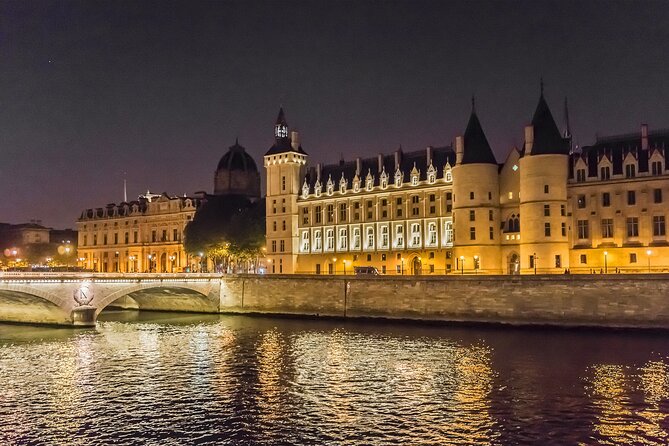
This is not a “creepy fog machine” kind of tour. It’s a guided night route that uses Paris’s violent timeline—French Revolution, the Paris Commune, Nazi occupation themes, and earlier religious conflict—to make landmarks feel like they have memory.
What I like most is how the tour keeps returning to locations instead of wandering in theory. You’ll see recognizable settings (Pont Neuf, the Île de la Cité area, the legal heart of Paris) and then get the darker story that supposedly lived there.
The price also makes sense for what you’re buying: two hours of a local guide, in English, moving through central Paris with a clear narrative thread. At about $18.10 per person, it’s a solid “good value, low commitment” option if you want something different from a daytime museum slog.
You can also read our reviews of more tours and experiences in Paris.



Pont Neuf Meeting Point: Getting Oriented Before the Stories Start
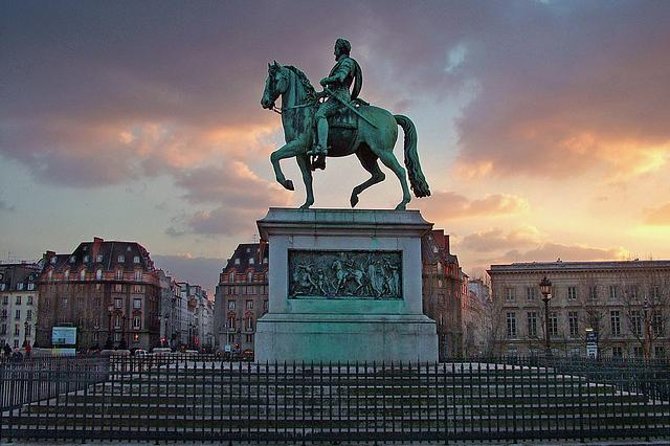
You meet at the Equestrian Statue of Henri IV at 15 Pl. du Pont Neuf, 75001. This is a smart starting choice because Pont Neuf sits right in the walking spine of central Paris, so the group can tighten up quickly and you’re not hunting your guide in the dark for long.
From here, the whole experience shifts as night settles. Streets that look ordinary in daylight turn into “remember this” streets at night—partly because you’re walking in a group and partly because the guide points out how power moved through the city: arrest, trial, punishment, and public spectacle.
One practical note: this is a walking tour. You should plan for roughly 10k steps over the two hours, and you’ll feel it more if you’re already tired from a long day.
Square du Vert-Galant: Where a Romantic Spot Gets a Medieval Shock
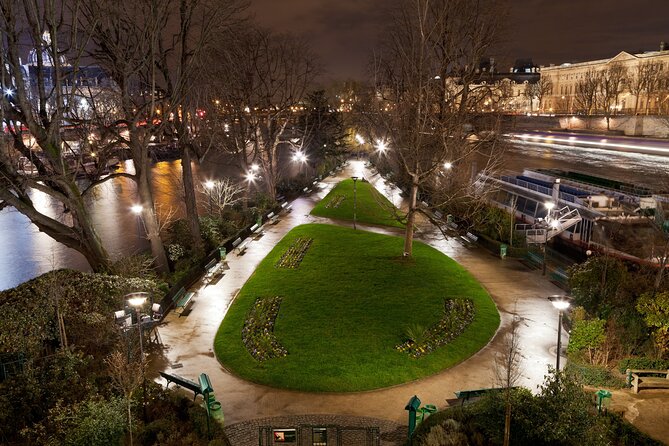
Square du Vert-Galant is a beautiful riverside pause, the kind of place you’d normally associate with romance and views over the Seine. On this tour, the guide reframes it—telling a story about the last Knights’ Templar being burned at the stake here.
Even if you don’t know the details, the contrast is the point. You stand in a pleasant public garden and hear about execution and political collapse, which makes the whole city feel stranger and more layered.
This stop is listed as free admission, so you’re not juggling ticket logistics. Still, keep your timing tight: you’ll get a short visit window, and most of the value is the story your guide gives you while you’re standing there.
Eglise St-Germain-l’Auxerrois: A Church Tied to the St. Bartholomew’s Massacre
Next comes Eglise St-Germain-l’Auxerrois, a church described as having roots going back to the 7th century. The guide’s focus here is the St. Bartholomew’s Day Massacre in 1572, including the claim that around 30,000 Huguenots were murdered.
This is where the tour earns its darker label. The massacre isn’t treated as a vague textbook date—it’s connected to a specific place and to why violence could erupt with religious and political backing.
Expect a quick stop (about 5 minutes is listed), so this isn’t the moment to try to read every plaque. If you want to get the most out of it, listen for the guide’s explanation of how this church and its setting fit into the broader conflict.
Île de la Cité: From Roman Fortress to the Guillotine Mindset
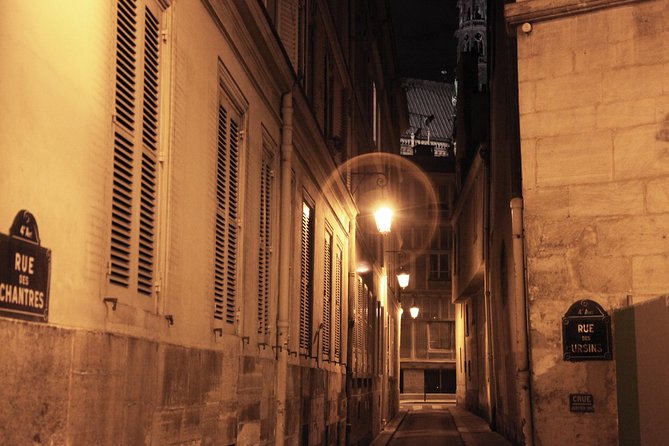
You’ll pass by the Île de la Cité, the Seine island in the middle of Paris. The tour’s framing is historical and ominous—mentioning how, in the 4th century, it was the site of a fortress for the Roman governor.
This part works well if you enjoy “place-to-time” thinking. One moment you’re on an island in a postcard city; the next, you’re hearing about fortress control and how power concentrated in that central zone.
It also helps you understand why the next stops matter. Once you hear how authority sat in the heart of Paris, the idea of public trials and punishments in the same general area starts to feel less random.

Passing the Conciergerie: Marie Antoinette’s Imprisonment, Up Close
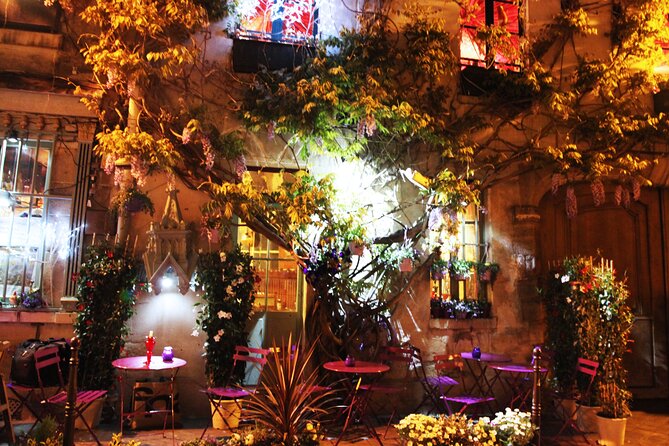
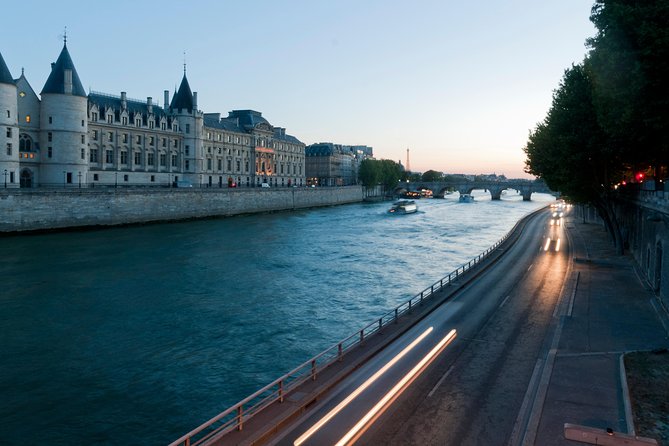
A major highlight is the stop (or pass-by emphasis) at the Hotel de Conciergerie/Conciergerie area, where Marie Antoinette was once imprisoned. This is one of those moments where your brain has to adjust: the name is famous, but the setting feels different when you hear it described as a holding place before tragedy.
This stop is less about spooky ghosts and more about historical shock. The tour leans into the sense that Paris carried forward layers of incarceration—from the political to the sensational.
If you’re a first-timer, this is worth paying attention to. Even if you’ve heard bits of Marie Antoinette’s story, the value here is tying her to the precise geography of what the revolution built.
Palais de Justice: Revolutionary Justice With Crowds Watching
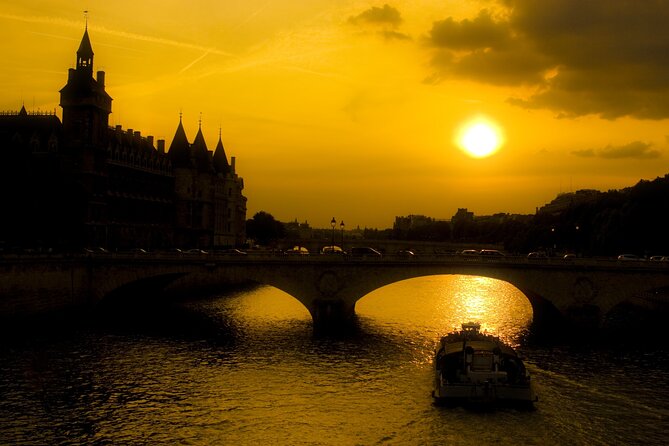
At the Palais de Justice de Paris, the tour focuses on the machinery of the French Revolution. You’ll hear how unfortunates were judged guilty and sentenced to the guillotine, and that it happened in front of cheering crowds—even when the accused were kings or revolutionaries themselves.
This is not subtle history. It’s public punishment as entertainment, wrapped in law and politics, staged in a place designed to hold authority.
The guide also adds context about how the Palais de Justice was recognized for artistic greatness in its era, which creates a sharp, uneasy contrast. That contrast is part of the experience: beautiful state buildings, brutal outcomes.
Place de l’Hôtel de Ville: Where Celebration and Executions Collide
You end near Place de l’Hôtel de Ville, at 70 Rue de Rivoli, 75004. This square has a double identity on the tour: it hosted municipal parties celebrating royal births and marriages, but it also became the scene of major executions from 1310 to 1830.
The tour calls out named cases, including Ravaillac and La Brinvilliers. Even if you only recognize one name, the bigger lesson lands: the square isn’t just a pretty civic landmark. It’s a stage where France’s political story turned violent.
Ending here is smart because it’s visually legible. In daylight, Place de l’Hôtel de Ville is a familiar Paris square. After this tour, it comes with a second layer of meaning you can’t un-know.
How the Night Walk Feels: Pace, Group Size, and Storytelling Style
The tour is designed for small groups of up to 20. That matters because it keeps the dynamic tight—your guide can keep eyes on the group, and you’ll have a better chance of hearing details without shouting over traffic.
In the real world, guides vary. Some guides—like Sophia, Thelma, Daniel, Ami, and Sylvia—have been called out for being engaging and for keeping a lively storytelling pace. If you get a guide who talks clearly and ties locations together, the tour can feel more theatrical and less like a lecture.
But there’s also a clear pattern in what can go wrong. If you want constant “spookiness,” the tour may feel like grim history plus walking rather than a true ghost quest. Some people end up wishing the narrative had more connective tissue between stops, especially during longer stretches.
Value Check: Is $18.10 Worth It?
At about $18.10 per person, this tour is priced like a budget-friendly evening activity. For that, you get real guidance through central Paris, plus access to stories you probably wouldn’t connect on your own without time and research.
It’s especially good value if:
- you’re doing a first Paris trip and want a fast way to learn the city’s darker timeline
- you like history that uses locations as “evidence,” not just background
- you want an evening plan that isn’t another museum line
I’d hesitate if:
- you want supernatural elements as the main event
- you already know most of French Revolution and massacre history from classes or books
- you need frequent interaction or a highly theatrical tone to stay engaged
Who This Tour Fits Best (and Who Should Skip It)
You’ll probably love this tour if you enjoy macabre storytelling that stays tied to geography. It’s a good match for adults, teens, and anyone who can handle dark subject matter without needing it softened.
It’s also a smart choice if you want to “walk off dinner” while learning. You’ll cover a lot of ground in a structured way, and you’ll finish near a major central square you can explore again afterward.
If you’re traveling with kids, use judgment. The overall content is about murders, massacres, torture, and executions, and the experience won’t turn those topics into kid-friendly frights.
Should You Book This Night Walking Tour?
Book it if you want a straightforward, small-group after-dark walk that connects Paris landmarks to violent chapters of the city’s past. It’s a bargain, and it’s one of those rare tours that doesn’t just repeat the same daytime highlights.
Skip it or choose something else if your ideal “ghost tour” means genuine supernatural emphasis and sustained spooky theatrics. This one mostly delivers history with a haunting edge, and for some people that’s a letdown—especially if the word ghosts sounds like a promise of more than it is.
If you’re flexible and curious, I think you’ll leave with a Paris you didn’t expect—one where even a calm riverside square can suddenly sound like a sentence.
FAQ
How long is the Paris by Night Walking Tour?
It’s listed as about 2 hours.
Where do I meet, and where does the tour end?
You start at the Equestrian Statue of Henri IV, 15 Pl. du Pont Neuf, 75001 Paris. The tour ends near Hotel La Ville, 70 Rue de Rivoli, 75004 Paris.
What language is the tour offered in?
The tour is offered in English.
How large are the groups?
The experience runs with groups of up to 20 people.
What’s included in the price?
The included items are a local guide and the small group size.
Do I need tickets to enter any stops?
Square du Vert-Galant and Eglise St-Germain-l’Auxerrois are listed as free admission.
Is there a lot of walking?
Yes. One review notes it’s about 10k steps, and it’s designed as a walking tour through central Paris at night.