REVIEW · ISTANBUL
Istanbul Haunted Night Tour
Book on Viator →Operated by Istanbul's Haunted Walking Tour · Bookable on Viator
One sentence: this is Istanbul at its darkest. You’ll walk major landmarks tied to Roman Constantinople and Ottoman power plays, while using ghost-hunting gear that turns history into a hands-on night game. I like that it’s built around specific stops with short, story-focused segments, and I also like that the mood stays fun even when the tales get grim. The one thing to weigh is that this is weather-dependent and you may leave without any paranormal proof—still, you’ll likely come away with better city context than a standard sightseeing stroll.
If you go, you’re choosing a quick, 2-hour route that moves you through iconic areas at night, including the Hippodrome complex and the Topkapi Imperial Gate area. Expect a small group (max 20) and an English guide such as Sara, Brent, or Mehmet, who can make the connections feel personal and clear.
In This Review
- Key Things to Know Before You Go
- Two Hours, One Spooky Route: what happens at 8:00 pm
- The real promise: story + gear + city corners
- Forum of Constantine to Ahmet Tevfik Paşa Graveyard: a dark start
- Why this opening works
- Possible drawback for some people
- Sphendone remains and the Hippodrome: prisoners, torture, and public spectacle
- The value of learning “how a city entertained itself”
- A second Sphendone moment: “best seats in the house”
- Küçük Ayasofya (Little Hagia Sophia) and the palace-era twist
- What to expect if you want atmosphere without overdoing it
- Serpent Column and the German Fountain: spoils, punishments, and a deadly pause
- Why these stops feel different
- Sultan Ahmet Tomb and Sultanahmet Square: laws, power, and consequences
- A practical tip for these stops
- Imperial Gate Bab-i-Humayun: the palace’s intimidation factor
- Tools, group size, and how to get value from the haunting vibe
- How I’d frame the “ghost hunt” part
- What the review reactions suggest about the guide’s role
- Practical fit: who this tour suits best
- Should you book this Istanbul Haunted Night Tour?
- FAQ
- How long is the Istanbul Haunted Night Tour?
- What does it cost, and what language is offered?
- Where does the tour start and end?
- What time does the tour begin?
- What ghost-hunting equipment is included?
- Are any admissions included?
- What if the weather is bad or I need to cancel?
Key Things to Know Before You Go
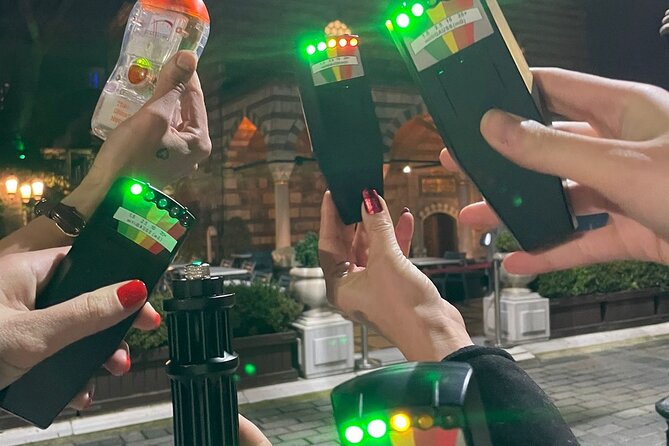
- Hands-on ghost equipment: EMF detectors, Maddusa’s Web green laser, dowsing rods, and an EVP recorder are part of the experience.
- A tight 2-hour arc: you’re covering a lot of ground on foot without it turning into an all-night marathon.
- Lots of short stops: each location is about 5–20 minutes, so you get many story beats instead of one long lecture.
- Roman and Ottoman layers: the route jumps from Constantine-era legends to Ottoman-era tombs and palace drama.
- Small-group feel: capped at 20 travelers, which helps you stay engaged with the guide.
Two Hours, One Spooky Route: what happens at 8:00 pm
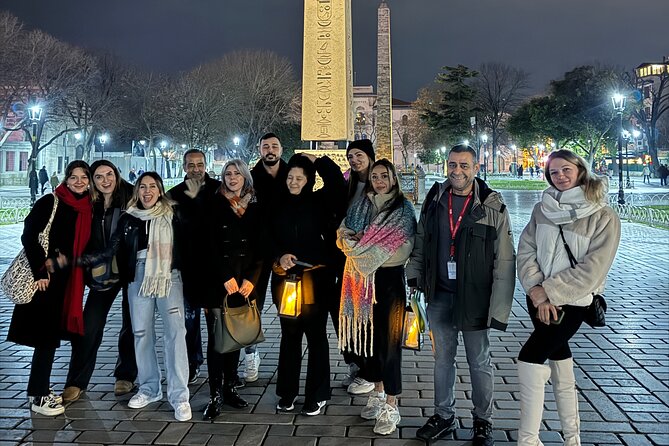
This is a 2-hour nighttime walking tour that starts at 8:00 pm. The meeting point is at the Column of Constantine area on Molla Fenari, Vezirhan Cd. No:16 D:18 (Fatih). The end point is at Bab-ı Hümayun, the imperial gate to Topkapi Palace area (behind and to the side of Hagia Sophia), at Cankurtaran, Topkapi Sarayı.
Because it’s at night and designed for atmosphere, pace matters. The itinerary is built from short stops—mostly around 8–10 minutes, with one longer segment at the Hippodrome—so you’ll keep moving and keep listening. That structure is part of the value: you don’t get bored waiting at one spot, and you get a steady flow of story hooks.
Language is English, and the tour offers a mobile ticket. You’re also told the typical booking timing is around 15 days in advance, which is a clue that it can fill up around popular travel windows.
The real promise: story + gear + city corners
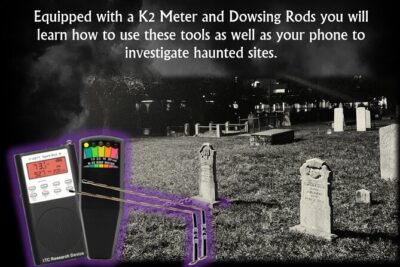
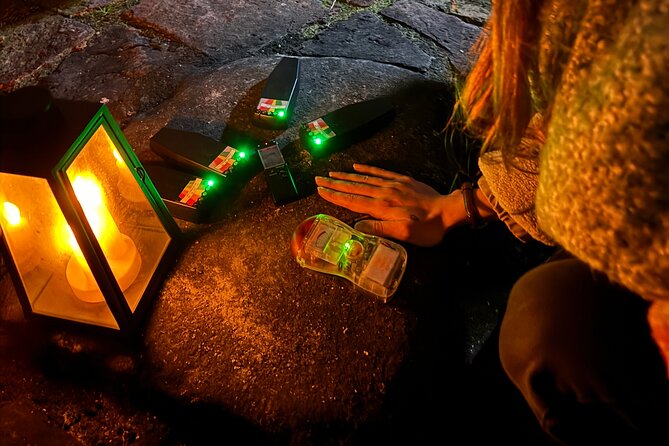
This tour’s “haunted” angle isn’t just spooky branding. It’s paired with actual ghost-hunting tools—EMF detectors, Maddusa’s Web green laser, dowsing rods, and an EVP recorder. Even if you’re skeptical (and you’re totally allowed to be), those tools change your role. You aren’t just watching a guide point at ruins; you’re participating, following instructions, and trying the devices during the storytelling.
And that’s where the best moments often happen: when the guide ties a grim rumor or execution story to a physical place you can see and stand in.
Forum of Constantine to Ahmet Tevfik Paşa Graveyard: a dark start
The tour begins at the Forum of Constantine. You’ll hear that this is tied to the year 330, when Constantine moved the Roman Empire’s capital and it began here. The Column of Constantine is treated like a character in the narrative—holding dark secrets, with the surrounding forum linked to terror.
Then you move to Ahmet Tevfik Paşa Mezarİ (the graveyard of a 19th-century sultan and advisors). The tone shifts from Roman-era power moves to Ottoman-era court violence. The story focus stays consistent: betrayal, assassination, and the way politics leaves marks that outlast the people.
Why this opening works
I like openings that teach you how to read a place. Here, you’re shown that Istanbul is layered: a site may look like stone and pavement, but it’s also a stage where real people fought to survive. If you pay attention early on, later stops feel sharper, because you understand what your guide is trying to show—continuity of power, fear, and spectacle.
Possible drawback for some people
If you want loud “ghost effects” rather than a guided narrative, this may not match your expectation. The tour is designed for historical storytelling plus optional tools, not for guaranteed supernatural results.
Sphendone remains and the Hippodrome: prisoners, torture, and public spectacle
Next comes the Sphendone remains—the vaulted remnants on the side of the Hippodrome. You’ll visit outside an ancient prison area that once held wild animals for circus-style events. The guide also talks about torture methods and how disfigurement was used as a practice in that era.
Then you get the Hippodrome itself. This is presented as the sporting and social center of Constantinople for more than 1,000 years, second only to Circus Maximus. The Hippodrome is where you hear about chariot racing factions, public executions, and the emperor facing citizens. The stories don’t shy away from horror—this is also tied to one of the most horrific massacres in human history.
The value of learning “how a city entertained itself”
Hippodrome narratives can easily become vague. Here, the stop’s practical value is that it explains the space as a machine for control: entertainment, fear, and authority all sharing the same arena. When you understand that, you’ll see the Hippodrome area as more than an ancient stadium.
A second Sphendone moment: “best seats in the house”
The itinerary brings you back to the Sphendone remains from the other side. This time the talk is about who had the best viewing spots and how death was carried out across centuries. You’ll also hear about a coup that successfully dethroned a powerful emperor and the fate of him and his sons above these walls.
That repeat stop is smart. You’re not just “passing the same location again”; you’re hearing a different angle, which helps you map what you’re seeing onto the story.
Küçük Ayasofya (Little Hagia Sophia) and the palace-era twist
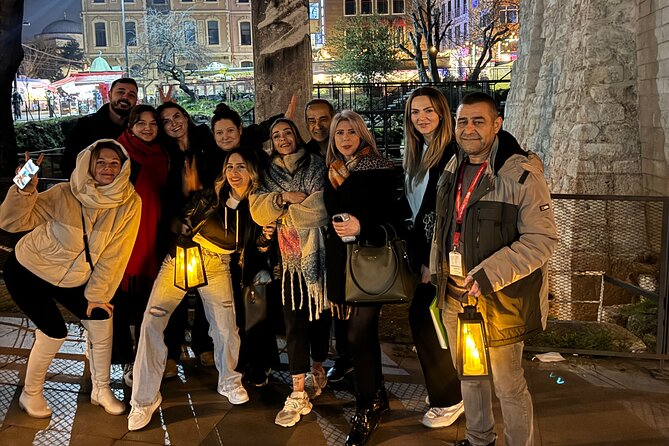
The tour includes a stop at Kucuk Ayasofya – Gazi Suleyman Pasa Mosque. This place carries layered identities: it was once the Church of Saints Sergius and Baccus, later renamed the Little Hagia Sophia Mosque under Ottoman rule. Before it became a church, the area is described as a palace home to Justinian in the 6th century.
Then the story turns personal and dark. In the 16th century, a high-ranking eunuch is said to have been embezzling money and avoiding taxes. He was found and executed, and the narrative points out that he lost something very personal—adding a human sting to what can otherwise sound like political theater.
Admission here is listed as included for this stop.
What to expect if you want atmosphere without overdoing it
This stop is one of the best places to slow down inside the story framework. You’re shifting from open-area ruins and stadium spaces into a site that has lived multiple lives. If you’re the type who enjoys connecting religious, political, and architectural change, this is the stop that can land the hardest.
Serpent Column and the German Fountain: spoils, punishments, and a deadly pause
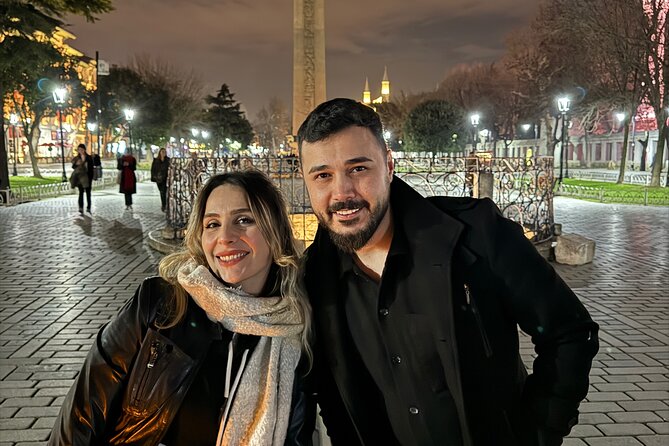
After the Hippodrome zone, the route moves to the Serpent Column. The narration focuses on its “haunted” angle: spoils of war turned into a brutal execution scene involving a Byzantine emperor. It’s a good example of how this tour handles “legend” without treating it like fantasy. The guide keeps tying the spooky label to a specific incident linked to the location.
Next is a quick but interesting stop at the German Fountain. You’ll hear it relates to the starting gates for chariot races. Then the story shifts forward: in the 17th century, Ottoman soldiers returning from war weren’t paid, and the result was a deadly event connected to the location where an old tree once stood.
Why these stops feel different
Serpent Column and German Fountain are both smaller than the Hippodrome, which makes them memorable for a different reason. Instead of scale, you get focus. These stories narrow onto “a single moment” types of events, which helps the tour feel varied rather than repetitive.
Sultan Ahmet Tomb and Sultanahmet Square: laws, power, and consequences
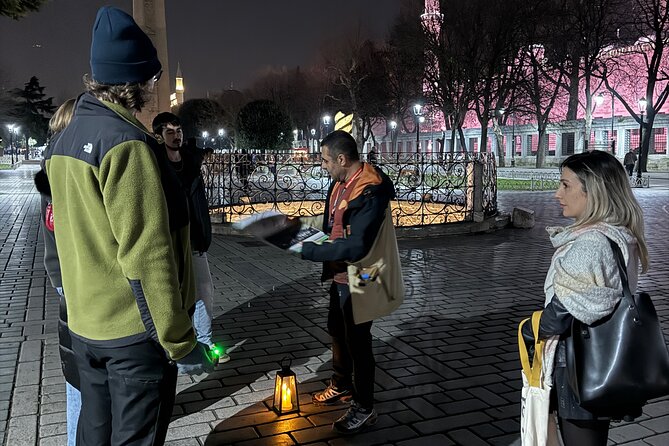
At Sultan Ahmet Tomb, the theme is Ottoman-style enforcement. The story references the law of fratricide in the Ottoman Empire, where sultans could kill brothers and children seen as threats to the throne. The tour frames it as haunting—people and family lines erased by law, with the aftermath lingering in place.
Then you reach Sultanahmet Square. This is where you get a surprisingly specific social rule: coffee was banned for public drinking in the early 17th century, and the consequences were described as literally deadly. It’s grim, but it’s also oddly revealing. A city’s “haunting” can be about how everyday behavior gets policed with extreme results.
A practical tip for these stops
Because these are heavy themes, they work best if you let your brain slow down for a minute. Stand where the guide tells you, listen for the connection to the surrounding space, and try to imagine what “ordinary life” looked like when those rules were enforced.
Imperial Gate Bab-i-Humayun: the palace’s intimidation factor
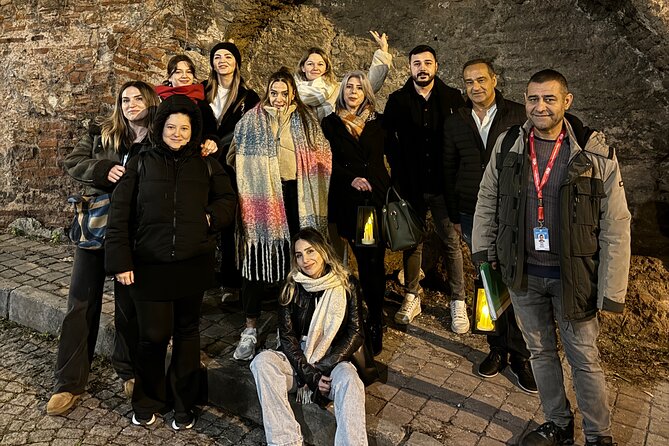
The tour finishes back at Bab-ı Hümayun, the main gate to the Imperial Palace at Topkapi. This gate is described as grand, but also built to scare and intimidate people entering. In other words, the building isn’t neutral; it’s a message.
The story ends with palace garden details: the head gardener of the palace gardens reportedly had a special race, described as a matter of life and death. It’s a fitting closer because it ties together the tour’s big themes—power, fear, and spectacle—one last time before you exit into the night.
The route description also notes that guides will walk you back close to the starting area and can help direct you wherever you want to go after the tour.
Tools, group size, and how to get value from the haunting vibe
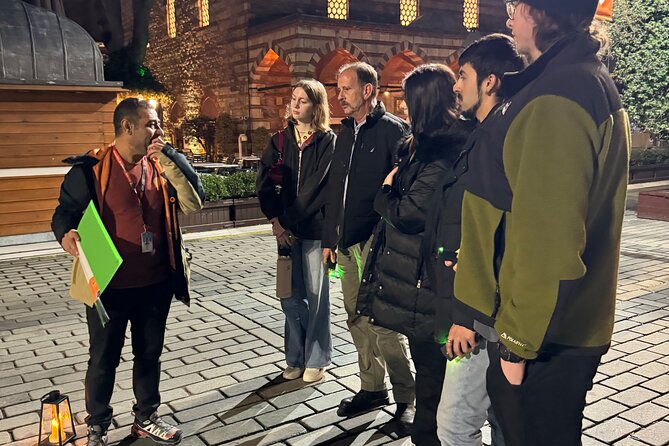
This tour isn’t the kind where you just show up and hope. You get equipment—EMF meters, green laser tool (Maddusa’s Web), dowsing rods, and an EVP recorder—so you’ll want to treat it as part of the experience, not just a prop. The guide’s job is to explain when to use each item and how to follow along while they talk.
That matters because a small group can make the equipment feel usable instead of chaotic. With a maximum of 20 travelers, you’re more likely to actually participate rather than stand back watching others run the devices.
How I’d frame the “ghost hunt” part
I’d think of it as an interactive layer over the stories. You’re using tools while hearing about prisoners, executions, conspiracies, and Ottoman enforcement. The most satisfying moments tend to be when you connect the equipment to the stop’s narrative, because it turns your attention into something active.
What the review reactions suggest about the guide’s role
The strongest feedback you’ll see is about guides like Sara, Brent, and Mehmet, described as passionate, engaging, and fun, with historical research behind the stories. If your guide is good, you’ll feel the city click into place as you walk.
One review mentioned that the tour still felt satisfying even without dramatic supernatural events. That’s a useful expectation to keep: you’re paying for a mix of night storytelling and a hands-on twist.
Practical fit: who this tour suits best
This experience is a good match if you want:
- A nighttime walk through key landmarks on Istanbul’s European side.
- A guide who can connect Roman and Ottoman stories to physical locations.
- The fun factor of trying ghost-related tools even if you’re not taking results too literally.
It’s less ideal if you want a purely academic lecture or a fully accessible, slow pace that never moves. The tour is built for momentum—2 hours, multiple stops, and standing/walking through outdoor spaces.
Also remember this experience requires good weather. If weather is bad, you’ll be offered a different date or a full refund.
Should you book this Istanbul Haunted Night Tour?
Book it if you want a night with two kinds of payoff: meaningful places and a spooky interactive style that doesn’t drag. The price—about $48.06 per person—is reasonable for a guided, 2-hour route that includes equipment and a guided flow through major sites, with admission included at one stop (Küçük Ayasofya area).
Skip it if you’re chasing guaranteed paranormal activity or you dislike darker historical themes. This tour is honest about being tied to executions, punishment, and political violence in its storytelling approach.
FAQ
How long is the Istanbul Haunted Night Tour?
It runs for about 2 hours.
What does it cost, and what language is offered?
The price is $48.06 per person, and the tour is offered in English.
Where does the tour start and end?
It starts at the Column of Constantine area (Molla Fenari, Vezirhan Cd. No:16 D:18, 34120 Fatih) and ends at Bab-ı Hümayun, the Imperial Gate at Topkapı Sarayı (34122 Fatih). The ending point is behind and to the side of Hagia Sophia.
What time does the tour begin?
The start time is 8:00 pm.
What ghost-hunting equipment is included?
You’ll be provided EMF detectors, Maddusa’s Web green laser, dowsing rods, and an EVP recorder.
Are any admissions included?
Most stops list free admission, and Kucuk Ayasofya – Gazi Suleyman Pasa Mosque includes an admission ticket.
What if the weather is bad or I need to cancel?
The experience requires good weather. If it’s canceled due to poor weather, you’ll be offered a different date or a full refund. Cancellation is free up to 24 hours in advance of the experience’s start time. Service animals are allowed, and it’s near public transportation.