REVIEW · HOI AN
Hoi An Ghosts, Death, Mystery Unveiled
Book on Viator →Operated by Momo Travel · Bookable on Viator
Death stories in Hoi An hit different at dusk.
This Hoi An Ghosts, Death, Mystery Unveiled walk turns spooky alleyways into context: you hear how Vietnamese beliefs about death shape daily life, rituals, and house protection. You also get a clear way to read the old town as it changes through time, from older graves to newer scars tied to war and displacement.
I especially like two things. The walk is short and manageable, with a 1.5 km route that feels like a story tour rather than a cardio session. And the guide-led focus on taboos, rituals, and what locals do around spirits makes the whole experience more thoughtful than a standard scare-fest.
One drawback to consider: this is an evening ghost-style tour, so you’ll be moving through darker lanes and it depends on good weather. If you’re hoping for bright, easy sightseeing photos, you’ll want to plan around that.
In This Review
- Key highlights you’ll feel during the walk
- Why a Hoi An death-and-ghost walk works at 6:00 pm
- Starting at Trần Hưng Đạo and ending by the Japanese Covered Bridge
- Into the dark alleys: graves, ghost lanes, and haunted-house legends
- What you’ll learn about death rituals and the living-dead connection
- Lantern mystery, taboos, and the rules of full-moon night
- Murder of 108 traders and the king’s apology story
- The oldest house shadow and the war that pushed people out
- House protection from dark spirits: the practical side of spooky beliefs
- Practical notes: pace, private group, and what to bring
- Price and value: what $19.58 buys in a short night walk
- Should you book Hoi An Ghosts, Death, Mystery Unveiled?
- FAQ
- How long is the Hoi An Ghosts, Death, Mystery Unveiled tour?
- How far do we walk during the tour?
- What time does the tour start?
- Where do we meet and where does the tour end?
- Is the ticket digital or paper?
- Is this a private tour?
- Is service available for travelers who need service animals?
- Does the tour require good weather?
- How does confirmation work after booking?
- What is the cancellation window for a full refund?
Key highlights you’ll feel during the walk
- Dark alleys, a medieval graveyard vibe, and a 200-year-old grave tied to death rituals
- Death beliefs explained in human terms, showing how living people connect with death
- Hoi An old-town legends in sequence, including the murder of 108 traders and the king’s apology
- Lantern mystery + taboos, including things not allowed during the full moon
- House protection from dark spirits, framed as local practice not just folklore
- A private group feel, so your guide can pace and answer questions for your crew
Why a Hoi An death-and-ghost walk works at 6:00 pm
Hoi An old town looks lovely in daylight. At night, it becomes something else: narrower, darker, and more story-shaped. This tour starts at 6:00 pm, right as the streets shift into evening mood, which helps a lot with the theme. You’re not just passing sights. You’re moving from one belief-linked location to the next.
The big promise here is that the tour breaks the taboo around death beliefs in Vietnam. In practice, that means you get more than ghost names and scary set pieces. You get reasons—how people think about what happens after death, and how that thinking shows up in rituals and daily behavior.
And there’s another plus. The tour doesn’t treat the old town like a frozen museum. You pick up the city’s layers as you walk: older grave spaces, haunted-house-style legends, and later memories tied to conflict and immigration. It’s a way of seeing Hoi An that many visitors miss because they stick to the postcard routes.
Starting at Trần Hưng Đạo and ending by the Japanese Covered Bridge
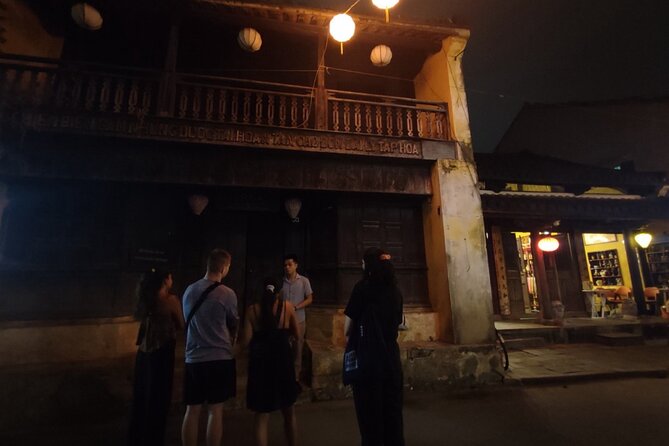
Meet at 40 Trần Hưng Đạo, Phường Minh An, Hội An, Quảng Nam 51000. The tour finishes at the Japanese Covered-Bridge area on Nguyễn Thị Minh Khai, Phường Minh An, Hội An, Quảng Nam 564010. That end point matters because the Japanese Covered Bridge is one of the places you naturally want to reach after dark—bright enough to orient you, but still close to the old-town atmosphere.
The distance is about 1.5 km on foot, with the total experience running about 2 hours (roughly 1.5 hours of walking, depending on pace and how long stops take). You won’t be counting steps. This isn’t a long slog. It’s a tight route designed for story delivery.
Also, it’s described as a private tour/activity where only your group participates. That’s a genuine quality-of-life benefit for ghost tours. Instead of being herded into a big line, you can ask questions and get the guide to slow down if something grabs your attention.
Into the dark alleys: graves, ghost lanes, and haunted-house legends
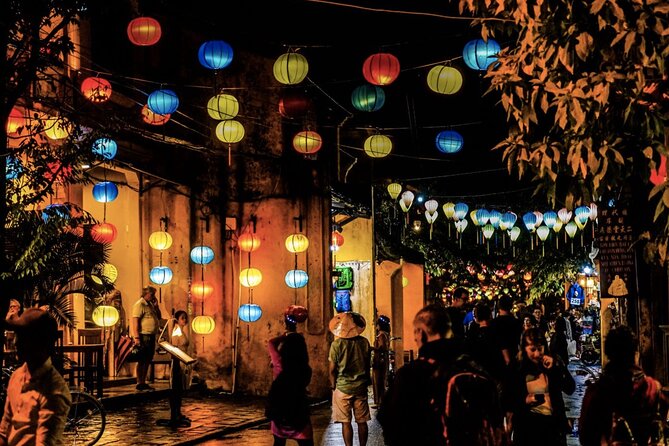
This tour’s walking segments are built like a gradual reveal. You start moving into places that feel tucked away—hidden spots and lanes that you’d likely skip if you were just doing self-guided wandering.
Early on, you pass locations tied to a 200-year-old grave, a ghost alley, and an ancient haunted house. The tour frames these as spaces where the supernatural and everyday beliefs overlap. Even if you’re not a die-hard paranormal believer, the structure works: you’re given a cultural lens for why these places carry weight.
A key detail is that you’re shown a medieval graveyard and guided through the death ritual element. That’s different from tours that only say, spooky thing is spooky. Here, you get the logic of the ritual and the living connections around it—how people behave, remember, and maintain respect in ways that don’t feel like pure performance.
You’ll likely notice the tone shift too. The alley storytelling tends to feel more atmospheric and compact. Then, when the guide moves you toward the graveyard and ritual spaces, the conversation slows down and becomes clearer. That pacing helps your brain stay with the theme instead of getting lost in generic legends.
What you’ll learn about death rituals and the living-dead connection
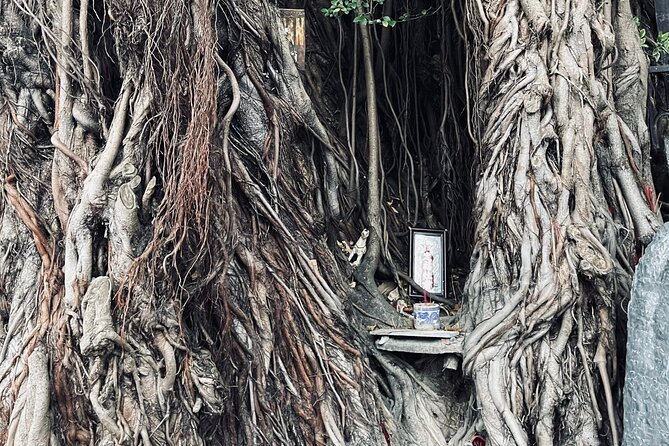
The centerpiece theme is breaking the taboo around death in Vietnam beliefs. That sounds heavy on paper, but on the ground it’s more practical than you might expect. You learn how living people connect with death through ritual and behavior, rather than only focusing on what might happen afterward.
In the tour’s story arc, death isn’t treated as a horror movie event. It’s treated as a relationship. The guide’s job is to connect what you’re standing near—grave spaces, ritual-linked locations—with how people act because they believe those connections matter.
This is one of the most valuable parts for you if you like travel that teaches you how locals think. It also helps if you’re tired of history that feels like dates and names. Here, the topic is belief and behavior, which often explains why certain corners of old cities feel different.
You also get a sense of the city through history in a way that residents rarely do, as the tour describes it. The practical takeaway: you’ll start recognizing how old town spaces can function as memory holders. Even a lane or a house shadow becomes part of a story map.
Lantern mystery, taboos, and the rules of full-moon night
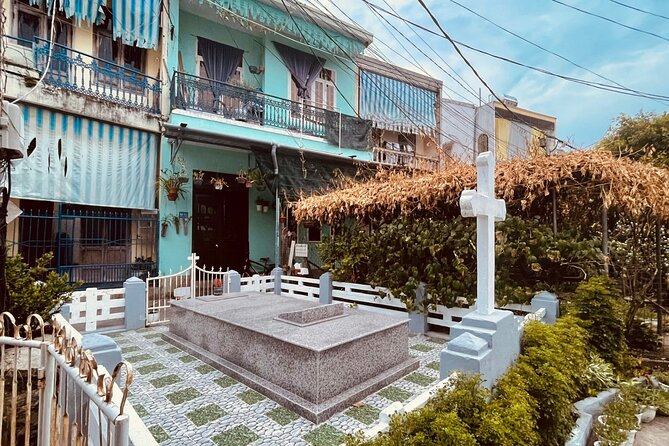
Hoi An’s lantern reputation is famous. This tour uses lanterns in a different way—not just as decoration, but as part of the city’s mystery and symbolism. As you move, you’ll hear about the mystery of lanterns alongside the taboo side of local beliefs.
That taboo element is important. The tour includes how locals protect houses from dark spirits, and it also points out things you are not allowed to do during the full moon. The guide doesn’t just name rules; the framing suggests these taboos are a way to keep relationships with spiritual forces orderly.
For you, that changes how you walk through Hoi An. Instead of reading only for architectural photo angles, you start reading for small clues: where rituals might be referenced, where house protections might show up, and how certain behaviors connect back to belief systems.
A gentle heads-up: taboos and supernatural rules can be culturally sensitive. Follow the guide’s instructions and treat the stories as belief-based practice, not a game of daring someone to break them. That’s how you get the best experience and respect the meaning behind the legends.
Murder of 108 traders and the king’s apology story
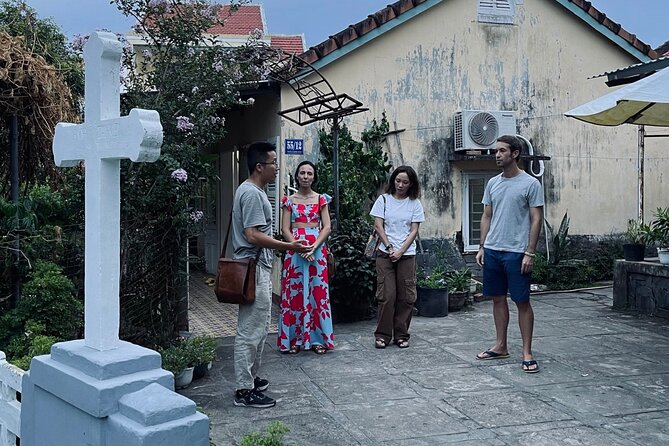
One of the tour’s more dramatic story beats is the murder of 108 traders and the apology of the King. As the tour moves through hidden places and story points, you’re guided to locations tied to that sequence.
Now, you should treat this as legend-based storytelling presented in the tour’s narrative—not as something to confirm like a textbook fact. The value is what the story reveals about community memory: big events get packaged into morality tales, remorse, and public consequence.
This kind of story works especially well on a night walk because it turns the old town into a living archive. You’re not just hearing a plot summary. You’re standing in a place that the tour claims holds meaning, and that connection helps the narrative stick.
If you like mystery structure—setup, escalation, a response—this segment can be a high point. It also gives the tour more emotional range than purely “ghost sightings” style legends. You come away with the sense that old towns remember through story.
The oldest house shadow and the war that pushed people out
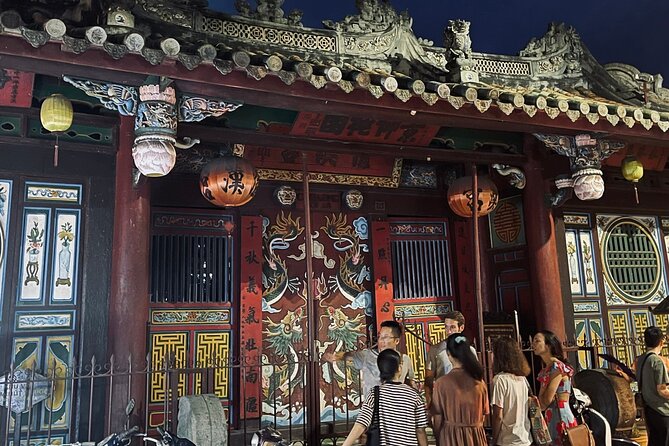
The tour also brings in a memory angle tied to migration after war. You’ll hear about the war that made immigrants abandon their houses, and you’ll learn this in the shadow of the oldest house in the old town.
Again, the tour’s strength isn’t that it gives you a lecture in dates. It’s that it connects conflict to physical spaces. When people leave homes, those empty spaces can become heavy. Over time, the stories around them can turn into ghost lore, taboos, and warnings about what should never be disturbed.
If you’re the type who enjoys walking tours that change how you read streets, this is the part that can shift your mindset. Even if you don’t remember every story detail, you’ll remember the idea: Hoi An’s old town holds layers of disruption as well as charm.
And since the route ends near the Japanese Covered Bridge, you get a nice contrast. You start in a maze of lanes and end at a historic landmark where the city feels more open and navigable—like moving from legend back to orientation.
House protection from dark spirits: the practical side of spooky beliefs
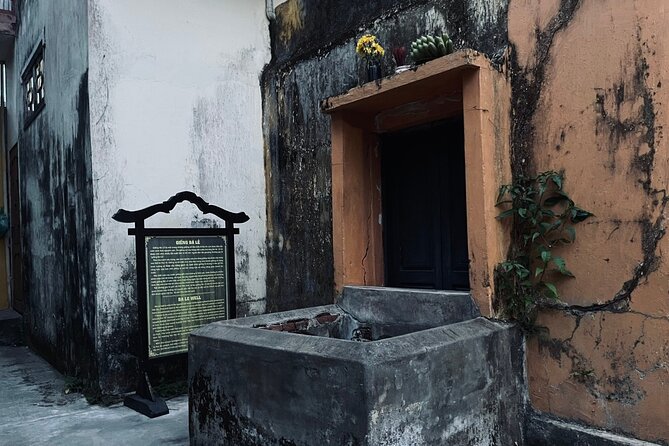
Not all ghost tours focus on what people actually do. Here, you get the locals protect their houses from dark spirits angle. That means the tour touches beliefs as daily management—keeping trouble away, following taboos, and respecting boundaries tied to spiritual ideas.
This portion is especially helpful if you’re worried the tour will feel like a string of jump-scare moments. Instead, you’re given explanations of how beliefs can shape behavior: where people place protection, what rituals or taboos might be observed, and why certain actions are discouraged.
You also hear about the mystery monster living in Hoi An. The details of what the guide says can vary with how they present the legend, but the purpose is consistent: it adds a local creature-myth element to the belief ecosystem. You’re not just learning about death. You’re learning about the wider spiritual world that, in the tour’s telling, includes warnings, rules, and characters that symbolize dangers.
For your takeaway, focus on the meaning behind the legend shapes. Monsters and taboos are often ways communities teach caution without needing a modern rulebook. Whether you buy into it personally or not, it’s a useful way to understand how people organize fear and respect.
Practical notes: pace, private group, and what to bring
The tour is about 2 hours total and covers roughly 1.5 km. That means it’s realistic even if you’ve spent the earlier part of the day in town. This is not a marathon; it’s a guided walk designed for story stops.
The tour uses a mobile ticket, which is handy. You won’t need to hunt for paper. Service animals are allowed, which is good to know if that applies to your group.
Timing-wise, the start is 6:00 pm, and it requires good weather. If it gets canceled due to poor weather, you’re offered another date or a refund. For you, this just means dress for evening walking—comfortable shoes matter more than fashion here.
Because it’s private, you should expect a more personalized pace. If your group likes questions, this style usually works better than big group tours where your questions get cut off.
Price and value: what $19.58 buys in a short night walk
At $19.58 per person for about 2 hours, you’re paying for guided storytelling plus a route that you could do on your own—but wouldn’t get nearly as much out of. The value isn’t just the locations. It’s the explanation layer: death beliefs, taboos, and the way the city’s history is woven into local ghost legends.
You also get a ticket that’s simple to handle (mobile) and a route that’s compact enough for an evening activity. Most importantly, the guide-led framing makes the content feel connected rather than scattered.
If you want purely architectural sightseeing, you might skip this. But if you like learning how people think—especially about topics other cultures handle differently—this price-to-experience ratio is strong for Hoi An.
Should you book Hoi An Ghosts, Death, Mystery Unveiled?
Book it if you want a different side of Hoi An at night: graveyard rituals, death taboo explanations, house protection beliefs, and old-town legends tied to specific spots. It’s a smart pick if you’ve already walked the standard sights and you want something more story-driven and culturally grounded.
Think twice if you’re uncomfortable with the topic of death in any form, or if you need a well-lit, easy walking route for photos. Also, since it depends on good weather, keep an eye on evening conditions so you’re not stuck wishing you had an indoor alternative.
If your group likes mystery plus local meaning, you’re in the right place. And if the guide happens to be Sanh, from the enthusiasm shown in guide feedback, you’ll likely enjoy the energy and the way the stories get explained with care.
FAQ
How long is the Hoi An Ghosts, Death, Mystery Unveiled tour?
It’s listed as about 2 hours (approx.).
How far do we walk during the tour?
The experience covers around 1.5 km by walking, and it’s described as about a mile of distance over roughly 1.5 hours.
What time does the tour start?
The start time is 6:00 pm.
Where do we meet and where does the tour end?
You meet at 40 Trần Hưng Đạo, Phường Minh An, Hội An, Quảng Nam 51000, Vietnam. It ends at the Japanese Covered-Bridge area on Nguyễn Thị Minh Khai, Phường Minh An, Hội An, Quảng Nam 564010, Vietnam.
Is the ticket digital or paper?
It uses a mobile ticket.
Is this a private tour?
Yes. Only your group will participate.
Is service available for travelers who need service animals?
Service animals are allowed.
Does the tour require good weather?
Yes. The experience requires good weather. If it’s canceled due to poor weather, you’ll be offered a different date or a full refund.
How does confirmation work after booking?
Confirmation is received at the time of booking.
What is the cancellation window for a full refund?
You can cancel up to 24 hours in advance for a full refund. If you cancel less than 24 hours before the start time, the amount paid will not be refunded.