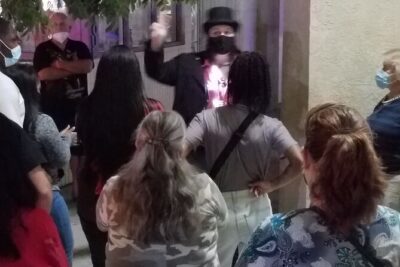
Ghost stories hit different when they come with landmarks. This 2-hour Ghosts of Covington Haunted History Tour threads together hauntings and murders from the Civil War era to ship disasters and more modern sightings, guided by a local-style storyteller. I especially like how it’s small-group (up to 15), so you can actually ask questions instead of listening into the dark from the back.
The other thing I like is the stop-by-stop mix of places you can see clearly right in Covington—Roebling Bridge, haunted houses, and old institutions—so the history feels physical, not vague. One real consideration: it’s primarily a walking tour with a moderate fitness level, and you’ll be outside for around two hours, so wear solid shoes and dress for the weather.
In This Review
- Key things that make this tour work
- Why Covington’s haunted history feels specific, not generic
- Price and value: what $38 buys you in Covington
- The route: 2 hours, 9 stops, and a tight walking rhythm
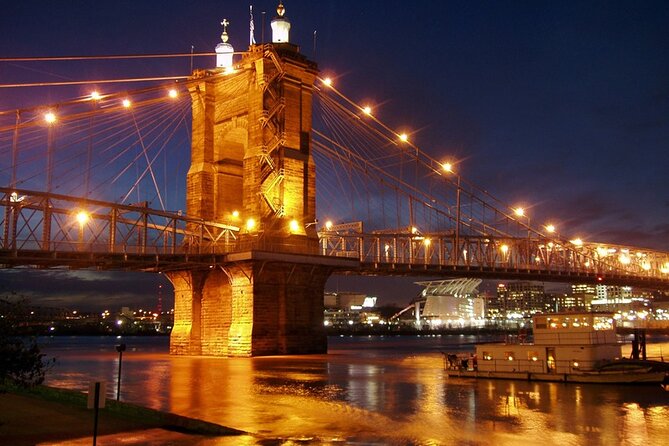
- Stop 1: John Roebling statue and Roebling Suspension Bridge
- Stop 2: George Rogers Clark Park and Mary Greene’s ghost stories
- Stop 3: BB Riverboats and Civil War-era Newport Army Barracks
- Stop 4: Carneal House Inn and the Grey Lady
- Stop 5: Booth Memorial Hospital at Governors Point Condominiums
- Stop 6: The Amos Shinkle house and the carriage house
- Stop 7: The Rugby (Henry Bruce mansion) and a Civil War-era encounter
- Stop 8: Baker-Hunt Art and Cultural Center and séance lore at the Baker-Hunt House
- Stop 9: Molly Malone’s Irish Pub and the Hermes Building double murder
- What to expect from the guide and the group (and how to enjoy it more)
- Who this tour is best for
- Should you book Ghosts of Covington Haunted History Tour?
- FAQ
- How long is the Ghosts of Covington Haunted History Tour?
- How much does the tour cost?
- Where does the tour start and end?
- Is the tour walking or driving?
- What stops are included?
- Is admission included for the stops?
- What’s the group size?
- What should I bring?
- Is parking included?
- What if the weather is bad or I need to cancel?
Key things that make this tour work

- A true small-group format (max 15) makes the stories and Q&A feel personal.
- Start at Roebling: the John Roebling statue sets the tone with the Ohio River’s industrial history.
- Civil War through modern hauntings: you get multiple time periods, not just one spooky theme.
- Famous ghosts and named tragedies: Grey Lady, Mary Greene, séance stories, and double-murder lore show up on real addresses.
- A visual tour guide helps you follow along without needing to memorize a map.
- Weather matters: it’s run with good weather in mind, and you’ll be offered a different date or a refund if it’s canceled for poor conditions.
Why Covington’s haunted history feels specific, not generic
Covington’s spooky reputation isn’t just campfire talk. This tour is built around specific sites tied to real eras: the Ohio River, Civil War-era military activity, old mansions, and buildings that once served other purposes. That matters because you’re not chasing shadows in random alleys. You’re standing in front of recognizable places and learning why people linked them to ghost stories in the first place.
You’ll also notice the tone the guide brings. The tour tends to feel like a history lesson with sharp edges, not a jump-scare performance. In past tours, guides such as Chris (also referenced as Chris Code) have been described as doing real local homework through library research and interviews with people connected to the properties. That kind of effort shows up in how the stories connect to the physical buildings and the time periods they belonged to.
Finally, you get variety in every direction. The stories shift from river captains to hospital nurses to wealthy-house lore, so you’re not stuck hearing the same type of haunting all night.
You can also read our reviews of more tours and experiences in Kentucky.
Price and value: what $38 buys you in Covington
At $38 per person for about two hours, this isn’t a cheap thrill, but it is good value for what you get: a guided, stop-by-stop route across multiple historic sites. The tour also runs with a small maximum group size (15), which usually means better interaction and less “everyone hear the same line at the same volume” energy.
A big value boost is that the listed stops are admission-ticket free to view as you go. You’re paying for the guide, the interpretation, and the route—not for entry fees into several paid attractions.
Two practical notes that affect the total cost:
- Parking fees aren’t included, so if you drive, factor that in.
- You may want to budget for food later since lunch isn’t included. Plan a pint or snack after if you want to keep the evening going, especially since one stop is Molly Malone’s Irish Pub.
The route: 2 hours, 9 stops, and a tight walking rhythm
The tour runs back to the meeting point and is designed as an efficient loop through Covington’s older areas. Stops are short—mostly around 10 minutes—with one longer stretch at the Booth Memorial Hospital site (about 15 minutes). That pacing is deliberate: it keeps the momentum so the evening doesn’t drag, while still giving enough time to absorb each story.
Also, this is booked on average about 17 days in advance, so I’d avoid waiting until the last moment, especially if you’re traveling during a busy weekend. The tour language is English, and you’ll receive a mobile ticket.
If you’re concerned about mobility, the tour can be walking, but a driving tour can be arranged in advance. That’s worth asking about early so you’re not stuck trying to solve logistics at the start.
Stop 1: John Roebling statue and Roebling Suspension Bridge
You meet at the John Augustus Roebling Statue on Riverside Dr, right where Greenup Street dead-ends at the Ohio River. The statue sits next to the circular parking lot, and from there you can visually connect with the Roebling Bridge itself.
This first stop works because it’s an anchor. It ties the city to river industry and engineering, and it gives you a clear sense of place before the stories turn more personal and darker. Even if you’re not a bridge fanatic, it’s a strong opening landmark—easy to find, easy to orient yourself, and perfect for setting the historical tone.
Tip: arrive a few minutes early so you’re not scrambling when the guide starts. The tour timing is built around short, focused narration windows.
Stop 2: George Rogers Clark Park and Mary Greene’s ghost stories
Next is George Rogers Clark Park, where you’ll view the statue of Steamboat Captain Mary Greene. This stop brings the Ohio River back into focus through a haunting tied to ship captains and crew members.
What I like about placing this early is that it broadens the definition of “haunted.” You’re not only hearing about houses. You’re also hearing about the water—about the people who depended on it, traveled it, and worked aboard steamboats. That river angle continues the theme you started at Roebling: Covington’s identity is welded to the river.
Because this stop is about observation plus narration, it’s ideal for most walking-tour fitness levels. You’re not expected to hike or climb—just stand, look, and listen.
Stop 3: BB Riverboats and Civil War-era Newport Army Barracks
At BB Riverboats, you’ll look at the former site of the Newport Army Barracks during the Civil War. From there, the story turns toward one couple’s terrifying encounter with ghosts of long-dead soldiers.
This is where the tour starts to feel more “gritty.” Military sites carry built-in tension, and the couple-based encounter format helps the story stick. Instead of the haunting feeling abstract, it’s framed as something people lived through—even if you take it as legend, it still reads like a human story about fear, survival, and memory.
If you like your hauntings with a historical spine, this stop delivers.
Stop 4: Carneal House Inn and the Grey Lady
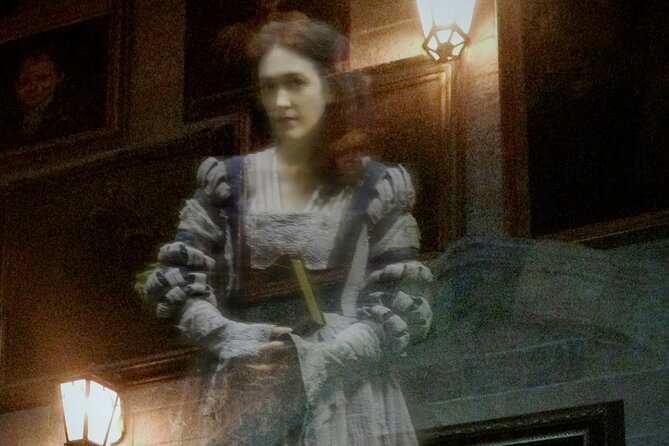
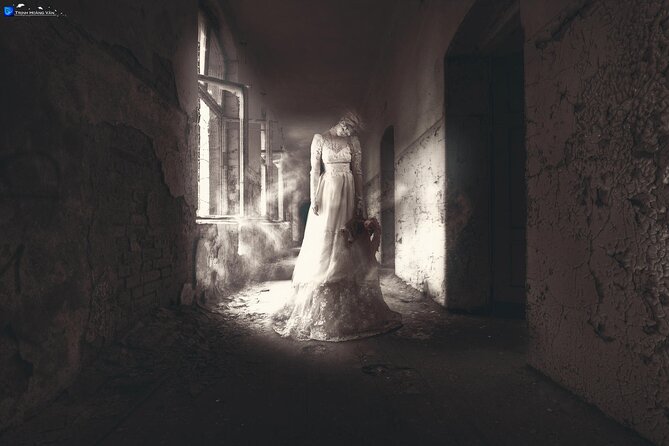
The fourth stop is the Carneal House Inn, described as the oldest house in Covington. Here you’ll hear about a gruesome suicide and the hauntings of the Grey Lady, which is presented as the most famous ghost in the city.
This is the kind of stop that works even if you’re not a hardcore ghost-tour fan. Old houses bring visual drama on their own, and the tour uses the building’s age and status to explain why the stories grew strong over time. The suicide and the Grey Lady lore also give you a different flavor than war-and-river hauntings.
One drawback to expect here: this part of the tour leans into darker human tragedy. If that’s not your thing, you can still enjoy it as history, but don’t plan it for a night when you want light and silly.
Stop 5: Booth Memorial Hospital at Governors Point Condominiums
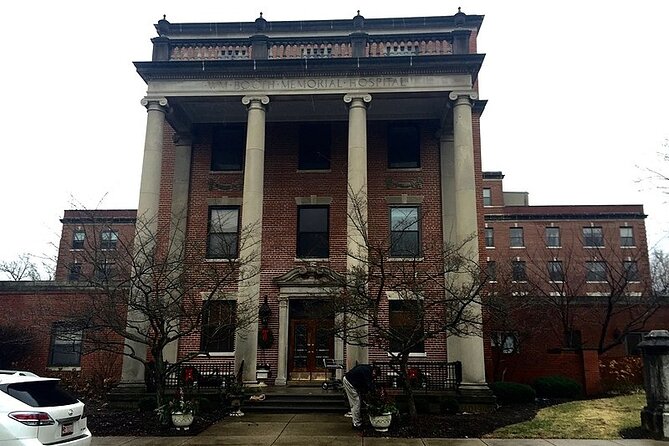
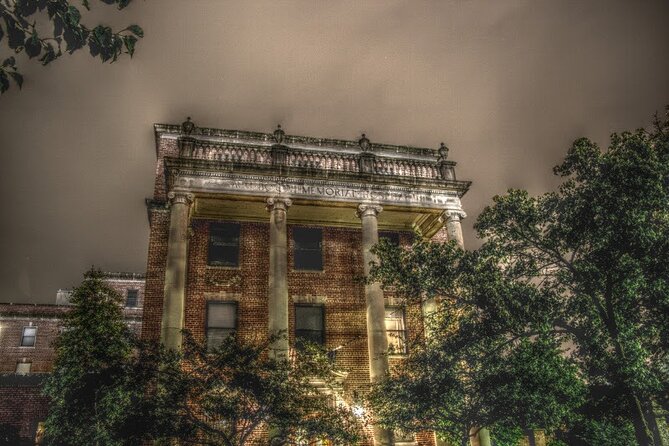
At Governors Point Condominiums, the tour visits the old Booth Memorial Hospital. This stop centers on an encounter police reportedly had, along with accounts from some residents today about nurses and what they experienced.
Then the guide adds a shock: you’ll be told what’s in the morgue. The tour doesn’t waste time. It treats this site like a full-on story set-piece, and it’s the longest stop on the route (about 15 minutes), which signals you’ll want that extra time to follow the details.
This is one of the best stops if you want the “creepy, institutional” brand of haunting—hospitals, staff, and rooms you normally wouldn’t think about are exactly the sort of place where people build long-running ghost lore.
Stop 6: The Amos Shinkle house and the carriage house
Next comes the Amos Shinkle house, tied to one of Covington’s oldest and wealthiest citizens. The story then shifts toward what’s lingering in the old carriage house.
This stop is a good reminder that haunted history isn’t only about dramatic deaths. It’s also about power, wealth, and daily life patterns that long outlast the people who lived them. Carriage houses are perfect for this kind of lore because they’re close to the main home but still feel separate—almost like an in-between space where secrets could hide.
If you love local architecture and want to see the city beyond modern streets, this is a strong “slow down and look” moment.
Stop 7: The Rugby (Henry Bruce mansion) and a Civil War-era encounter
At The Rugby, formerly the Henry Bruce mansion, you’ll hear about a ghostly encounter reaching back to the Civil War.
This stop continues the Civil War thread, but it changes the setting—from river and military barracks to wealthy-home territory. That switch keeps the stories from blending together. It also helps you see how the same era echoes through different social layers of the city.
This one is short (around 10 minutes), so listen closely. It’s the kind of story where key details matter more than the ending.
Stop 8: Baker-Hunt Art and Cultural Center and séance lore at the Baker-Hunt House
The tour stops at the Baker-Hunt Art and Cultural Center, focusing on the former home of Dr. William Hunt, his wife Margaretta Baker, and their daughter Katie. Here you’ll hear about a tragedy that befell the family and séances that took place on the property, along with ghostly appearances reported afterward.
I like this stop because it broadens haunting beyond “something wants you to leave.” Séances point to fear mixed with curiosity—people trying to control death through rituals. Even if you treat it as history and folklore rather than proof, it still tells you a lot about how families coped and what they believed when answers felt impossible.
The combination of named family members and the séance element makes this stop feel unusually grounded for a haunted-history tour.
Stop 9: Molly Malone’s Irish Pub and the Hermes Building double murder
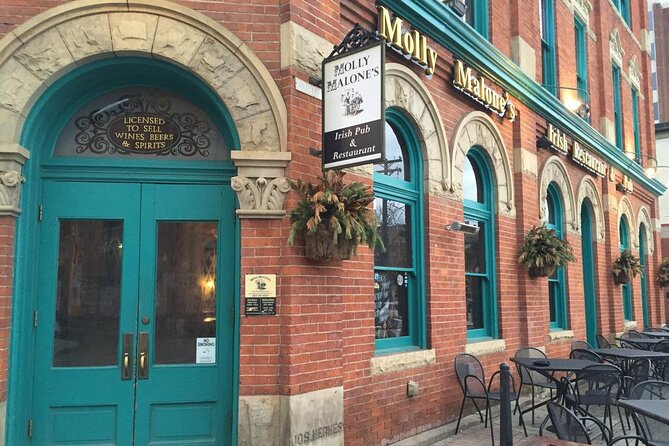
You end at Molly Malone’s Irish Pub & Restaurant, formerly the old Hermes Building. The story includes a grisly double murder and ghostly encounters that servers and bartenders still report.
This final stop is smart because it changes the mood. By the time you reach a pub, you’ve already absorbed several heavy themes, and now the storytelling shifts toward present-day workplace haunting. It’s also an easy way to keep the evening relaxed after the walking.
If you want a practical wrap-up: stick around for a pint after the tour ends or follow the guide back to the starting point. Either way, you’ll have a clearer sense of the route once it’s fully completed.
What to expect from the guide and the group (and how to enjoy it more)
This is built as a small group tour, max 15. That means you’ll likely get personal-style storytelling and actual opportunities to ask questions. In past outings, the guides mentioned—especially Chris and Chris Code—have been praised for being engaging, taking time with the group, and answering questions without rushing people.
Here are a few ways to get the most out of the experience:
- Bring good walking shoes. You’ll be outside for around two hours.
- Dress for the weather. The tour requires good conditions, and it’s canceled if poor weather hits.
- Bring water if it’s warm. One group noted how staying hydrated helped on a hot day.
- If you want photos, plan for a quick shot during the narration breakpoints. The stops are short, so don’t wait until you’ve missed the key parts.
Also, the tour includes a visual tour guide. That’s helpful if you like maps or want to understand where you are in relation to the river and neighborhood streets.
Who this tour is best for
This tour is a great match if you:
- Want history with a spooky edge, not just a ghost performance.
- Like Civil War and Ohio River stories, plus older homes and historic institutions.
- Enjoy architecture and neighborhoods, and you don’t mind walking between viewpoints.
- Prefer small groups where questions are welcomed.
It may be less ideal if you:
- Hate walking and standing outside for an extended period.
- Want guaranteed lighthearted entertainment. Several stops involve murder, suicide, tragedy, and morgue details.
Should you book Ghosts of Covington Haunted History Tour?
I’d book it if you’re in Covington for a short stay and want one activity that covers a lot of ground: river landmarks, haunted houses, Civil War-era connections, and modern ghost lore—all guided in a way that’s meant to be understandable and question-friendly.
If you’re on the fence, decide based on two things: your comfort with walking for about two hours, and how you feel about darker stories (suicide, murders, hospital/morgue lore). If that fits your taste, this is one of the most efficient ways to see Covington in a way that feels specific and local.
FAQ
How long is the Ghosts of Covington Haunted History Tour?
It runs about 2 hours (approx.), with several short stops and one slightly longer stop.
How much does the tour cost?
The price is $38.00 per person.
Where does the tour start and end?
You meet at the John Augustus Roebling statue on Riverside Dr, Covington, KY 41011, USA. The tour ends back at the meeting point.
Is the tour walking or driving?
It is typically a walking tour. A driving tour can be arranged in advance.
What stops are included?
The tour includes Roebling Suspension Bridge (view from the Roebling statue area), George Rogers Clark Park (Mary Greene statue), BB Riverboats, Carneal House Inn, Governors Point Condominiums (old Booth Memorial Hospital), the Amos Shinkle house, The Rugby (Henry Bruce mansion), Baker-Hunt House area at Baker-Hunt Art and Cultural Center, and Molly Malone’s Irish Pub & Restaurant.
Is admission included for the stops?
The tour’s stops are listed with admission ticket free entries for the time you view them.
What’s the group size?
The maximum group size is 15 travelers.
What should I bring?
Wear footwear suited for walking and dress for the weather. The tour requires good weather, and packing water can help on warm days.
Is parking included?
Parking fees are not included.
What if the weather is bad or I need to cancel?
The experience requires good weather. If it’s canceled due to poor weather, you’ll be offered a different date or a full refund. You can cancel for a full refund up to 24 hours before the start time.